AP Inter 1st Year Civics Study Material Chapter 8 Citizenship

Andhra Pradesh BIEAP AP Inter 1st Year Civics Study Material 8th Lesson Citizenship Textbook Questions and Answers.

AP Inter 1st Year Civics Study Material 8th Lesson Citizenship

Long Answer Questions

Question 1.
Define citizenship. Describe the methods of acquiring citizenship.
Answer:
Introduction :
Citizenship is a privilege of individual residing in democratic states. People fed that citizenship enables them to lead a happy, honourable and harmonious life in the state. Citizenship instills the feelings of patriotism, sacrifice, broad outlook etc., among the people.

Definitions :
Prof. Laski:
“Citizenship is one’s contribution of instructed judgement to the public good”.

T.H. Marshall:
“Citizenship is a status bestowed on those who are full members of a community. All who possess this status are equal with respect to the rights and duties with which the state is endowed”.

Methods of acquiring citizenship :
There are two methods of acquiring citizenship. They are : i) Natural ii) Naturalization. The two methods may be studied as follows.

i) Natural Citizenship :
Natural Citizenship is one which is acquired by the persons without specific application or request to the authorities. It comprises three elements. They are :

i) Blood relationship (Jus Sanguinis) ii) Soil (Jus Soli) and iii) Mixed principle.

i) Jus Sanguinis – (Kinship or Blood Relationship) :
This type of Citizenship denotes acquiring citizenship by kinship or blood relationship. Under this method birth within the territory of a state entitles a person to have citizenship. Every person is treated as a citizen of the state where he is born. According to Jus Sanguinis, a child acquires the citizenship of the parents irrespective of its place of birth. Here blood relationship alone determines the Citizenship. Ex : A child born to the Indian parents will be treated as Indian citizen irrespective of its place of birth.

ii) Jus Soli (Land or Place of Birth) :
Jus Soli means acquisition of citizenship by the principle of place of birth. According to this method, citizenship is determined by the place of birth and not by parentage. It is the place of birth which determines citizenship. However this method is not more popular in modem times. It was popular in the Middle Ages when citizenship was associated with land. At present, however, this practice is observed exclusively in Argentina.

Mixed Principle :
Under this method citizenship is granted by following either of the two principles of Jus Sanguinis and Jus Soli. Many states adopted both these principles. Ex : In Britain, France, and United States, the above two principles are employed simultaneously. In this context there may arise duplication of citizenship. Ex: A child born to British parents in the United States becomes an american citizen according to the practice of Jus Soli. The same child becomes a citizen of Britain according to the principle of Jus Sanguinis. In such a case, the child is given option to choose one of its citizenship, after becoming a major.

ii) Naturalised Citizenship:
Citizenship may also be acquired through naturalization. According to this method, an alien will become a citizen after fulfilling certain conditions. These conditions vary from state to state. Some of them may be summed up as follows.

1) Residence :
An alien who resides in a state for a prescribed period automatically become its citizen. Residence in any part of the state is a must for an alien. The period of residence varies from state to state. For instance it is 5 years in Britain and United States and 10 years in France respectively.

2) Choice:
The children of alien parents could receive citizenship of the state according to their option and choice.

3) Application :
An alien in a state may apply for the citizenship of that state. Then the government of that state considers his application on its merits. It grants citizenship to him with or without some conditions. These prescribed conditions refer to a minimum period of residence, good moral character, financial capability and knowledge of one of the national languages. Besides, an alien must take an oath of allegiance before he assumes the citizenship of another state.

4) Fixed Assets :
An alien who buys some portion of land or acquires some fixed property can acquire citizenship in a state.

5) Service (Public or Private):
An alien who serves in the government of a state or in a private recognised enterprise could become the citizen of that state. He is entitled for such citizenship if he serves in the public or private authorised departments. He may also be given Citizenship if the renders meritorious service in another state.

6) Marriage :
An alien woman acquires citizenship of a state when she marries the citizen of that state. In some countries when a person marries an alien, Citizenship of either of the husband or wife is acquired. For instance, a British lady will acquire Indian citizenship if she marries an Indian citizen. Japanese women do not lose their citizenship even if they marry persons of alien states. The alien person on the other hand, acquires the citizenship of Japan if he marries a Japanese lady.

In this context it may be noted that an alien who receives the citizenship of the new state, he will have to forego his native citizenship. In other words no one is allowed to have dual citizenships simultaneously.

AP Inter 1st Year Civics Study Material Chapter 8 Citizenship

Question 2.
Explain the various qualities of a good Citizen.
Answer:
According to Aristotle good citizens make good state. This is due to the fact that good citizens imbibe many noble qualities. Lord Bryce cited three qualities of a good citizen, namely, conscience, intelligence, and self control. On the whole, a good citizen will have the following qualities.

1) Good Character :
Good character is essential for a good citizen. A good citizen should be courageous, just, helpful, kind-hearted, sympathetic, truthful and virtuous in letter and spirit.

2) Sound health:
A good citizen should have good health and strength. Healthy citizens make the nation healthy. Only a sound body will have a sound mind. Sound body and mind of a citizen paves the way for the progress of the state in many spheres.

3) Intelligence and education :
Proper education is another quality of a citizen. The citizen should be well-enlightened, fully aware and informed of his rights and responsibilities. He must be intelligent enough to identify good and bad. He will not be emotional in examining the events. In this regard education enables him to play a proper role in the society. An intelligent citizen will be able to understand the problems of the state in a proper way.

4) Self control :
A good citizen will have moderate temperment. He will have self-control in his public activities. Self control and confidence make him to lead a disciplined life. He will not indulge in inhuman activities.

5) Public spirit:
A good citizen should have broad and liberal outlook. He should be ready to take active part in public affairs. He should be intelligent in enjoying his rights and responsibilities. He should have active participation in the social activities. He should have public-spirit and ready to offer his services for the collective welfare of the society.

6) Self-sacrifice:
A good citizen must possess self sacrifice. He must subordinate his self-interest to the interests of the community. He must be imbibed by the spirit of service and devotion to the society, government and state.

7) Honest exercise of franchise:
Honest exercise of one’s franchise is another essential quality of a good citizen. Self interest or sectional interest in terms of class, religion or community act as a hurdle to good citizenship.

8) Sincere performance of obligations :
A good citizen performs his obligations sincerely and faithfully. He extends co-operation to the authorities in the discharge of their obligations. He pays his taxes to the various governmental organizations promptly and properly.

9) Right ordering of loyalties :
A good citizen brings about a right ordering of his loyalties to the family, class, caste, club, trade union, region and nation. He avoids conflicts between various associations by assigning priorities. He sacrifices his self interest for the sake of wider purposes. When there arises a conflict between the interests of the family and the locality, one must sacrifice the interests of the family for the sake of the locality.

Question 3.
Describe the various hindrances to Good Citizenship.
Answer:
There are various hindrances to the growth of good citizenship in a state. These relate to caste system, communalism, ignorance, illiteracy, poverty, social discriminations etc. The main hindrances to good citizenship are discussed as below.

1) Laziness :
Citizens in many states do not prefer to work hard. They remain narrow minded. They have little interest in working for the progress of the nation. They create havoc on many occasions in the state. Many of them are affected by apathy, inactivity, indifference and indolence. Laziness leads to the neglecting of civic duties. Ultimately it makes citizens indifferent in public affairs.

2) Ignorance and Illiteracy :
Ignorance and illiteracy are regarded as the greatest obstacles to the good citizenship. Ignorant and illiterate citizens do not understand their rights and responsibilities properly. Laski rightly stated that citizenship consists in the contribution of one’s instructed judgment to the public good. Ignorant and illiterate persons are unable to make any such contribution. They don’t have an enlightened interest in public affairs in the absence of education. Democracy degenerates into a mob rule in the hands of ignorant and illiterate persons.

3) Poverty:
Poverty is the root cause of all evils. Good citizenship cannot develop in a country where vast inequalities of wealth exist. Poverty leads to apathy and indifference in public life.

4) Ill health:
Ill health is another hindrance to the good citizenship. Because unhealthy citizens cannot carry on their services to the good of the state and society.

5) Narrow Political Interests :
Political parties, which are essential in democracy, play a crucial role in promoting the ideals of good citizenship. But many members of these parties work for the party and not for the society or the nation. Leaders of various parties keep their attention only on capturing power. They show least regard to the promotion of peoples welfare. Some political parties even create rivalries and satisfier among the people. Sometimes interests of the community are sacrificed for the sake of the party.

6) Communalism and Casteism :
Communalism and casteism are two important handicaps in the path of good citizenship. Caste system and class distinctions are especially responsible for bringing out a discord among the people. These distinctions hamper social and political solidarity of the state. .

7) Selfishness :
Selfishness and good citizenship cannot go together. Selfish citizens will confine their thoughts and actions to their own private benefits. They spare no time and energy for the well being of others including their mother land.

8) Indifference:
Indifference is another great obstacle which makes citizens indolent and lazy. Such citizens are least bothered about the contemporary happenings. They do not participate in the dynamics of the state mechanism. They ignore the evil effects of backwardness, dirt, disease and poverty. Lastly, they lack the character of good citizens and suffer from total aversion to public work.

AP Inter 1st Year Civics Study Material Chapter 8 Citizenship

Question 4.
How many types of citizenship are there? Elucidate.
Answer:
There are three types of Citizenship. They are : (i) Single Citizenship (ii) Dual Citizenship and (iii) Global or Universal Citizenship.

i) Single Citizenship:
Single Citizenship implies possession of one type of citizenship, identical rights, privileges, and immunities by the citizens. Citizens enjoy this type of citizenship without any discrimination. It is prevalent in many states in the modem period. For instance the constitution of India provided for single citizenship to every Indian citizen irrespective of his place of birth, residence etc.,

ii) Dual Citizenship :
Dual citizenship means possession of two citizenships in two States. It is in vogue in some developed and developing countries. For instance, children born to American citizens in other states acquire natural citizenship in both the states – one in their parent American State and another in the State where they are born. However, persons having dual citizenship are not entitled to the special privileges. They are subject to the laws of both countries. Dual citizenship applies to the children until they attain adulthood. Later they have to choose citizenship of one of the two States.

iii) Global or Universal Citizenship :
Global or Universal Citizenship is the latest phenomena in the contemporary international and national politics. The dramatic events that took place after 1980s and 1990s created a great awareness among the people all over the world. The advancement in communications, science, technology, and other spheres transformed human life in a miraculous way.

Short Answer Questions

Question 1.
Write about the two methods of acquiring natural citizenship.
Answer:
i) Jus Sanguinis – (Kinship or Blood Relationship):
This type of Citizenship denotes acquiring citizenship by kinship or blood relationship. Under this method birth within the territory of a state entitles a person to have citizenship. Every person is treated as a citizen of the state where he is born. According to Jus Sanguinis, a child acquires the citizenship of the parents irrespective of its place of birth. Here blood relationship alone determines the Citizenship. Ex : A child born to the Indian parents will be treated as Indian citizen irrespective of its place of birth.

ii) Jus Soli (Land or Place of Birth):
Jus Soli means acquisition of citizenship by the principle of place of birth. According to this method, citizenship is determined by the place of birth and not by parentage. It is the place of birth which determines citizenship. However this method is not more popular in modem times. It was popular in the Middle Ages when citizenship was associated with land. At present, however, this practice is observed exclusively in Argentina.

Question 2.
What are the differences between Citizen and Alien?
Answer:
Citizen:
Aristotle defines a Citizen as “One who has a share in the deliberative functions of the state and in the election of its officials.

Alien :
An alien is a person living in a state but owing allegiance to another state.

Differences between Citizen and Alien :

CitizenAlien
1. A citizen resides in a particular State on permanent basis.1. An alien resides in a State on temporary basis.
2. A citizen owes loyalty to the State in which he resides.2. An alien owes allegiance to the State to which he belongs.
3. A citizen is entitled to enjoy civil and political rights.3. An alien will have civil rights only.
4. A citizen can criticize the policies and programmes of the government.4. An alien has no right to criticize the policies and programmes of the government.
5. A citizen will have both the rights and responsibilities.5. An alien has more responsibilities than the rights.

Question 3.
How is naturalised citizenship acquired?
Answer:
Naturalised Citizenship :
Citizenship may also be acquired through naturalization. According to this method, an alien will become a citizen after fulfilling certain conditions. These conditions vary from state to state. Some of them may be summed up as follows.

1) Residence :
An alien who resides in a state for a prescribed period automatically become its citizen. Residence in any part of the state is a must for an alien. The period of residence varies from state to state. For instance it is 5 years in Britain and United States and 10 years in France respectively.

2) Choice:
The children of alien parents could receive citizenship of the state according to their option and choice.

3) Application :
An alien in a state may apply for the citizenship of that state. Then the government of that state considers his application on its merits. It grants citizenship to him with or without some conditions. These prescribed conditions refer to a minimum period of residence, good moral character, financial capability, and knowledge of one of the national languages. Besides, an alien must take an oath of allegiance before he assumes the citizenship of another state.

4) Fixed Assets :
An alien who buys some portion of land or acquires some fixed property can acquire citizenship in a state.

5) Service (Public or Private):
An alien who serves in the government of a state or in a private recognised enterprise could become the citizen of that state. He is entitled for such citizenship if he serves in the public or private authorised departments. He may also be given Citizenship if the renders meritorious service in another state.

6) Marriage :
An alien woman acquires citizenship of a state when she marries the citizen of that state. In some countries when a person marries an alien, Citizenship of either of the husband or wife is acquired. For instance, a British lady will acquire Indian citizenship if she marries an Indian citizen. Japanese women do not lose their citizenship even if they marry persons of alien states. The alien person on the other hand, acquires the citizenship of Japan if he marries a Japanese lady.

AP Inter 1st Year Civics Study Material Chapter 8 Citizenship

Question 4.
How citizenship is lost?
Answer:
Citizens loose their citizenship under the following conditions :
1) Renunciation :
A person is deprived of his citizenship, if he wishes to become the citizen of another state. One will lose the citizenship of one’s parent state and may become the citizen of a foreign state by naturalization. In India, the Constitution prescribes that a person who voluntarily acquires Citizenship of any other state will no longer be an Indian citizen.

2) Marriage :
Generally a woman loses her citizenship when she marries an alien. However some states allow retention of citizenship. For instance in Britain, there is an option to retain British citizenship who marries an alien.

3) Accepting Foreign Service :
A person may lose his citizenship when he enters into the service of another state. If a person accepts a permanent job in the government of a foreign state, he foregoes the citizenship of his native state.

4) Obliging Foreign Decorations or Titles :
When a citizen obliges to receive foreign decorations or titles, it may lead to the forfeiture of his Citizenship.

5) Prolonged Absence :
Prolonged absence in the native state beyond a certain period may lead to the loss of citizenship. In some states like France and Germany citizens who are absent themselves from their native country for more than ten years will loose their citizenship.

6) Treason or Crime :
Involvement of a citizen in a serious crime and subsequent proof of his action will also lead to the loss of citizenship. Especially those persons who directly or indirectly participate or extend assistance to anti-state, anti-social and anti- govemmental activities, will loose their Citizenship by a special notification to that effect.

7) Desertion from Army:
Desertion from army thereby jeopardizing the security of a state leads to the forfeiture of citizenship.

Question 5.
Explain any three conditions for securing naturalized citizenship.
Answer:
1) Residence :
An alien who resides in a state for a prescribed period automatically become its citizen. Residence in any part of the state is a must for an alien. The period of residence varies from state to state. For instance it is 5 years in Britain and United States and 10 years in France respectively.

2) Choice:
The children of alien parents could receive citizenship of the state according to their option and choice.

3) Application :
An alien in a state may apply for the citizenship of that state. Then the government of that state considers his application on its merits. It grants citizenship to him with or without some conditions. These prescribed conditions refer to a minimum period of residence, good moral character, financial capability and knowledge of one of the national languages. Besides, an alien must take an oath of allegiance before he assumes the citizenship of another state.

AP Inter 1st Year Civics Study Material Chapter 8 Citizenship

Question 6.
Briefly describe about the Global or Universal citizenship.
Answer:
Global or Universal Citizenship is the latest phenomena in the contemporary international and national politics. The dramatic events that took place after 1980s and 1990s created a great awareness among the people all over the world. The advancement in communications, science, technology and other spheres transformed human life in a miraculous way.

Liberalization :
Privatization and Globalization (LPG) have become a boon to them. The various governments in both the advanced and Third World States have shifted their priorities ranging from defence to the welfare and well being of common men. As a result, intellectuals belonging to different walks of life have been given encouragement to go abroad and reap ample benefits.

It is in the above circumstances that large number of citizen have gone abroad for educational, commercial and research purposes. Thousands of them have either settled in foreign states or remained there on work permits. They have earned a lot of money. They remain instrumental in bringing their income to the native states. In the process they have been seeking citizenship in their native state and in the states where they are rendering services. Some states have contemplated the idea of conferring dual citizenship to their citizens in other states. Such an idea became a basis of global Citizenship.

Question 7.
Suggest the remedies for removing the hindrances to good citizenship.
(or)
Point out the ways for overcoming the hindrance to good citizenship.
(or)
How to overcome the obstacles (or) Hindrances (or) Hurdles to good citizenship?
Answer:
In order to remove the hindrances of good citizenship, efforts should be made by the parties, people, press and the state. Laski said that good citizenship implies “the contribution of one’s instructed judgement to public good”. The following are some ways to remove hindrances to good citizenship.

1) Solving People’s Grievances :
First of all government should address the basic grievances of the people. Issues of poverty and unemployment should be tackled with great commitment. Good citizenship can’t be realized when people’s basic needs are not satisfied.

2) Education and awareness :
Education, which is the most important need of the hour should be given top priority. Steps should be taken to spread education and awareness among the people. Citizens must be provided with such instructions which make possible the understanding of human life. They must be trained for expressing their wishes and aspirations which they come across in their life.

3) Efforts of Leaders:
Citizens should always feel that government itself cannot provide succour and rescue them on every occasion. The leaders at various levels should come forward and co-operate with the government in promoting good citizenship.

On the whole, Lord Bryce suggested two types of remedies for overcoming the hindrances of good citizenship. They are : 1. Mechanical and 2. Ethical. The first relates to the laws of the state and second relates to the character of the citizens.
Mechanical Remedies improve the machinery of the state to make it more useful to the public. The entire social structure has to be built up on the principles of equality, Citizenship, and democracy. Citizens should be allowed to utilise their civil and political rights to their maximum extent.

Ethical remedies enhance the general character of citizens in the state. Ignorance and narrow party interests must be avoided. On the other hand, honesty and literacy would induce the citizens to take active role in public life.

Very Short Answer Questions

Question 1.
Define citizenship.
Answer:
i) Prof. Laski defines “Citizenship is one’s contribution of instructed judgement to the public good”.

ii) T.H. Marshall defines “Citizenship is a status bestowed on those who are full members of a community. All who possess this status are equal with respect to the rights and duties with which the state is endowed”.

AP Inter 1st Year Civics Study Material Chapter 8 Citizenship

Question 2.
What do you mean by Jus Sanguinis?
Answer:
Acquiring citizenship by kinship or blood relation is called Jus Sanguinis. According to Jus Sanguinis, a child acquires the citizenship of the parents irrespective of its place of birth. Blood relation alone determines the citizenship in Jus Sanguinis method.

Question 3.
What do you mean by ‘Jus Soli’?
Answer:
Jus Soli means acquisition of citizenship by the principle of place of birth. According to this method, a child acquires the citizenship of a State, where it boms. It is the place of birth which determines citizenship. This method is not more popular in modem times. At present, this method is observed exclusively in Argentina.

Question 4.
Who is an alien?
Answer:
An Alien is a person living in a state but owing Allegiance to another State. Aliens are entitled to such rights and obligations which are incorporated in the covenants of the Foreign State. Ex: In America, Aliens must obey the laws and pay taxes just like the American Citizens.

Question 5.
Write about any two conditions for acquiring natural citizenship.
Answer:
The two conditions for acquiring natural citizenship are :
i) Jus Sanguinis (Right of blood) :
According to Jus Sanguinis, A child acquires the citizenship of the parents irrespective of its place of birth.

ii) Jus Soli (Right of Soil) :
According to this method, citizenship is determined by the place of birth and not by parentage.

Question 6.
List out two conditions of loss of citizenship.
Answer:
i) Renunciation :
A person is deprived of his citizenship, if he wishes to become the citizen of any other State.

ii) Marriage :
Generally a woman loses her citizenship when she marries an alien.

Question 7.
Mention any two qualities of a good Citizen. [A.P. Mar, 15]
Answer:
i) Good Character :
Good character is essential for a good citizen. A good citizen should be courageous, just, helpful, kind-hearted, sympathetic, truthful, and virtuous in letter and spirit.

ii) Sound Health :
A good citizen should have good health and strength. Healthy citizens make the nation healthy and wealthy.

Question 8.
Explain the significance of citizenship.
Answer:
Citizenship remains significant when the fundamental rights enshrined in the constitution are available to all the citizens. Further, Citizenship ensures the citizens many political rights. Citizens could exercise their vote in elections to the various representative bodies. They could also contest for membership of legislative bodies. Above all, citizens alone are eligible for appointment to the highest offices in the executive like President, Vice-President, Judges of the Supreme Court and High Courts etc.

Question 9.
In what way do ignorance and illiteracy act as hindrances to good citizenship?
Answer:
Ignorance and illiteracy are regarded as the greatest obstacles to the good citizenship. Ignorant and illiterate citizens do not know their rights and responsibilities properly. They are unable to make any contribution to the State. Democracy degenerates into mob rule in the hands of ignorant and illiterate persons.

Question 10.
What are the suggestions of Lord Bryce for overcoming the hindrances of good citizenship?
Answer:
Lord Bryce suggested two types of remedies for overcoming the hindrances of good j citizenship. They are: i) Mechanical ii) Ethical. Mechanical remedies improve the machinery of the State to make it more useful to the public. Ethical remedies enhance the general character of citizens in the State.

AP Inter 1st Year Civics Study Material Chapter 8 Citizenship

Question 11.
Write short notes on Dual Citizenship.
Answer:
Dual Citizenship means possession of two citizenships in two States. Ex : Children bom to American citizens in other States acquire citizenship in both the States – one in their parent State and the other in the State, where there are born. Dual citizenship applies to the children until they attain adulthood. Later they have to choose citizenship of any one of the two states.

AP Inter 1st Year Civics Study Material Chapter 6 Rights and Responsibilities

Andhra Pradesh BIEAP AP Inter 1st Year Civics Study Material 6th Lesson Rights and Responsibilities Textbook Questions and Answers.

AP Inter 1st Year Civics Study Material 6th Lesson Rights and Responsibilities

Long Answer Questions

Question 1.
Define Rights. Describe the Civil and Political Rights.
Answer:
Introduction:
Rights are the essential conditions for the development of the personality of individuals. They are upheld by the laws of the state. They are regarded as a power or privilege that the law invests in a person. They are treated as the sum total of the opportunities meant for enhancing one’s personality. Individuals can not achieve progress in the absence of rights.

Definitions of Rights :
Political scientists have defined the term ‘Right’ in several ways. Some of their definitions are explained below :

1. Earnest Barker:
“Rights are the external conditions necessary for the development of the capacities of the personality of the individual.”

2. Beni Prasad:
“Rights are nothing more and nothing less than those social conditions which are necessary for the development of personality of individuals.”

3. Bosanquet:
“A right is a claim recognised by the society and enforced by the state.”

4. T.H. Green :
“Rights are those powers claimed and recognized as contributory to the common good.”

5. H.J. Laski :
“Rights are those conditions of social life without which no man can seek in general to be himself at his best.”

Civil Rights :
Civil rights aim at providing basic conditions for individuals to lead a happy and dignified social life. These rights are considered vital for a civilized society. Social life becomes impossible in their absence.

Individuals in a civilized society enjoy the following Civil rights. These are

1) Right to life :
This is the most important civil right. T.H. Green considered it as the most fundamental civil right. This right provides security to the individual’s life. Individuals can not lead their lives in the absence of this right. This right is based on the premise that the life of an individual is valuable not only to himself, but also to the society and the state as a whole. Hence it prescribes at large the state to extend protection to the life of individuals. However, it empowers the state to impose some reasonable restrictions upon the individuals. The state can insist any person to sacrifice his life for the sake of the nation. This right also includes the right of self-defence.

2) Right to liberty:
This right enables individuals to have freedom in various walks of life. It makes their lives worth living. It enables them to develop their personality in various spheres. It includes various freedoms such as freedom of movement, speech, expression, thought, residence etc.

3) Right to equality:
This right implies that individuals are equal before law. It forbids discrimination on the basis of one’s caste, colour, creed, education, region, race, religion, wealth etc. It enables equal treatment to all persons. It provides scope for uniform application of laws. It enables equal opportunities to all persons in social, economic and political fields.

4) Right to property:
This right enables every individual to acquire, enjoy, donate or inherit the property. It is essential to the individual for securing higher standards of living. This right is crucial for the growth of individual’s personality.

5) Right to family :
Family is a fundamental social institution. This right enables individuals to maintain family relations in society. Consequently, individuals will have freedom to marry persons of their choice. They will have choice to procreate children and rear their offspring. However, the state can impose certain restrictions upon this right keeping in view the national interests. For example, until recent times China imposed severe restrictions against their citizens in the size of their families. Recently it has made some amendments in this regard.

6) Right to religion :
This right allows the individuals to have freedom to practice, propagate and profess any religion of their choice. Every individual is at liberty to preach or practice the religious doctrines as they like. The secular states provide religious freedoms to their citizens.

7) Right to contract :
This right provides freedom to every individual to enter into contract or legal arrangements with others regarding his life, property and work. It regulates the two parties in carrying their contracts in letter and spirit. The state recognizes only those contracts which are helpful to the common well being of the people.

8) Right to education :
In the modem era education is regarded as vital to every individual. Uneducated and innocent individuals cannot play an active role in public affairs. Similarly, illiterate persons cannot fully make use of their abilities. Education and literacy enable the people to understand the problems of the society and policies of the government. This right guarantees a minimum level of education to every citizen in democratic states.
9) Right to form associations and unions :
This right enables individuals to form associations and unions for realising some specific objectives. Individuals may join, continue or keep away from the membership of associations according to their will and pleasure. The State is empowered to impose restrictions against those associations which ignore the welfare of the nation.

10) Right to constitutional remedies :
Civil rights are meaningless in the absence of this right. This right is essential to every individual for safeguarding his rights. This right empowers a person (who was deprived of his liberty due to the intervention or manhandling by others including the government) to seek justice and relief from the concerned judicial organizations. The affected individuals are authorised to approach an appropriate court for correcting such imbalance. In this regard the higher judicial organizations issue several writs and effectively check such tendencies. These writs are in the form of Habeas Corpus, Mandamus, Prohibition, Quo-warranto and Certiorari etc.

Political Rights :
Political rights are those rights which enable the individuals to participate in the political affairs of the state.

The following are the important political rights :
1) Right to vote :
Right to vote is the most important political right enjoyed by the citizens in modem democratic states. It serves as a powerful weapon for adult citizens in choosing their representatives to various legislative bodies. It makes them as real sovereign. All the citizens are entitled to this right without any discrimination based on creed, colour, language, race, region, religion, sex etc. However, persons such as aliens and minors are deprived of this right.
2) Right to contest in elections :
This right empowers the citizens to contest as candidates to various legislative bodies in the state. Especially this right enables those, who have political sagacity, enthusiasm and dynamic nature, to actively participate in the political dynamics of the state. As a result, it increases political enthusiasm among the citizens. Such an element is considered as a base of democratic polity.

3) Right to hold public offices :
This right provides opportunities to the citizens to hold various public offices for a definite period. It gives no scope for exclusion of citizens or conferring special privileges to some at the cost of others. This helps the citizens to exercise authority in a dignified manner.

4) Right to petition :
This right enables the citizens to forward petitions denoting their requirements or grievances. It is considered as a vital political right in the modem state. The citizens could be able to find solutions to their immediate or long pending issues by bringing them to the notice of the government through this right. It also helps the public authorities to know the grievances of the people and attend to them properly and promptly.

5) Right to criticism:
This right gives opportunity to the citizens to criticize the various public policies and programmes. It also enables them to highlight the omissions and commissions of the leaders, and administrative personnel at various levels. It also gives scope for the citizens to render positive and constructive criticism about the on goings in the government from time to time. Ultimately it keeps the administrative authorities and policy makers to be vigilant in discharging their obligations.

AP Inter 1st Year Civics Study Material Chapter 6 Rights and Responsibilities

Question 2.
Identify the safeguards of Rights.
Answer:
Introduction: Rights are the essential conditions for the development of the personality of individuals. They are upheld by the laws of the state. Individuals cannot achieve progress in the absence of the Rights.

Definition:
1) T.H. Green :
“Rights are those powers claimed and recognized as contributory to the common good.”

2) H.J. Laski:
“Rights are those conditions of social life without which no man can seek in general to be himself at his best.”

Safeguards of Rights:
Individuals enjoy their rights only when they were fully protected or safeguarded by the State. In this regard, the following elements act as the safeguards of the rights.

1) Democratic Rule :
Democratic rule safeguards the rights of the people to a great extent. People can enjoy their rights perfectly in democratic states only. This system makes constitutional and legal provisions for safeguarding the right of the people.

2) Written and Rigid Constitution:
A written constitution clearly defines the powers and functions of the government. It also explains about the various limitations of governmental authority. Besides, a rigid constitution will guarantee the rights of the people by making it difficult for the rulers and legislators to make amendments on flimsy grounds.

3) Constitutional Incorporation :
Incorporation of fundamental rights in the constitution will prevent the encroachment of individual rights by the government. Such an arrangement protects the rights of the individuals to a great extent.

4) Separation of Powers:
The powers of the government should be separated among the three organs of the government. Such as measure would act as a check against other organ. Ultimately, it serves as a safeguard of individual liberty.

5) Decentralisation of Powers :
Individuals enjoy their rights, when powers are decentralised among the governmental institutions. This involves allocation of powers at various levels – national, provisional, local either on functional or territorial basis.

6) Rule of Law:
Rule of law implies equality before law. It also denotes equal application of laws to the citizens. It gives no scope for discrimination between citizens on the grounds of region, religion, caste, colour, community etc.

7) Independent and Impartial Judiciary :
Independent and impartial judiciary is another safeguard of rights. Judges in higher judicial bodies will deliver judgement with impartial and independent outlook. In the process of delivering justice, they issue certain writs for immediate protection of the rights.

8) Indepedent Press:
Independent and honest press is another essential safeguard of rights of individuals. Such agency will be able to disseminate news and views impartially and without fear or favour to anybody. In this regard the state should not try to threaten and silence the press. Then only individuals enjoy their rights to the maximum extent.

9) Social and Economic Equalities:
Social and economic equalities are necessary for enjoying one’s rights. People will be able to utilize their rights properly and positively when there are social and economic equalities in the state. These equalities include absence of casteism, communalism, linguism, wide spread economic inequalities, exploitation etc.

10) Eternal Vigilance:
Eternal vigilance is said to be the most important safeguard of rights of individuals. Individuals must be vigilant and cautious about the policies of the government. They should oppose the despotic tendencies of the government through democratic and constitutional methods. Under no circumstances they should allow the self seeking politicians to acquire power. Besides several other elements like judicial review, recall, strong opposition etc., are considered as the safeguards of rights.

Question 3.
Write an essay on Human Rights.
Answer:
Introduction :
Human rights are the amenities required for the basic existence of human beings. They are available to all persons irrespective of caste, creed, community, religion, region, language etc. The constitutional and ordinary laws in democratic states recognize these rights. The various governments in democratic states will take appropriate steps for providing human rights to their people.

Definitions:

  1. “Human Rights are freedom to all irrespective of place, sex, religion language etc.” – United Nations Organization (U.N.O)
  2. “The Rights which serve as the protective shield to the individuals whenever the state attempts to interfere with the civil liberties of individuals.” – Ronald Darwin
  3. “Human Rights are the new standards of civilization.” – John Dowski

Origin and Growth of Human Rights :

  1. The credit for showing interest on human rights and their application to human goes to Greek rulers. They recognised the need and importance of health and strength in the development of human personality.
  2. Magna Carta sanctioned by King John of England in 1613 gave life to the Freedoms and independence of the people.
  3. The cultural renaissance which shook the various countries in Europe gave strength and succor to the Civil rights movements.
  4. John Locke of England popularised the doctrine of natural rights as a part of his proposal for the spread of human rights.
  5. Rousseu of Switzerland mentioned several times about the importance of human rights in his concept of social contract. He declared that “Man has bom with free but every where he is in chains.”
  6. John Stuart Mill, a prominent British political philosopher, propounded individualism. He stated that every individual is sovereign over himself, his body and mind and all organizations including the state shall not interfere in the affairs of Individuals.
  7. The writings of above philosophers profoundly influenced the people across the globe. Several freedom movements such as bloodless revolution in England (1688), American declaration of Independence (1776), French Revolution (1789), Russian Revolution (1917). The Indian declaration of Independence (1947) etc., led to the creation of favourable atmosphere for the enjoyment of human rights.
  8. After the establishment of United Nations Organization in 1945, the charter of U.N.O assigned priority and significance to the rights of human beings. The universal declaration of human rights came into force on December 10, 1948. Since then, that day is celebrated as the universal human rights day.

As a result, several covenants like international economic, social and cultural rights, International civil and political rights (1966) came into being. The above covenants made obligatory for the international community to provide favourable conditions for enjoying the various human rights by the people of the world. All the member states of the United Nations gave assurance to have full faith in the human rights. They assured their cooperation for observing and promoting human rights.

Violation of Human Rights:
Today in almost all the countries of the World, everywhere the violation of human rights is happening Poverty, Refugees, Separatist movements etc., are the main causes for violation of human rights.

Protection of Human Rights:
Every nation has the responsibility to protect the human rights. Governments as well as voluntary organizations play a key role in protection of human rights. Amnesty International and Asia watch are playing a prominent role in protecting the human rights.

Question 4.
”Rights and Responsibilities are inter related” Analyse.
Answer:
There is a close relationship between rights and responsibilities. The two are considered as the two sides of a same coin. Rights are incomplete in the absence of responsibilities. Rights imply responsibilities are entitled to rights. The two are inseparable. They are compared to the life and breath of living beings.

Essential conditions of social life :
Many political writers described that rights and responsibilities are the two essential conditions of social life. They are like the shield and soul of the people in the state. Every right will have a corresponding responsibility. Similarly, every responsibility has a corresponding right. The two propositions when put together will help to a great extent the individuals to lead a happy, honourable, harmonious and prosperous life in society. For instance, the right to religion allows every individual to embrace a religion of his choice.

It also enables him to preach, profess and propagate his religious beliefs in society. At the same time that person has a corresponding responsibility in religious matters. He has to avail this right to religion in consonance with the religious beliefs of his fellow citizens. He has the responsibility of not interfering in the religious matters of others under any circumstances.

Social Progress :
It is imperative that everyone should enjoy his rights in such a way that his activities contribute to social progress. He should be aware of his rights and perform his responsibilities in a judicious manner. His actions should always be carried on with the Ultimate aim of promoting social progress.

Another postulate regarding the affinity between rights and responsibilities relates to the order in the State. One should utilize his rights in such a way that his actions should in no way disrupt the peaceful atmosphere in the society. Similarly, he should abide by the rules and regulations imposed and implemented by the government authorities from time to time.

He should always carry as his activities in various spheres of life without affecting the rights of others in society. It implies that he must oblige and respect others in the enjoyment of their rights. He should not interfere in other affairs under any circumstances. This reveals the relationship between rights and responsibilities.

Rights and Responsibilities do not have separate or distinct ends. They are always present together like shadow and man.

One’s right automatically becomes other’s responsibility and vice versa. The two rights and responsibilities – together make a person as a good citizen.

Responsibilities lack meaning in the absence of rights. The reason is that there will be no responsibilities without rights. Similarly, there will be no rights without responsibilities. Hence, rights and responsibilities go hand in hand. Together the two concepts enable the peace, progress and harmony in human society.

AP Inter 1st Year Civics Study Material Chapter 6 Rights and Responsibilities

Question 5.
Write an essay on National Commission on Human Rights.
Answer:
As per the U.N. Declaration of human rights, the government of India too steps for its implementation. In 1993, it appointed National Human Rights Commission and also passed Human Rights Act in 1998.

Composition:
National human rights commission is a multi-member body. It consists of four members, headed by the former chief justice of the supreme court. There will be a supreme court judge (or former Judge). A high court judge (or former high court chief justice) and two other members who actively participated in the human rights activities. The chairman of scheduled castes, scheduled tribes, minorities commission, chairperson of national women commission act as the ex-officio members of the commission. There will be a General Secretary having the status of Secretary general in the commission.

Appointment:
The chairman as well as members of the commission are appointed by the President of India.

Tenure :
The Chairman and members shall hold their office for five years or until the super annuation age of 70 years which ever is earlier.

Functions :
The following are some of the important Junctions of national human rights commission.

  1. The national human rights commission makes enquiry into the cases of violation of human rights by the public authorities.
  2. It enquires into the cases of human rights violation as permitted by the judicial organizations.
  3. It reviews the various legislative measures in regard to the implementation of human rights.
  4. It makes suggestions for averting terrorist operations affecting human rights.
  5. It makes research into the matter of human rights.
  6. It takes steps for creating awareness of human rights among the people.
  7. It gives encouragement to voluntary organizations in the matters of preserving human rights.

Short Answer Questions

Question 1.
What are the features of Rights?
Answer:
Rights are the essential conditions for the development of the personality of individuals. They are upheld by the laws of the state. Individuals cannot achieve progress in the absence of rights.

Definition :
“Rights are those conditions of social life without which no man can seek in general to be himself at his best.”

Features of Rights :
Rights comprise the following features.
1) Rights are possible only in society:
Rights originate in society. They denote human social behaviour. They do not exist outside of the society.

2) Rights are social in nature :
Rights are the claims of individuals. These claims can be established only when the society or the state recognises and maintains them. So they are social in nature.

3) Rights are inherent in nature:
Rights are inherent in the social nature of men. The social contractualists stated that rights are inherent in nature. Their views are accepted to some extent in modem times.

4) Rights are enforced and protected by the state:
Rights are enforced and protected by the state. The various judicial organisations act as the custodians of the rights of individuals. In other words, rights are protected by the courts of law. Individuals enjoy several rights fully only in a democratic state.

5) Rights are not absolute :
Rights are not absolute. Society and state impose some restrictions on the enjoyment of rights by the individuals. These restrictions are meant for maintaining peace and other in the society. Further, rights are meant for contributing social welfare and security.

6) Every right has a corresponding responsibility :
Rights and responsibilities are interdependent. Every right has a corresponding responsibility. It is the responsibility of every individual to see that his neighbours also enjoy the same rights. Rights without responsibilities or responsibilities without rights cannot exist. Both are essential for leading a peaceful social life.

7) Rights are universal :
Rights are universal in nature. They are applicable to all. They are given to all without any discrimination.

8) Rights vary :
Rights vary from time to time according to the needs of the people. They also grow with the changes in time and conditions. Some rights which were not found in the past may exist now. The socio economic, political and cultural conditions will have an influence over the rights.

9) Rights precede the state :
Rights are the products of history. Rights originated in course of time. They were prevalent even before the origin of the state. However, they were guaranteed only after the origin of the state.

10) Rights are meant for common good :
Rights always exist and flourish as long as they are meant for common good. Only those rights which promote common good of the people are recognised by the society and the state. They are essential for leading a prosperous life by the individuals.

Question 2.
Explain Political Rights.
Answer:
Political rights are those rights which enable the individuals to participate in the political affairs of the state.

The following are the important political rights :
1) Right to vote :
Right to vote is the most important political right enjoyed by the citizens in modem democratic states. It serves as a powerful weapon for adult citizens in choosing their representatives to various legislative bodies. It makes them as real sovereign. All the citizens are entitled to this right without any discrimination based on creed, colour, language, race, region, religion, sex etc. However, persons such as aliens and minors are deprived of this right.
2) Right to contest in elections :
This right empowers the citizens to contest as candidates to various legislative bodies in the state. Especially this right enables those, who have political sagacity, enthusiasm and dynamic nature, to actively participate in the political dynamics of the state. As a result, it increases political enthusiasm among the citizens. Such an element is considered as a base of democratic polity.

3) Right to hold public offices :
This right provides opportunities to the citizens to hold various public offices for a definite period. It gives no scope for exclusion of citizens or conferring special privileges to some at the cost of others. This helps the citizens to exercise authority in a dignified manner.

4) Right to petition :
This right enables the citizens to forward petitions denoting their requirements or grievances. It is considered as a vital political right in the modem state. The citizens could be able to find solutions to their immediate or long pending issues by bringing them to the notice of the government through this right. It also helps the public authorities to know the grievances of the people and attend to them properly and promptly.

5) Right to criticism:
This right gives opportunity to the citizens to criticize the various public policies and programmes. It also enables them to highlight the omissions and commissions of the leaders, and administrative personnel at various levels. It also gives scope for the citizens to render positive and constructive criticism about the on goings in the government from time to time. Ultimately it keeps the administrative authorities and policy makers to be vigilant in discharging their obligations.

AP Inter 1st Year Civics Study Material Chapter 6 Rights and Responsibilities

Question 3.
What are the features of Human Rights?
Answer:
Human rights are the amenities required for the basic existence of human beings. They are available to all persons irrespective of caste, creed, community, religion, region, language etc. The constitutional and ordinary laws in democratic states recognize these rights. The various governments in democratic states will take appropriate steps for providing human rights to their people.

Definition :
“Human rights are freedom to all irrespective of place, sex, religion, language etc.” – U.N.O.

Features of human rights :
There are some common features of human rights. They may be mentioned as follows :

  • Human rights are enjoyed by all the people without discrimination.
  • These rights are universal.
  • They treat all people alike.
  • They regard individuals basically as human beings.
  • They encompass some fundamental principles of humanity.
  • They have no geographical limitations.

Almost all members of the united nations organisation have affirmed to follow the human tights in theory.

Question 4.
Write the objectives and classification of Human Rights.
Answer:
Definition of human rights:
“Human Rights are Freedom to all irrespective of place, sex, religion, language etc. – U.N.O.

Objectives of human rights:
The following are the various objectives of human rights.

  1. Provision of independence to the people against discrimination.
  2. Freedom from poverty.
  3. Freedom for availing the latent abilities of individuals.
  4. Freedom from fear.
  5. Freedom of protection.
  6. Freedom from injustice.
  7. Freedom of speech and expression.
  8. Freedom of protection.
  9. Freedom of association.
  10. Freedom for carrying one’s activities on dignified lines.
  11. Freedom against exploitation.

The united nations general assembly declared 1995 – 2005 as the International decade of human rights. The ultimate objective of human rights relates to the provision of human rights to all people of the world.

Classification of human rights:
Human rights are broadly classified into two categories (i) Civil and Political Rights (ii) Economic, social and cultural rights. In the first category, civil rights occupy a prominent position. Civil rights include several rights like right to life, liberty and security of individuals, freedom from slavery and torture, equality before law, protection against arbitrary custody etc.

They also assure the individual for a right to fair trial, right to own property, right to marriage etc. Besides they comprise several freedoms like freedom of speech, expression, association, assembly, movement, residence etc. Political rights include right to vote, right to contest as candidates in elections to various offices, right to assume power, right to criticise, right to petition etc.

The second category of human rights include several economic, social and cultural rights. Economic rights include right to work, right to equal payment of salaries to equal work, right to form and join in trade unions, right to adequate standard of living etc. Social rights include right to education, right to health, right to entertainment etc. Respecting the civilization, arts, culture etc., are included in the category of cultural rights.

Question 5.
Discuss the various types of Responsibilities.
Answr:
Responsibility is an obligation of an individual towards other individuals residing in the society. It is regarded as an obligation or duty towards others. The term ’Responsibility’ denotes what one is bound to do. Every individual must abide by certain rules of behaviour in society for his own good and for the good of others. These include some do’s and don’ts. Responsibilities are both positive and negative in nature.

Everyone in society must perform these responsibilities in the larger interests of society and state. Everyone must behave in such a way that promotes common good and social welfare. Responsibilities in turn contribute to the public good. They establish peace and order in society. Responsibilities always preceed rights.

Types of Responsibilities:
Responsibilities are broadly of two types: Moral and Legal.

i) Moral Responsibilities:
Moral responsibilities are those which bound the individuals together on moral grounds. They may not be upheld and supported by the laws of the state. They are based on the moral beliefs of the people. They are sanctioned by the community basing on some customs, traditions and usages. Any violation of moral responsibilities does not lead to punishment. Helping the needy and the sick is regarded as an example of moral responsibilities.

ii) Legal Responsibilities:
Legal Responsibilities are implemented through the courts and with the support of the statutory laws. They carry statutory significance. They are very clear and precise. They are compulsory and coercive in nature. So those who violate these responsibilities will be punished. Obeying the laws of the state, paying taxes, assisting the administrators in the maintenance of law and order etc., are some of the important legal responsibilities of a citizen.

Legal Responsibilities are further classified into positive and negative.

1) Positive Responsibilities:
When a citizen exercises his responsibilities to strengthen the social progress and welfare, they are known as positive responsibilities. Obedience to the laws of the state, defending the country, paying taxes etc., are some of the examples for positive aspects of legal responsibilities. These responsibilities aim at extending co-operation to the government in realizing the objectives of the state.

2) Negative Responsibilities :
When a citizen abstains from doing an activity as prohibited by the laws, it is said to be an example of negative responsibility. Negative respon-sibilities keep the people from not doing certain activities. The government, on behalf of the state, makes several regulations in this regard.

Question 6.
What are the features of Fundamental Rights?
Answer:
Fundamental rights are very essential for the development of the personality of the individuals. They are by and large incorporated in the constitution. Several factors like (i) democracy (ii) individual freedoms (iii) minority interests (iv) greater emphasis on human life, liberty and properties etc., are responsible for the incorporation of fundamental rights in the constitution.

Characteristics of Fundamental Rights :
Fundamental rights have the following characteristics.

  • Fundamental Rights are definite, clear and specific.
  • They are constitutional and legal in nature.
  • They are coercive in nature.
  • They are given to the citizens only.
  • They vary from state to state.
  • They are not absolute.
  • They can be amended under certain conditions.

Very Short Answer Questions

Question 1.
Define Rights.
Answer:

  1. “Rights are those powers claimed and recognized as contributory to the common good.” – T.H. Green
  2. “Rights are those conditions of social life without which no man can seek in general to be himself at his best.” – H.J. Laski

AP Inter 1st Year Civics Study Material Chapter 6 Rights and Responsibilities

Question 2.
Classify Rights. [A.P. 19, 15; T.S. Mar, 15]
Answer:
Rights are broadly classified into three categories namely, (i) Natural rights (ii) Moral rights and (iii) Legal rights.
Legal Rights intum classified into (i) Civil rights (ii) Political rights and (iii) Economic rights.

Question 3.
What are Civil Rights?
Answer:
Civil rights aim at providing basic conditions for individuals to lead a happy and dignified social life. These rights are considered vital for a civilized society. Social life becomes impossible in their absence. Right to life, Right to liberty, Right to equality etc., are some of the examples of civil rights.

Question 4.
Natural Rights.
Answer:
Natural rights are those rights which are enjoyed by men by birth. Men enjoyed these rights even before the origin of civilised society. The society and the state recognized and respected these rights. John Locke, who propounded the theory of natural rights, claimed that rights are pre-social and pre-political in nature. He cited the right to life, right to liberty and right to property as the basic natural rights. The state cannot deprive men of these rights.

Question 5.
Moral Rights. [A.P. 2018]
Answer:
Moral rights denote claims based on the ‘moral’ code of the community. These rights are morally prescribed to men in the society. The ethical or moral principles in the society act as the basis of the moral rights. Customs, traditions and usages are regarded as the basic source of these rights. Men enjoy these rights in a civil society. These rights are based on the moral conscience of the people. They don’t have legal support. However, they are backed by the society. So violation of these rights is not considered as a crime. Individuals could be punished for their violation. Moral rights are indefinite and vague. But they are popular in nature. The State cannot ignore these rights for a long time.

Question 6.
What are Political Rights?
Answer:
Political rights are those rights which enable the individuals to participate in the political affairs of the state. They help the citizens to manage the political affairs including the organization of the government. They empower the citizens in the political affairs of the state. Citizens can freely participate in the administration of the country. A unique feature of these rights is that they are enjoyed by the citizens only. Aliens do not possess these rights.

Right to vote, right to contest as candidates in elections, right to hold public offices, right to petition, right to criticize the government etc., are some examples of the political rights.

Question 7.
What are the objectives of Human Rights?
Answer:
The following are the various objectives of human rights.

  1. Provision of independence to the people against discrimination.
  2. Freedom from poverty.
  3. Freedom for availing the latent abilities of individuals.
  4. Freedom from fear.
  5. Freedom of protection.
  6. Freedom from injustice.
  7. Freedom of speech and expression.
  8. Freedom of protection.
  9. Freedom of association.
  10. Freedom for carrying one’s activities on dignified lines.
  11. Freedom against exploitation.

Question 8.
How many types of Human Rights are there? Name them.
Answer:
Human rights are broadly classified into two categories :
(i) Civil and political rights (ii) Economic, social and cultural rights.

Question 9.
Significance of Human Rights.
Answer:
The United Nations reaffirmed that the people and governments of every state must strive for respecting individual freedoms and human rights. The concerned authorities and agencies of the United Nations held several international conferences and invited internationally acclaimed intellectuals, jurists and heads of states for eliciting their valuable opinions on extending human rights to every section of human communities throughout the world.

Question 10.
Classification of Responsibilities.
Answer:
Responsibilities are broadly classified into (i) Moral responsibilities (ii) Legal responsibilities. Legal responsibilities are further classified into (i) Positive responsibilities (ii) Negative responsibilities.

Question 11.
Moral Responsibilities.
Answer:
Moral Responsibilities :
Moral responsibilities are those which bound the individuals together on moral grounds. They may not be upheld and supported by the laws of the state. They are based on the moral beliefs of the people. They are sanctioned by the community basing on some customs, traditions and usages. Any violation of moral responsibilities does not lead to punishment. Helping the needy and the sick is regarded as an example of moral responsibilities.


AP Inter 1st Year Civics Study Material Chapter 6 Rights and Responsibilities

Question 12.
Give some examples of Responsibilities.
Answer:
The following are some examples of Responsibilities :

  1. Payment of Taxes
  2. Cooperation in law and order matters
  3. Honest exercise of Franchise etc.

AP Inter 1st Year Civics Study Material Chapter 5 Liberty and Equality

Andhra Pradesh BIEAP AP Inter 1st Year Civics Study Material 5th Lesson Liberty and Equality Textbook Questions and Answers.

AP Inter 1st Year Civics Study Material 5th Lesson Liberty and Equality

Long Answer Questions

Question 1.
Define Liberty and describe various types of Liberty.
Answer:
Introduction :
The concept of Liberty is of great significance in the study of political science. Liberty is an essential condition without which man cannot develop his personality. It became a source of inspiration to the millions of people living all over the world.

Meaning:
The term liberty is derived from the Latin word “LIBER” which means free from restrictions.

Definitions :
Liberty is defined in many ways by different political thinkers. Some of them are cited below :

  1. “Liberty means the absence of restraints”. – J.R. Seeley
  2. “Liberty is the freedom of an individual to express without any external hindrance to his personality”. – G.D.H. Cole
  3. “Liberty means the positive power of doing or enjoying something worth doing or enjoying”. – TH. Green
  4. “Liberty is the eager maintenance of that atmosphere in which men have the opportunity to be at their best selves”. – H.J. Laski

Types of Liberty: Liberty is of different types. Some of them may be described in the following :

  1. Natural liberty
  2. Civil liberty
  3. Economic liberty
  4. Political liberty
  5. National liberty.

1. Natural liberty:
Natural liberty is understood as uncontrolled freedom or absolute freedom. It is believed that natural liberty existed in the pre-social and pre-state human life. According to this concept there were no rules and regulations except the Liberty and Equalitys of nature in the past. All persons were free to do anything according to their will and capacity. But this type of liberty is not possible in civilised society, since liberty is a social condition. True liberty does not inconvenience others. Liberty is not a licence. Natural liberty is equal to anarchy. The weak cannot enjoy liberty without Liberty and Equality. Some writers imagined that this kind of liberty existed before the origin of state.

2. Civil liberty :
Civil liberty is also known as personal liberty. It relates to the individual’s freedom in his life as a member of the social organisation. It is enjoyed by the individuals in the society. Civil liberty is the essential pre-requisite to the existence and survival of human beings. It enables them to lead happy, honourable and civilised life in the state. So it is a must to every one. The state recognises the various freedoms of individuals. In this regard Gettle said thus “Civil liberty is the group of rights recognised and implemented by the state”. The constitution of the America and the India have in corporated civil liberty in the form of fundamental rights. Civil liberty is manifested in several rights. These include A) Right to Life B) Right to Work Q Right to Property D) Right to Religion E) Right to Speech, Expression, Assembly, Movement and Residence etc.

3. Economic liberty :
Economic liberty means the right of everyone to earn his livelihood. Laski described economic liberty as the security and opportunity to find reasonable significance in earning one’s daily bread. Economic liberty ensures everyone freedom from want and feari hunger and starvation, unemployment and insufficiency. Economic liberty denotes freedom from want or insecurity of economic nature. Without economic liberty democracy is meaningless. It will also be secured by adopting the following measures.

  1. Provision of minimum wages.
  2. Guarantee of the right to work.
  3. Protecting the workers from unemployment, sickness and other types of insecurity.
  4. Providing adequate leisure.
  5. Giving representation to the workers in the management of the industries.

4. Political liberty:
Political liberty facilitates the citizens to take part in the political affairs of the state. Laski regarded political liberty as the power to be active in the affairs of the state. Gilchrist considered that political liberty is synonymous with democracy. Leacock described political liberty as constitutional liberty or liberty to choose one’s own government. Political liberty is confined to the citizens alone.

It is positive in nature. Political liberty provides several rights in political matters. These include (i) right to vote, (ii) right to contest as candidates in elections, (iii) right to hold public office, (iv) right to criticism etc. Laski emphasised that political liberty becomes real when there prevails (i) education (ii) honest and impartial press etc. Political liberty will be realized only in a democratic system.

5. National liberty :
National liberty implies the freedom and independence of the state. It also denotes the sovereignty of the state. Every state enjoys this liberty and remains free from the political domination of other states. This liberty is essential for the progress of nation in all spheres. It was manifested in several countries since ancient period; Many countries made efforts for securing this type of liberty.
The Greeks fought a war of independence against the Turks. Similarly the Indian masses under the leadership of Mahatma Gandhi waged a non-violent struggle to secure national freedom from the British rule. National liberty is veiy valuable. Great leaders like Thomas Jefferson emphasised the significance of national liberty.

AP Inter 1st Year Civics Study Material Chapter 5 Liberty and Equality

Question 2.
What do you mean by Liberty? What are the safeguards of Liberty?
Answer:
Introduction:
The concept of Liberty is of great significance in the study of political science. Liberty is an essential condition without which man cannot develop his personality. It became a source of inspiration to the millions of the people living all over the world.

Meaning:
The term liberty is derived from the Latin word” LIBER” which means free from restrictions.

Definition:

  1. “Liberty means the absence of restraints”. – J.R. Seeley
  2. “Liberty means the positive power of doing or enjoying something worth doing or enjoying”. – T.H. Green

Safeguards of liberty:
Liberty is the most cherished ideal of human beings. Hence, it must be safeguarded in the larger interest of the society and state. In this context, the following safeguards of liberty are worth mentioning.

1. Democratic rule :
Democratic rule is considered as a heaven to liberty. Liberty flourishes only in a democratic state. The reason is that democratic state extends protection to individual’s liberties through various Liberty and Equalitys. It creates a conducive atmosphere for the individuals to enjoy their liberties freely and impartially. It makes the people to participate in the government process directly or indirectly.

It makes the people to participate in the governmental process directly or indirectly. It makes the government answerable to the people. It allows the people the right to change the government through public opinion or ballot when the government acts improperly.

2. Written and rigid constitution :
A written and rigid constitution is considered the most important safeguard of individual liberty. Such a constitution incorporates the various freedoms of individuals in several provisions. It acts as a custodian of people’s rights and liberties. It demarcates the spheres of governmental activity.

It mentions about the various measures to be taken in case of people’s freedoms are infringed or confiscated by others including governmental authorities. It also imposes restraints on the political parties by not allowing them to amend the constitutional provisions for furthering their partisan interests.

3. Independent judiciary :
An independent and impartial judiciary is another safeguard of individual liberty. The judiciary will uphold the constitution and keeps the government accountable to the people. It prescribes various safeguards for protecting the fundamental rights of citizens. The judges in higher courts will deliver justice to the people on fair, free and impartial manner. Prof. Laski, while recognizing this safeguard, stated that good governance depends upon the effective functioning of judiciary.

4. Rule of Liberty and Equality :
Rule of Liberty and Equality is another safeguard of liberty. It is prevalent in many states like Britan, India, United States etc. Rule of Liberty and Equality safeguards individual liberties in three ways. Firstly, it treats all individuals as equal. Secondly, it makes arrangement for the application and enforcement of uniform Liberty and Equalitys throughout the state. Thirdly, it exercises restraints on the executive against the use of arbitrary powers.

5. Fundamental rights :
Provision of fundamental rights will safeguard rights to a great extent. Citizens enjoy their liberties without restraints when these rights are enshrined in the constitution. Fundamental rights enable the citizens to develop their talents and realise their personality in various walks of life.

6. Economic equality:
Economic equality too acts as an important safeguard of individual liberties. It implies provision of adequate conditions for the people to come out of the evil j effects of hunger, poverty, and unemployment etc. Liberty becomes real when there exists economic equality. Economic equality presupposes economic justice. It is guaranteed by the state. Absence of glaring inequalities is a pre-condition of safeguarding liberty.

7. Decentralization of powers:
Liberty will be better safeguard through decentralisation of powers. Individuals could enjoy their liberties when the country is free from the centralization of governmental powers and authority. When the powers of the government are allocated among the union, state, and local governments, there arises no scope for despotism and infringement of individual liberties.

8. Freedom of press :
Some regarded freedom of press as a safeguard of individual liberty. Individuals could enjoy their liberties when the various agencies of press and other media have autonomy in their functioning. The press will be able to serve as an important agent for creating, consolidating and expressing public opinion. It, through its impartial editorials and honest presentation of news and views, will be able to safeguard individual liberties.

9. Strong opposition :
A strong opposition is a necessary condition for promoting individual liberty. The opposition will act as a watchdog of individual liberty. Whenever the party in power or persons at higher levels of government try to subvert or circumscribe the freedoms of individuals by their oppressive and despotic acts and activities through legislation and execution, the opposition will strongly resist such attempts. Itr by moving a no-confidence motion in the last resort, will uphold the liberties of the individuals.

10. Eternal vigilance :
The best safeguard to liberty is the spirit of the people. It is rightly said, “Eternal vigilance is the price of liberty”. People must be ready to fight for their liberty. They should have the courage even to rebel against the government whenever their liberty is curbed by it. In the words of Laski, “It is the proud spirit of the citizens, that is their most real safeguard”.

Question 3.
What do you mean by Equality ? What are its types?
Answer:
Meaning and explanation of Equality: The concept of Equality is of great significance in the study of political science. The term Equality’ became an important slogan and inspired the people of France, America, Russia and India during their struggle for freedom and independence.

The term “Equality” implies absolute equality of treatment.

In Political science, the term ‘Equality’ refers to a state which grants its citizens equality before the Liberty and Equality and equal opportunities to develop their personality. But it may be noted that individuals are not equal in many respects. While some of them are strong, some others may be weak. Similarly some are more intelligent than others. In this way, men differ in many respects. Hence, equality of treatment is not possible. In other words, it implies that State should grant to its citizens equality before Liberty and Equality and equal protection by Liberty and Equality.

Definitions :

  1. “Equality means first of all the absence of special privilege. In the second place “It means that adequate opportunities are laid open to all”. – H.J. Laski
  2. “Equality implies equal rights for all the people and abolition of special rights and privileges”. – Barker

Types of Equality :
There are many types of equality. They may be analysed in the following.

1. Natural equality:
This kind of equality existed in the “State of Nature”. It is based on the principle that nature has created everyone as equal. But natural equality exists no where in the world. Nature has not created all people with the same qualities. So by natural equality we generally mean the provision of equal opportunities to all. It implies the abolition of man-made and artificial inequalities.

2. Social equality :
Social equality stands for equality of status and absence of class distinctions and discrimination. It exists when no individual is made to suffer on account of his caste, class, colour, creed, race etc. For instance, the constitution of India does not reconize caste or class distinctions. In fact it has opposed the practice of untouchability. When all citizens enjoy social equality, there will be no discrimination against anyone on the grounds of caste, class, colour, creed, race and place of birth and legal rights. Social equality cannot be achieved only through Liberty and Equalitys. There must prevail a sentiment of equality among individuals. The following elements help in achieving and maintaining social equality.

  1. Special privileges should not be allowed by the state to any citizen.
  2. The government shall adopt and implement a uniform policy in the fields of education, employment, administration and legislation.
  3. People must have a broad outlook with the qualities of tolerance, sacrifice, honesty etc., in social and religious affairs.
  4. Citizens of a state should maintain harmonious relations with their fellow citizens.
  5. People should not use their name of the caste, sect or religion at the time of forwarding petitions.
  6. Inter caste marriages should be encouraged.

3. Economic equality :
This kind of equality is a precondition for the enjoyment of social, and political equalities. Its absence leads to several social and political problems. Economic equality does not mean equal distribution of social wealth among all the people. It only means the elimination of inequalities in wealth, income and property. The basic needs like food, shelter and clothing must be available to all. In the opinion of Laski, “Economic equality means the abolition of unfettered and irresponsible will in the industrial world”. In Barker’s view, “Economic equality is partly a matter of status and partly a matter of property and income”.

4. Political equality:
Political equality is an important kind of equality. It means that all citizens will have equal access to the avenues of authority. All of them possess the same political rights, an equal voice in government and equal right to hold public offices. It may be noted that political equality is enjoyed by the citizens only. It is not given to aliens and foreign nationals living in a state. Citizens have to utilise the opportunities given by political equality with great case, farsighted outlook and broad-mindedness.

Then only political equality brings the required fruits. Then only political equality brings the required fruits. Political equality prevails and flourishes when all citizens were provided with political rights like Right to vote, Right to contest elections, Right to make petitions and Right to criticism. That means political equality flourishes only in democratic countries.

5. International equality:
International equality means that all the states are treated equally irrespective of their geographical, economic or military composition. According to this element all nations of the world are equal whether they are large or small. For instance, the United Nations have extended equal dignity and status to all the nations in its Charter. International Equality reflects the traits of humanism. It emphasizes the peaceful settlement of disputes between the nations. Some cautioned about the occurrence of Third World War in the absence of respect to international Liberty and Equality. They expressed apprehensions thinking that human beings will go back to the stone ages.

Question 4.
Explain the relationship between Liberty and Equality.
Answer:
Liberty and Equality are important concepts in political science. They are closely related to each other. Both of them inspired the people of several countries during their struggle of independence against Foreign Rule.

Political philosophers have expressed two different opinions in regard to the relationship between Liberty and Equality. They agreed that both Liberty and Equality are important concepts in Political Science. However, some advanced the notion of affinity between the two. Others considered that the two are incompatible to each other.

The first school of thought includes political philosophers like Rousseau, Tawney, Laski and G.D.H. Cole. The second school of thought includes Lord Mathew Arnold, Lord Acton, De Toe quavilla and others. Let us analyse the argument of the two in the following paras.

Liberty and Equality are opposite :
The propounders of this school have expressed the view that liberty and equality are opposite in nature. Lord Acton said that the desire to have equality destroyed the possibility of full liberty. Whenever the government passes a Liberty and Equality to bring equality, Liberties of some people are restricted. Similarly, when all individuals are allowed freedom to acquire wealth, only a few talented persons will be able to receive the advantages. This leads to inequalities of wealth. When equality is maintained, liberties of some efficient persons will be curtailed.

Industrial revolution (1760-1840) symbolized this type of exploitation in society. It led to capitalism which is characterized by free and cutthroat competition. On the other hand, Socialist countries forced the people to practice the principles of duty, discipline and devotion towards the State. Such a policy will kill the initiative and incentive of the people. The supporters of this view argued that both the concepts will not go together. Unrestrained liberty will destroy equality. Nations can achieve the goal of either liberty or equality at a time. Both cannot be realized simultaneously. For instance, in communist states people enjoy equality but they were deprived of liberty.

Liberty and Equality are complementary :
It is said that liberty and equality are complementary to each other. The proponents of this school argued that liberty can be enjoyed by the people only with some degree of equality. A large measure of equality is essential for the enjoyment of liberty. Tawney, a support of this school of thought, pointed out that a large measure of equality is essential for the enjoyment of equality.

Polard, another supporter, hinted out that there is only one solution to the issue of liberty; it lies in equality. Indeed both the concepts have a common end, namely, the promotion of human personality and the spontaneous development of one’s capacities to the greatest heights.

It may be noted that the above two arguments are not completely real. The fact lies in between the two. Liberty and Equality are neither completely complementary not antithetical in nature. In this context, the real relationship between the two concepts may be explained as below.

Liberty is essential for equality:
a) Liberty does not mean absolute freedom. It has some limitations. It is available to all for achieving social welfare under certain conditions.

b) Liberty cannot be treated as the monopoly of a person or a group of persons.

c) Enjoyment of liberty by a person does not affect the same of others. If one recognizes this principle, he has to respect the principle of equality. It means that the fruits of liberty are found in the branches of the tree of equality. So, liberty and equality are complementary to each other. When liberty is extended to all the people on the principles of equality, the goal of liberty could be fulfilled in the true sense.

Equality is essential for Liberty: Equality does not mean identical treatment which is impossible in a civil society. It means equality under similar conditions. In a civil society, some persons may not have equal status with others. But it is necessary to provide some conditions and opportunities for the people to develop their status and personality. It may be said that when all people are equal, the fruits of liberty is available to all.

In this way liberty and equality are complementary to each other. These two concepts are so inter related that they have common objective. If liberty disregards equality, it would lead to anarchy and dictatorship. In the same way, if equality keeps itself away from liberty, it would lead to slavery. Both the ideals are essential for the betterment of the individual and the society.

AP Inter 1st Year Civics Study Material Chapter 5 Liberty and Equality

Question 5.
Define the term Equality. Write about Social and Economic Equalities.
Answer:
Meaning and explanation of Equality:
The concept of Equality is of great significance in the study of political science. The term ‘Equality’ became an important slogan and inspired the people of France, America, Russia and India during their struggle for freedom and independence.

The term “Equality” implies absolute equality of treatment.
In Political science, the term ‘Equality’ refers to a state which grants its citizens equality before the Liberty and Equality and equal opportunities to develop the ir personality. But it may be noted that individuals are not equal in many respects. While some of them are strong, some others may be weak. Similarly some are more intelligent than others. In this way, men differ in many respects. Hence, equality of treatment is not possible. In other words, it implies that State should grant to its citizens equality before Liberty and Equality and equal protection by Liberty and Equality.

Definitions:

  1. “Equality means first of all the absence of special privilege. In the second place “It means that adequate opportunities are laid open to all”. – H.J. Laski
  2. “Equality implies equal rights for all the people and abolition of special rights and privileges”. – Barker

Types of Equality :
There are many types of equality. They may be analysed in the following.

1. Social Equality:
Social equality stands for equality of status and absence of class distinctions and discrimination. It exists when no individual is made to suffer on account of his caste, class, colour, creed, race etc. For instance, the constitution of India does not reconize caste or class distinctions. In fact it has opposed the practice of untouchability. When all citizens enjoy social equality, there will be no discrimination against anyone on the grounds of caste, class, colour, creed, race and place of birth and legal rights. Social equality cannot be achieved only through Liberty and Equalitys. There must prevail a sentiment of equality among individuals. The following elements help in achieving and maintaining social equality.

  1. Special privileges should not be allowed by the state to any citizen.
  2. The government shall adopt and implement a uniform policy in the fields of education, employment, administration and legislation.
  3. People must have a broad outlook with the qualities of tolerance, sacrifice, honesty etc., in social and religious affairs.
  4. Citizens of a state should maintain harmonious relations with their fellow citizens.
  5. People should not use their name of the caste, sect or religion at the time of forwarding petitions.
  6. Inter caste marriages should be encouraged.

2. Economic equality :
This kind of equality is a precondition for the enjoyment of social and political equalities. Its absence leads to several social and political problems. Economic equality does not mean equal distribution of social wealth among all the people. It only means the elimination of inequalities in wealth, income, and property. The basic needs like food, shelter and clothing must be available to all. In the opinion of Laski, “Economic equality means the abolition of unfettered and irresponsible will in the industrial world”. In Barker’s view, “Economic equality is partly a matter of status and partly a matter of property and income”.

Short Answer Questions

Question 1.
Define Liberty and describe any three types of Liberty. [A.P. Mar, 18]
Answer:
Introduction :
The concept of Liberty is of great significance in the study of political science. Liberty is an essential condition without which man cannot develop his personality. It became a source of inspiration to the millions of the people living all over the world.

Meaning:
The term liberty is derived from the Latin word “LIBER” which means free from restrictions.

Definitions :
Liberty is defined in many ways by different political thinkers. Some of them are cited below :

  1. “Liberty means the absence of restraints”. – J.R. Seeley
  2. “Liberty is the freedom of an individual to express without any external hindrance to his personality”. – G.D.H. Cole
  3. “Liberty means the positive power of doing or enjoying something worth doing or enjoying”. – TH. Green
  4. “Liberty is the eager maintenance of that atmosphere in which men have the opportunity to be at their best selves”. – H.J. Laski

Types of Liberty:
Liberty is of different types. Some of them may be described in the following :

  1. Natural liberty
  2. Civil liberty
  3. Economic liberty
  4. Political liberty
  5. National liberty.

1. Natural liberty:
Natural liberty is understood as uncontrolled freedom or absolute freedom. It is believed that natural liberty existed in the pre-social and pre-state human life. According to this concept there were no rules and regulations except the Liberty and Equalitys of nature in the past. All persons were free to do anything according to their will and capacity. But this type of liberty is not possible in civilised society, since liberty is a social condition. True liberty does not inconvenience others. Liberty is not a licence. Natural liberty is equal to anarchy. The weak cannot enjoy liberty without Liberty and Equality. Some writers imagined that this kind of liberty existed before the origin of state.

2. Civil liberty :
Civil liberty is also known as personal liberty. It relates to the individual’s freedom in his life as a member of the social organisation. It is enjoyed by the individuals in the society. Civil liberty is the essential pre-requisite to the existence and survival of human beings. It enables them to lead happy, honourable and civilised life in the state. So it is a must to every one. The state recognises the various freedoms of individuals. In this regard Gettle said thus “Civil liberty is the group of rights recognised and implemented by the state”. The constitution of the America and the India have in corporated civil liberty in the form of fundamental rights. Civil liberty is manifested in several rights. These include A) Right to Life B) Right to Work Q Right to Property D) Right to Religion E) Right to Speech, Expression, Assembly, Movement and Residence etc.

3. Economic liberty :
Economic liberty means the right of every one to earn his livelihood. Laski described economic liberty as the security and opportunity to find reasonable significance in earning one’s daily bread. Economic liberty ensures everyone freedom from want and fear, hunger and starvation, unemployment and insufficiency. Economic liberty denotes freedom from want or insecurity of economic nature. Without economic liberty democracy is meaningless. It will also be secured by adopting the following measures.

  1. Provision of minimum wages.
  2. Guarantee of the right to work.
  3. Protecting the workers from unemployment, sickness and other types of insecurity.
  4. Providing adequate leisure.
  5. Giving representation to the workers in the management of the industries.

AP Inter 1st Year Civics Study Material Chapter 5 Liberty and Equality

Question 2.
Explain about any three safeguards of Liberty. [T.S. 2017]
Answer:
Introduction :
The concept of Liberty is of great significance in the study of political science. Liberty is an essential condition without which man cannot develop his personality. It became a source of inspiration to the millions of the people living all over the world.

Meaning:
The term liberty is derived from the Latin word” LIBER” which means free from restrictions.

Definition :

  1. “Liberty means the absence of restraints”. – J.R. Seely
  2. “Liberty means the positive power of doing or enjoying something worth doing or enjoying” – T.H. Green

Safeguards of liberty:
Liberty is the most cherished ideal of human beings. Hence, it must be safeguarded in the larger interest of the society and state. In this context, the following safeguards of liberty are worth mentioning.

1. Democratic rule :
Democratic rule is considered as a heaven to liberty. Liberty flourishes only in a democratic State. The reason is that democratic state extends protection to individual’s liberties through various Liberty and Equalitys. It creates a conducive atmosphere for the individuals to enjoy their liberties freely and impartially. It makes the people to participate in the government process directly or indirectly. It makes the people to participate in the governmental process directly or indirectly. It makes the government answerable to the people. It allows the people the right to change the government through public opinion or ballot when the government acts improperly.

2. Written and rigid constitution :
A written and rigid constitution is considered the most important safeguard of individual liberty. Such a constitution incorporates the various freedoms of individuals in several provisions. It acts as a custodian of people’s rights and liberties. It demarcates the spheres of governmental activity. It mentions about the various measures to be taken in case of people’s freedoms are infringed or confiscated by others including governmental authorities. It also imposes restraints on the political parties by not allowing them to amend the constitutional provisions for furthering their partisan interests.

3. Independent judiciary :
An independent and impartial judiciary is another safeguard of individual liberty. The judiciary will uphold the constitution and keeps the government accountable to the people. It prescribes various safeguards for protecting the fundamental rights of citizens. The judges in higher courts will deliver justice to the people on fair, free and impartial manner. Pro. Laski, while recognizing this safeguard, stated that good governance depends upon the effective functioning of judiciary.

Question 3.
What are the characteristics of Liberty?
Answer:
Meaning:
The term Liberty is derived from the Latin word “LIBER” which means free from restraints.

Definition :
“Liberty means the absence of restraints”. – J.R. Seely

Characteristics of Liberty:
The following are the important characteristics of Liberty.

  1. Liberty is a dynamic concept. Its interpretation varies according to time, place and wishes of the people.
  2. Liberty always opposes political subjugation, imprisonment and slavery.
  3. It always aims at realizing the aspirations of the individuals.
  4. Liberty always means absence of irrational restraints and presence of favourable conditions.
  5. It is the product of rights.
  6. It is essential for the realization of human personalities.
  7. It is found only in democratic states.
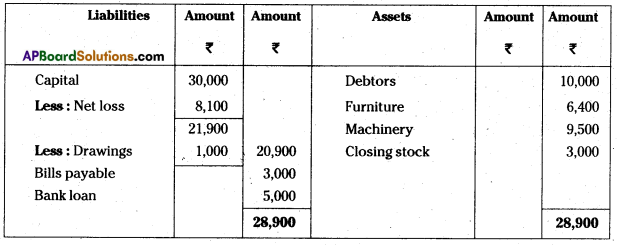
  8. It is manifest in the form of rights.
  9. It does not mean license to do whatever a person wants. It is always subject to limitations.

Question 4.
Describe the different aspects of Liberty.
Answer:
Meaning:
The term Liberty is derived’from the Latin word “LIBER” which means free from restraints.

Definition :
“Liberty means the absence of restraints”.

Aspects of Liberty :
Liberty has two aspects – Negative and Positive.

1. Negative aspect:
Liberty, in its negative aspect, implies absence of restrictions. Individuals enjoy freedom only when there are no restraints on their freedoms. However, some considered this aspect as not realistic. They asserted that unrestrained liberty was possible in a pre-social state. It is neither feasible nor practicable for enjoying freedoms by the individuals in modem times.
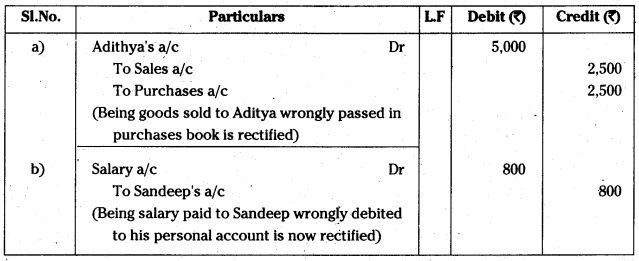
2. Positive aspect:
Liberty in its positive aspects denotes a situation in which individual is free to do according to his wishes and allowing others the same in his case. To say in other words liberty is the power which should not cause harm to others. T.H. Green, an idealist philosopher, propounded this aspect of liberty. He stated thus “Liberty is the power of doing or enjoying something that is worth doing or worth enjoying in common with others”.
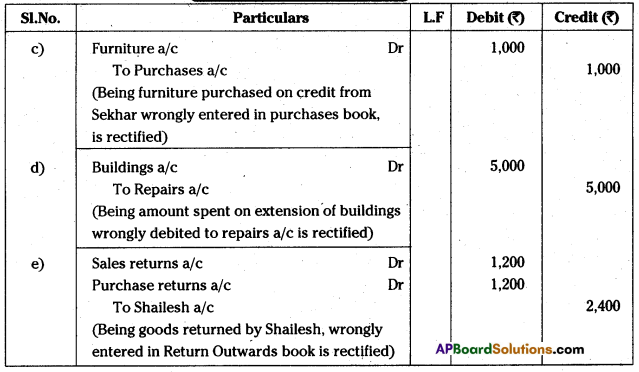
Question 5.
What do you mean by Civil Liberty?
Answer:
Civil liberty is also known as personal liberty. It relates to the individual’s freedom in his life as a member of the social organisation. It is enjoyed by the individuals in the society. Civil liberty is the essential pre-requisite to the existence and survival of human beings. It enables them to lead happy, honourable and civilised life in the state. So it is a must to every one. The state recognises the various freedoms of individuals. In this regard Gettle said thus “Civil liberty is the group of rights recognised and implemented by the state”. The constitution of the America and the India have in corporated civil liberty in the form of fundamental rights. Civil liberty is manifested in several rights. These include A) Right to Life B) Right to Work Q Right to Property D) Right to Religion E) Right to Speech, Expression, Assembly, Movement and Residence etc.

AP Inter 1st Year Civics Study Material Chapter 5 Liberty and Equality

Question 6.
Point out two elements that threaten individual’s Liberties.
Answer:
Liberty is an essential condition without which man cannot develop his personality. Even though the liberty is safeguarded by several ways, there prevails some elements which threatens the Liberty of individuals in modem times. They are as follows :

1. Enhancement of state authority:
The modem democratic state, in the pretext of welfarism has assumed undefinable powers. As a result, it has been intruding into every activity of the people. Even its interference in family matters in the name of population correctives became common. So is the case in the sphere of economy, culture, arts, science etc. All this will lead to the encroachment of state into the public domain. This negated individual liberty to a great extent.

2. Too many Liberty and Equalitys :
In modem times people felt the government should come to their rescue for providing various amenities. This prompted the government to encroach into the sphere of individuals. In the process, too many Liberty and Equalitys have become the order of the day. Extension of Liberty and Equalitys gradually led to the curtailment of individual liberties.

3. Negative attitude :
In democracy, the government informs the people about its policies and responds to the public opinion. In the process there is eveiy possibility of distorting public opinion by the concerned persons on the government. We could notice this tendency in several states of the worlds including India.

4. Tyranny of majority :
Individual liberty is ressed by the tyranny of majority. The party in power, through its majority members support in the legislature, makes Liberty and Equalitys without considering the wishes and aspirations of the people. Such a situation will be dangerous to individual liberties. Citizens must not vote to such a party in power or the opposition as in Indian government in the coming elections.

Question 7.
What is meant by Equality?
Answer:
The concept of Equality is of great significance in the study of political science. The term ‘Equality’ became an important slogan and inspired the people of France, America, Russia and India during their struggle for freedom and independence.

The term “Equality” implies absolute equality of treatment. In political science the term Equality refers to a state which grants its citizens equality before the Liberty and Equality and equal opportunities to develop their personality.

Definitions:

  1. “Equality means first of all the absence of special privilege. In the second place “It means that adequate opportunities are laid open to all”. – H.J. Laski
  2. “Equality implies equal rights for all the people and abolition of special rights and privileges”. – Barker

Question 8.
Describe any three aspects of Equality.
Answer:
The concept of equality has mainly two aspects-Positive and Negative. Equality, in its positive aspect, means the provision of adequate opportunities for all. However, it does not mean simply identical treatment for all. Since individuals differ in their needs and capacities, they require different opportunities for their personal development. Individuals should be given such opportunities which will develop their overall personality. If the state provides adequate opportunities to all for developing the capacities, the concept of equality could be realised in practice.

Equality in its negative sense, means no discrimination on some artificial grounds based on caste, colour, creed, descent, domicile, religion, etc. Everyone should get his due share. He should be in a position to realize his best self. Laski says that “Whatever rights herein in another by virtue of his being a citizen must be herein, and to the same extent in me also”. Everyone should have an equal access to the avenues of their Liberties.

Question 9.
What is Equality? Explain any three types of equality. [A.P. 19, 15]
Answer:
Meaning and explanation of Equality:
The concept of Equality is of great significance in the study of political science. The term ‘Equality’ became an important slogan and inspired the people of France, America, Russia and India during their struggle for freedom and independence.

The term “Equality” implies absolute equality of treatment.

In Political science, the term ‘Equality’ refers to a state which grants its citizens equality before the Liberty and Equality and equal opportunities to develop their personality. But it may be noted that individuals are not equal in many respects. While some of them are strong, some others may be weak. Similarly some are more intelligent than others. In this way, men differ in many respects. Hence, equality of treatment is not possible. In other words, it implies that State should grant to its citizens equality before Liberty and Equality and equal protection by Liberty and Equality.

Definitions:

  1. “Equality means first of all the absence of special privilege. In the second place “It means that adequate opportunities are laid open to all”. – H.J. Laski
  2. “Equality implies equal rights for all the people and abolition of special rights and privileges”. – Barker

Types of equality :
There are many types of equality. They may be analysed in the following.

1. Natural equality:
This kind of equality existed in the “State of Nature”. It is based on the principle that nature has created everyone as equal. But natural equality exists no where in the world. Nature has not created all people with the same qualities. So by natural equality we generally mean the provision of equal opportunities to all. It implies the abolition of man-made and artificial inequalities.

2. Political equality:
Political equality is an important kind of equality. It means that all citizens will have equal access to the avenues of authority. All of them possess the same political rights, an equal voice in government and equal right to hold public offices. It may be noted that political equality is enjoyed by the citizens only. It is not given to aliens and foreign nationals living in a state. Citizens have to utilise the opportunities given by political equality with great case, farsighted outlook and broad-mindedness. Then only political equality brings the required fruits. Then only political equality brings the required fruits. Political equality prevails and flourishes when all citizens were provided with political rights like Right to vote, Right to contest elections, Right to make petitions and Right to criticism. That means political equality flourishes only in democratic countries.

3. International equality:
International equality means that all the states are treated equally irrespective of their geographical, economic or military composition. According to this element all nations of the world are equal whether they are large or small. For instance, the United Nations have extended equal dignity and status to all the nations in its Charter. International Equality reflects the traits of humanism. It emphasizes the peaceful settlement of disputes between the nations. Some cautioned about the occurrence of Third World War in the absence of respect to international Liberty and Equality. They expressed apprehensions thinking that human beings will go back to the stone ages.

AP Inter 1st Year Civics Study Material Chapter 5 Liberty and Equality

Question 10.
Write about Political Equality.
Answer:
Political equality is an important kind of equality. It means that all citizens will have equal access to the avenues of authority. All of them possess the same political rights, an equal voice in government and equal right to hold public offices. It may be noted that political equality is enjoyed by the citizens only. It is not given to aliens and foreign nationals living in a state. Citizens have to utilise the opportunities given by political equality with great case, farsighted outlook and broad-mindedness.

Then only political equality brings the required fruits. Then only political equality brings the required fruits. Political equality prevails and flourishes when all citizens were provided with political rights like Right to vote, Right to contest elections, Right to make petitions and Right to criticism. That means political equality flourishes only in democratic countries.

Question 11.
Discuss the importance of Economic Equality.
Answer:
Economic equality is considered as the basis of social and political equalities. It serves as the main driving force behind all activities in the modern state. Economic equality means the elimination of vast inequalities in income, property and wealth. Earnest Barker viewed thus “Economic equality is purely a matter of status and partially a matter of property and income”. Lord Bryce viewed “Economic Equality” as The attempt to expunge all differences in wealth, allotting every man and women an equal share in the worldly goods”.

Prof. Laski held thus “Economic Equality implies the abolition of unfettered and irresponsible will in the industrial world”. At the same time, economic equality does not mean equal treatment and reward. It stands for opportunity to work and earn their livelihood to improve their economic status. This can be achieved only through individuals and government. Many socialist states have tried and partially succeeded in achieving economic equality.

Very Short Answer Questions

Question 1.
Give any two definitions of Liberty.
Answer:

  1. “Liberty means the absence of restraints”. – J.R. Seeley
  2. “Liberty is the freedom of an individual to express without any external hindrance to his personality”. – G.D.H. Cole

Question 2.
What do you know about positive aspect of Liberty?
Answer:
Positive aspect:
Liberty in its positive aspects denotes a situation in which individual is free to do according to his wishes and allowing others the same in his case. To say in other words liberty is the power which should not cause harm to others. T.H. Green, an idealist philosopher, propounded this aspect of liberty. He stated thus “Liberty is the power of doing or enjoying something that is worth doing or worth enjoying in common with others.

Question 3.
List out any four characteristics of Liberty.
Answer:
Characteristics of Liberty: The following are the important characteristics of Liberty.

  1. Liberty is a dynamic concept. Its interpretation varies according to time, place and wishes of the people.
  2. Liberty always opposes political subjugation, imprisonment and slavery.
  3. It always aims at realizing the aspirations of the individuals.
  4. Liberty always means absence of irrational restraints and presence of favourable conditions.
  5. It is the product of rights.

AP Inter 1st Year Civics Study Material Chapter 5 Liberty and Equality

Question 4.
Mention the names of four types of liberty.
Answer:
Liberty is of in the following types namely :

  1. Natural liberty
  2. Civil liberty
  3. Economic liberty
  4. Political liberty and
  5. National liberty.

Question 5.
What is Civil Liberty?
Answer:
Civil liberty is also known as personal liberty. It is the essential pre requisite to the existence and survival of human beings. It enables them to lead happy, honourable and civilised life in the state. Civil liberty is manifested in several rights like A) Right to Life B) Right to Work C) Right to Property D) Right to Religion E) Right to Speech, Expression, Assembly, Movement and Residence etc.

Question 6.
Write about Political Liberty.
Answer:
Political liberty facilitates the citizens to take part in the political affairs of the state. Political liberty is confined to the citizens alone. Political liberty provides several rights like i) Right to vote ii) Right to contest as candidates in elections iii) Right to hold public offices iv) Right to criticism etc.

Question 7.
Is it possible to achieve complete Economic Liberty?
Answer:
It is possible to achieve complete economic liberty if the following measures are taken.

  1. Provision of minimum wages.
  2. Guarantee of the right to work.
  3. Protecting the workers from unemployment, sickness and other types of insecurity.
  4. Giving representation to the workers in the management of the industries.

Question 8.
What is Economic Liberty? [A.P. & T.S. Mar, 15]
Answer:
Economic liberty means the right of every one to earn his livelihood. Economic liberty ensures everyone freedom from want and fear, hunger and starvation, unemployment and insufficiency. It will be secured by adopting the following measures.

  1. Provision of minimum wages.
  2. Guarantee of the right to work.
  3. Protecting the workers from unemployment, sickness and other types of insecurity.
  4. Providing adequate leisure etc.

Question 9.
What do you know about National Liberty?
Answer:
National Liberty implies the Freedom and Independence of the state. It also denotes the sovereignty of the state. Every state enjoys this liberty and remains free from the political domination of other states. Ex: The Indian masses under the leadership of Mahatma Gandhi waged a non-violent struggle to secure National Freedom from the British Rule.
Question 10.
Mention any four safeguards of Liberty.
Answer:

  1. Democratic rule
  2. Written and rigid constitution
  3. Independent judiciary
  4. Rule of Liberty and Equality
  5. Fundamental rights

Question 11.
Write about Independent-Judiciary as a safeguard of Liberty.
Answer:
Independent judiciary:
An independent and impartial judiciary is another safeguard of individual liberty. The judiciary will uphold the constitution and keeps the government accountable to the people. It prescribes various safeguards for protecting the fundamental rights of citizens. The judges in higher courts will deliver justice to the people on fair, free and impartial manner. Prof. Laski, while recognizing this safeguard, stated that good governance depends upon the effective functioning of judiciary.

AP Inter 1st Year Civics Study Material Chapter 5 Liberty and Equality

Question 12.
What is Equality?
Answer:
According to H.J. Laski “Equality means first of all the absence of special privilege. In the second place “It means that adequate opportunities are laid open to all”.

Question 13.
Mention the different implications of Equality.
Answer:
The following are the major implications of equality. They are :
a) There should not be any special privileges to any individual or a group of individuals.

b) People must be provided with adequate opportunities to develop their personalities.

c) There should not be any discrimination among the people on the grounds of religion, caste, creed, colour, place of birth etc. However, some discrimination may be made on the basis of reasonable grounds i.e., protective discrimination.

Question 14.
What are the aspects of Equality?
Answer:
The concept of equality has mainly two aspects – Positive ad Negative. Equality in its positive aspect, means the provision of adequate opportunities for all. Equality in its negative sense, means no discrimination on some artificial grounds based on caste, colour, creed, descent, domicile, religion etc.

Question 15.
Write about any two features of Equality.
Answer:
The following are the essential features of equality.
1. Equality not given by nature :
Equality is not given by nature. Absolute equality is now here to be found. All individuals are bom in the same circumstances. Human beings are not like standard commodities which are coming out of a factory. Every individual has his own point of strength and weakness peculiar to his personality. No two individuals remain exactly like each other. Practically, individuals are not equal.

2. Equality not absolute:
Equality is not absolute. Absolute equality is neither possible nor desirable. In no movement in the history of the world did individuals claim to have absolute equality. So, equality does not mean uniformity and differences does not mean inequality.

Question 16.
Mention the different forms of Equality.
Answer:
Equality is of the different forms like

  1. Natural equality
  2. Social equality
  3. Economic equality
  4. Political equality and
  5. International equality.

Question 17.
Explain Natural Equality.
Answer:
Natural equality:
This kind of equality existed in the “State of Nature”. It is based on the principle that nature has created everyone as equal. But natural equality exists no where in the world. Nature has not created all people with the same qualities. So by natural equality we generally mean the provision of equal opportunities to all. It implies the abolition of man-made and artificial inequalities.

Question 18.
What do you mean by Social Equality?
Answer:
Social equality stands for equality of status and absence of class distinctions and discriminations. It exists when no individual is made to suffer on account of his caste, class, colour, creed, race etc. In fact it has opposed the practice of untouchability.

Question 19.
What is meant by Political Equality?
Answer:
Political equality implies the provision of adequate conditions for the people in the political affairs of the state. It is enjoyed by the citizens only. It could be achieved by granting various political rights such as

  1. Right to vote
  2. Right to contest in elections
  3. Right to hold public offices
  4. Right to criticise the government etc.

AP Inter 1st Year Civics Study Material Chapter 5 Liberty and Equality

Question 20.
Mention the measures adopted for achieving Economic Equality.
Answer:
The following measures are adopted for achieving Economic Equality.

  1. Provision of adequate means of employment
  2. Implementation of land reforms
  3. Providing housing facilities to the poor
  4. Provision of free education to the poor
  5. Provision of minimum wages etc.

AP Inter 1st Year Civics Study Material Chapter 4 Law

Andhra Pradesh BIEAP AP Inter 1st Year Civics Study Material 4th Lesson Law Textbook Questions and Answers.

AP Inter 1st Year Civics Study Material 4th Lesson Law

Long Answer Questions

Question 1.
Define Law. Explain its various sources.
(or)
Question 2.
What is meant by law? Discuss the various sources of law.
Answer:
Introduction :
Law is an important concept in the study of political science. It is an important feature of the modem state. Law regulates the external behaviour of individuals. It determines and regulates the nature of individual’s activities.

Individual’s life, social order, political system, economic transactions, cultural activities etc., remain paralysed in the absence of laws.

It is due to the deterioration of legal system that public life, governmental organisations, and state activities were affected to a great extent in some contemporary states. Afghanistan, Iraq, Nigeria, Somalia, Soviet Union, Ukraine, Yemen, Palestine etc., are some examples of such states.
Meaning :
The term “Law” is derived from the Teutonic (German) word “Lag” which means “To Lay”, “To Set” or something fixed.

The second dimension is that the word “Law” had its roots in the Latin words “Jus and Jungere” which means bond or Tie.

Definitions:
Political thinkers defined law in different ways which are listed below :

  1. “Law is the command of the sovereign”. – John Austin
  2. “Law is the system of rights and obligations which the State enforces”. – T.H. Green
  3. “Law is a general rule of external action enforced by the sovereign political authority”. – T.E. Holland
  4. “Law is a body of rules which the State recognises and applies in the administration of Justice”. – John Salmond

Sources of Law :
Law is a product of history. It has passed through various stages of development. Several elements have contributed to its evolution. In Legal sense, the state is the main source of law. Professor T.E. Holland mentioned six sources of Law. They are

  1. Customs
  2. Religion
  3. Judicial Decisions
  4. Scientific Commentaries
  5. Equity and
  6. Legislature.

1) Customs, Practices, and Traditions:
These are one of the important sources of law. In primitive societies, there were no laws in written form. All disputes were settled in accordance with social customs and traditions. Customs regulated the social life in the early societies. Customs and traditions cannot be laws in political sense. But, when the State recognises certain traditions, they in turn become laws. For example, the laws relating to marriage, divorce etc., found in our Country are based on traditions, the common law of England.

2) Religion :
In ancient times customary laws and religious laws were intermixed. The religious teachers enjoyed unlimited powers in those times. Their decisions were treated on par with laws. The primitive men believed that the judgements of the religious teachers had divine sanction. The ancient Roman laws were merely the religious laws. The Hindu and Muslim laws derived inspiration mainly from religion.

3) Judicial Decisions/Adjudication/Judgement of the Courts :
The judgements of the judges also serve as a source of law. Generally, judges interpret laws, apply them to particular cases and deliver judgements. Their judgements become precedents and are usually followed by other judges in similar cases. In course of time such judgements acquire the status of law. In this way, judges add to the law of the country. There are many instances that new laws have evolved by way of interpretation. Many of the laws in Britain, America, and India have originated from the judgements of the Judges of the respective countries.

4) Scientific Commentaries :
These are the works of great Jurists. The views of the Jurists expressed in their works also act as and important source of law. The Jurists collect and compare the past customs and laws with those of the present. While doing so, they point out the defects in the existing laws and suggest ways for their improvement. The views of the Jurists however, do not become laws. But, they become laws when they are recognised by the courts. For example, the writings of Coke and Black Stone in the U.K. are held in high esteem. The same is the position of Story and Kent in America and the Vignaneswara and Apararka in India.

5) Equity:
Equity means fairness or justice. It is also a kind of Judge – made law. It is an informal method Of making a new law or altering an old law to new conditions. Some-times, the courts may be confronted with the disputes about which the law is silent. Under such situation, the Judge will give relief to the aggrieved party by using principles of social justice and humanism common-sense. In course of time, they acquire the status of law. In equity, Judge is adding to the law what is missing therein and creating a new one.

6) Legislature :
This is the most important and direct source of law. Most of the laws now-a-days are made by the legislatures. Hence, legislatures are regarded as “Law-Making Factories”. They frame new laws, amend the existing laws and if necessary, abolish old laws. The other sources of Law have been replaced by the legislature. This, however, does not mean that they have no role to play in influencing laws. While framing laws, the legislators bear in mind the customs, religious practices, judicial decisions etc.

AP Inter 1st Year Civics Study Material Chapter 4 Law

Question 3.
Explain Maclver’s classification of Laws.
Answer:
Meaning :
The English word Law’ originates from the ancient Teutonic word ‘Lag’ which means “something that lies fixed or uniform”.

Definitions :

  1. “Law is the command of the sovereign”. – John Austin
  2. “Law is a general rule of external action enforced by the sovereign political authority”. – T.E. Holland

Classification of Law:
Many political philosophers gave their classifications on laws in different ways, of them the classification given by Maclver is mention worthy.

Law is mainly classified into two types namely i) Natural Law ii) Positive Law.
Law is further divided into National Law and International Law.
National Law is further grouped into constitutional law and ordinary law.
Ordinary Law is again classified into public law and private law.

Public Law is further divided into Administrative Law and general law. General law is divided into statutory law, case Law and common law.

The above classification of Law can be explained in the following points.

1) Natural Law :
Natural Law is also known as divine law. It is abstract. It is not created by any human agency. It is considered as the gift of nature based on metaphysical power. It refers to the use of reason to analyse human nature. It is written in the heart of human beings by the finger of God.

2) Positive Law :
Positive Law is created by the human Agency. It is also known as political law. It is framed on the basis of the existing social and political conditions. It is sanctioned by the Sovereign Political Authority. Violation of positive law leads to punishment.

Positive Law is further classified into two categories – A) National Law and B) International Law.

A) National Law :
National Law is also known as law of the state. It confines to the territorial limits of the state. It is enforced by the sovereign, is applicable to all the people in a state. It is enforced by the sovereign, is applicable to all the people in a state.

B) International Law :
International Law is one which regulates the cordial relations among various states. National Law is further divided into two categories
i) Constitutional Law and
ii) Ordinary Law.

i) Constitutional Law:
It is a basic law of any state. It defines the political system. All the basic principles of administration are included in this type. All other laws in the state are subservient to constitutional law. It is framed by the constituent assembly.

ii) Ordinary Law :
It determines the relation between the state, administration and people. These laws are framed by a group of officials authorised by law. Ordinary law is further divided into
A) Public law and
B) Private law.

A) Public Law :
It regulates the relation between people and state. These laws are formulated by state for society.

B) Private Law :
It regulates the relation between citizens. It protects the rights of citizens. It is also called civil law.

Public Law is further divided into i) Administrative Law and ii) General Law.

C) Administrative Law:
It regulates the administrative relations between the authorities and people. Administrative law brings discipline among the personnel in the government. Now it is implementing in France and India.

D) General Law :
It deals with the private affairs of individual in relation to the state. It covers the laws relating to marriage, divorce, contract etc. General Law is further classified into
i) Statutory law
ii) Common law.

i) Statutory Law:
Statutory law is the greater part of modem law. It is enacted by the Legislature of a state for the day to day administration. Ex : The Parliament in India, the Congress in United States, and Parliament in Britain formulate this type of law.

ii) Common Law :
Common law is a customary law. It is a product of customs and traditions which are popular among the people. The courts accept common law as a part of the legal system.

Question 4.
Explain the relationship between Law and Liberty.
Answer:
Law and Liberty are the two fundamental concepts in political science. These two concepts are interdependent. There is no unanimity of opinion among political philosophers in regard to the relation between Law and Liberty.

There are two different schools which gave contradictory opinions. One school of thought believed that Law and Liberty are antithetical to each other. The other school of thought believed that Law and Liberty are inter-related to each other. Let us explain the two versions.

i) Law and Liberty are Antithetical :
Individualists like J.S.Mill, Herbert Spencer, David Ricardo, Adam Smith believed that law always restricts the activities of human beings. The State is the principal agency which destroys individual’s liberties. It will not “allow the citizens to take active part in the affairs of State and Government. Similarly, it becomes a hurdle in performing the economic activities of the Nation. The recent liberalised economic policies in many countries changed the pace of their economies. These policies enabled the people to freely participate in economic activities. Therefore, individualists believed that state is a necessary evil institution. They stated that the Government is the best which governs the least. Therefore Law and Liberty are antithetical to each other.

ii) Law and Liberty are complementary :
The socialists and communists believed that Law and Liberty are complementary to each other. They regarded the State as a welfare agency. Law imposes restrictions essential for the social welfare. It is a fact that the capitalist class exploited the working class. The State shall eradicate the evils of exploitation by making necessary laws.

The idealists believed that State is a Moral Agency The State represents the general will of the community. Individuals will be free when they obey the laws of the State. Moussolini gave a slogan “Nothing against the State”. Law always protects the interests of the people. Therefore both the concepts of Law and Liberty are complementary to each other.

Short Answer Questions

Question 1.
Define Law and mention the features of law.
Answer:
Law is an important concept in the study of political science. It is an important feature of Modern State. Law regulates the external behaviour of individuals.

Meaning:
The term “Law” is derived from the Teutonic word “Lag” which means something fixed.

Features of Law :
The following are some important features of law.

  1. Law comprises some rules and regulations which are approved by the Sovereign.
  2. It is enforced by the State. It is valid because it is sanctioned by the State.
  3. It is definite, precise and universal.
  4. It reflects the will of the people.
  5. Any violation of law leads to punishment.
  6. Laws are compulsory and cohesive in nature.
  7. Law aims at securing and promoting the individual and general welfare.
  8. Law is dynamic as it goes on changing according to the needs of the people.

AP Inter 1st Year Civics Study Material Chapter 4 Law

Question 2.
Discuss different kinds of law.
Answer:
Many political philosophers gave their classifications on laws in different ways. Of them the classification given by Maclver is mentioned worthy which can be explained in the following points.

1. Natural Law :
Natural law is also known as divine law. It is abstract. It is not created by any human agency. It is considered as the gift of nature, based on metaphysical power. It refers to the use of reason to analyse human nature. It is written in the heart of human beings by the finger of God.

2. Positive Law :
Positive law is created by the human agency. It is also known as political law. It is framed on the basis of the existing social and political conditions. It is sanctioned by the Sovereign Political Authority. Violation of positive law leads to punishment.

3. Constitutional Law:
It is a basic law of any state. It defines the political system. All the basic principles of administration are included in this type. All other laws in the State are subservient to constitutional law. It is framed by the constituent assembly.

4. Ordinary Law :
It determines the relation between the State, Administration and people. These laws are framed by a group of officials authorised by law.

5. Public Law :
It regulates the relation between people and state. These laws are formulated by State for Society.

6. Private Law :
It regulates the relation between citizens. It protects the rights of citizens. It also called civil law.

7. Administrative Law:
It regulates the administrative relations between the authorities and people. Administrative law brings discipline among the personnel in the government. Now it is implementing in France and India.

8. General Law:
It deals with the private affairs of individual in relation to the State. It covers the laws relating to Marriage, Divorce, Contract etc.

9. Statutory Law:
Statutory law is the greater part of modem law. It is enacted by the Legislature of a State for the day to day Administration.

10. Common Law :
Common law is o customary law. It is a product of customs and traditions which are popular among the people. The courts accept common law as a part of the legal system.

Question 3.
Write about any three sources of Law.
Answer:
Definitions:
The English word ‘Law’ originates from the ancient Teutonic word ‘Lag’ which means “something that lies fixed or uniform”. Political thinkers defined law in different ways which are listed below :

  1. “Law is the command of the sovereign”. – John Austin
  2. “Law is the system of rights and obligations which the State enforces”.- T.H. Green

Sources of Law:
1) Customs, Practices, and Traditions:
These are one of the important sources of law. In primitive societies, there were no laws in written form. All disputes were settled in accordance with social customs and traditions. Customs regulated the social life in the early societies. Customs and traditions cannot be laws in political sense. But, when the State recognises certain traditions, they in turn become laws. Ex: The laws relating to marriage, divorce etc., found in our Country are based on traditions, the common law of England.

2) Religion :
In ancient times customary laws and religious laws were intermixed. The religious teachers enjoyed unlimited powers in those times. Their decisions were treated on par with laws. The primitive men believed that the judgements of the religious teachers had divine sanction. The ancient Roman laws were merely the religious laws. The Hindu and Muslim laws derived inspiration mainly from religion.

3) Judicial Decisions / Adjudication / Judgement of the Courts :
The judgements of the judges also serve as a source of law. Generally, judges interpret laws, apply them to particular cases and deliver judgements. Their judgements become precedents and are usually followed by other judges in similar cases. In course of time such judgements ac- quire the status of law. In this way judges add to the law of the country. There are many instances that new laws have evolved by way of interpretation. Many of the laws in Britain, America and India have originated from the judgements of the Judges of the respective countries.

Question 4.
Distinguish between Law and Morality.
Answer:

LawMorality
1) Law is concerned with the external behaviour of individuals.1) Morality is concerned with the whole life of individuals.
2) Law is a concern of the State.2) Morality is concerned with individual conscience.
3) Law is backed by the coercive power.3) Public opinion and individual conscience lie behind morality.
4) Law is definite and precise.4) Morality is vague and uncertain.
5) Law acts within the Territory of a State.5) Moral principles are universal in Nature.
6) Law is enacted with a specific objective.6) Moral principles are inherent in Society.
7) Laws are sanctioned by the Sovereign.7) Moral principles are sanctioned by the society.
8) Law is the subject matter of political science.8) Moral principles are the subject matter of ethics.
9) Violation of law leads to punishment.9) Violation of moral principles does not leads to punishment.
10) There is a definite agency to make and implement the law.10) There is no such agency in the case of moral principles.

Question 5.
“Law and Liberty are Antithetical” – Analyse this statement
Answer:
Individualists like J.S.Mill, Herbert spencer, David Ricardo, Adam Smith believed that law always restricts the activities of human beings. The state is the Principal Agency which destroys individual liberties. It will not allow the citizens to take active part in the affairs of State and Government. Similarly, it becomes a hurdle in performing the economic activities of the nation.

The recent liberalised economic policies in many countries changed the pace of their economies. These policies enabled the people to freely participate in economic activities. Therefore, individualists believed that state is a necessary evil institution. They stated that the Government is the best which governs the least. Therefore law and liberty are antithetical to each other.

AP Inter 1st Year Civics Study Material Chapter 4 Law

Question 6.
How Law and Liberty are complementary?
Answer:
Law and Liberty are the two fundamental concepts in political science. These two concepts are interdependent. The socialists and communists believed that Law and Liberty are complementary to each other. They regarded the State a Welfare Agency. Law imposes restrictions essential for the social welfare. It is a fact that the capitalist class exploited the working class. The state shall eradicate the evils of exploitation by making necessary laws.

The idealists believed that state is a moral agency. The state represents the general will of the community. Individuals will be free when they obey the laws of the state. Mussolini gave a slogan “Nothing against the State”. Law always protects the interests of the people. Therefore both the concepts of law and liberty are complementary to each other.

Question 7.
In what way are law and morality related to each other?
Answer:
Law and morality are considered as the basic pillars of social institutions. The two elements play a vital role in the maintenance of peace, security and prosperity in society. They have different versions with common objective. They are interrelated and interdependent. Some political philosophers believed that law and morality are one and the same. In this context R. G. Gettle stated thus “Law and Morality were both identical. Both arise as a result of habits and experience in primitive social life when moral and social lives were not separate. Inspite of certain differences, Law and Morality are meant for common welfare. Both deal with individual as a moral agent of society. Ex : In ancient India the term “Dharma” denotes both law and morality. The Greek political philosophers identified the two as same.

Very Short Answer Questions

Question 1.
Explain the origin of the term “Law”. [A.P. 2019]
Answer:
The term “LAW’ is derived from the Teutonic route (German) “Lag” which means “To Lay”, “To Set” or something fixed. The second dimension is that the word “Law” had its roots in the Latin Words “Jus and Jungere” which mean bond or tie.

Question 2.
Write any two definitions of Law.
Answer:
Political thinkers defined law in different ways which are listed below.

  1. “Law is the command of the Sovereign”. – John Austin
  2. “Law is the system of Rights and obligations which the state enforces”. – T.H. Green

AP Inter 1st Year Civics Study Material Chapter 4 Law

Question 3.
What are the features of Law?
Answer:
The following are some important features of law

  1. It is enforced by the State.
  2. It is definite, precise and universal.
  3. It reflects the will of the people.
  4. Laws are compulsory and cohesive in nature.
  5. Any violation of law leads to punishment.

Question 4.
Define the term “Rule of Law”. [A.P. 19, 15; T.S. 17, 15]
Answer:
Rule of Law is an important type of administration of justice. It originated in England. It implies :

  1. Legal Equality : All are equal before law.
  2. No Arbitrary Action : Punishment is given only when an existing law is violated.
  3. No Special Rights : No individual is above law and law does not recognise any special privileges.

Question 5.
What is Natural Law?
Answer:
Natural Law is also known as Divine Law. It is abstract. It is not created by any human agency. It is considered as the gift of nature, based on metaphysical power. It refers to the use of reason to analyse human nature. It is written in the heart of human beings by the finger of God.

Question 6.
What do you mean by Administrative Law?
Answer:
Administrative law plays an important role in the smooth functioning of administration. It regulates the administrative relations between the authorities and people. It helps the Government to bring reforms in the sphere of development and welfare programmes. Administrative law brings discipline among the personnel in the Government. Now it is implementing in France and India.

Question 7.
Write any three sources of Law. [T.S. 2017]
Answer:
Professor T.E. Holland mentioned six sources of law. They are

  1. Customs
  2. Religion
  3. Judicial decisions
  4. Scientific commentaries
  5. Equity and
  6. Legislature.

Question 8.
What is Constitutional Law? [A.P. Mar. 18]
Answer:
The basic law according to which the Government in a State is conducted is called constitutional law. It defines the political system. It is usually prepared by a body known as Constituent Assembly, formed only for that purpose. All other laws in the State are subordinate to this law. It also contains fundamental rights and fundamental duties.

Question 9.
Define Public Law.
Answer:
Public law regulates the relations between state and individuals. It explains the basic structure and functions of the State. It covers the basic rights of the individuals against the interference of the State. It must be followed by the citizens. Its violation leads to punishment.

Question 10.
Define the term Equity.
Answer:
Equity means fairness or justice. It is also a kind of Jude – Made law. It is an informal method of making a new law or altering an old law to new conditions. Sometimes, the courts may be confronted with the disputes about which the law is silent. Under such situation, the Judge will give relief to the aggrieved party by using principles of social justice and humanism common-sense. In course of time, they acquire the status of law. In equity Judge is adding to the law what is missing therein and creating a new one.

Question 11.
What do you mean by Scientific Commentaries?
Answer:
These are the works of great Jurists. The views of the Jurists expressed in their works also act as an important source of law. The Jurists collect and compare the past customs and laws with those of the present. While doing so, they point out the defects in the existing laws and suggest ways for thier improvement. The views of the Jurists however, do not become laws. But, they become laws when they are recognised by the courts. Ex : The writings of Coke and Black Stone in the U.K. are held in high esteem. The same is the position of Story and Kent in America and the Vignaneswara and Apararka in India.

Question 12.
What is the role of Legislature in law making Laws?
Answer:
This is the most important and direct soruce of law. Most of the laws now-a-days are made by the legislatures. Hence, legislatures are regarded as “Law-making Factories”. They frame new laws, amend the existing laws and if necessary, abolish old laws. The other sources of law have been replaced by the legislature. This, however, does not mean that they have no role to play influencing laws. While framing laws, the legislators bear in mind the customs, religious practices, judicial decisions etc.

AP Inter 1st Year Civics Study Material Chapter 4 Law

Question 13.
What is meant by Statutory Law?
Answer:
Statutory law is an important part of modem law. it is enacted by the legislature of a state for the day to day administration. For instance, the Parliament in India, the Congress in United States and Parliament in Britain formulate this type of law.

AP Inter 1st Year Civics Study Material Chapter 3 Nationalism

Andhra Pradesh BIEAP AP Inter 1st Year Civics Study Material 3rd Lesson Nationalism Textbook Questions and Answers.

AP Inter 1st Year Civics Study Material 3rd Lesson Nationalism

Long Answer Questions

Question 1.
Define Nationality. Explain the Essential Elements of Nationality.
Answer:
Introduction :
The concepts of Nation and Nationality have become important components in the domain of International Relations and political science respectively. Both inspired the people of several countries with patriotic feeling prior to the two world wars.

The Events that took place in the erstwhile Soviet Union, ethnic Riots between Serbians and croatians in the former Yugo slavia, the unification of East and west Germanies, the peace talks between Israel and Palestine Liberation Organization (PLO) on West Asia etc., reflect the serious concern of the people for realising Nationality and Nation States.
Meaning :
The Word “Nation” is derived from a latin word “NATIO” which means “BORN” (BIRTH) or “Common Descent”.

Definitions :
1. R.G. Gettle:
“Nationality is a population having the common bonds of Race, Language, Religion, Traditions and History.

2. J.H. Rose :
“Nationality is a union of Hearts once made and never unmade”.

3. J.W. Garner:
“Nationality is a group or portion of population which is united by Racial and other bonds”.

Essential Elements of Nationality :

1) Purity of Race :
Racial purity helps in the formation and strengthening of the idea of Nationality. Race is a physical phenomenon. It depends on certain distinctions of skull, stature, hair, complexion etc. These distinctions serve as a cementing bond among the members of a group.

But we should remember that common race is not an indispensable factor in the growth of Nationality. Modem races are so mixed that none of them can claim to be pure. Pure races have disappeared because of wars and migrations. Racial purity is now a myth only.
Ex : Canada and United states have transformed into single nations inspite of their racial diversities in their respective populations. Similarly, Australia and Britain are two distinct Nations although they belong to one racial stock.

2) Common Language :
Language plays a key role in the promotion of nationality. The philosophers and scientists said that common language is essential for the development of nationality. Language is a medium to express all their feelings. It helps to express one’s ownselves to have cordial relations and to share the miseries and happiness in a group languages also promotes common feelings and traditions. Common language promotes the feeling of oneness and keeps the entire race on single track.

3) Common Religion:
Religion is one important factor to strengthen nationality. There are many instances when people of different nationalities with common religion remain citizens in the same state. For instance, the main reason for the partition of Indian subcontinent into India and Pakistan in 1947 lies in the religion.

4) Geographical Unity :
Geographical unity is necessary for the emergence of nationality. Nationality sentiments prevail and develop among the people living in a single geographical area. The people residing in such an area love, worship their country and make sacrifices for the sake of their motherland. People, who belong to one religion, converse the same language, same race living in a geographical area inculcate- and improve their nationality sentiments. The formation of Israel in 1946 was purely due to the feelings of the hitherto wandering Jewish people to live in a single geographical area. Hence their desire of live in a territory made them united- This ultimately transformed them as patriotic persons.

5) Common History :
Common History is considered as an important element of Na-tionality. It invokes an inspiration among the people and binds them together. Some historical incidents may give a chance to the people to develop national sentiments. Ex : Indians have learnt the lessons of Nationalism from the British legacy.

6) Common Culture:
Culture in its broad sense means a way of life. It is reflected through certain common elements like dress, customs, conventions, food habits, religious beliefs, ethical values etc. They easily develop into a single Nation. These elements bind the people together and hold together.

7) Common Political aspirations :
Nationality sentiments prevail and develop among the people having common political aspirations. The political ideas, conventions, and institutions which were formed due to the single political rule will have a considerable impact and influence over the people. For instance, the Swiss people love very much their direct democratic devices in political matters. Similarly the Americans express the feeling of worship towards their constitution. The British people also feel proud of their political and judicial institutions like rule of law, parliamentary democracy and judicial review etc.

8) Common Economic ties:
This element of nationality has been stressed by ‘Karl Marx’. Since then onwards the importance of this element has been increasing. The Russians have great regard for their economic system, eventhough there exist diversities. Their unflinching love for socialism inspired nationalism among them. They successfully repulsed the attacks of Germany during the Second World War. Thus the common economic ties made them united and integrated them into a nation.

AP Inter 1st Year Civics Study Material Chapter 3 Nationalism

Question 2.
Discuss the relation between Nation and Nationalism.
Answer:
Introduction :
The concepts of Nation and Nationalism have become important components in the domain of International Relations and political science respectively. Both inspired the people of several countries with patriotic feelings prior to the two world wars.
Meaning :
The word “Nation” and “Nationalism” are used as complementary to each other.

The word Nation is derived from a latin word “NATIO” which means “BORN” (BIRTH) or “Common descent”.

Nation:
“Nation is a Nationality which has organised itself into a political body, either independent or desiring to be independent”.

Nationalism :
“Nationalism is a state of mind in which the supreme loyalty of the individual is felt to be due to the Nation state.”

Relationship between “Nation” and “Nationalism”:

  1. Nationalism is a psychological feeling prevailing in the minds of the people.
  2. People through the feeling of Nationalism sacrifice all their interests for the sake of their Nation.
  3. The strong desire of the people of a nationality to emerge as a nation state is nationalism.
  4. The seeds of nationalism originated in the cultural renaissance of Europe in 16th century.
  5. In French Revolution (1789) pushed the nationalism further in Europe and took to the great heights.
  6. The Vienna congress (1815) further supported the cause of nationalism in Europe.
  7. The Italian and German unifications boosted the cause of nationalism.
  8. The American War of Independence (1774) was a great leap forward in spreading nationalism among the people.
  9. The much publicized theory of Nation’s self-determination of Woodrow Wilson in 1917 was further generated hope among the people of the world to form Nation States.
  10. The two world wars completed to redraft the European map with the formation of Nation-states.
  11. The Freedom struggles and national aspiration of the people of the Asia, Africa, and Latin America are fulfilled with the formation of Nation states immediately after the end of II-World war.
  12. The Indian national movement from 1885 to 1947 had fulfilled with the formation of India and Pakistan as an Independent States.

In this regard, we can understand that the feeling of nationalism when it acquires unity and independence. It becomes a Sovereign Nation.
There were some writers who treated the two terms as synonymous.

Question 3.
Write a short note on demand for National Self-Determination.
Answer:
The theory of National self-determination was advocated by the former president of the United States of America, Woodrow Wilson in 1917. It was much publicized and generated hope among the people of the world to form Nation states.

From then onwards, Demands for National self-determination has been raising in different parts of the world. The Right to national self determination has also asserted the national liberation movements in Asia and Africa, when they were struggling against colonial rule. Nationalist movements maintained that political independence would ensure dignity and recognition to the colonised people. They also helped the people by protecting their collective interests. Many Nationalist movements were inspired by the goal of bringing justice and prosperity to the nation.

However, it proved almost impossible to ensure that each cultural group, which claimed to be a distinct nation, could acheive political independence and statehood. As a result, migration of people, border wars and violence have continued to plague many countries in the region. Thus we have the paradoxical situation of nation-states which themselves had acheived independence through struggle now acting against minorities with in their own territories which claim the right to national self-determination. Virtually every state in the world today faces the dilemma of how to deal with the movements of national self-determination and raised doubts about the right to national self-determination.

More and More people began realising that the solution does not lie in creating new states but in making existing states more democratic and equal. That is in ensuring that people with different cultural and ethmic indentives live and co-exist as partners (arising) and equal citizens with in the country. This may be essential not only for resolving problems arising out of new claims for self-determination but also for building a strong and United State.

Question 4.
Write a short note on “Whether India is a Nation”?
(or)
Explain breifly whether India is a Nation.
Answer:
Many western and oriental writers described that India is indeed a Nation. There are strong reasons to justify that India is a nation.

  1. Indians have a common history and culture.
  2. They have demonstrated their distinct qualities of National integration on many occassions.
  3. Indians have expressed their dedication to make unparalled and supreme sacrifices for the accomplishment of Independence.
  4. They fought unitedly against the foreign yoke under the leadership of Mahatma Gandhi.
  5. Although the people belong to different regions and provinces, they realised the basic fact that they are all first and fore most Indians. Then only, they owe indebtedness to their respective religions and languages.
  6. Some common elements concerning national anthem, national heritage, culture constitution and the government inspire the nationalist feelings and inculcate the national integration among the people.
  7. Indians demonstrated their distinct qualities of National integration on many occassions. During India’s Aggression by China and Pakistan, the Indians extended unequivocal support to the government.

Short Answer Questions

Question 1.
Briefly explain the essential elements of Nationality.
Answer:
Introduction :
The concepts of Nation and Nationality have become important components in the domain of International Relations and political science respectively. Both inspired the people of several countries with patriotic feeling prior to the two world wars.

The Events that took place in the erstwhile Soviet Union, ethnic Riots between Serbians and croatians in the former Yugo slavia, the unification of East and west Germanies, the peace talks between Israel and Palestine Liberation Organization (PLO) on West Asia etc., reflect the serious concern of the people for realising Nationality and Nation States.

Meaning :
The Word “Nation” is derived from a latin word “NATIO” which means “BORN” (BIRTH) or “Common Descent”.

Definitions :
1. R.G. Gettle:
“Nationality is a population having the common bonds of Race, Language, Religion, Traditions and History.

2. J.H. Rose :
“Nationality is a union of Hearts once made and never unmade”.

3. J.W. Garner:
“Nationality is a group or portion of population which is united by Racial and other bonds”.

Essential Elements of Nationality :

1) Purity of Race :
Racial purity helps in the formation and strengthening of the idea of Nationality. Race is a physical phenomenon. It depends on certain distinctions of skull, stature, hair, complexion etc. These distinctions serve as a cementing bond among the members of a group.

But we should remember that common race is not an indispensable factor in the growth of Nationality. Modem races are so mixed that none of them can claim to be pure. Pure races have disappeared because of wars and migrations. Racial purity is now a myth only.
Ex : Canada and United states have transformed into single nations inspite of their racial diversities in their respective populations. Similarly, Australia and Britain are two distinct Nations although they belong to one racial stock.

2) Common Language :
Language plays a key role in the promotion of nationality. The philosophers and scientists said that common language is essential for the development of nationality. Language is a medium to express all their feelings. It helps to express one’s ownselves to have cordial relations and to share the miseries and happiness in a group languages also promotes common feelings and traditions. Common language promotes the feeling of oneness and keeps the entire race on single track.

3) Common Religion:
Religion is one important factor to strengthen nationality. There are many instances when people of different nationalities with common religion remain citizens in the same state. For instance, the main reason for the partition of Indian subcontinent into India and Pakistan in 1947 lies in the religion.

4) Geographical Unity :
Geographical unity is necessary for the emergence of nationality. Nationality sentiments prevail and develop among the people living in a single geographical area. The people residing in such an area love, worship their country and make sacrifices for the sake of their motherland. People, who belong to one religion, converse the same language, same race living in a geographical area inculcate- and improve their nationality sentiments. The formation of Israel in 1946 was purely due to the feelings of the hitherto wandering Jewish people to live in a single geographical area. Hence their desire of live in a territory made them united- This ultimately transformed them as patriotic persons.

5) Common History :
Common History is considered as an important element of Na-tionality. It invokes an inspiration among the people and binds them together. Some historical incidents may give a chance to the people to develop national sentiments. Ex : Indians have learnt the lessons of Nationalism from the British legacy.

6) Common Culture:
Culture in its broad sense means a way of life. It is reflected through certain common elements like dress, customs, conventions, food habits, religious beliefs, ethical values etc. They easily develop into a single Nation. These elements bind the people together and hold together.

7) Common Political aspirations :
Nationality sentiments prevail and develop among the people having common political aspirations. The political ideas, conventions and institutions which were formed due to the single political rule will have a considerable impact and influence over the people. For instance, the Swiss people love very much their direct democratic devices in political matters. Similarly the Americans express the feeling of worship towards their constitution. The British people also feel proud of their political and judicial institutions like rule of law, parliamentary democracy and judicial review etc.

8) Common Economic ties:
This element of nationality has been stressed by ‘Karl Marx’. Since then onwards the importance of this element has been increasing. The Russians have great regard for their economic system, eventhough there exist diversities. Their unflinching love for socialism inspired nationalism among them. They successfully repulsed the attacks of Germany during the Second World War. Thus the common economic ties made them united and integrated them into a nation.

AP Inter 1st Year Civics Study Material Chapter 3 Nationalism

Question 2.
In what way do “Nation” and “State” differ from each other?
Answer:
Several Nation-States came into existence after the two world wars, on the basis of the principle of self-determination. The terms “Nation” and “State” were used synonymously. Even the political experts used both these words homogeneously and intermixingly as if both had same meaning. However, in practice both these terms are not same and identical.

Nation:
“Nation is a nationality which has organized itself into a political body either Independent or desiring to be independent”.

State :
“State is a people organized for law within definite territory”.

Differences:
The concepts of Nation and State differ from one another from the following points of view:

NationState
1) Nation is an independent political community or an integral part of a multi-national state.1) State may consist of the people of the same nation or many nations.
2) Nation preceeds the state.2) State follows the nation. The final form of a nation is the accomplishment of statehood.
3) Nation is historical and cultural in its evolution.3) State is political and legal structure.
4) Nation is the community of people who exist together for a common goal and who were united by psychological feeling of oneness.4) State is a people organised by law in a definite territory.
5) Nation is the culmination of a long coexistence of the people.5) State need not be evolutionary in nature. It may come into existence either by unification of the smaller independent political communities or by partition.

Question 3.
Describe the various phases of Nationalism.
Answer:
Introduction :
Nationalism is an effective force in modern politics. Nationalism is a psychological feeling prevailing in the minds of the people. People through this feeling sacrifice all their interests for the sake of their nation.

Meaning :
Nationalism is a state of mind in which the supreme loyalty of the Individual is felt to be due to the Nation State.

Broadly speaking the term “Nationalism” is generally used to describe two phenomenon. They are mentioned as follows :

  1. The attitude of the members of a Nation towards their national identity.
  2. The action of the members of a Nation towards the goal of achieving self-determination.

Different (or) various phases of Nationalism :
According to Snyder, there are four phases of nationalism namely.

1) Integrative Nationalism (1815 – 71) :
During this period nationalism was a unifying force and found solid expression in the unification of Italy and Germany.

2) Disruptive Nationalism (1871-90) :
During this period, subject nationalities of Austria – Hungary and other multinational states clamoured for independence.

3) Aggressive Nationalism (1890-1945) :
During this period, Nationalism became virtually identical with aggressive imperialism. This led to the clash of opposing national interests in the form of two world wars.

4) Contemporary Nationalism :
During the early years of the contemporary period, political nationalism manifested in the form of revolts against European Masters. Nationalism indeed has become a slogan, A school of thought, a movement and a fight for certain political or sovereign objective in Afro-Asian and Latin American countries.

Question 4.
Describe the relative importance of”Nation” and “Nationality”.
Answer:
The concepts of Nation and Nationality laid formidable foundations to several modem political systems. These concepts promoted the bonds of unity, fraternity and integrity among the people of a particular country. The existence of the modem states is by and large, rooted in these zealous concepts.

The two concepts have similarity in their origin. Both the words were derived from a latin word “Natio” which means birth or descent. Some political writers like lord Bryce and Hayes described that people will form into a nation when they achieve political independence. Such a nation originates when people had sentiments.

A state emerges due to the influence of nationality and nation. Nationalism and nationality profoundly influenced the people of a nation in building their own states and moulding their economic prosperity. The concepts of the nation and nationality transformed the people of Europe, Afro-Asian and latin American countries into nation-states hence, these great ideals strengthened understanding and unity among the people.

Question 5.
What are the differences between Nation and Nationality? [A.P. Mar. 19, 18; T.S. Mar. 15]
Answer:
The concepts of Nation and Nationality laid formidable foundations to several modem political systems.

Nation :
“Nation is a nationality which has organised itself into a political body either independent or desiring to be independent”.

Nationality:
“Nationality is a population having the common bonds of race, language, religion, traditions and history”.

Differences between Nation and Nationality :

NationNationality
1) Nation is a political concept.1) Nationality is a psychological feeling.
2) Nation is always a politically organised state.2) Nationality is always an unorganised and flexible feeling.
3) Nation is always independent.3) Nationality is not independent.
4) There can’t be a nation without nationaltiy.4) There can be nationality without a nation.
5) People who form into a nation should obey the laws of the state.5) Untill the people of nationality form into a nation. There can’t be constitutional laws. But they oblige certain common rules in their best interests.

Question 6.
Write a short notes on National Self-Determination.
Answer:
The theory of national self-determination was advocated by the former president of the United States of America, Woodrow Wilson in 1917. From then onwards nationalism became a world-wide phenomenon. This principle implies that every nation should be organised as an independent political entity. It raises the question whether every nationality has the right to be a self governing or sovereign state.

Nations, unlike other social groups, seek the right to govern themselves and determine their future development. In making this claim, a nation seeks recognition and acceptance by the international community of its status as a distinct political entity or state. Quite often these claims come from the people who lived together in a given land for a long period having sense of common identity. Such claims of self-determination were frequently made in the 19th century in Europe. The nation of one culture – one state began to gain acceptability at that time. Subsequently, this idea was employed while reordering state boundaries after the first World war. The treaty of Versailles led to the formation of several small and newly independent states.

The Right to national self-determination has asserted the National liberation movements in Asia and Africa when they were struggling against colonial rule. Nationalist movements maintained that political independence would ensure dignity and recognition to the colonised people.

AP Inter 1st Year Civics Study Material Chapter 3 Nationalism

Question 7.
Is India a Nation State? Explain.
Answer:
It is interesting to know whether India is a Nation-State. Some say that India is a uni-national state. As against this some state that it is a Multi-National State. It is argued that India is a Uni-National State rather than a Multi-National State due to the following reasons.

  1. It consists of people who possess the features of uni-national state like common history, common culture and traditions.
  2. The Indians showed their spirit of National integration on many occassions after in-dependence.
  3. They stood as one and extended support to their government when our country was faced with wars from Pakistan and China in 1962 and 1965 respectively.
  4. They stood united under the leadership of Mahatma Gandhi throughout the freedom struggle against the British rule in India.
  5. From the begining, our country won name and fame for its unity in diversity. Even- though the people of India belong to different regions, they are Indians first and Indians in the last resort i.e., they owe indebtedness to their respective religions and languages.
  6. Some common elements concerning national anthem, national heritage, culture, constitution, national flag and the government inspire the nationalist feelings and inculcate the national integration among the people.
  7. People celebrate all the national festivals with great enthusiasm and spirit.

Hence we may say that India is a nation state with the characteristic features of unity in diversity.

Very Short Answer Questions

Question 1.
What is meant by Nationality?
Answer:
Nationality is derived from the Latin word “Natio”. which means birth. It is a spiritual sentiment or feeling of oneness. This emotional feeling of oneness or unity is caused due to factors like common race, common language, common religion, common territory, common history and culture, common political aspirations etc. Nationality is not politically organised. There can be no nation without nationality.

Question 2.
Define Nation.
Answer:
Nation is derived from two Latin words – “Nates” and “Natio” which means birth. Lord Bryce defined it as “A Nation is a nationality which has organised itself into a political body, either independent or desiring to be independent. “It means that the people of country are called as a National if they are united by characteristics of nationality and have a strong desire for political independence or if they are politically free.

Question 3.
Write any two differences between Nation and State.
Answer:

NationState
1. Nation is an independent political community or an integral part of a Multi-National state.1. State may consist of the people of the same Nation or many nations.
2. Nation is Historical and cultural in its evolution.2. State is a political and Legal structure.

Question 4.
Mention any two connotations of Nationality.
Answer:

  1. Nationality Refers to the legal status of citizens in a particular state. Here it refers to one’s status as a citizen of the state to which he belongs to.
  2. Nationality denotes a particular kind of feelings and sentiments that binds the people together. It differentiates such people from these of other Nationalities.

Question 5.
Mention any two essential elements of Nationality.
Answer:
Nationality is derived from the Latin word “Natio”. Which means birth. It is a spiritual sentiment or feeling or oneness. This emotional feeling of oneness or unity is caused due to factors like common race, common language, common religion, common territory, common history and culture, common political aspirations etc. Nationality is not politically organised. There can be no nation without nationality.

Question 6.
What is the importance of Nationalism?
Answer:
Nationalism is an effective force in modem politics and it played prominent role in the world Affairs. It’s importance can be analysed from the following points.

  1. Nationalism inspired the people and created deep hatredness among the people.
  2. It helped in liberalising the people from oppressive rule.
  3. It became a deciding factor in the breakup of many empires and states.

Question 7.
Write any two merits of Nationalism.
Answer:

  1. Nationalism made the people obey the government.
  2. It helped in achieving the progress of a nation in a short period.

AP Inter 1st Year Civics Study Material Chapter 3 Nationalism

Question 8.
Mention any two de-merits of Nationalism.
Answer:

  1. Nationalism makes the people extremely proud, Jealous and arrogant as was clear from the history of Germany and Italy.
  2. It leads to unnecessary and unhealthy competition among the nations is economic matters.

AP Inter 1st Year Civics Study Material Chapter 2 State

Andhra Pradesh BIEAP AP Inter 1st Year Civics Study Material 2nd Lesson State Textbook Questions and Answers.

AP Inter 1st Year Civics Study Material 2nd Lesson State

Long Answer Questions

Question 1.
Define State and explain its essential elements.
Answer:
Introduction:
State is an important political organisation. The study of political science begins and ends with the state. The term state for the first time, was used by an Italian political thinker, Machiavlly in his famous book “The Prince” in 16th century.

Meaning :
The word state is derived from a Tuetonic word “status” which means political organisation.

Definitions:

  1. “State is a people organised for law within a definite Territory” – Woodrow Wilson.
  2. “State is a politically organised people of a definite Territory” – Bluntschlli.
  3. “State is a territorial society divided into government and subjects claiming within its allotted physical area, a supremacy over all other institutions. – Harold. J. Lasld.

Essential elements of state:
State is the predominant and superior politico – social institution existing in the society. It consists of 4 essential elements. These elements of state may be explained in a detailed way in the following paragraphs.

1) Population :
Population is the fundamental and essential element of state. There can be no state without population. Plato, Aristotle, Rousseau and others considered this feature as an important one. The famous poet Sri. Gurajada Apparao also states that it is the people, rather than the land, that comprise the state. Political writers differ in their opinions regarding the exact size of population possessed by the state.

While Plato fixed 5,040, Rousseau fixed 10,000 to be an ideal population for a state. But today we can find the countries like China and India which have more than 100 crores of population on one hand and the countries like Andora, San Marino are having small number of people on the other hand is the modem world.

2) Territory:
Territory is another essential element of the state. It is necessary for the origin and existence of the state. There can be no state without territory. Every state must have more or less territory of its own. There is no unanimous opinion among the political writers regarding the size of territory of the state. Some preferred vast territory, where as others preferred small territory. But today we can find the countries like America and Canada having large territory on one hand, and the countries like Vatican, Monaco having very less territory on the other hand in the modem world.

3) Government:
Government is the third essential element of the state. There can be no state without government. State enforces its authority through the government. Government consists of 3 organs namely
Legislature – which makes laws
Executive – which implements laws and
Judiciary – which interpretes laws.

Government are of different kinds namely, Unitary, Federal, Parliamentary and Presidential governments. Governments are at different levels like Local, State level and National level.

4) Sovereignty:
Sovereignty is the most essential element of the state. It is spirit and soul of the state. There can be no state without sovereignty. It distinguishes the state from other associations and institutions. Sovereignty is the supreme political power of the state over citizens and subjects.

AP Inter 1st Year Civics Study Material Chapter 2 State

Question 2.
In what aspects do state and Government differ from each other? Explain.
Answer:
Introduction :
We often use the terms “State” and “Government” indiscriminately one for the other”. State means government in practice” said by H.J. Laski. “State means almost government machinery”.

Relationship between State and Government:
The relationship between state and government can be discussed as follows.
1) Both are established by individuals :
State and government are two important organizations established by Individuals. The two came into existence for protecting the people and for regulating the conditions between them.

2) Complementary :
State is the government for all practical purposes. Government carries on its activities in the name of the state whatever government does. It does in the name of the state. The Stuart king in England and Louis XIV in France viewed the state and government as complementary.

3) The will of the state expressed by the government:
Government is an important element of state. The collective will of the state is expressed and implemented through government. Government is described as the “Brain of state”. Laws which reflect the will of the state are formulated and given effect only by the government.

Differences between State and Government :
The following are the differences between state and government.

StateGovernment
1. State has four elements namely population, territory, government and sovereignty.1. Government is one of the essential elements of the state.
2. State is a permanent organisation.2. Government is a temporary organisation.
3. State consists of the whole body of people – The rulers and the ruled.3. Government consists of only the rulers.
4. State has the sovereignty.4. Government does not have sovereignty.
5. State is the master.5. Government is the servant.
6. Membership of the state is compulsory.6. Membership in government is not compulsory. to that of state is narrow.
7. All states are alike in the sense they possess the same four features (or) elements like Population, Territory, Government and Sovereignty.7. Governments are different types, viz. Parliamentary – Presidential – Unitary – Federal, Democratic – Dictatorial etc.
8. Peoples are not entitled to revolt against the state.8. People have the right to oppose and criti-cize the policies and programmes of the government.
9. The scope of state when compared to that of government is wider.9. The scope of government when compared to that of state is narrow.

Question 3.
Explain the relationship and differences between State and Society.
Answer:
Introduction :
State and society are two important human organizations. Maclver described that blood relationship (kinship) created society and society in turn led to the state.

State :
State is a people organized for law within a definite territory.

Society :
Society is a group of men brought together by a system of common ideas, interests and aspirations.

Relationship between State and Society :
The relationship between state and society can be discussed as follows.

1) Common features:
State and society have some common features. The two sometimes include practically. The same persons most cases, a vast majority of the members of a society may be included in the same state.

2) Complementary:
State and society go hand in hand. They help each other. Social progress depends upon the progress of the state. The working of the state is influenced by social customs and traditions.

3) Synonymous :
State and society were considered as the same in the past. In the beginning the Greek Philosophers and later the Idealists viewed the city states and society as synonymous.

4) Inter related:
State regulates the external conduct of individuals in society through laws. It provides a broad frame work of social order. Society nourishes the state with economic, cultural, religious and humanitarian activities. Thus state and society cannot be completely separated as different entities.

Differences between State and Society:
Inspite of close relationship, state and society differ from one another. This may be informed through the following table.

StateSociety
1. State is a political organization.1. Society is a social organization.
2. State regulates only the external relation of men in society.2. Society controls both internal and external activities of men in society.
3. State possess the power of compulsion. Disobedience to its laws leads to punishment.3. Society does not possess the power of compulsion. Disobedience to its principles does not leads to any physical punishment.
4. State derives its strength mainly from laws.4. Society derives its strength from customs, conventions and traditions.
5. State has definite territory.5. Society has no definite territory.
6. State has the sovereignty.6. Society has no sovereignty.
7. Membership of the state is compulsory.7. Membership of the society is voluntary.
8. State is permanent.8. Society is not permanent.
9. Laws of the state are uniform.9. Rules of society are not uniform.
10. State came into existence after the origin of society.10. Society is much older institution than the state.

AP Inter 1st Year Civics Study Material Chapter 2 State

Question 4.
Describe the relationship and differences between State and Association.
Answer:
Introduction :
The social nature of man finds expression in numerous groups and associations which satisfy his various needs in life. Man cannot live in isolation. He seeks the cooperation and help of others to fulfill his needs and to develop his personality.

Intimate social relationship for achieving certain ends or purposes gives rise to the formation of associations.

State :
State is people organized for law within a definite territory.

Association :
Association is a group of people united for a specific purpose or a limited number of purposes.

Relationship between State and Association :
The state and association are related in the following aspects.
1) Same membership :
Both the state and other associations consist of a group of same human beings. So the same individuals remain members of both the state and associations.

2) Common interests:
Both are created and organized for the pursuit of an interest or a group of interests. Promotion of common interests in the moving force behind all forms of associations including the state.

3) Organization:
Both are characterized by organizations and a well-knit framework for realizing their objectives. Both regulate the activities of members. Both view cooperation as the basis among the members.

4) Code of conduct:
Both have a code of conduct denoting some rules and regulations. The code of conduct keeps the members together. It ensures stability to the organization.

5) Executive :
Every state will have an executive agency known as the government. Similarly every association will have an executive council for implementing its decisions.

Differences between State and Association :
State and association differ from one another in the following matters.

StateAssociation
1. State is a political organization.1. Association is a social organization.
2. State has definite territory.2. Association has no definite territory.
3. State has the sovereignty.3. Association has no sovereignty.
4. Membership of the state is compulsory.4. Membership of the association is not compulsory.
5. State is permanent.5. Association is not permanent.
6. State is superior to the associations.6. Associations are inferior to the state.
7. The scope of state is wide.7. The scope of association is limited.
8. State can interfere in the affairs of the associations.8. Associations can’t interfere in the affairs of the state.
9. Laws of the state are uniform.9. Rules of association are not uniform.
10. State strives for the welfare and progress of all the people.10. Associations are meant for realising the interests of the members only.

Short Answer Questions

Question 1.
Explain any two essential elements of the State.
Answer:
Essential elements of state :
State is the predominant and superior politico-social institution existing in the society. It consists of 4 essential elements. These elements of state may be explained in a detailed way in the following paragraphs.

1) Population :
Population is the fundamental and essential element of state. There can be no state without population. Plato, Aristotle, Rousseau and others considered this feature as an important one. The famous poet Sri. Gurajada Apparao also states that it is the people, rather than the land, that comprise the state. Political writers differ in their opinions regarding the exact size of population possessed by the state.

While Plato fixed 5,040, Rousseau fixed 10,000 to be an ideal population for a state. But today we can find the countries like China and India which have more than 100 crores of population on one hand and the countries like Andora, San Marino are having small number of people on the other hand is the modem world.

2) Territory:
Territory is another essential element of the state. It is necessary for the origin and existence of the state. There can be no state without territory. Every state must have more or less territory of its own. There is no unanimous opinion among the political writers regarding the size of territory of the state. Some preferred vast territory, where as others preferred small territory. But today we can find the countries like America and Canada having large territory on one hand, and the countries like Vatican, Monaco having very less territory on the other hand in the modem world.

Question 2.
What are the other elements of State?
Answer:
Introduction:
State is an important political organization. It was established for regulating and improving the relations between individuals.

Definition :
“State is a people organised for law within a definite territory”. -Woodrow Wilson

Besides essential elements namely, population, territory, government and sovereignty, state will also have the other elements.

Other elements of the state :
1) International recognition :
It implies recognition of the sovereign status of a state by other states. This feature has gained currency due to the immerse technologlical and scientific advancements. The man of today is not only a member in his state but also a member of the entire world at large. Today majority of the countries of the world are joining in one or the other international associations to obtain certain benefits.

The United Nations Organisation is the best example for such associations. It’s membership is considered to be necessary for attaining perfect and complete statehood. Whenever a .new state comes into existence, it’s recognition by other states and by UN is considered as very essential.

2) Permanence :
State is a permanent institution. If the state surrenders to the other states during war or Aggression. It loses its significance but not the feature of permanence. Sometimes through the process of integration or disintegration, the states will change the form of their existence for instance. In 1990’s Soviet Union (Former USSR) got disintegrated and new 15 independent states came into being.

3) General obedience :
General obedience implies the supreme power of the state overall the individuals and institutions within its territorial limits. No person or association can deny the power or authority of the state. People can criticise the policies and programmes of the government but not the state. The obedience to the state is mandatory on the part of the people.

4) Popular will:
Willoughby stated that the will of the people is an important element of the stae. State continues to exist as long as it is supported by the majority of the people. The strong desire for protecting the state against invasions and internal revolutions is compulsory for the continuation of the state.

Question 3.
What do you know about Government and Sovereignly as the two essential elements of State?
Answer:
Government: Government is the third essential element of the state. There can be no state without government. State enforces its authority through the government. Government consists of 3 organs namely
Legislature – which makes laws
Executive – which implements laws and
Judiciary – which interpretes laws.

Government are of different kinds namely, Unitary, Federal, Parliamentary and Presidential governments. Governments are at different levels like Local, State level and National level.

Sovereignty :
Sovereignty is the most essential element of the state. It is spirit and soul of the state. There can be no state without sovereignty. It distinguishes the state from other associations and institutions. Sovereignty is the supreme political power of the state over citizens and subjects.

Question 4.
Describe the relationship between State and Society.
Answer:
Introduction : State and society are two important human organizations. Maclver described that blood relationship (kinship) created society and society in turn led to the state.

State :
State is a people organized for law within a definite territory.

Society :
Society is a group of men brought together by a system of common ideas, interests and aspirations.

Relationship between State and Society :
The relationship between state and society can be discussed as follows.

1) Common features:
State and society have some common features. The two sometimes include practically. The same persons most cases, a vast majority of the members of a society may be included in the same state.

2) Complementary:
State and society go hand in hand. They help each other. Social progress depends upon the progress of the state. The working of the state is influenced by social customs and traditions.

3) Synonymous :
State and society were considered as the same in the past. In the beginning the Greek Philosophers and later the Idealists viewed the city states and society as synonymous.

4) Inter-related:
State regulates the external conduct of individuals in society through laws. It provides a broad frame work of social order. Society nourishes the state with economic, cultural, religious and humanitarian activities. Thus state and society cannot be completely separated as different entities.

AP Inter 1st Year Civics Study Material Chapter 2 State

Question 5.
Point out the differences between State and Society. [A.P. Mar, 19, 15]
Answer:
Introduction :
State and society are two important human organizations. Maclver described that blood relationship (kinship) created society and society in turn led to the state.

State :
State is a people organized for law within a definite territory.

Society :
Society is a group of men brought together by a system of common ideas, interests and aspirations.

Differences between State and Society :
Inspite of close relationship, state and society differ from one another. This may be informed through the following table.

StateSociety
1. State is a political organization.1. Society is a social organization.
2. State regulates only the external relation of men in society.2. Society controls both internal and external activities of men in society.
3. State has definite territory.3. Society has no definite territory.
4. State has sovereignty.4. Society has no sovereignty.
5. Membership of the state is compulsory.5. Membership of the society is voluntary.
6. State is permanent.6. Society is not permanent.
7. Laws of the state are uniform.7. Rules of society are not uniform.
8. State came into existence after the origin of society.8. Society is much older institution than the state.

Question 6.
What is the relationship between State and Association.
Answer:
Introduction :
The social nature of man finds expression in numerous groups and associations which satisfy his various needs in life. Man cannot live in isolation. He seeks the cooperation and help of others to fulfill his needs and to develop his personality.

State :
State is people organized for law within a definite territory.

Association :
Association is a group of people united for a specific purpose or a limited number of purposes.

Relationship between State and Association :
The state and association are related in the following aspects.

1) Same membership :
Both the state and other associations consist of a group of same human beings. So the same individuals remain members of both the state and associations.

2) Common interests:
Both are created and organized for the pursuit of an interest or a group of interests. Promotion of common interests in the moving force behind all forms of associations including the state.

3) Organization:
Both are characterized by organizations and a well-knit framework for realizing their objectives. Both regulate the activities of members. Both view cooperatiorf as the basis among the members.

4) Code of conduct:
Both have a code of conduct denoting some rules and regulations. The code of conduct keeps the members together. It ensures stability to the organization.

5) Executive :
Every state will have an executive agency known as the government. Similarly every association will have an executive council for implementing its decisions.

Question 7.
Mention the differences between State and Association.
Ansnswer:
Introduction :
The social nature of man finds expression in numerous groups and associations which satisfy his various needs in life. Man cannot live in isolation. He seeks the cooperation and help of others to fulfill his needs and to develop his personality.

State :
State is people organized for law within a definite territory.

Association :
Association is a group of people united for a specific purpose or a limited number of purposes.

Differences between State and Association :
State and association differ from one another in the following matters.

StateAssociation
1. State is a political organization.1. Association is a social organization.
2. State has definite territory.2. Association has no definite territory.
3. State has sovereignty.3. Association has no sovereignty.
4. Membership of the state is compulsory.4. Membership of the association is not compulsory.
5. State is permanent.5. Association is not permanent.
6. State is superior to the associations.6. Associations are inferior to the state.
7. Laws of the state are uniform.7. Rules of association are not uniform.
8. State can interfere in the affairs of the associations.8. Associations can’t interfere in the affairs of the state.

Question 8.
In what way are State and Government related?
(Or)
Explain the relationship between State and Government.
Answer:
Introduction :
We often use the terms “State” and “Government” indiscriminately one for the other”. State means government in practice” said by HJ. Laski. “State means almost government machinery”.

State :
State is a people organized for law within a definite territory.

Government:
Government is an instrument which fulfills aims and goals of the state

Relationship between State and Government:
The relationship between state and government can be discussed as follows.

1) Both are established by individuals :
State and government are two important organizations established by Individuals. The two came into existence for protecting the people and for regulating the conditions between them.

2) Complementary :
State is the government for all practical purposes. Government carries on its activities in the name of the state. Whatever government does. It does in the name of the state. The Stuart king in England and Louis XIV in France viewed the state and government as complementary.

3) The will of the state expressed by the government:
Government is an important element of state. The collective will of the state is expressed and implemented through government. Government is described as the “Brain of state”. Laws which reflect the will of the state are formulated and given effect only by the government.

AP Inter 1st Year Civics Study Material Chapter 2 State

Question 9.
Distinguish between State and Government.
Answer:
Introduction :
We often use the terms “State” and “Government” indiscriminately one for the other”. State means government in practice” said by H.J. Laski. “State means almost government machinery”.

State :
State is a people organized for law within a definite territory.

Government:
Government is an instrument which fulfills aims and goals of the state.

Differences between State and Government :
The following are the differences between state and government.

StateGovernment
1. State has four elements namely population, territory, government and sovereignty.1. Government is one of the essential elements of the state.
2. State is a permanent organisation.2. Government is a temporary organisation.
3. State consists of the whole body of people – The rulers and the ruled.3. Government consists of only the rulers.
4. State has the sovereignty.4. Government does not have sovereignty.
5. State is the master.5. Government is the servant.
6. Membership of the state is compulsory.6. Membership in government is not compulsory.
7. All states are alike in the sense they possess the same four features (or) elements like Population, Territory, Government and Sovereignty.7. Governments are different types, viz. Parliamentary – Presidential – Unitary – Federal, Democratic – Dictatorial etc.

Very Short Answer Questions

Question 1.
Mention any two definitions of state.
Answer:

  1. “State is a people organised for law within a definite Territory”. – Woodrow Wilson
  2. “State is a politically organised people of a definite Territory”. – Bluntschlli.

Question 2.
How many essential elements does the State possess? What are they? [T.S. 2017]
Answer:
State consists of four essential elements. They are :

  1. Population
  2. Territory
  3. Government and
  4. Sovereignty.

Question 3.
What do you mean by ‘Government’? [T.S. Mar, 15]
Answer:
Government is the third essential element of the state. There can be no state without government. It is an instrument which fulfills aims and goals of the state.

AP Inter 1st Year Civics Study Material Chapter 2 State

Question 4.
How many other elements does the State possess? Name them.
Answer:
Besides Population, Territory, Government, and Sovereignty, state will also possess four other elements. They are :

  1. International recognition
  2. Permanence
  3. General obedience and
  4. Popular will.

Question 5.
What do you know about ‘Society’?
Answer:
The term “Society” refers to the interaction of complex norms among the people. It can be defined as a group of men brought together by a system of common ideas, interests, and aspirations. It is a voluntary association. It’s membership is optional. It originated much earlier than the state.

Question 6.
What do you mean by ‘Association’?
Answer:
Association is a group of people united for a specific purpose or a limited number of purposes. Associations are of various types viz., social, economic, political, cultural, religious etc. It’s membership is optional. A person can be a member of a numer of associations.

Question 7.
Write about the qualitative aspect of the population of a State.
Answer:
The qualitative aspect of the population is more important for a state. Aristotle rightly said that good citizens make a good state. If the people are committed, disciplined, hard working, honest and intelligent, then the state achieves rapid progress.

Question 8.
Does a state require International recognition?
Answer:
It implies recognition of the sovereign status of a state by other states. This feature has gained currency due to the immerse technologlical and scientific advancements. The man of today is not only a member in his state but also a member of the entire world at large. Today majority of the countries of the world are joining in one or the other international associations to obtain certain benefits.

The United Nations Organisation is the best example for such associations. It’s membership is considered to be necessary for attaining perfect and complete statehood. Whenever a new state comes into existence, it’s recognition by other states and by UN is considered as very essential.

Question 9.
Mention any two differences between State and Society.
Answer:

StateSociety
1. State is a political organization.1. Society is a social organization.
2. State regulates only the external relation of men in society.2. Society controls both internal and external activities of men in society.

Question 10.
Write about any two differences between State and Government.
Answer:

StateGovernment
1. State has four elements namely population, territory, government and sovereignty.1. Government is one of the essential elements of state.
2. State is the master.2. Government is the servant.

Question 11.
How many organs of Government are there? Explain their functions briefly.
Answer:
Government is the third essential element of the state. It is an instrument which fulfills aims and goals of the state. Government consists of three organs viz.,
i) Legislature :
Law making organ. Ex : Parliament.

ii) Executive :
Law implementing organ. Ex : Council of Ministers.

iii) Judiciary:
Justice administering organ. Ex : Supreme court and High courts.

AP Inter 1st Year Civics Study Material Chapter 2 State

Question 12.
Mention any two differences between State and Association.
Answer:

StateAssociation
1. State is a political organization.1. Association is a social organization.
2. State has sovereignty.2. Association has no sovereignty.

AP Inter 1st Year Commerce Study Material Chapter 3 Forms of Business Organization

Andhra Pradesh BIEAP AP Inter 1st Year Commerce Study Material 3rd Lesson Forms of Business Organization Textbook Questions and Answers.

AP Inter 1st Year Commerce Study Material 3rd Lesson Forms of Business Organization

Essay Answer Questions

Question 1.
Define Sole Proprietorship and discuss its merits and demerits. [Mar. 17 ; May 17- A.P.]
Answer:
A business unit is commenced with a single person i.e. owned by a single person it is called “Sole proprietorship concern”. The person who does the business is called sole trader. The individual may run the business on his own or may obtain the assistance of employees.

Sole proprietorship concern is also known as individual entrepreneurship, it is easiest to form and is also the simplest in organisation. In the sole trading concerns the sole trader contributes capital and runs the business. There are no legal formalities to be followed except those required for a particular type of business.

A sole proprietor contributes and organises the resources in a systematic way and controls the activities with objective of earning profit.

Sole proprietorship – Definitions:
“A type of business unit where one person is solely responsible for providing the capital and bearing the risk of the enterprise, and for the management of the business.” – J.L. Hanson

“Sole proprietorship is a form of business where the individual proprietor is the supreme judge of all matters pertaining to his business.” – Kimball and Kimball

Merits:
The following are the merits of sole proprietorship concern.

  1. Easy to form
  2. Quick decision and prompt action
  3. Direct contact with customers
  4. Flexibility in operation
  5. Maintence of business secrets
  6. Motivation
  7. Self employment

1) Easy to form :
It is very and simple to form a sole proprietorship form of business organisation. Less legal formalities are required to be observed. Naturally, the business can be wound up any time if the proprietor so decides.

2) Quick decision and prompt action :
Since he is the sole organizer, he can take quick decisions. He can act promptly according to the changes in the market. Because, nobody interferes in the affairs of the sole proprietory organisation.

3) Direct contact with customers :
He is the owner and manager of the concern. He will be in a position to study the tastes and needs of customers personally since he establishes good contacts with them.

4) Flexibility in operation :
It is very easy to initiate and implement charges as per the requirements of the business. The expansion or curtailment of Forms of Business Organization does not require many formalities as in the case of other forms of business organisation.

5) Maintenance of business secrets :
The business secrets are known only to the proprietor. He is not required to disclose any information to others unless and until he himself so decides. He is also not bound to publish his business accounts.

6) Motivation:
In this organisation the entire profit of the business goes to the owner. This motivates the proprietor to work hard and run the business effectively and efficiently.

7) Self-employment:
Small scale units can be easily started. Nationalised banks are also helping in this direction.

Demerits:
The following are the demerits.

  1. Limited resources
  2. Lack of continuity
  3. Unlimited liability
  4. Limited managerial skills

1) Limited resources :
The resources of a sole proprietor are always limited. Being the single owner, it is not always possible to arrange sufficient funds from his own sources. So, the proprietor has a limited capacity to raise funds for his business.

2) Lack of continuity :
The continuity of the business is linked with the life of the proprietor. Illness, death or insolvency of the proprietor can lead to closure of the business. Thus, the continuity of business is uncertain.

3) Unlimited liability :
As per law, the proprietor and business are one and same. So personal proprietors of the owner can also be used to meet the business obligations and debts.

4) Limited managerial skills :
As there is only one man the managerial ability is limited. The sole trader has limited financial sources, administration, sale and marketing skills. However, all skills required to take decisions may not be present in a single person alone.

AP Inter 1st Year Commerce Study Material Chapter 3 Forms of Business Organization

Question 2.
“One man management is best in the world provided one man is big enough to take care of everything.” Discuss.
Answer:
Business organisation is an organised entity having group of people working together to achieve or common goal. In order to achieve the desired goal, try to organisations mobilise capital or finance, employ labour or man power and other resources like land and building, plant and machinery, furniture and fitting, etc. Finally, all these resources are put together in a useful manner to achieve the end results.

Sole proprietorship concern is one of the business organisations. When a business organisation is owned by a single person, it is called sole trade in concern. It is also known as “one man’s business”. The person who does the business is called the sole trader or sole proprietor. The sole trader carries on business by himself and for himself. He is the proprietor, manager and controller of business. He enjoys all profits and bears all losses.

According to James Stephenson, a sole trader is a person who carries on business exclusively by and for himself. The leading feature of this kind of concern is that the individual assumes full responsibility for all risks connected with conduct of business. He is not only the owner of the capital of the undertaking, but is usually the organizer and manager and takes all the profits or responsibility for losses.

Sole proprietorship has several advantages but proves to be inadequate as the business expands. One man control is ideal if the man is competent enough to manage everything. But in reality, one man cannot look after every aspect of business. Therefore, sole proprietorship is suitable for small scale business.

In spite of all the limitations, a sole trading concern is a popular form of organisation in all parts of the world. Thus, we can say that it has its own place in the field of business even today. Its future is bright. In the words of William R. Basset, “One man control is the best in the world, if that one man is big enough to manage everything. But a business must be small, indeed to permit one man actually to know and to supervise everything. The danger is always present that he thinks he knows, when really he does not know. If the one man is away or ill, the business stops and when he dies, business vanishes or has to be rebuilt”. Thus, one man control is strictly limited to small business only.

Short Answer Questions

Question 1.
What is sole proprietorship?
Answer:
A sole proprietor contributes and organises the resources in a systematic way and controls the activities with the objective of earning profit.

The sole proprietorship is that form of business ownership which is owned and controlled by a single individual. He receives all the profits and bears risks of his property in the success of failure of the ent.erprises^It is the first stage in the evolution of the forms of organisation and is thus, the oldest among them,

Sole proprietorship also known as individual entrepreneurship, it is the easiest to form and is also the simplest in organisation. All that is required is that the individual concerned should decide to carry on some particular business and find the necessary capital. For this purpose, he may depend mostly on his own savings, or else, he may borrow part or whole from his friends or relatives. There are no legal formalities to be followed except those required for a particular type of business.

Question 2.
Explain the features of sole proprietor.
Answer:
“Sole proprietorship is a form of business where the individual proprietor is the supreme judge of all matters pertaining to his business.” – Kimball and %imball

The important features of sole proprietorship :

  1. The business is owned by only one person.
  2. The business is controlled by a single individual.
  3. The risk is borne by a single person only i.e. sole trader.
  4. The liability of the sole trader is unlimited.
  5. The business concern has no separate legal entity, i.e. as per law the sole trader and firm both are same.
  6. To commencement of business, legal formalities are very less. So it is easiest form.
  7. Decisions are made by sole trader only.

Thus, a sole proprietor or trader is a person who sets up his business with his own resources. He is the owner, entreprenuer, financier, manager, controller of Lie business and sole responsible for the results of its operations.

AP Inter 1st Year Commerce Study Material Chapter 3 Forms of Business Organization

Question 3.
Explain the limitations of sole trader.
Answer:
The following are the limitations of sole trading concern.

  1. Limited resources
  2. Lack of continuity
  3. Unlimited liability
  4. No suitable for large scale operations
  5. Limited managerial skills

1) Limited resources :
The resources of a sole proprietor are always limited. Being the single owner, it is not always possible to arrange sufficient funds from his own sources. So, the proprietor has a limited capacity to raise funds for his business.

2) Lack of continuity :
The continuity of the business is linked with the life of the proprietor. Illness, death or insolvency of the proprietor can lead to closure of the business. Thus, the continuity of business is uncertain.

3) Unlimited liability :
As per law, the proprietor and business are one and same. So personal proprietors of the owner can also be used to meet the business obligations and debts.

4) Not suitable for large scale operations :
Since the resources and the managerial ability is limited, sole proprietorship form of business organisation is not suitable for large scale business.

5) Limited managerial skills :
As there is only one man the managerial ability is limited. The sole trader has limited financial sources, administration, sale, and marketing skills. However, all skills required to take decisions may not be present in a single person alone.

Very Short Answer Questions

Question 1.
No separate entity
Answer:
The sole proprietorship unit does not have an entity separate from the owner. The businessman and its enterprise are one and the same, and the businessman is responsible for everything that happens in his business firm.

Question 2.
Unlimited liability
Answer:
The liability of the sole proprietor is unlimited. In case of loss, if his business assets are not enough to make the payment of business liabilities, his personal property can also be utilised to pay off the liabilities of the business.

AP Inter 1st Year Commerce Study Material Chapter 3 Forms of Business Organization

Question 3.
Forms of business organisation
Answer:
Arrangement of ownership and management of business organisations is termed as “Form of business organisation”. Business organisations may be owned and managed by a single individual (sole proprietorship) or a group of individuals (partnership) or in the form of a company (joint stock company).

AP Inter 1st Year Commerce Study Material Chapter 2 Business Activities

Andhra Pradesh BIEAP AP Inter 1st Year Commerce Study Material 2nd Lesson Business Activities Textbook Questions and Answers.

AP Inter 1st Year Commerce Study Material 2nd Lesson Business Activities

Essay Answer Questions

Question 1.
What is meant by Industry? Explain various types of industries with suitable. [Mar. 2019, 18 – T.S. Mar. 16 – A.P.]
Answer:
Industry – Meaning :
Industry is concerned with the production of goods and services. Industry is involved to convert raw materials into finished goods. It creates form utility to goods.

Classification of Industries :
Industries can be classified into various types. They are

  1. Primary industry
  2. Genetic industry
  3. Extractive industry
  4. Manufacturing industry
  5. Construction industry
  6. Service industry

1) Primary Industry :
Primary industry is concerned with the production of goods with the help of nature. E.g : Agriculture, Farming, Fishing, Horticulture, etc.

2) Genetic industry :
This industry is concerned with the breeding of plants or animals, which are used in reproduction. E.g. : Poultry forms,’ Cattle breeding farms, Fish hatcheries, etc.

3) Extractive Industry :
This is concerned with extraction or drawing out goods from the soil, air or water. Generally products of extractive industries come in raw material, they are used for manufacturing and construction industries for produc¬ing finished products. E.g. : Mining, Fishing, Coal, Mineral, Iron ore, Oil industry, Timber, Rubber from forests, etc.

4) Manufacturing Industry :
This industry is engaged in the conversion of raw materials into semi-finished or finished goods. E.g.: Cotton Textiles, Sugar, Cement, etc.

Manufacturing industries are also sub-divided into four types. They are given below:

i) Analytical Industry :
In an analytical industry the basic raw material is broken into several useful materials. E.g.: Oil refinery. Crude oil is refined and several petroleum products are obtained.

ii) Synthetic Industry:
In this type of manufacturing industry two or more materials are mixed to form a new product. E.g. : Cosmetics, Soaps, Fertilizers, Paint industry etc.

iii) Processing Industry :
In this industry material is processed through various stages.
E.g.: The textile industry. Cotton passes through the spinning, weaving, dyeing, bleaching and printing processes.

iv) Assembling Industry :
In this type of industry, manufactured components or parts are combined together mechanically or chemically to produce a new product.
E.g.: Manufacturing of TV sets, and automobiles industries.

5) Construction Industry :
This industry is concerned with the construction and erection.
E.g.: Construction of Buildings, Roads, Dams, Bridges, and Canals.

6) Service industry:
These type of industries are engaged in the provision of essential services to the community. Service sector plays an important role in the development of the nation. E.g.: Hotels, Tourism, Entertainment industry, etc.

Question 2.
What is Commerce? Describe the various branches of Commerce.
Answer:
Commerce – Meaning:
Commerce is the part of business. It deals with the buying and selling of goods. Commerce is concerned only with the exchange of goods. It includes all those activities which are related to the transfer of goods from production place to the consumption place. Commerce includes trade and aids to trades. Trade means buying and selling of goods. Aids to trade include transport, banking, insurance, warehousing, etc.
(Commerce = Trade + Aids to Trade )

Commerce – Definition:
“Commerce is an organized system for the exchange of goods between the members of the industrial world.” – James Stephenson

Branches of Commerce :
Commerce is divided into two branches. They are :

  1. Trade
  2. Aids to trade

1) Trade:
Trade is branch of commerce. It means purchase and sale of goods with profit motive. It involves exchange of goods and services between buyers and sellers. Trade may be classified into two types, i) Home trade ii) Foreign trade

i) Home trade :
This is also known as inland trade or internal trade. Purchase and sale of goods with profit motive within the boundaries of the country is called internal trade.

Home trade is also divided into two types. They are :

  1. Wholesale trade
  2. Retail trade

1) Wholesale trade :
It implies buying and selling of goods in large quantities. Traders who engage themselves in wholesale trade are called “Wholesalers”. Wholesale serves as a connecting link between the producers and retailers.

2) Retail trade :
It involves buying and selling in small quantities. Traders engaged in retail trade are called “Retailers”. They serve as a connecting link between the wholesalers and consumers. Retail trade is the final stage of distribution.

ii) Foreign trade:
It refers to buying and selling of goods and services between two or more countries, it is called foreign trade. In other words, the trade beyond the boundaries of the country is known as foreign trade.

Foreign trade is also known as “External trade” and “International trade”. Foreign trade may be classified into three types. They are
i) Export trade
ii) Import trade
iii) Entrepot trade

i) Export trade:
When domestic goods are sold to the other country it is called export trade. Selling and sending goods by Indian firms to other firms located outside India.

ii) Import trade :
In this type of trade, wherein goods are purchased from foreign countries. Purchasing goods by an Indian trader from a trader of the USA, the. UK, Japan, etc., is an example for import trade.

iii) Entrepot trade :
When the goods imported from one country are exported to an other country, it is known as entreport or re-export trade. E.g.: Oil import from Iraq by an Indian firm and export the same to Nepal, is called entrepot trade.

2) Aids to Trade :
Commercet is the sum total of those processes, which are engaged in the removal of hindrance of persons, place and time in the exchange of commodities, it is called Aids to trade.
Aids to trade is also called “Auxiliaries to trade.” Aids to trade include Transport, Communication, Warehousing, Banking, Insurance, Advertising.

i) Transport :
It means for the movement of commodities from one place to another place. The development of road, rail, air and water transport allows to move commodities all over the world. They create place utility to goods. Transport is broadly classified into three types – Land transport, Water transport, Air transport.

ii) Insurance :
Insurance reduces the problem of risks. Business is subject to risks and uncertainties. These are inevitable in the field of business. Risks may be due to fire, theft, accident or any other natural calamity. Insurance plays a vital role in removing risks. Insurance tries to reduce risks by spreading them out over a larger number of people.

iii) Warehousing :
There is a time gap between production and consumption. In other words, goods which are produced at one time, are not consumed at the same time. Hence it becomes necessary to make arrangements for storage or warehousing. Warehousing creates time utility and removes the hindrances of time.

iv) Banking :
Banking solves the problem of finance. Businessmen receive money and also pay money in large amounts. It is risky to carry large amount to cash from one place to another. Here comes banking as a solution. Banking and financial institutions solve the problem of payment and facilitate exchange between buyer and seller. Banks provide many services like accepting deposits, advance loans, agency services, overdraft facilities, etc.

v) Advertising :
Advertising means giving publicity regarding goods or services which are offered to the public for sale. It is intended to retain the existing market. Advertising creates mass market for the product. Advertisements can be made through different media.” E.g. : Newspaper, Magazines, Television, Radio, Outdoor publicity, etc.

AP Inter 1st Year Commerce Study Material Chapter 2 Business Activities

Question 3.
Define trade explain the various types of aids to trade.
Answer:
Trade :
Trade is branch of commerce. It means purchase and sale of goods with profit motive. It involves exchange of goods and services between buyers and sellers.
Trade may be classified into two types.

  1. Home trade
  2. Foreign trade

1) Home trade :
This is also known as inland trade or internal trade. Purchase and sale of goods with profit motive within the boundaries of the country is called internal trade. Home trade is also divided into two types. They are :
i) Wholesale trade
ii) Retail trade

i) Wholesale trade :
It implies buying and selling of goods in large quantities. Traders who engage themselves in wholesale trade are called “Wholesalers”. Wholesale serves as a connecting link between the producers and retailers.

ii) Retail trade :
It involves buying and selling in small quantities. Traders engaged in retail trade are called “Retailers”. They serve as a connecting link between the wholesalers and consumers. Retail trade is the final stage of distribution.

2) Foreign trade :
It refers to buying and selling of goods and services between two or more countries, it is called foreign trade. In other words, the trade beyond the boundaries of the country is known as foreign trade.

Foreign trade is also known as “External trade” and “International trade”. Foreign trade may be classified into three types. They are
i) Export trade
ii) Import trade
iii) Entrepot trade

i) Export trade :
When domestic goods are sold to the other country it is called export trade. Selling and sending goods by indian firms to other firms located outside india.

ii) Import trade :
In this type trade, wherein goods are purchased from foreign countries. Purchasing goods by an Indian trader from a trader of the USA, the UK, Japan, etc. is an example for import trade.

iii) Entrepot trade :
When the goods imported from one countiy are exported to an other country, it is known as entrepot or re-export trade. E.g.: Oil import from Iraq by an Indian firm and export the same to Nepal, is called entrepot trade.

Aids to trade :
Commerce is the sum total of those process, which are engaged in the removal of hindrance of persons, place and time in the exchange of commodities, it is called Aids to trade.

Aids to trade is also called “Auxiliaries to trade.” Aids to trade include, Transport, Communication, Warehousing, Banking, Insurance, Advertising.

i) Transport:
It means for the movement of commodities from one place to another place. The development of road, rail, air and water transport allows to move commodities all over the world. They create place utility to goods. Transport is broadly classified into three types – Land transport, Water transport, Air transport.

ii) Insurance:
Insurance reduces the problem of risks. Business is subject to risks and uncertainties. These are inevitable in the field of business. Risks may be due to fire, theft, accident or any other natural calamity. Insurance plays a vital role in removing risks. Insurance tries to reduce risks by spreading them out over a larger number of people.

iii) Warehousing :
There is a time gap between production and consumption. In other words, goods, which are produced at one time, are not consumed at the same time. Hence it becomes necessary to make arrangements for storage or warehousing. Warehousing creates time utility and removes the hindrances of time.

iv) Banking :
Banking solves the problem of finance. Businessmen receive money and also pay money in large amounts. It is risky to carry large amount to cash from one place to another. Here comes banking as a solution. Banking and financial institutions solve the problem of payment and facilitate exchange between buyer and seller. Banks provide many services like accepting deposits, advance loans, agency services, overdraft facilities, etc.

v) Advertising :
Advertising means giving publicity regarding goods or services which are offered to the public for sale. It is intended to retain the existing market. Advertising creates mass market for the product. Advertisements can be made through different media.
E.g.: Newspaper, Magazines, Television, Radio, Outdoor publicity, etc.

Question 4.
Explain the inter-relationship between Trade, Commerce and Industry, and also state differences between them.
Answer:
Inter-relationship between Industry, Trade and Commerce :
Business:
Business deals with production or purchase and sale of goods and services undertaken with the object of earning profit and acquiring wealth, through the satisfaction of human wants. .

Industry :
Industry deals with production of goods and services.

Commerce :
Commerce deals with distribution or exchange of goods and services.

Trade :
Trade deals with the buying and selling of goods and services.
AP Inter 1st Year Commerce Study Material Chapter 2 Business Activities 1
AP Inter 1st Year Commerce Study Material Chapter 2 Business Activities 2

Short Answer Questions

Question 1.
Define industry.
Answer:
Industry – Meaning :
Industry is concerned with the production of goods and services. Industry is involved to convert raw materials into finished goods. It creates form utility to goods.

Industry is a business activity which is related to the extracting, producing, processing or manufacturing of goods.

The goods may be consumer goods or producer goods. Consumer goods are the goods, which are used finally by consumers, e.g., Food grains, textiles, cosmetics, VCR, etc. Producer’s goods are the goods used by manufacturers for producing some other goods. E.g. Machinery, tools, equipment, etc.

Question 2.
What do you understand by commerce?
Answer:
Commerce is the part of business. It deals with buying and selling of goods and services and includes all those activities which directly or indirectly facilitate that exchange.

Commerce includes trade and aids to trade i.e. deals with the distribution aspect of the business. Whatever is produced it must be consumed, to facilitate this consumption there must be a proper distribution channel. Here comes the need for commerce which is concerned with the smooth buying and selling of goods and services.

Commerce is a very wide term. It involves the process of bringing goods from the place of production to the place of consumption. In other words, it supplies goods to ultimate consumers. Thus commerce in the sum total of those processes, which are engaged in the removal of hindrances of persons as place, time in the exchange of commodities. Importance of commerce :

  1. Commerce helps to increase our standard of living.
  2. Commerce links producers and consumers.
  3. Commerce generates employment opportunities.
  4. Commerce increases national income and wealth.
  5. Commerce encourages international trade.

COMMERCE = TRADE + AIDS TO TRADE”

AP Inter 1st Year Commerce Study Material Chapter 2 Business Activities

Question 3.
What is trade?
Answer:
Trade :
Trade means purchase and sale of goods with profit motive. It involves exchange of goods and services between buyers and sellers. Trade is a branch of commerce. It connects buying and selling activities. An individual who does trade is called a trader. Trader transfers the goods from the producer to the consumer. He earns profit from this activity.

Trade may be classified into (a) home trade (b) foreign trade.

Question 4.
State the types of foreign trade.
Answer:
Foreign trade :
It refers to buying and selling of goods and services between two or more countries through international airports and sea ports. Foreign trade is also known as ‘External Trade’ or ‘International Trade’.

Foreign trade may be classified into three types. They are :

  1. Import trade
  2. Export trade
  3. Entrepot trade

1) Import trade :
In this type of trade, wherein goods are purchased from foreign countries. Purchasing goods by an Indian firm from a trader of the USA, the UK, Japan, etc. is an example for import trade.

2) Export trade :
When domestic goods are sold to the other country it is called export trade. Selling and sending goods by Indian firms to other firms located outside India.

3) Entrepot trade :
When the goods imported from one country are exported to an other country, it is known as entrepot trade or re-export trade.
E.g.: Electronic goods are imported from Singapore and the same are exported to Bangladesh.

Question 5.
Explain the classification of industries.
Answer:
Classification of Industries : Industries can be classified into various types. They are

  1. Primary industry
  2. Genetic industry
  3. Extractive industry
  4. Manufacturing industry
  5. Construction industry
  6. Service industry

1) Primary industry :
It is concerned with the production of goods with the help of nature. E.g : Agriculture, Farming, Horticulture, etc.

2) Genetic industry :
This industry is concerned with the breeding of plants or animals, which are used in reproduction.
E.g. : Poultry forms, Cattle breeding farms, Fish hatcheries, etc.

3) Extractive industry :
This is concerned with extraction or drawing out goods from the soil, air or water. Generally products of extractive industries come in raw material, they are used for manufacturing and construction industries for producing finished products.
E.g. : Mining, Fishing, Coal, Mineral, Iron ore, Oil industry, Timber, Rubber from forests, etc.

4) Manufacturing Industry:
This industry is engaged in the conversion of raw materials into semi-finished or finished goods. E.g.: Cotton Textiles, Sugar, Cement, etc.

Manufacturing industries are also sub-divided into four types. They are given below :

i) Analytical Industry :
In an analytical industry the basic raw material is broken into several useful materials. E.g.: Oil refinery. Crude oil is refined and several petroleum products are obtained.

ii) Synthetic Industry:
In this type of manufacturing industry two or more materials are mixed to form a new product. E.g. : Cosmetics, Soaps, Fertilizers, Paint industry, etc.

iii) Processing Industry:
In this industry material is processed through various stages. E.g.: The textile industry. Cotton passes through the spinning, weaving, dyeing, bleaching, and printing processes.

iv) Assembling Industry:
In this type of industry, manufactured components or parts are combined together mechanically or chemically to produce a new product. E.g.: Manufacturing of TV sets, and automobiles industries.

5) Construction Industry:
This industry is concerned with the construction and erection. E.g.: Construction of Buildings, Roads, Dams, Bridges, and Canals.

6) Service industry:
These type of industries are engaged in the provision of essential services to the community. Service sector plays an important role in the development of the nation. E.g.: Hotels, Tourism, Entertainment industry, etc.

Question 6.
Define entrepot trade.
Answer:
Entrepot trade :
It means importing (buying) goods from one country for the purpose of exporting (selling) them to another country. This type of trade is also known as re-export trade.

Entrepot trade refers to a trade in one centre for the goods of other countries. Merchandise can be imported and exported without paying import duties in entrepot trade. Because of favorable trade conditions, profit is possible in entrepot trade.

AP Inter 1st Year Commerce Study Material Chapter 2 Business Activities

Question 7.
What are the hindrances involved in commerce?
Answer:
Commerce is an organised system which facilitates free flow of goods and services. In busi¬ness, products and services are produced through industry. The produced goods and ser¬vices face various types of hindrances to reach the customers. Commerce removes all these hindrances and helps to distribute products and reach business desired goal.

HindrancesRemoved By
PersonsTrade
PlaceTransportation
TimeWarehousing
FinanceBanking
Riskinsurance
PromotionAdvertisement
InformationCommunication

Following are some important hindrances in commerce :

  1. Hindrance of person
  2. Hindrance of place
  3. Hindrance of exchage
  4. Hindrance of time and duration
  5. Hindrance of knowledge

1) Hindrance of person :
Trade treaty is done by buyers and sellers. In exchange of money, the sellers sell the value of the goods and services to the buyers. Therefore through the handover of products personal hindrances can be removed.

2) Hindrance of place :
The goods are produced at one place but their consumption in different places. The hindrance of distance is removed by various means of transport such as rail, road, air, and sea. Transport helps in removing the hindrance of place. It creates place utility.

3) Hindrance of exchange :
The payment of goods and services is generally made possible through banks. Bank as a part of commerce, acts to remove the hindrance of exchange. Bank helps in removing the hindrance of exchange.

4) Hindrance of time and duration :
There is a time gap between production and consumption. The goods produced are not immediately required for consumption. Warehousing removes the hindrances of time and duration. It preserves the goods from the time of production to the time of consumption. It creates time utility.

5) Hindrance of risk :
Business involves risk. Risk is involved in transporting goods from one place to another place. There can be a risk due to fire, theft, accident, etc. The risk of loss will removed by insurance. Insurance helps in the removal of hindrance of risk.

6) Hindrance of knowledge :
Advertisement removes the hindrance of knowledge. It informs to the customers about the availability of various products. Communication helps in the efficient operation of commercial activities. The hindrances of knowledge will be removed by advertisements.

Very Short Answer Questions

Question 1.
Industry tf
Answer:
Basically industry is concerned with manufacturing of goods and services. Industry deals with extractive, genetic, manufacturing, construction, and service type industries.

Question 2.
Commerce.
Answer:
It deals with buying and selling of goods. Commerce is concerned only with the exchange of goods and services.

(Commerce = Trade + Aids to Trade)

Question 3.
Trade
Answer:
Trade is the central activity of commerce. Trade means purchase and sale of goods with profit motive. It involves exchange of goods and services between buyers and sellers.

Question 4.
Home trade
Answer:
Purchase and sale of goods with profit motive within the boundaries of the country is called home trade. It is also known as Inland trade or Internal trade.

AP Inter 1st Year Commerce Study Material Chapter 2 Business Activities

Question 5.
Entrepot trade.
Answer:
It is one of types of the foreign trade. When goods are imported from one country and the same are exported to another country such trade is called entrepot trade.
E.g.: Electronic goods are imported from Taiwan and same are exported to Nepal.

Question 6.
Transportation
Answer:
There is a vast distance between centers of production and centers of consumption. This difficulty is removed by transport. Transportation creates place utility.

Question 7.
Warehousing
Answer:
It is very important function of commerce. It involves storage or accumulation of goods for the purpose of equalizing supplies over a period of time. So, it creates time utility.

Question 8.
Genetic industries
Answer:
These industries are concerned with the breeding of plants or animals, which are used in reproduction. Eg : Poultry farms, etc.

Question 9.
Extractive industries
Answer:
These are concerned with extraction or drawing out goods from the soil, air or water. Eg : Mining, Fishing, Coal, Minerals, Iron ore, Oil industries, etc.

Question 10.
Banking
Answer:
Banking is one of the aids to trade. It solves the problem of finance. Businessmen receive money and also pay money in large amounts. It is risky to carry money from one place to another place. Here comes banking as a solution.

Question 11.
Ana lytica l industry
Answer:
In an analytical industry the basic raw material is broken into several useful materials. E.g.: Oil refinery. Crude oil is refined and several petroleum products are obtained.

Question 12.
Synthetic Industry
Answer:
In this type of manufacturing industry two or more materials are mixed to form a new product. E.g.: Cosmetics, Soaps, Fertilizers, Paint industry, etc.

Question 13.
Processing industry
Answer:
In the industry material is processed through various stages. E.g.: The textile industry. Cotton passes through the spinning, weaving, dyeing, bleaching and printing processes.

AP Inter 1st Year Commerce Study Material Chapter 2 Business Activities

Question 14.
Assembling industry
Answer:
In this type of industry, manufactured components or parts are combined together mechanically or chemically to produce a new product.
E.g.: Manufacting of TV sets and automobile industries.

AP Inter 1st Year Accountancy Study Material Chapter 12 Final Accounts

Andhra Pradesh BIEAP AP Inter 1st Year Accountancy Study Material 12th Lesson Final Accounts Textbook Questions and Answers.

AP Inter 1st Year Accountancy Study Material 12th Lesson Final Accounts

Essay Type Questions

Question 1.
List out advantages of Final accounts.
Answer:
List out advantages of Final accounts :

  1. To know the profit or loss: Business profit or loss can be known to the trader through the trading account and profit and loss account.
  2. Financial position: Balance sheet reflects the financial position of the organization.
  3. Financial planning : Final accounts are important source of finance information which helps the management to plan the financial activities of the business concern.
  4. Decision making: Financial statements of current year can be compared with results of the previous year statements, which helps the trader to take business decisions.
  5. To pay the taxes: Final accounts help in completion of tax.
  6. To borrow money : Final accounts reveal the solvency position of the organization. This helps to take loan from banks.

Question 2.
Explain the capital and revenue expenditures and incomes with examples.
Answer:
Capital and Revenue Expenditures: Business expenditure of an enterprise are of three kinds as :

1. Capital Expenditure,
2. Revenue Expenditure,
3. Deferred Revenue Expenditure.

1) Capital Expenditure : It is the expenditure which is normally incurred for acquiring fixed assets or assets which increase the earning capacity of the business. Benefits of this expenditure are extended over a number of years. E.g.: Purchase of furniture, Machinery, Buildings, etc.

2) Revenue Expenditure : It is the expenditure incurred in the normal course of business activities. The benefit of this expenditure is restricted to only one accounting year.
E.g.: Rent, Salaries, Selling expenses.

3) Deferred Expenditure : It consists of revenue and capital items. Benefits from these expenses are spread over several years.
E.g.: Huge amount of expenditure on advertisement.

Capital and Revenue Incomes: The business incomes are of three kinds as :

1. Capital Income,
2. Revenue Income and
3. Deferred Income.

1) Capital Income: Any amount received as investment by the owners, raised by way of loans and incomes received on sale of fixed assets is called capital income.
E.g.: Capital, Sale of machinery, etc.
2) Revenue Income: It means an income which arise, during normal course of regular business transactions. E.g.: Commission received, Sale of goods, etc.
3) Deferred Income : This consists of items of revenue and capital nature and spread over several years. E.g.: Rent or Interest received for more than a year.

AP Inter 1st Year Accountancy Study Material Chapter 12 Final Accounts

Question 3.
Draw an imaginary Balance Sheet Pro forma.
Answer:
Balance sheet may be prepared in any one of the following orders.

  1. Liquidity order
  2. Permanency order

Proforma of Balance sheet on the basis of Liquidity order:
Balance sheet of ____ as on _____
AP Inter 1st Year Accountancy Study Material Chapter 12 Final Accounts 1
Balance sheet on the order of Permanency: Balance sheet of ____ as on ____
AP Inter 1st Year Accountancy Study Material Chapter 12 Final Accounts 2

Short Answer Questions

Question 1.
Write the meaning and uses of final accounts.
Answer:
Final accounts (Final statements) are the statements that are prepared at the end of an accounting period. These consist of trading account, profit and loss account and balance sheet.

Uses:

  1. To know the profit or loss at the end of a particular period.
  2. To know the financial position of the organization.
  3. It helps to plan the financial activities of business concern.
  4. It helps to take business decision.
  5. With the help of financial statements business concerns can get the loans from the banks.

Question 2.
Explain the meaning and advantages of trading account.
Answer:
An account is to be prepared to know the results of trading activities carries during the accounting period. This account is termed as Trading Account.

Advantages:

  1. It reveals either gross profit or gross loss
  2. Gross profit / loss ratio can be calculated
  3. Trading expenses and incomes of the current year can be compared with that of previous year.
  4. The trader can estimate his trade revenue for future years.

AP Inter 1st Year Accountancy Study Material Chapter 12 Final Accounts

Question 3.
Write the meaning and importance of profit and loss account.
Answer:
After trading account, the Profit & Loss a/c is to be prepared to find out the net profit or net loss of the business. It is a nominal account. Hence all the expenses and losses should be debited and all the incomes and gains to be credited to this account.

Importance of Profit & Loss Account

  1. It reveals net profit or net loss.
  2. Net profit ratio can be calculated.
  3. Current year’s administrative, selling and other expenses can be compared with the previous year’s amounts.
  4. It facilitates for the preparation of balance sheet.

Question 4.
Explain the following with examples:
a) Current Assets
b) Current Liabilities
Answer:
a) Current Assets : The assets which are held for resale or can be converted into cash on a later date are called current assets. E.g.: Stock, Debtors, Bills receivable, etc.
b) Current Liabilities : These liabilities payable by the organization within one accounting period (short term liabilities) not more than 12 months from the date of balance sheet E.g.: Bills payable, Trade creditors, Bank overdraft, etc.

Very Short Answer Questions

Question 1.
Define capital expenditure and give two examples.
Answer:
Capital expenditure is the expenditure which is normally incurred for acquiring fixed assets or assets which increase the earning capacity of the business. Benefits of capital expenditure are extended over a number of years. E.g,: Purchase of fixed assets like furniture, Machinery and Buildings.

Question 2.
Define revenue expenditure with two examples. (Mar. ’17 – A.P.)
Answer:
Revenue expenditure means an expenditure incurred in the normal course of business activities. The benefit of revenue expenditure is restricted to only one accounting year.
E.g.: Office expenses like rent, Salaries, etc.

Question 3.
Define capital income and give two examples. (Mar. 2019, 15 – A.P.)
Answer:
Any amount received as investments by the owners, raised by way of loans and income received on sale of fixed assets is called capital income. E.g.: Capital, Sale of machinery, etc.

Question 4.
Explain the terms tangible and intangible assets with examples.
Answer:
Assets which can be seen and touch are called tangible assets E.g.: Furniture, Machinery, etc. Assets which can neither be seen nor touched are called intangible assets. E.g.: Patents, Good will etc.

Question 5.
Define the term drawings. (Mar. 2019 – T.S.)
Answer:
Drawings may be defined as the amount withdrawn by the proprietor from the business either in cash or in kind for personal use. Drawings should be deducted from capital in the balance sheet on liabilities side.

Problems

Question 1.
Prepare trading account of Srikanth Traders for the year ended 31.12.2013.
AP Inter 1st Year Accountancy Study Material Chapter 12 Final Accounts 3
Answer:
Dr. Tracing Account of Srikanth Traders for the year ended 31.12.2013
AP Inter 1st Year Accountancy Study Material Chapter 12 Final Accounts 4

Question 2.
Prepare trading account from the following particulars for the year ended 31.03.2014:
AP Inter 1st Year Accountancy Study Material Chapter 12 Final Accounts 5
Answer:
AP Inter 1st Year Accountancy Study Material Chapter 12 Final Accounts 6

AP Inter 1st Year Accountancy Study Material Chapter 12 Final Accounts

Question 3.
Prepare trading account.
Purchases
AP Inter 1st Year Accountancy Study Material Chapter 12 Final Accounts 7
Answer:
AP Inter 1st Year Accountancy Study Material Chapter 12 Final Accounts 8

Question 4.
Prepare trading account of Hyderabad Traders as on 31.12.2012:
AP Inter 1st Year Accountancy Study Material Chapter 12 Final Accounts 9
Answer:
AP Inter 1st Year Accountancy Study Material Chapter 12 Final Accounts 10

Question 5.
From the following particulars, prepare Profit & Loss A/c as on 31.12.2013:
AP Inter 1st Year Accountancy Study Material Chapter 12 Final Accounts 11
Answer:
AP Inter 1st Year Accountancy Study Material Chapter 12 Final Accounts 12

Question 6.
Prepare Profit & Loss A/c from the following particulars:
AP Inter 1st Year Accountancy Study Material Chapter 12 Final Accounts 13
Answer:
AP Inter 1st Year Accountancy Study Material Chapter 12 Final Accounts 14

Question 7.
From the following Particulars, prepare Profit & Loss A/c.
AP Inter 1st Year Accountancy Study Material Chapter 12 Final Accounts 15
Answer:
AP Inter 1st Year Accountancy Study Material Chapter 12 Final Accounts 16

Question 8.
Prepare Trading A/c, Profit & Loss A/c of Suresh Traders for the year ending 31.12.2012.
AP Inter 1st Year Accountancy Study Material Chapter 12 Final Accounts 17
Answer:
AP Inter 1st Year Accountancy Study Material Chapter 12 Final Accounts 18

Question 9.
From the following trial balance, prepare Trading A/c, Profit & Loss A/c for the year ended 31.12.2013:
AP Inter 1st Year Accountancy Study Material Chapter 12 Final Accounts 19
Answer:
AP Inter 1st Year Accountancy Study Material Chapter 12 Final Accounts 20

Question 10.
Prepare Trading account and Profit & Loss A/c. (amounts in rupees)
AP Inter 1st Year Accountancy Study Material Chapter 12 Final Accounts 21
Answer:
AP Inter 1st Year Accountancy Study Material Chapter 12 Final Accounts 22

AP Inter 1st Year Accountancy Study Material Chapter 12 Final Accounts

Question 11.
Prepare Balance sheet from the following;
AP Inter 1st Year Accountancy Study Material Chapter 12 Final Accounts 23
Answer:
AP Inter 1st Year Accountancy Study Material Chapter 12 Final Accounts 24

Question 12.
Prepare balance sheet of Kiran Traders from the following as on 31.03.2913:
AP Inter 1st Year Accountancy Study Material Chapter 12 Final Accounts 25
Answer:
AP Inter 1st Year Accountancy Study Material Chapter 12 Final Accounts 26

Question 13.
Prepare balance sheet of Vamsi Traders for the year ended 31.12.2013:
AP Inter 1st Year Accountancy Study Material Chapter 12 Final Accounts 27
Answer:
AP Inter 1st Year Accountancy Study Material Chapter 12 Final Accounts 28

Question 14.
From the following Trial Balance, prepare Trading, P& L Account and Balance Sheet:
AP Inter 1st Year Accountancy Study Material Chapter 12 Final Accounts 29
Answer:
AP Inter 1st Year Accountancy Study Material Chapter 12 Final Accounts 30
AP Inter 1st Year Accountancy Study Material Chapter 12 Final Accounts 31

AP Inter 1st Year Accountancy Study Material Chapter 12 Final Accounts

Question 15.
From the following a trial balance prepare final accounts for the year ending 31.03.2014 :
AP Inter 1st Year Accountancy Study Material Chapter 12 Final Accounts 32
Answer:
AP Inter 1st Year Accountancy Study Material Chapter 12 Final Accounts 33

Balance sheet for the year ending 31.3.2014
AP Inter 1st Year Accountancy Study Material Chapter 12 Final Accounts 34

Student Activity

Visit any small undertaking and collect its expenses, income, assets and liabilities during the latest accounting period, and prepare Trading and Profit & Loss A/c and Balance Sheet in vertical form.

AP Inter 1st Year Accountancy Study Material Chapter 11 Rectification of Errors

Andhra Pradesh BIEAP AP Inter 1st Year Accountancy Study Material 11th Lesson Rectification of Errors Textbook Questions and Answers.

AP Inter 1st Year Accountancy Study Material 11th Lesson Rectification of Errors

Short Answer Questions

Question 1.
Give two examples of Errors of Omission.
Answer:
When a transaction is completely or partly omitted from the books of accounts such error is known as Error of Omission.

  1. When no entry is made for a transaction in journal
    E.g.: Purchase of goods are not recorded in the books of original entry.
  2. If an entry is not made for a transaction in the Subsidiary Book
    E.g.: Paid cash to Ganesh traders not entered in Cash Book.

Question 2.
Explain the errors of commission with two examples.
Answer:
The errors arise due to wrong recording, wrong posting, wrong casting, wrong entry forwarding, wrong balancing, etc.

  1. Wrong recording: When a transaction is incorrectly recorded in the books of original entry E.g.: Slaes of goods to Rama of Rs. 150 recorded as Rs. 50.
  2. Wrong casting : If the mistake is committed in totaling, it is called error of commission.
    E.g.: Sales book is overcast by Rs. 100.

AP Inter 1st Year Accountancy Study Material Chapter 11 Rectification of Errors

Question 3.
Explain the errors of Principle with two examples.
Answer:
Errors which are committed by violating or defective knowledge of accounting principles (rules). These errors may arise, when the clear distinction is not made between the Capital and Revenue nature items.
E.g.:

  1. Purchase of land & buildings – debited to purchases a/c instead of land & buildings a/c.
  2. Rent paid to landlord – debited to landlord a/c instead of rent a/c.

Question 4.
Explain the compensating errors. (Mar. 2018 – A.P.)
Answer:
If two or more errors are arised and one error nullifies the another error, the net effect is unchanged, these are Called compensating errors.
E.g.: Amount paid to Teja Rs. 2000 recorded as Rs. 200 and Amount received from Krishna Rs. 10,000 recorded as Rs. 9,500.

Question 5.
Define suspense account.
Answer:
Sometimes, despite an accountant’s best efforts, the trial balance may not agree. In such circumstances, the differnce between the debit and credit Totals should be transferred to an account called Suspense Account. It is an imaginary account, opened and used as a temporary measure to make two sides of the trial balance agree.

Essay Type Questions

Question 1.
What are the various types of errors ? Explain. (Mar. 2018 – A.P. – May ’17 – A.P. & T.S.; Mar. 17. ’15 – T.S.)
Answer:
Errors may be classified as:

1) Errors of Principle
2) Errors of Omission
3) Errors of Commission
4) Compensating Errors
5) Writing to wrong head of account

1) Errors of Principle : Errors which are committed by violating or defective knowledge of accounting principles (rules). These errors may arise, when the clear distinction is not made between the Capital and Revenue nature items.
E.g.:

  1. Purchase of land & buildings – debited to purchases a/c instead of land and buildings a/c.
  2. Rent paid to landlord – debited to landlord a/c instead of rent a/c.

2) Errors of Omission : When a transaction is completely or partly omitted from the books of accounts such error is known as Error of Omission.

  1. When no entry is made for a transaction in journal
    E.g.: Purchase of goods are not recorded in the books of original entry.
  2. If an entry is not made for a transaction in the Subsidary Book E.g.: Paid cash to Ganesh not entered in Cash Book.

3) Errors of Commission : The errors arise due to wrong recording, wrong posting, wrong casting, wrong entry forwarding, wrong balancing, etc.

  1. Wrong recording : When a transaction is incorrectly recorded in the books of original entry E.g.: Sales of goods to Rama of Rs. 150 recorded as Rs. 50.
  2. Wrong Casting : If the mistake is committed in totaling is called error of commission. E.g.: Sales book is overcast by Rs. 100.

4) Compensating Errors: If two or more errors are arised and one error nullifies the another error, the net effect is unchanged, these are called compensating errors.
E.g.: Amount paid to Teja Rs. 2000 recorded as Rs. 200. and amount received from Krishna Rs. 10,000 recorded as 9,500.

5) Writing to wrong head of account: Instead of recording one account, recording another account is known as writing to wrong head of a/c.
E.g.: Paid to Vijay Rs. 1,000 is debited to Vinay a/c.

AP Inter 1st Year Accountancy Study Material Chapter 11 Rectification of Errors

Question 2.
What are the errors disclosed by Trial Balance and not disclosed by Trial balance ? (Mar. 2019 – A.P. & T.S.)
Answer:
Errors may be classified as

I) Errors not disclosed by Trial Balance
II) Errors disclosed by Trial Balance .

I) Errors not disclosed by trial balance :

  1. Errors of Principle
  2. Errors of Omission
  3. Errors of Commission
  4. Compensating Errors
  5. Writing to wrong head of account

II) Errors disclosed by Trial Balance :

  1. Posting of transaction to wrong side of an account
  2. Posting of wrong amount to an account
  3. Errors in totaling
  4. Errors of carrying forward
  5. Posting of only one aspect of journal entry into ledger
  6. Recording one aspect twice

Question 3.
What is meant by Suspense Account? Why Is It opened ?Explain. (Mar. ’17, ’15 – A.P.)
Answer:
Sometimes, despite an accountant’s best efforts, the trial balance may not agree. In such circumstances, the difference between the debit and credit Totals should be transferred to an account called ‘Suspense Account’. It is an imaginary account, opened and used as a temporary measure to make two sides of the trial balance agree.
The suspense account may show any balance, suspence account will be written off after the errors are detected and rectified. If the opening balance of suspense a/c is not given, the difference of suspense account is to be considered as opening balance.

Problems

Question 1.
Rectify the following errors:
a) A sale of goods to Adithya for Rs. 2500 was passed through the purchases book.
b) Salary of Rs. 800 paid to Sandeep was wrongly debited to his personal account.
c) Furniture purchased on credit from Sekhar for Rs. 1000 was entered in the purchases book.
d) Rs. 5000 spent on the extension of buildings was debited to buildings repairs account.
e) Goods returned by Shailesh Rs. 1200 were entered in the Return Outwards book.
Answer:
Rectification Entries
AP Inter 1st Year Accountancy Study Material Chapter 11 Rectification of Errors 1
AP Inter 1st Year Accountancy Study Material Chapter 11 Rectification of Errors 2

AP Inter 1st Year Accountancy Study Material Chapter 11 Rectification of Errors

Question 2.
Rectify the following errors;
a) Furniture purchased for Rs. 10,000 wrongly debited to purchase account.
b) Machinery purchased on credit from Ramana for Rs. 20,000 was recorded through purchases book.
c) Repairs on machinery Rs. 1,400 debited to machinery account.
d) Repairs on overhauling of secondhand machinery purchased Rs. 2,000 was debited to repairs account.
e) Sale of old machinery at book value of Rs. 3,000 was credited to sales account.
Answer:
Rectification Entries
AP Inter 1st Year Accountancy Study Material Chapter 11 Rectification of Errors 3
AP Inter 1st Year Accountancy Study Material Chapter 11 Rectification of Errors 4

Question 3.
Pass journal entries to rectify the following errors:
a) Machinery purchased for Rs. 5,000 has been debited to purchases a/c.
b) Rs. 700paid to Ruchira as legal charges were debited to his personal account.
c) Rs. 10,000 paid to Escorts Company for machinery purchased stand debited to Escorts company account.
d) Typewriter purchased for Rs. 6,000 was wrongly passed through purchase book.
e) Rs. 20,000 paid for the purchase of Motor-Cycle for proprietor has been charged to General Expenses’a/c.
f) Rs. 15,000 paid for the purchase of Gas engine’ were debited to ‘Purchases’ a/c.
g) Cash paid to Saritha Rs. 400 was debited to the account of Amani.
Answer:
Rectification Entries
AP Inter 1st Year Accountancy Study Material Chapter 11 Rectification of Errors 5
AP Inter 1st Year Accountancy Study Material Chapter 11 Rectification of Errors 6

Question 4.
Give rectification entries for the following errors:
a) Wages payable to furniture maker Rs. 670 debited to Wages a/c.
b) A credit sale of Rs. ISO to Srinivas debited to Shiva Ram.
c) Payment of salary to Varshini not passed through books at all.
d) A credit purchase ofRs. 140 to Harshini, recorded in the books as Rs. 410.
Answer:
Rectification Entries
AP Inter 1st Year Accountancy Study Material Chapter 11 Rectification of Errors 7

AP Inter 1st Year Accountancy Study Material Chapter 11 Rectification of Errors

Question 5.
Pass journal entries to rectify the following errors:
a) The purchases book of the trader is overadded by Rs. 200. (Overcast by)
b) Old furniture sold for Rs. 100 was wrongly credited to sales a/c.
c) Rs. 100 paid on account of interest was debited to commission account.
d) An amount of Rs. 125 received from Soni was wrongly credited to his account as Rs. 152.
Answer:
Rectification Entries
AP Inter 1st Year Accountancy Study Material Chapter 11 Rectification of Errors 8

Question 6.
Rectify the following errors:
a) Purchases of furniture costing Rs. 1,200 have been passed through purchases book.
b) Repairs to machinery Rs. 200 were debited to machinery account.
c) A credit sale ofRs. 200 to Ramesh Kodur through properly entered in the sales book has been credited to his account.
d) The total of purchases book, was overcast by Rs. 200.
e) Salary paid to Sheshu, manager stands debited to his account.
Answer:
Rectification Entries
AP Inter 1st Year Accountancy Study Material Chapter 11 Rectification of Errors 9

Question 7.
Rectify the following errors:
a) Sale of old machinery Rs. 500 has been entered in the sales book.
b) Rakesh Vedantam pays 300. This amount has been credited to Rajesh.
c) A sale ofRs. 250 to Shah & Co., has been debited to them as Rs. 520.
d) Returns to Ramanuji Rs. 350 have not been posted to his account.
e) Salary of Rs. 1500 paid to Ramana has been debited to his account.
f) A purchase ofRs. 700 from Gupta & Co., has been entered in the sales book.
Answer:
Rectification Entries
AP Inter 1st Year Accountancy Study Material Chapter 11 Rectification of Errors 10

AP Inter 1st Year Accountancy Study Material Chapter 11 Rectification of Errors

Question 8.
Rectify the following errors:
a) An amount of Rs. 100 paid for the repairs of furniture was debited to furniture account,
b) Sales book total was overcast by Rs. 500.
c) Expenses 15 were posted in the ledger as 150.
d) A sale ofRs. 200 to Mr. S. was wrongly debited to the account of Mr. V.
e) Old furniture sold has been credited to sales a/c Rs. 500,
Answer:
Rectification Entries
AP Inter 1st Year Accountancy Study Material Chapter 11 Rectification of Errors 11

Question 9.
Write the entries for the rectification of the following errors:
a) Sales book was overcast by Rs. 300.
b) Sales of Rs. 100 to Madhavi was wrongly debited to account of Sharath.
c) General expenses of Rs. 20 were posted in the general ledger as Rs. 30.
d) Rs. 100 received from Yada was debited to Sandhya.
e) Legal expenses Rs. 200 paid to Saritha was debited to her personal account.
f) An amount of Rs. 200 paid of Ramesh is not posted to his account.
Answer:
Rectification Entries
AP Inter 1st Year Accountancy Study Material Chapter 11 Rectification of Errors 12
AP Inter 1st Year Accountancy Study Material Chapter 11 Rectification of Errors 13
AP Inter 1st Year Accountancy Study Material Chapter 11 Rectification of Errors 14

Question 10.
Pass Journal en fries for rectification of the following errors:
a) The total of purchases book was undercast by Rs. 200.
b) A credit purchase from Vaishnavi for Rs. 1000 has been wrongly passed through the sales book
c) Wages paid Rs. 200 was wrongly debited to salaries account.
d) Rs. 100 receIved on account interest stands wrongly credited to commission account.
e) Salary of Rs. 500 paid to manager Mr. Krishna (s debited to his personal account.
Answer:
Rectification Entries
AP Inter 1st Year Accountancy Study Material Chapter 11 Rectification of Errors 15

Question 11.
Rectify the following errors before preparation of trial balance:
a) Purchase book was undercast by Rs. 2000.
b) Rent paid Rs. 350 was debited to that account as Rs. 530.
c) Discount received from Rama & Co. Rs. 250 was not posted to their account.
d) Interest paid Rs. 89 was wrongly credited to that account as Rs. 98.
e) Sales book was overcast byRs. 1700.
f) Purchase returns book undercast by Rs. 275.
Answer:
Rectification Entries
AP Inter 1st Year Accountancy Study Material Chapter 11 Rectification of Errors 16
AP Inter 1st Year Accountancy Study Material Chapter 11 Rectification of Errors 17

Question 12.
Rectify the following errors discovered before preparation of the trial balance.
a) The sales book has been totaled Rs. 1000 short.
b) Sale of old furniture Rs. 4000 was credited to sales account.
c) Rs. 250 paid towards interest was debited to commission account.
d) Rs. 125 paid by Sandeep but was entered in his account Rs. 152.
e) The purchase a/c was overcast by Rs. 750.
f) Rs. 4500 salary paid to Mr. Shekar head clerk stands debited to his personal account.
Answer:
Rectification Entries
AP Inter 1st Year Accountancy Study Material Chapter 11 Rectification of Errors 18
AP Inter 1st Year Accountancy Study Material Chapter 11 Rectification of Errors 19

AP Inter 1st Year Accountancy Study Material Chapter 11 Rectification of Errors

Question 13.
Rectify the following errors dicovered before preparation of the trial balance.
a) Furniture purchased Rs. 3,500 has been passed through the purchases book.
b) The returns inward book was overcast by Rs. 250.
c) Rs. 800 paid for repairs to machinery was debited to machinery account
d) A sale ofRs. 750 made to Srimannarayana was entered in sales book but was credited to his account.
e) A purchase ofRs. 760 made from Radhika was credited to his account Rs. 670.
Answer:
Rectification Entries
AP Inter 1st Year Accountancy Study Material Chapter 11 Rectification of Errors 20
AP Inter 1st Year Accountancy Study Material Chapter 11 Rectification of Errors 21

Question 14.
Rectify the following errors before preparation of trial balance.
a) Rs. 250paid for proprietors medical bill was debited to sundry expenses account.
b) Sale of goods to Sandhya & Co. for Rs. 2900 was entered through the purchase book.
c) Sale of old machinery Rs. 5000 was posted to the credit of sales account.
d) The total of purchase book was overcast by Rs. 2000.
e) Salary ofRs. 4500 paid to Kittu has been debited to his account.
Answer:
Rectification Entries
AP Inter 1st Year Accountancy Study Material Chapter 11 Rectification of Errors 22
AP Inter 1st Year Accountancy Study Material Chapter 11 Rectification of Errors 23

Question 15.
Pass necessary entries to rectify the following errors. After the preparation of trial balance.
a) Rs. 1500 received from Gopal has been wrongly credited to Chandu’s a/c.
b) The purchase book was undercast by Rs. 1000.
c) Repairs to machinery Rs. 800 were debited to machinery account.
d) Discount allowed to Chiru Rs. 200 correctly entered in cash book, has not been posted to his account.
e) Bills payable from Mr. Gopichand Rs. 1000 was entered in the bills payables book.
Answer:
Rectification Entries
AP Inter 1st Year Accountancy Study Material Chapter 11 Rectification of Errors 24
AP Inter 1st Year Accountancy Study Material Chapter 11 Rectification of Errors 25

Student Activity

Visit any small organisation and note down its experiences in rectifying the errors.

AP Inter 1st Year Accountancy Study Material Chapter 10 Trail Balance

Andhra Pradesh BIEAP AP Inter 1st Year Accountancy Study Material 10th Lesson Trail Balance Textbook Questions and Answers.

AP Inter 1st Year Accountancy Study Material 10th Lesson Trail Balance

Short Answer Questions

Question 1.
Define’TrialBalance’.
Answer:
“Trial Balance is a statement, prepared with the debit and credit balances of ledger accounts to test the arithmetical accuracy of the books.” – J.R. Batliboi
“A Trial Balance is a list of all the balances standing on the ledger accounts and cash book of a concern at any given date.” – Spicer and Peglar

Question 2.
Give the format of Trial Balance.
Answer:
Trial Balance of ……. as on ……
AP Inter 1st Year Accountancy Study Material Chapter 10 Trail Balance 1

AP Inter 1st Year Accountancy Study Material Chapter 10 Trail Balance

Question 3.
What are the objectives of the Trial Balance ?
Answer:
Objectives of trial balance are :

  1. To verify the arithmetical accuracy of ledger accounts.
  2. To know the balances of various ledger accounts.
  3. Final accounts can be prepared on the basis of trial balance.
  4. Trial balances of various years are useful for comparison and get conclusions.

Question 4.
What are the methods of preparation of Trial Balance ?
Answer:
There are two methods to prepare trial balance.

  1. Total Balances Method : Under this method total of debit side and total of credit side of each individual a/c is taken into trial balance. This method is not in use now.
  2. Net Balances Method : Under this method, balance in each ledger a/c is taken into trial balance. All the ledger a/cs showing debit balances are put on the debit side of the trial balance and the accounts showing credit balances are put on the credit side.

Essay Type Questions

Question 1.
What is Trial Balance ? How it is prepared ?
Answer:
Trial balance is a statement of balances/totals of accounts of a business concern and prepared to check the arithmetical accuracy of the books.
Preparation of Trial balance : The following points are to be kept in the mind while preparing the Trial Balances.

  1. Draw the pro forma of trial balance with the title.
  2. Trial balance is a statement; hence we need not use the words ‘to’ or ‘by’.
  3. Show all types of assets in debit column.
  4. Show all types of liabilities in credit column.
  5. Show all types of expenses in debit column,
  6. Show all types of incomes in credit column.
  7. Show reserves and surpluses / reserve funds / provisions in credit columns.
  8. Show intangible assets in debit column E.g. good will, patents, royalties
  9. Show purchases and sales returns in debit column.
  10. Show sales, purchase returns in credit column.

AP Inter 1st Year Accountancy Study Material Chapter 10 Trail Balance

Question 2.
Explain the merits and demerits of Trial Balance.
Answer:
Merits:

  1. It helps in ascertaining the arithmetical accuracy of ledger accounts.
  2. It helps in detecting errors.
  3. It helps to get a summary of the ledger accounts.
  4. It helps in the preparation of final accounts.

Limitations:

  1. Certain type of errors remain even when the trial balance tallies.
  2. It is possible to prepare trial balance in which double entry book-keeping system is followed which is very expensive.
  3. Even if some transactions are omitted the trial balance tallies.

Problems

Question 1.
From the following balances taken from the books of Naveena as on December 2013, prepare a trial balance in proper form :
AP Inter 1st Year Accountancy Study Material Chapter 10 Trail Balance 2
Answer:
Trial Balance of Naveena as on December 2013
AP Inter 1st Year Accountancy Study Material Chapter 10 Trail Balance 3

AP Inter 1st Year Accountancy Study Material Chapter 10 Trail Balance

Question 2.
Prepare a Trial Balance from the following balances of Swathi as on 31st March 2013:
AP Inter 1st Year Accountancy Study Material Chapter 10 Trail Balance 4
Answer:
Trial Balance of Swathi as on 31st March 2013
AP Inter 1st Year Accountancy Study Material Chapter 10 Trail Balance 5

Question 3.
The following Trial Balance has been prepared by an inexperienced accountant. Redraft it in a correct form :
AP Inter 1st Year Accountancy Study Material Chapter 10 Trail Balance 6
AP Inter 1st Year Accountancy Study Material Chapter 10 Trail Balance 7
Answer:
Correct Trial Balance
AP Inter 1st Year Accountancy Study Material Chapter 10 Trail Balance 8

AP Inter 1st Year Accountancy Study Material Chapter 10 Trail Balance

Question 4.
The following are the Balances extracted from the books ofRuthwik, prepare a Trial Balance as on 31-03-2013.
AP Inter 1st Year Accountancy Study Material Chapter 10 Trail Balance 9
AP Inter 1st Year Accountancy Study Material Chapter 10 Trail Balance 10
Answer:
Trial Balance of Ruthwik as on 31.03.2013
AP Inter 1st Year Accountancy Study Material Chapter 10 Trail Balance 11

Question 5.
From the following balances, prepare Trial Balance of Harshini as at 31-12-2013.
AP Inter 1st Year Accountancy Study Material Chapter 10 Trail Balance 12
Answer:
Trial Balance of Harshini as at 31.12.2013
AP Inter 1st Year Accountancy Study Material Chapter 10 Trail Balance 13

AP Inter 1st Year Accountancy Study Material Chapter 10 Trail Balance

Question 6.
The following are the balances extracted from the books ofSarayu on 31-08-2013 Prepare the Trial Balance.
AP Inter 1st Year Accountancy Study Material Chapter 10 Trail Balance 14
Answer:
Trial Balance of Sarayu as on 31.8.2013
AP Inter 1st Year Accountancy Study Material Chapter 10 Trail Balance 15

Question 7.
The following are the balances extracted from the books of Paddu as on 31 -01 – 2014. Prepare Trial Balance.
AP Inter 1st Year Accountancy Study Material Chapter 10 Trail Balance 16
Answer:
Trial Balance of Paddu as on 31.1.2014
AP Inter 1st Year Accountancy Study Material Chapter 10 Trail Balance 17

Question 8.
Prepare the Trial Balance of Renish as on 31.12.2013. (Mar. 2018 – A.P. ; May ’17 – A.P.)
AP Inter 1st Year Accountancy Study Material Chapter 10 Trail Balance 18
Answer:
Trial Balance of Renish as on 31.12.2013
AP Inter 1st Year Accountancy Study Material Chapter 10 Trail Balance 19

Question 9.
From the following balances prepare Trial Balance of Manas as on 31.12.2013.
AP Inter 1st Year Accountancy Study Material Chapter 10 Trail Balance 20
Answer:
Trial Balance of Manas as on 31.12.2013
AP Inter 1st Year Accountancy Study Material Chapter 10 Trail Balance 21

Question 10.
From the following balances prepare Trial Balance of Mridula as on 31.12.2013. (Mar. ’17 – A.P.)
AP Inter 1st Year Accountancy Study Material Chapter 10 Trail Balance 22
Answer:
Trial Balance of Mridula as on 31.12.2013
AP Inter 1st Year Accountancy Study Material Chapter 10 Trail Balance 23

AP Inter 1st Year Accountancy Study Material Chapter 10 Trail Balance

Question 11.
Prepare Trial Balance of Prafulla from the following balances as on 31.12.2013. (Mar. 2019 – T.S.)
AP Inter 1st Year Accountancy Study Material Chapter 10 Trail Balance 24
Answer:
AP Inter 1st Year Accountancy Study Material Chapter 10 Trail Balance 25

Question 12.
Prepare Trial Balance of Suchitra as on 31.12.2013 from the following balances:
AP Inter 1st Year Accountancy Study Material Chapter 10 Trail Balance 26
Answer:
Trial Balance of Suchitra as on 31.12.2013
AP Inter 1st Year Accountancy Study Material Chapter 10 Trail Balance 27

Question 13.
Prepare trial Balance of Radha from the following balances:
AP Inter 1st Year Accountancy Study Material Chapter 10 Trail Balance 28
Answer:
Trial Balance of Radha
AP Inter 1st Year Accountancy Study Material Chapter 10 Trail Balance 29

Question 14.
Prepare Trial Balance of Snigdha form the following balances:
AP Inter 1st Year Accountancy Study Material Chapter 10 Trail Balance 30
Answer:
Trial Balance of Snigdha
AP Inter 1st Year Accountancy Study Material Chapter 10 Trail Balance 31

Question 15.
Prepare Trial Balance of Supreeth from the following balances as on 31-12-2010. [May – ’17 – T.S.]
AP Inter 1st Year Accountancy Study Material Chapter 10 Trail Balance 32
Answer:
Trial Balance of Supreeth as on 31.12.2010
AP Inter 1st Year Accountancy Study Material Chapter 10 Trail Balance 33

AP Inter 1st Year Accountancy Study Material Chapter 10 Trail Balance

Question 16.
Prepare Trial Balance of Rohitha : (Mar. 2018 – T.S.)
AP Inter 1st Year Accountancy Study Material Chapter 10 Trail Balance 34
Answer:
Trial Balance of Rohitha
AP Inter 1st Year Accountancy Study Material Chapter 10 Trail Balance 35

Question 17.
Prepare Trial Balance ofSusmitha from the following balances as on 31.03.2013.
AP Inter 1st Year Accountancy Study Material Chapter 10 Trail Balance 36
Answer:
Trial Balance of Smith as on 31.12.2013
AP Inter 1st Year Accountancy Study Material Chapter 10 Trail Balance 37

Question 18.
Prepare Trial Balance of Sudha from the following particulars:
AP Inter 1st Year Accountancy Study Material Chapter 10 Trail Balance 38
Answer:
Trial Balance of Sudha as on 31.12.2013
AP Inter 1st Year Accountancy Study Material Chapter 10 Trail Balance 39

Question 19.
Prepare Trial Balance from the following balances.
AP Inter 1st Year Accountancy Study Material Chapter 10 Trail Balance 40
Answer:
Trial Balance as on 31.12.2013
AP Inter 1st Year Accountancy Study Material Chapter 10 Trail Balance 41

Student Activity

Visit any organisation and prepare a trial balance by extracting balances of accounts from its ledger.

AP Inter 1st Year Accountancy Study Material Chapter 8 Cash Book

Andhra Pradesh BIEAP AP Inter 1st Year Accountancy Study Material 8th Lesson Cash Book Textbook Questions and Answers.

AP Inter 1st Year Accountancy Study Material 8th Lesson Cash Book

Essay Type Questions

Question 1.
Describe the meaning and importance of the cash book.
Answer:
Among the entire subsidiary books, cash book is one of the important books. In this book we record cash receipts and cash payments. The main objective of cash book is to know the balance of cash at any given time. The person who maintains cash book is known as cashier. Business transactions are mainly two kinds.

  1. Cash Transactions
  2. Credit Transactions

All cash transactions are two types :

  1. Cash receipts
  2. Cash payments

Cash receipts should be recorded on debit side and cash payments are on the credit side. Generally cash book shows debit balance, because a business unit cannot pay more than its receipts.

Question 2.
Briefly explain the different types of cash books.
Answer:
The form of the cash book depends on the need, nature and scope of activities of a business firm.
They are as follows :

1) Simple cash book
2) Double column cash book
i) With cash and discount columns
ii) With bank and discount columns
3) Triple column cash book
4) Analytical petty cash book

1) Simple Cash Book: The simple cash book is maintained by small business concern. Only cash transactions are recorded in this book. Cash receipts are to be recorded on the debit side and cash payments are on credit side. After entering all the transactions, the balance is ascertained like other accounts.

2) Double Column Cash Book:

a) Cash Book with Cash and Discount Columns: The transactions pertaining to cash and cash discounts are also recorded. To record the discount involved in any transactions one additional column on both sides of the cash book is provided. Discount column on the debit side should be named as discount allowed, and on the credit side discount received. They should not be balanced.

b) Cash Book with Bank and Discount Columns : Modern business organisations carry their transactions in the form of cheques through banks. The receipts and payments of the business are made through cheques. They maintain bank column in the cash book. The traders deposit money and cheques into bank account and make payments by cheques. The traders’ deposit through bank is having advantages of safety and convenience.

3) Triple Column Cash Book: This book also known as cash book with cash discount and bank columns. It contains three columns on both the sides. Three column cash book is used by big trading organisations, to record large number of cash and bank transactions of different nature.

4) Analytical Petty Cash Book: In large scale business organisation cash is paid and received through banks, but every day the organisation has to pay various small payments. It is not possible to pay small payments through cheques and enter in the cash book. Hence all petty payments of the business are recorded in a separate cash book which is called a Petty Cash Book.

AP Inter 1st Year Accountancy Study Material Chapter 8 Cash Book

Question 3.
Write the importance of Triple column cash book and draw its pro forma.
Answer:
Triple column cash book contains three columns on both sides (debit and credit) in addition to date, particulars and L.F columns. Three column cash book is very useful to the big trading organisations for the following reasons.

  1. It helps to record cash Receipts and also Receipts through cheques.
  2. It is useful to record Cash Payments and also Payments by Cheques.
  3. It helps to record large number of cash and bank transactions of different nature.
  4. It is useful to record Contra Entries.
    AP Inter 1st Year Accountancy Study Material Chapter 8 Cash Book 1

Question 4.
Explain the important points to be followed in the preparation of three column cash book.
Answer:
The following points are to be noted carefully while preparing three column cash book.

  1. Opening cash and bank balances are recorded on the debit side of the cash and bank column as “To Balance b/d” in the particulars column.
  2. If the overdraft is given as opening bank balance, it should be recorded on the credit side of Bank column.
  3. All cash receipts should be recorded on the debit side cash column and cash payments are recorded in the cash column on the credit side.
  4. If any cheque is received from customers and if it was not deposited in the bank on the same day, it should be debited to cash column.
  5. If cheque is received and sent to bank on the same day, it should be debited to bank column.
  6. Any payment made through cheque, should be credited to bank column on the credit side.
  7. If discount amounts are involved either in cash or in bank transactions, discount allowed should be recorded on the debit side and discount received should be recorded on the credit side in the discount column.
  8. If the cheques sent to bank for collection are dishonoured, it should be recorded in the bank column on debit side.
  9. The transaction which is passed on both sides of the cash book is called ‘Contra Entry’. While opening bank a/c, cash deposited in bank, cash withdrawn from bank for personal use and cheque received on one day but deposited on another day. Contra entries will appear on both sides. It is denoted by “C”.

Short Answer Questions

Question 1.
Explain the advantages of cash book.
Answer:
Advantages of Cash Book:

  1. It helps to know the amount of cash received and the amount of cash paid by the Business Unit.
  2. It gives the Cash and Bank balances of a business unit at any given period.
  3. Mistakes or Fraud can be detected by verifying the closing balance of cash book with the actual amount of cash in hand.
  4. As cash book acts as Cash A/c, preparation of a separate Cash A/c (ledger) is not required.

AP Inter 1st Year Accountancy Study Material Chapter 8 Cash Book

Question 2.
Give the characteristics of cash book.
Answer:
Characteristics of Cash Book :

  1. Cash book is a Subsidiary Book.
  2. It records only Cash Transactions.
  3. Cash book serves as Cash Account.
  4. It records cash receipts on the debit side and cash payments on the credit side.
  5. Cash book will show Debit Balance only.

Very Short Answer Questions

Question 1.
Cash Discount (Mar. ’17 – T.S.)
Answer:
It is given for prompt and early payment. If a debtor pays the amount to the creditor on or before the due date, he may receive discount in the form of cash. It is known as cash discount. It is discount received for the debtor and discount allowed for the creditor. The discount column is maintained on both sides of the cash book.

Question 2.
Discount Allowed
Answer:
Discount given or allowed by the creditor is known as discount allowed. It is a loss for the ‘ creditor. This was allowed to the debtor for prompt payment.

AP Inter 1st Year Accountancy Study Material Chapter 8 Cash Book

Question 3.
Discount Received
Answer:
If a debtor pays the amount on or before the due date, he may receive discount in the form of cash. It is gain for the debtor. It is called discount received.

Question 4.
Contra entry (Mar. 2019 ; May ’17 – T.S.) (Mar. 2018 – A.P.)
Answer:
The transaction which is recorded on both sides of Triple column cash book i.e. Cash and Bank on the opposite sides is called contra entry. Contra means opposite side. It should be denoted by “C” in the L.F column on both sides of Triple Column Cash Book.

Question 5.
Imprest System
Answer:
In this system petty cash payments for a period is estimated and that amount is given to the petty cashier as advance. The cashier makes payments from this amount and records them in petty cash book. At the end of a particular period the petty cashier submits petty cash book to the Head Cashier. The Head Cashier scrutinizes the petty payments and issues a fresh cheque equal to the amount of petty expenses paid. This system of book keeping is called Imprest System.

Problems

Question 1.
Prepare süaple cash book as on 1.1.2014 from the following particulars:
AP Inter 1st Year Accountancy Study Material Chapter 8 Cash Book 2
Answer:
AP Inter 1st Year Accountancy Study Material Chapter 8 Cash Book 3

AP Inter 1st Year Accountancy Study Material Chapter 8 Cash Book

Question 2.
Enter the following transactions in single column cash book of Farma traders
AP Inter 1st Year Accountancy Study Material Chapter 8 Cash Book 4
Answer:
AP Inter 1st Year Accountancy Study Material Chapter 8 Cash Book 5

Question 3.
Prepare Simple Cash Book as on 31.3.2014.
AP Inter 1st Year Accountancy Study Material Chapter 8 Cash Book 6
Answer:
AP Inter 1st Year Accountancy Study Material Chapter 8 Cash Book 7

Question 4.
Record following transactions in Two Column Cash book as on 31.1.2014:
AP Inter 1st Year Accountancy Study Material Chapter 8 Cash Book 8
Answer:
AP Inter 1st Year Accountancy Study Material Chapter 8 Cash Book 9

Question 5.
Prepare Double Column Cash Book with Cash and Discount Columns:
AP Inter 1st Year Accountancy Study Material Chapter 8 Cash Book 10
Answer:
AP Inter 1st Year Accountancy Study Material Chapter 8 Cash Book 11

Question 6.
Prepare Double Column Cash Book from the following:
AP Inter 1st Year Accountancy Study Material Chapter 8 Cash Book 12
Answer:
AP Inter 1st Year Accountancy Study Material Chapter 8 Cash Book 13
Hint: Transaction dated 20th is a credit Transaction.

Question 7.
Prepare Two column cash book with Bank and Discount columns from the following: (Mar. 17 T.S.)
AP Inter 1st Year Accountancy Study Material Chapter 8 Cash Book 15
Answer:
AP Inter 1st Year Accountancy Study Material Chapter 8 Cash Book 16

Question 8.
Prepare Three Column Cash Book. (Mar. 2019, ’17 – A.P.)
AP Inter 1st Year Accountancy Study Material Chapter 8 Cash Book 17
(Hint: Transactions dated 25th and 28th are Contra entries.)
Answer:
AP Inter 1st Year Accountancy Study Material Chapter 8 Cash Book 18

AP Inter 1st Year Accountancy Study Material Chapter 8 Cash Book

Question 9.
Prepare three column cash book from the following particulars :
AP Inter 1st Year Accountancy Study Material Chapter 8 Cash Book 19
Answer:
AP Inter 1st Year Accountancy Study Material Chapter 8 Cash Book 20

Question 10.
Prepare Triple Column Cash Book from the following:
AP Inter 1st Year Accountancy Study Material Chapter 8 Cash Book 21
Answer:
AP Inter 1st Year Accountancy Study Material Chapter 8 Cash Book 22

Question 11.
Record the following transactions in Cash, Bank, and Discount Columns Cash Book
AP Inter 1st Year Accountancy Study Material Chapter 8 Cash Book 23
Answer:
AP Inter 1st Year Accountancy Study Material Chapter 8 Cash Book 24

Question 12.
From the following particulars, prepare three column cash book:
AP Inter 1st Year Accountancy Study Material Chapter 8 Cash Book 25
Answer:
AP Inter 1st Year Accountancy Study Material Chapter 8 Cash Book 26

Question 13.
Prepare triple column cash book from the following information, 2014 (May -17 – T.S.)
AP Inter 1st Year Accountancy Study Material Chapter 8 Cash Book 27
Answer:
AP Inter 1st Year Accountancy Study Material Chapter 8 Cash Book 28

AP Inter 1st Year Accountancy Study Material Chapter 8 Cash Book

Question 14.
Prepare triple column cash book from the following particulars: (Mar. 2019, 18 – T.S.)
AP Inter 1st Year Accountancy Study Material Chapter 8 Cash Book 29
Answer:
AP Inter 1st Year Accountancy Study Material Chapter 8 Cash Book 30

Question 15.
Prepare Three Column Cash Book from the following: (Mar. 2018 – A.P.)
AP Inter 1st Year Accountancy Study Material Chapter 8 Cash Book 31
Answer:
AP Inter 1st Year Accountancy Study Material Chapter 8 Cash Book 32

Question 16.
Prepare Three Column Cash Book from the following:
AP Inter 1st Year Accountancy Study Material Chapter 8 Cash Book 33
Answer:
AP Inter 1st Year Accountancy Study Material Chapter 8 Cash Book 34

Question 17.
Prepare Three Column Cash book from the following particulars.
AP Inter 1st Year Accountancy Study Material Chapter 8 Cash Book 35
Answer:
AP Inter 1st Year Accountancy Study Material Chapter 8 Cash Book 36

AP Inter 1st Year Accountancy Study Material Chapter 8 Cash Book

Question 18.
Prepare Three Column Cash book of Mr.Stephen from the following particulars.
AP Inter 1st Year Accountancy Study Material Chapter 8 Cash Book 37
Answer:
AP Inter 1st Year Accountancy Study Material Chapter 8 Cash Book 38

Question 19.
Prepare Three Column Cash book of Mrs. Vijaya from the following particulars 2010
AP Inter 1st Year Accountancy Study Material Chapter 8 Cash Book 39
Answer:
AP Inter 1st Year Accountancy Study Material Chapter 8 Cash Book 40

Question 20.
Prepare Analytical Petty Cash from the following particulars:
AP Inter 1st Year Accountancy Study Material Chapter 8 Cash Book 41
Answer:
AP Inter 1st Year Accountancy Study Material Chapter 8 Cash Book 42

Question 21.
Prepare Analytical Petty Cash Book.
AP Inter 1st Year Accountancy Study Material Chapter 8 Cash Book 43
Answer:
AP Inter 1st Year Accountancy Study Material Chapter 8 Cash Book 44

Question 22.
From the following information, prepare Analytical Petty Cash Book and also prepare ledger:
AP Inter 1st Year Accountancy Study Material Chapter 8 Cash Book 45
Answer:
AP Inter 1st Year Accountancy Study Material Chapter 8 Cash Book 46

Student Activity

  1. Collect Cash and Bank transactions during a month from any organisation or firm and prepare Cash Book.
  2. Collect daily expenses of small amount and prepare petty Cash Book.