AP SSC 10th Class English Solutions Chapter 3A The Journey

AP State Board Syllabus AP SSC 10th Class English Textbook Solutions Chapter 3A The Journey Textbook Questions and Answers.

AP State Syllabus SSC 10th Class English Solutions Chapter 3A The Journey

10th Class English Chapter 3A The Journey Textbook Questions and Answers

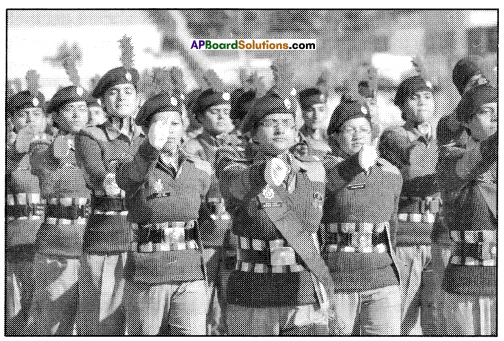
Look at the picture and read the following excerpt from the diary of a 72-year-old man. Answer the questions that follow.
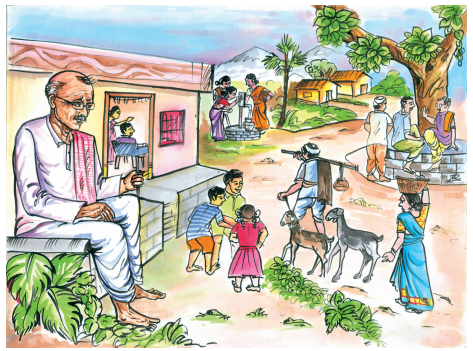
AP SSC 10th Class English Solutions Chapter 3A The Journey 1

As I sit here alone and waiting
I gaze at people passing me by.
I try to smile and reach out to them
But no one notices; no one waits.
They look to me like I am nothing
Are they afraid to be seen saying “Hi”
to an old man like me?

Question 1.
What is the excerpt about?
Answer:
The excerpt is about an old man’s inner feelings. He feels sorry for himself. Through this excerpt, he tries to tell the readers about his pathetic condition. He feels that he is totally neglected.

AP SSC 10th Class English Solutions Chapter 3A The Journey

Question 2.
How do people respond to the old man’s smile?
Answer:
When the old man tries to smile and reach out to others, no one notices and no one waits. They look to him like he is nothing. The old man feels that they are afraid to be seen saying “Hi” to an old man like him.

Question 3.
How should old people be treated so that they do not feel neglected?
Answer:
The old people should be treated equally. They should be respected and treated with honour. They should not be bullied or laughed at. We should share our feelings with them. We should give value to their feelings. We should obey them and try to follow their pieces of advice. If we treat the old people as mentioned above, they don’t feel neglected.

I. Answer the following questions.

Question 1.
‘After spending a leisurely Sunday at home, the very thought of returning to work on Monday is tiring.’ Do you agree? Have you ever felt so?
Answer:
Yes, 1 agree to the above statement. After spending a leisurely holiday at home, the very thought of returning to work on the next day is tiring to anyone. I have felt so many a time. I felt so after Dussehra holidays, Pongal holidays and summer vacation previously. It would be a difficult day for me going to school on the very first day after the holidays are over.

Question 2.
The last sentence of the first paragraph and the first sentence of the second paragraph appear to contradict each other. What could be the reason for the change in the decision?
Answer:
The last sentence of the first paragraph says that the author didn’t want to go but the first sentence of the second paragraph says that the author decided to go finally. Both the sentences contradict each other. At first he didn’t want to go as he had got married. He didn’t want to leave behind his newly-wed wife. But, when he remembered his increased responsibilities because of his marriage and his debts, he decided to return to work.

Question 3.
‘Why did the author get into debt? Think of some possible reasons.
Answer:
The author felt that he had got into debt after his marriage.
The possible reasons are :
i) The author might have met his marriage expenses.
ii) He spent leisurely at home for about six months without going to work.
iii) The increased expenses for the new couple.
iv) The author might have bought new furniture.
v) He might have bought a new flat.
vi) He might have bought a number of sarees for his newly-wed wife.
vii) He might have spent money carelessly.
viii) He might have given money to his old parents.

Question 4.
Why was the author reluctant to carry his own luggage? What would you do if you were in the author’s place?
Answer:
The author was reluctant to carry his own luggage as he had the feeling that if he carried the luggage, the whole world would laugh at him. He thought that his education had made him shun physical labour. In fact, the author looked for someone’s help. He felt that his guilt, shame, self-consciousness and pride might have stopped him from carrying the luggage. If I were in the author’s place, I would not do like he did. I would myself carry the luggage without looking for others’ help.

AP SSC 10th Class English Solutions Chapter 3A The Journey

Question 5.
The author feared that the whole world would laugh at him if he carried the trunk. Was the fear imaginary or real? Give reasons for your answer.
Answer:
The author feared that the whole world would laugh at him if he carried the trunk. I think his fear was imaginary. No one laughs at us when we do our work. In fact, carrying the trunk should not have been such a worry for him. For a young man like the author it should not have been an issue to carry his luggage on his back. Actually the others will praise his modesty, if he carries his luggage himself.

Question 6.
Choose one sentence from the story that best expresses the author’s false prestige. Support your answer with details from the story.
Answer:
“Somehow, I had the feeling that if 1 carried the luggage, my father and my people, in fact the whole world would laugh at me and I would be belittled,” – this sentence expresses the author’s false prestige. He thought that his education had made him avoid physical labour. As a government officer, he didn’t accept the idea of people seeing him carry his own luggage. He was of the opinion that it was through him that his parents had earned a greater degree of admiration and respect from the villagers. He felt that his father would not like to see him carrying a trunk on his back and would be very hurt if he did so. These are all the facts which show the author’s false prestige.

Question 7.
What does the phrase ‘opposite directions’ in the last sentence suggest?
Answer:
When the bus started moving, the author saw his father gradually receding into the distance. The author felt that their journeys started in two opposite directions, with him seated in the luxurious seat of a bus and father walking back with tired legs on the pebble-strewn road. The phrase ‘opposite directions’ suggests that both their directions were different. Actually, the son and the father had to travel in opposite directions to reach their destinations. In the other sense, the writer’s way was a luxurious one as he was an educated one and a government officer. He didn’t need to lead such a hard and laborious life like his father used to lead. When compared with his life, his father’s life was much harder one.

Question 8.
How was the story told? Were the events narrated in the order in which they had happened? Spot the sentences where the course of narration changed its direc¬tions. How effective was it?
Answer:
‘The Journey’ is a beautiful narrative by Yeshe Dorjee Thongchi. Most of the events were narrated in the order in which they had happened. Here and there we find that the narration changed its directions.
The sentences where the course of narration changed its directions:
a) “I did not have much to carry byway of luggage – just a trunk. Ours is a hilly terrain
Here the author tried to give the reason. Then he explained the purpose of his coming to his place. Thus, the course of narration was changed.
b) “Nobody had time to spare for me. In fact, carrying the trunk should not have been such a worry”
The course of narration was changed after the first sentence when the author tried to tell us about his inner feelings.
c) “We were walking up a narrow hilly road and neither of us uttered a word as if we were strangers who spoke different languages. I did not know what was going on in his mind.”
When we observe the two sentences given above, the first one changed its direc¬tion when the author tried to present his thoughts.
d) “Father wanted to say something but the bus started moving.” Later the narrative was changed its course when the author tried to think about his way in comparison with his father’s.
A reader could understand very well about the author’s inner thoughts by this way of narration. He too would try to think in his own way imagining that if he were in the author’s place. Thus it was effective in provoking the thoughts.

II. Write the number of the paragraph that gives the stated information in each of the following sentences.

1. The author enjoyed his married life.
Answer:
Paragraph 1 (The first paragraph)

2. The author tried to convince himself that he had not done anything wrong.
Answer:
Paragraph 11.

3. The author was ashamed of making his father carry his trunk.
Answer:
Paragraph 10.

4. The author looks at himself and his father as two travellers taking two different roads.
Answer:
Paragraph 16 (The last paragraph).

III. The following statements are false. Correct them.

1. The author offered to carry the trunk for some time.
2. The author could decide on whether to allow his father to carry the trunk or not.
3. The author took unpaid leave.
4. The father was not happy with the old shoes his son gave him.
Answer:
Corrections:

  1. The author didn’t carry the trunk at all throughout the story. His father carried it all the way.
  2. The author decided that it would be better to let his father carry the trunk.
  3. The author initially thought of taking unpaid leave but later he decided against it.
  4. The father was happy with the old shoes his son gave him. His face lit up with content-ment when he noticed the author taking out his pair of shoes from the trunk.

Vocabulary

I. Look at these words from the story :

1. newly-wed wife
2. bus stop
3. forehead

They are all compound words. A compound word is a union of two or more words to convey a unit idea or special meaning that is not as clearly or quickly conveyed by separated words. As shown above, compound words may be hyphenated, written open (as separate words), or written solid (closed). The use of compounding in English is an evolving process. As expressions become more popular or adopt special meanings, they follow a gradual evolution from two or more separate or hyphenated words to single words.

audio visualaudio-visualaudiovisual
copy editorcopy-editorcopyeditor
wild lifewild-lifewildlife

The words in the first, second and third columns are called ‘open compounds’, ‘hyphenated compounds’ and ‘closed compounds’ respectively. In this unit we focus on hyphenated compounds.

A hyphenated compound is a combination of words joined by a hyphen or hyphens. Here, the hyphen aids understanding and readability and ensures correct pronunciation. Words are hyphenated mainly to express the idea of a unit and to avoid ambiguity.

AP SSC 10th Class English Solutions Chapter 3A The Journey

A. Pick out all the compound words from the story and group them under the head-ings as explained above.

Open compoundsHyphenated compoundsClosed compounds
1. bus stop1. newly-wed1. anyone
2. government officer2. far-off2. someone
3. tea shop3. 20-kilo3. forehead
4. each other4. home-made4. moreover
5. bare feet5. matter-of-fact5. myself
6. self-consciousness6. anyway
7. white-collar7. childhood
8. pebble-strewn8. useless
9. anything
10. somehow

B. Fill in the blanks to make hyphenated compound words. Refer to a dictionary and get the meaning. Write a few sentences using them appropriately.
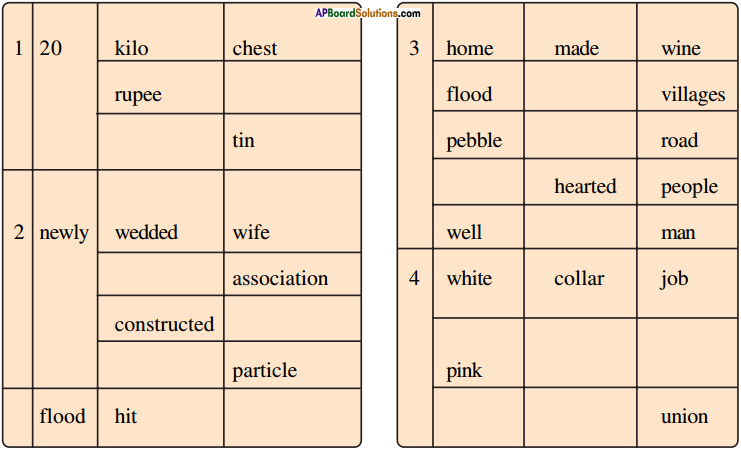
AP SSC 10th Class English Solutions Chapter 3A The Journey 2

1.20kilochest
rupeenote
inch caketin
2.newlyweddedwife
formedassociation
constructedbuilding
discoveredparticle
3.floodhitarea
homemadewine
floodhitvillages
pebblestrewnroad
kindheartedpeople
wellmanneredman
4.whitecollarjob
pinkcardholder
newtradpunion

Own Sentences:
1. a) He can easily lift a 20-kilo chest.
b) My father gave me a 20-rupee note.
c) We ordered a 20-inch cake tin and it has just been delivered.

2. a) Mr. Prakash came to his native place along with his newly-wedded wife.
b) The newly-formed association held an important meeting yesterday.
c) Theirs is a newly-constructed building.
d) The scientists declared that it was a newly-discovered particle-
e) The CM has visited the flood-hit area.

3. a) They served the home-made wine in the party.
b) The officials listed out the flood-hit villages.
c) I have to walk over pebble-strewn road to reach the temple.
d) They are kind-hearted people; they have made their contribution in building this hospital.
e) Mr. Rajan is a well-mannered man; he always tries to be friendly with others.

4. a) Mr. Ravi Teja was offered a white-collar job.
b) Mr. Bharat is a pink-card holder, who is eligible to take all the fair-price goods.
c) Yesterday, they formed a new-trade union.

AP SSC 10th Class English Solutions Chapter 3A The Journey

C. Fill in the blanks with the missing parts of compound words.

Kedarnath lived in Uttarakhand. Due to heavy rains, his village was hit by floods. His newly ____(1) ____ house fell down and he became ______(2)_____ less. The Chief Minister visited all the _____ (3) ____ hit villages and announced immediate help. However, Kedarnath lost his self ____(4) ____ and tried to commit suicide by jumping into the flooded river. Some brave and ____(5) ____ hearted people rescued him risking their lives. They told their stories too. Someone had lost his ____(6) ____ wedded wife, and someone else had lost all his family members. One of them offered him a ____(7) ____ collar job. It required him to carry rice bags. But he could not carry even a 20 ____(8) ____ bag, so he asked for a ____(9) ____ job. But no such jobs were available. One of them suggested ____(10) ____ employment scheme. But Kedarnath had no money. One day as he was walking on the pebble ____(11) ____ road, he found some ____(12) ____ plated idols and jewellery in a box.
Answer:

  1. built (newly-built)
  2. home (homeless)
  3. flood (flood-hit)
  4. confidence (self-confidence)
  5. kind (kind-hearted)
  6. newly (newly-wedded)
  7. blue (blue-collar)
  8. kilo (20-kilo)
  9. white-collar
  10. self (self-employment)
  11. strewn (pebble-strewn)
  12. gold (gold-plated)

II. Look at the word ‘dilly-dally from the text. This is a reduplicative word. The words super-duper and bye bye are also reduplicative words. But they belong to different categories shown below:
1. Duplicative type :
Here, the first part of the word is repeated without any change.
e.g.: bye bye

2. Alliterative type :
Here, the two parts have the same consonants but different vowels.
e.g. : dilly-dally, chit-chat

3. Rhyming type :
Here, the second word starts with a different consonant but rhymes with the first part.
e.g. : super-duper

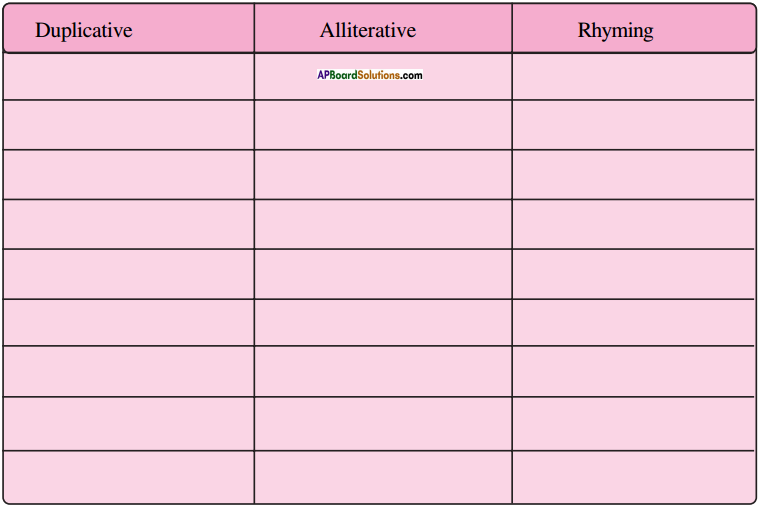
A. Look at the following reduplicatives carefully and put them under proper headings in the table given below.
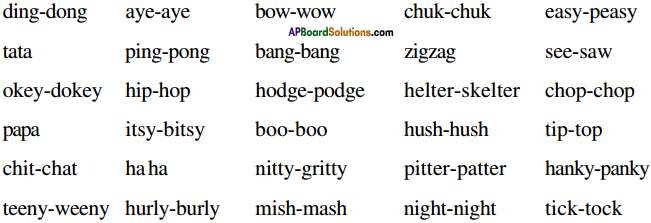
AP SSC 10th Class English Solutions Chapter 3A The Journey 3 AP SSC 10th Class English Solutions Chapter 3A The Journey 4
Answer:

DuplicativeAlliterativeRhyming
aye-ayeding-dongbow-wow
chuk-chukping-pongeasy-peasy
bang-bangzig-zagokey-dokey
chop-chopsee-sawhodge-podge
tatahip-hophelter-skelter
papachit-chatitsy-bitsy
ha hapitter-patternitty-gritty
boo-bootip-tophanky-panky
hush-hushtick-tockteeny-weeny
night-nightmish-mashhurly-burly

Reduplicatives are used in a variety of ways. Some simply imitate sounds: ding- dong, bow-wow. Some suggest alternative movements: flip-flop, ping-pong. And some intensify meaning: teeny-weeny(very small), tip-top(very good).

Find the meanings of the words you like and use them in your own sentences. You will find similar words in your language too. For example, in Telugu, we have words like chi-chi, pho-pho, kaadu-kaadu, tara-tama, taado-pedo, pilla-jella, auto-ito. Give some examples from your language. Don’t they sound musical?

Reduplicative Words in Telugu

B. Answer each of the following questions using a reduplicative word.

1. What does the clock say? ____________________
2. What does the school bell say? ____________________
3. How does the rain drop? ____________________
4. What does the dog say? ____________________
5. How do you laugh? ____________________
Answer:

  1. tick-tock
  2. ding-dong
  3. pitter-patter
  4. bow-wow
  5. ha ha

Grammar

I. In this story the author used past perfect tense (had + past participle) in many sentences. If you observe the following sentences from the story and the rules given under them, you will understand why and how the past perfect tense is used.’

1. It was 10.20 My father had already left, (para 6)
Answer:
When an action takes place before a point of time in the past, the action is expressed in the past perfect tense. (Sometimes the point of time can be understood from the earlier sentences and other contextual clues.)

2. Finally we reached Dirang. The bus from Tawang had not yet reached Dirang. (para 11)
Answer:
When two actions in the past are clearly separated by time, the earlier action is expressed in the past perfect tense.

AP SSC 10th Class English Solutions Chapter 3A The Journey

3. I quickly sat down on a rock. My father laughed at my plight, (para 7)
Answer:
When two actions in the past happen simultaneously, both of them are expressed in the past tense.

4. a) Sunitha never saw a bear before she was transferred to Maredumilli. (not from the story)
b) Shindh closed the doors because she heard loud noises from outside.
c) I never met him after I left India.
Answer:
Normally, when the time relation is unambiguous, (by the use of before, after, because, etc.), the simple past (past perfect is optional) is used to refer to both past actions.

Comment on the use of the simple past tense/past perfect tense (as illustrated above) in the following sentences. Identify the tense and give reasons for the use of the tense used.

1. I had come home this time round for a special purpose: to get married. My parents had arranged my marriage according to the customs of our tribal society.
Answer:
In both the sentences, the part perfect tense is used as those two actions had already completed before his narration, (had come, had arranged)

2. Time flew, and five months into my marriage I realized it.
Answer:
In the above sentence both the verbs are in the simple past tense as the time relation is unambiguous and those two occur in the past simultaneously.

3. But after some dilly-dallying I finally decided against it because marriage had increased my responsibilities and I had got into debt.
Answer:
“Marriage had increased my responsibilities and 1 had got into debt.” – These two actions occurred before “I finally decided against it.” Hence, in the earlier two actions the past perfect tense is used while the simple past tense is used in the latter.

4. On my way home from the bus stop my trunk had been carried by a porter, (para 3)
Answer:
The above action occurred before his narrating the story. Hence, the past perfect tense (had been carried) is used.

5. A large crowd gathered at our place the day I was to leave. People had come to wish me luck, (para 6)
Answer:
A large crowd gathered at our place the day I was to leave. → In this sentence the simple past tense is used as it occurred later.

People had come to wish me luck. → In this sentence the past perfect tense is used as it occurred earlier.

People had come and then the large crowd gathered. Hence, the two tenses are used.

6. Father was quiet for some time. He thoughtfully looked at the sun for a moment, and then his eyes fell on the can of home-made wine that I was carrying, (para 9)
Answer:
The actions in the above sentences occurred in the past simultaneously. Hence, the simple past tense is used in all the actions except the last part of the second sentence. ” ……….. that I was carrying.” Here the past continuous tense is used as it was going on at the time of narrating.

AP SSC 10th Class English Solutions Chapter 3A The Journey

7. I gave him the can of wine. He poured himself a mug and handed me the can. He drank all of it at one go. He then arranged the belt that was attached to the trunk carefully on his forehead. (para 10)
Answer:
All the actions are in the simple past tense as they all occurred in the past simultaneously and also the time relation is unambiguous.

8. I had never got used to physical labour having stayed in hostels right from my childhood. (para 11)
Answer:
“I had never get used to …………”
Here the past perfect tense is used as the author while narrating, went intq the past and told. Hence, the past perfect tense is used.

9. His feet had developed cracks and somehow resembled those of an elephant. (para 14)
Answer:
When two actions in the past are clearly separated by time, the earlier action is expressed in the past perfect tense. “His feet had developed cracks” …. This action took place before “his feet resembled those of an elephant.” Hence, the earlier action is expressed in the past perfect tense and the latter is expressed in the simple past, (had developed, resembled)

10. I noticed this for the first time. 1 hadn’t noticed that the road was uneven, (para 14)
Answer:
“I noticed this for the first time.”
Here the simple past tense is used as it is the author’s narration.
“I hadn’t noticed that …….. ”
This action might have occurred if the author did it but this action didn’t take place. Hence, the past perfect tense (+ not) is used.
” the road was uneven.” The condition of the road was mentioned here. It was
the condition of the road when he narrated. Hence, the simple past tense is used.

11. I checked my wallet and saw I still had around Rs.40 with me. (para 14)
Answer:
Both the actions in the above sentences occurred in the past simultaneously. Hence, the simple past tense is used in both the contexts.

AP SSC 10th Class English Solutions Chapter 3A The Journey

12. I then took out my pair of leather shoes from the trunk, and noticed my father’s face lighting up with contentment, (para 15)
Answer:
The above two actions occurred in the past simultaneously and the time relation is unambiguous. Hence, the simple past tense is used, (took, noticed)

13. I saw that the road we had come by looked like a giant motionless rope, (para 16)
Answer:
“I saw that ” — Here the past tense is used to refer to the past action as it is the writer’s narration.
” ………… we had come by looked …………”
— Here the past perfect tense is used as this action had completed before his narration.
” …………… looked like a giant motion rope.” — Here the simple past tense is used to refer to the action as it is the writer’s narration.

14. He stopped his business after he became old.
Answer:
In this sentence both the verbs ‘stopped’ and ‘became’ are in the past tense as the time is unambiguous.

15. I never ate ‘haleem’ before I visited Hyderabad.
Answer:
In this sentence the verbs ’ate’ and ‘visited’ are in the past tense as the time is unambiguous.

II. Adverbial Clauses

Study the following examples from the story.
1. As I had to do a bit of catching up, I walked fast.
2. As I was going to take my first sip. 1 heard father’s voice.
3. He decided to go to his work place because he got into debts.

In all the above sentences there are two clauses. The underlined part is the adverbial clause.
There are several types of adverbial clauses.
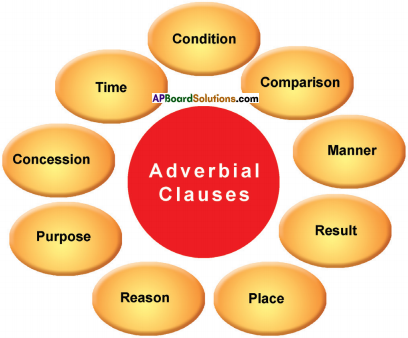
AP SSC 10th Class English Solutions Chapter 3A The Journey 5

Combine the pairs of sentences by using the words given in brackets.
1. There was nobody in the village to carry the author’s luggage. Everbody was engaged in some important work, (because)
2. The roads were not good. He preferred less luggage, (as)
3. He wanted to stay at home for some more days. He wanted to apply for leave, (since)
4. You may not attend the class. You don’t want to come again, (if)
5. The boy was about to come down the stairs. Then it crumbled down, (when)
Answer:

  1. There was nobody in the village to carry the author’s luggage because everybody was engaged in some important work.
  2. As the roads were not good, he preferred less luggage.
  3. Since he wanted to stay at home for some more days, he wanted to apply for leave.
  4. If you want to come again, you have to attend the class.
  5. Whan the boy was about to come down the stairs, it crumbled down.

More about Adverbial Clauses :

1. Adverbial Clauses of Time :
Adverbial Clauses of Time are introduced by the subordinating conjunctions when-ever, since, after, before, while, as, etc.
e.d.:
1) As Bayaji came home, his children returned.
2) As soon as the bell rang, the children came out crying.
3) While Sachin was batting, there was a heavy noise all over the stadium.

2. Adverbial Clauses of Place :
Adverbial Clauses of Place are introduced by the subordinating conjunctions where and whereas.
e.g.:
1) You can go wherever you like.
2) I want to live where you live.

3. Adverbial Clauses of Reason :
Adverbial Clauses of Reason are introduced by the subordinating conjunctions because, that, as, since.
e.g.:
1) Because he was ill, he didn’t come.
2) He was very happy that his son had passed.
3) As she was absent from school, the teacher punished her.

4. Adverbial Clauses of Manner :
Adverbial Clauses of Manner are introduced by the subordinating conjunctions like, as, as if.
e.g.:
1) He finished the work as she requested.
2) He is acting like he doesn’t like her.
3) They talked as if they had read.

5. Adverbial Clauses of Purpose :
Adverbial Clauses of Purpose are introduced by the subordinating conjunctions so that, in order that and lest
e.g.:
1) Work hard lest you should fail.
2) We eat so that we may live.
3) Sunlight is needed in order that the process of photosynthesis takes place.

6. Adverbial Clauses of Condition :
Adverbial Clauses of Condition are introduced by the subordinating conjunctions if, whether, unless.
e.g.:
1) Unless you work harder, you will fail.
2) If I go to Hyderabad, I will meet your brother.
3) She was uncertain whether to stay or leave.

7. Adverbial Clauses of Consequence :
Adverbial Clauses of Consequence are introduced by the subordinating conjunction that.
e.g.:
1) She is such a kind man that all love him.
2) She speaks in such a low voice that nobody can hear her.

8. Adverbial Clauses of Comparison :
Adverbial Clauses of Comparison of Degree are introduced by the subordinating conjunction than, or by the Relative Adverb as …. as.
e.g.:
1) She is younger than he.
2) He is as stupid as he is lazy.

9. Adverbial Clauses of Concession :
Adverbial Clauses of Concession are introduced by the subordinating conjunctions though, although, even if.
e.g.:
1) Though he is poor he is honest.
2) Even if it rains 1 shall come.
3) He passed in first division although he didn’t work hard.

Writing

I. In the story ‘The Journey’ the author says “…. my education had made me shun physical labour”. This is an adverse effect of education. Now write an essay on ‘The Adverse Effects of Education’. Here are some points:
Effect on
• doing some work that involves physical labour
• dress/fashion
• family relationships
• giving respect to elders
• the treatment of illiterate people
Answer:

The Adverse Effects of Education

It is a well-known fact that education plays a vital role in bringing up both economically and socially. It is thought that education helps people in so many ways. Highly educated people are enjoying the status in the present day society. People with high education attain a good job, more money and many other benefits. A literate person can show the right path to others. We usually think of the benefits of education only but we should not ignore the adverse effects of education.

When the pupils spend all their time in reading and writing, there is no scope for them to do any other work. They don’t find time even to play games. Their education makes them physically weak. They are unable to do any work that involves physical labour. “A sound mind in a sound body” is a proverb. Both the sound mind and the sound body are needed if one desires to be successful. When we are helathy, we can perform our functions regularly and properly. Today, most of the pupils stay in hostels right from their childhood. Hence, they never get the chance to do physical labour. One’s physical labour will make oneself both physically and mentally strong. But today’s education system doesn’t allow the pupils to do physical labour. And the other thing is that the educated people think that others will laugh at them if they do any kind of physical labour. They think that theirs is an important position in the society. Doing their own things is the point of prestige for them. Their false prestige makes them think in a wrong way.

The second point is their dress sense. The persons with high education try to wear fashionable dresses which are different from other ones. As far as the educated Indians are concerned, they give more value to the western culture. They try to adapt the foreigners’ culture. They never think of our culture and traditions. They think that only illiterate people wear such kind of dresses which reflect our culture. In their view, they will be degraded if they don’t wear modern dresses. This thought only leads to other social problems. The young women’s dress sense will cause them a threat. They think that they are superior to the uneducated ones and behave arrogantly.

Another important point is how education affects the family relations. When a person completes his education, he starts thinking that he is greater than the other uneducated members of his family. He wants to show his dominance. If he gets employment, he doesn’t find time to spend with them. He always thinks about earning money. He gives importance to money only. He doesn’t show any love and affection even for his parents. Thus, one’s education leads to the absence of human relationships.

Most of the literates don’t give any respect to elders. As Indians, we generally have faith in our values, traditions and culture. What we have learnt from our ancestors is that we should give utmost respect to our elders. At present, we witness a different scenario. Some educated persons think that there is no use of elders. They forget the sacrifices made by them. They ill-treat their family members who are illiterates. This will lead to the destruction of family relationships.

No doubt, there are so many advantages with the education one gets. But one’s education makes one senseless. The educated persons must not move away from physical labour. They must do some work that involves physical labour. They should take care about their dress. They should not deviate from our traditional way of dressing. They should maintain good family relationships. They should respect elders. They should treat the illiterate people with courtesy. Then only their education is meaningful.

II. Summarising

A few guidelines and tips to summarize a text are given below. Read them carefully. Then read the essay ‘On Umbrella Morals’ and summarize it.

Guidelines and tips to summarize a text

To summarize is to condense a text to its main points and to do so in your own words. To include every detail is neither necessary nor desirable. In order to write a good summary, you may have to gather minor points or components of an argument from different places in the text in order to summarize the text in an organized way. A point made in the beginning of an essay and then one made toward the end may need to be grouped together in your summary to concisely convey the argument that the author is making.

Here are a few key points:

  1. Read the article carefully – as many times as you require!
  2. Begin your summary by mentioning the author and title. The publication and date may also be mentioned.
  3. Summarize in your own words in third person using simple present tense.
  4. Use transition words (however, moreover, then, also, etc.).
  5. Avoid unnecessary details and direct quotes.
  6. Do not give your own opinion.
  7. Keep it within the word limit given or one third of the original text.
  8. Prefer short and simple sentences.
  9. Be consistent with the tense.
  10. Check for grammar and punctuation errors.

Read the following essay.

On Umbrella Morals

-Alfred George Gardiner

A sharp shower came on as I walked along the street, but 1 did not put up my umbrella. The truth is I couldn’t put up my umbrella. The frame would not work for one thing, and even if it had worked, I would not have put the thing up, because it was falling to pieces and I would be the laughing stock. The fact is, the umbrella is not my umbrella at all. It is the umbrella of some person who I hope will read these lines: He has got my silk umbrella. I have got the cotton one he left in exchange. I imagine him walking along the street under my umbrella, and throwing a scornful glance at the fellow who was carrying his ugly thing. I dare say the rascal laughed silently as he eyed the fool with his cotton umbrella. He is one of those people who have what I may call an umbrella conscience.

I hope you know the sort of person I mean. He would never put his hand in another’s pocket, or forge a cheque or rob a cashbox —not even if he had the chance. But he will swap umbrellas, or forget to return a book, or take a rise out of the railway company. In fact he is a thoroughly honest man who allows his honesty the benefit of the doubt. Perhaps he takes your umbrella at random from the barber’s stand. He knows he can’t get a worse one than his own. He may get a better one. He doesn’t look at it very closely until he is well on his way. Then, “Dear me! I’ve taken the wrong umbrella,” he says, with an air of surprise, for he likes really to feel that he has made a mistake. “Ah, well, it’s no use going back now. He’d be gone. And I’ve left him mine! “It is thus that we play hide-and-seek with our own conscience. It is not enough not to be found out by others; we refuse to be found out by ourselves. Quite impeccable people, people who ordinarily seem unspotted from the world, are afflicted with umbrella morals.

It was a well-known preacher who was found dead in a first-class railway carriage with a third-class ticket in his pocket. And as for books, who has any morals where they are concerned? I remember some years ago the library of a famous divine and literary critic, who had died, being old. It was a splendid library of rare books, chiefly concerned with seventeenth-century writers, about whom he was a distinguished authority. Multitudes of the books had the marks of libraries all over the country. He had borrowed them and never found a convenient opportunity of returning them. They clung to him like pre-cedents to law. Yet he was a holy man and preached admirable sermons, as I can bear witness. And, if you press me on the point, I shall have to own that it is hard to part with a book you have come to love.

It is possible, of course, that the gentleman who took my silk umbrella did really make a mistake. Perhaps if he knew the owner, he would return it with his compliments. After my experience to-day, I think I will engrave my name on my umbrella. But not on that baggy thing standing in the corner. I do not care who relieves me of that. It is anybody’s for the taking.

Study Skills

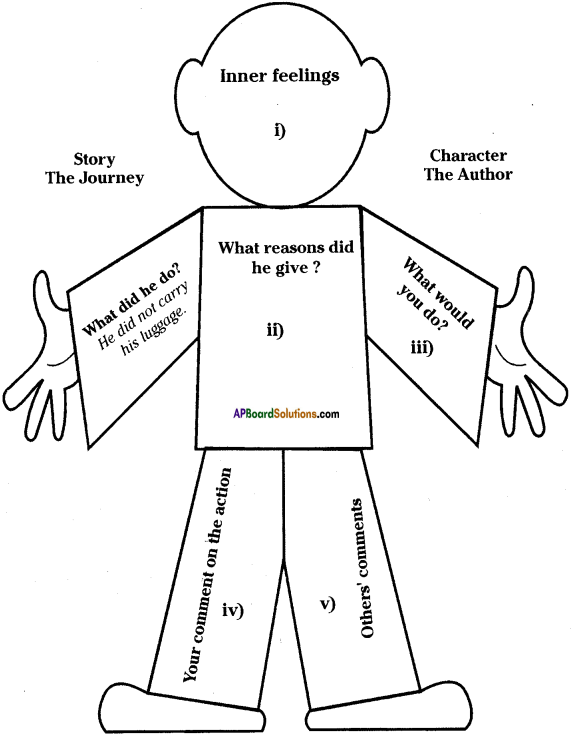
Use the following graphic organizers to represent your understanding of the story ‘The Journey’. Modify the layout to suit your needs.
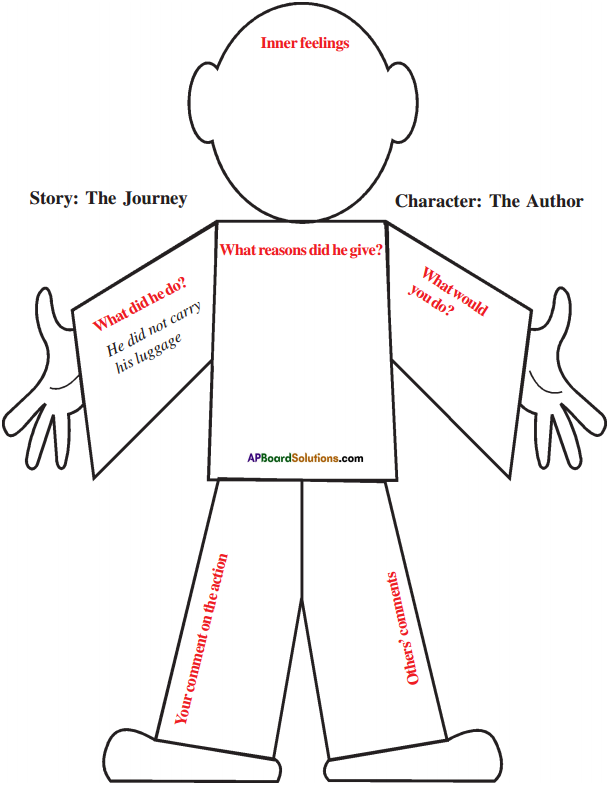
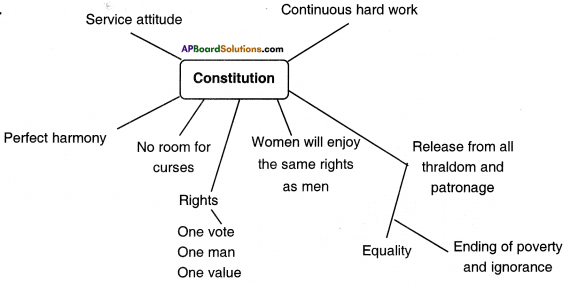
AP SSC 10th Class English Solutions Chapter 3A The Journey 6 AP SSC 10th Class English Solutions Chapter 3A The Journey 7

i) 1. How could I allow my old father to carry my trunk?
2. What would people think?
3. What would they say?
4. It was improper for me to let father carry the luggage.
5. It was through me that they (my parents) had earned a greater degree of admiration and respect from the villagers.
6. He was stronger and more skilled than I in these matters.

ii) 1. His education had made him shun physical labour.
2. His father, his people, and the whole world would laugh at him and he would be belittled.
3. His father would not like him to see him carrying a trunk on his back.

AP SSC 10th Class English Solutions Chapter 3A The Journey

iii) I would myself carry my luggage. I wouldn’t make my father carry it.
iv) The author’s action is inhuman. He is thankless and selfish.
v) The author is ungrateful. He doesn’t show any respect, love, and affection for his father.

Listening

Listen to the story and answer the questions that follow.

Once there was a very rich man. His name was Dhanaraju. He had two sons, Ganiraju and Pothuraju. Ganiraju was hard working and obedient. He always helped his father in the fields. But Pothuraju was lazy. He never went to fields. He was disobedient to his father. He always wanted to lead a free, lavish life, so one day he said to his father, “Father, give me my share of property.” The father was heart-broken. He divided the property between his two sons. Pothuraju left home with his share. He went to a distant land, made a lot of friends and soon spent all his property lavishly on friends, food and drinks. All his friends left him.

At that time, there was a famine and Pothuraju had no work and food. None of his friends gave him food or money. He took up the job of feeding pigs. Sometimes, he had to eat the food kept for the pigs. He was very sad about his condition. He soon began to think of his father and his brother. He said to himself, “In my father’s house, even the servants have enough food. They get good shelter too. But here, I am struggling for food and shelter. I will go back to my father. 1 will beg him to take me as his servant.”
So decided, the dishonest son set out for his father’s house. In the meantime, his father was always thinking of his second son. He would sit near the windows. He would look out at the road, expecting his son to return home.

One day Dhanaraju saw his son coming at a distance. He rah out of the house in great joy and hugged his son. His son knelt down. He said, “Father, 1 am not fit to be your son. Take me as your servant.”

I. Read the statements given below and mark True or False against each of them.

1. Pothuraju went to far-off lands to enjoy free life.
2. Ganiraju asked his father to give his share of property.
3. Pothuraju had a lavish life from the beginning.
4. Dhanaraju did not care about Pothuraju.
Answer:
1. True
2. False
3. False
4. False

II. Which of the following is the most appropriate title for the story you have just listened to?
a) A Rich Son
b) Repentance
c) Two Sons
Answer:
(b) Repentance

The Journey Summary in English

The Journey’ is an excellent piece of work written by Yeshe Dorjee Thongchi, a prominent Assamese writer and it is translated into English by D.P. Nath. The author was a government officer. He came to his village to get married. His parents had arranged his marriage, according to the customs of their tribal society. After spending six months at home, he was preparing to return to his place of work. But he didn’t want to leave behind his newly-wed wife. He thought of extending his leave too. But his responsibilities made him decide to go.

As theirs is a hilly terrain, without any motorable roads, the author always prefers to carry less luggage. Now, his problem was that he needed someone to carry his luggage as his education had made him avoid physical labour. Since most of the villagers were busy in the fields, he couldn’t find even one who could help him carry the trunk to the bus stop. Finally, the writer’s father told him that he would see him off at Dirang. He didn’t want to allow his old father to carry his trunk and so he protested. But his father decided to carry the chest to the bus stop. On the day of his departure, a large crowd gathered to wish him luck and the author left for Dirang at 10 : 20. His father had already left and he had to walk fast to catch up his father. He was very tired when he caught up with his father. He sat on a rock to rest for a while. His father drank all the wine given by him and resumed carrying the luggage on his back. The author followed his father. Neither of them spoke a word as if they were strangers. The author thought that it was improper for him to let his father carry the luggage. Although he wanted to tell his father that he would like to carry the trunk himself, he couldn’t do so because of his guilt, shame and pride. He felt that the whole world would laugh at him if he did so.

The author knew that his father had provided for his education. He thought that it was through him that his parents had earned admiration and respect from the villagers. He knew that he was physically useless in spite of his youth and strength. He concluded that it would be better to let his father carry the luggage and followed him silently After resting at two places for tiffin, they reached Dirang finally. They entered a tea shop and started sipping tea. His father asked him if he had a pair of old shoes. Then the author looked at his father’s bare feet and noticed that they were full of cracks. He noticed this for the first time. He offered his father money but he refused to take. Instead, he wanted the author’s old pair. So, the author gave him the hunting boots he was wearing. His father filled with satisfaction when he saw the author taking out his pair of leather shoes from the trunk. His father wanted to say something to him but the bus started moving. Finally the author realized that both their ways were different – his way was a luxurious one while his father’s was a difficult one.

The Journey Glossary

lethargy (n) : the state of not having any energy or enthusiasm for doing things
creeps (v) : develops very slowly
terrain (n) : a particular type of land
extend (v) : to continue for a longer period of time
dilly-dallying (v) : taking a long time to do something, go somewhere or make a decision
debt (n) : a sum of money that a person or organization owes
shun (v) : to avoid something or somebody
chest (n) : a large strong box
see off (phr.v.) : to go to an airport, station, etc. to say goodbye to someone
protest (v) : to say that one strongly disagrees with
dissuade (v) : to convince somebody not to do something
catch up (phr.v.) : to come from behind and reach someone in front of you by going faster
plight (n) : a difficult and sad situation
utter (v) : to say something
guilt (n) : the unhappy feelings caused by knowing that you have done something wrong
self-consciousness (n) : feelings of nervousness about what other people think of you
belittle (v) : to make someone or something seem small or unimportant
hardly (adv) : almost not
sip (n) : a very small amount of a drink
pebbles (n) : small smooth stones
bare feet (n.phrase) : the feet without chappals or shoes
contentment (n) : a feeling of happiness or satisfaction
recede (v) : move back from a previous position further and further until it disappears
weary (adj) : very tired
pebble-strewn road (n.phrase) : the road over which pebbles are scattered

AP SSC 10th Class English Solutions Chapter 1C I Will Do It

AP State Board Syllabus AP SSC 10th Class English Textbook Solutions Chapter 1C I Will Do It Textbook Questions and Answers.

AP State Syllabus SSC 10th Class English Solutions Chapter 1C I Will Do It

10th Class English Chapter 1C I Will Do It Textbook Questions and Answers

Comprehension

I. Answer the following questions briefly.

Question 1.
What is the ultimate aim of a bright student? And why?
Answer:
The ultimate aim of a bright student is to continue his/her studies at a world-class educational institute. He/She wants to join it as there are high standards. One will do great things when one studies at a top-class institute. So, a bright student wants to join a top-ranked institute.
(Or)
The ultimate aim of a bright student is to study at IIT. It is because, these institutions maintain high standards. One can do big things if one studies at IIT. Hence, a bright student’s ultimate aim is to study at IIT.

AP SSC 10th Class English Solutions Chapter 1C I Will Do It

Question 2.
‘His heart sank in sorrow.’ Whose heart sank in sorrow? Why?
Answer:
Narayana Murthy’s heart sank in sorrow. Because of the poor financial position, Murthy’s father refused to send him to IIT. Though he had passed with a high rank, there was no chance for him to study at IIT which was his dream. So, he was very sorrowful.

Question 3.
How did Murthy react when his father expressed his helplessness to send him to IIT?
Answer:
When his father expressed his helplessness to send him to IIT, Murthy was disappointed. It seemed his dreams had burnt to ashes. His heart sank in sorrow. He didn’t share his feelings with anybody. His heart was bleeding but he didn’t get angry with anybody.

Question 4.
The author calls Murthy an introvert. Which action of Murthy substantiates this claim of the author about Murthy?
Answer:
‘Introvert’ means someone who is quiet and shy, and does not enjoy being with other people. When Murthy’s father refused to send him to IIT, he became sorrowful. Though he was sorrowful, he never shared his unhappiness or helplessness with anybody. He did not reply. He remained silent. So, we can say that Murthy was an introvert by nature.

AP SSC 10th Class English Solutions Chapter 1C I Will Do It

Question 5.
What, according to Narayana Murthy, can change the life of a person?
Answer:
According to Narayana Murthy, a person himself can change his life by hard work. It is not the institution or any other thing that can change the life of a person.

Question 6.
How does the motto ‘Powered by intellect and driven by values’ describe Murthy’s life?
Answer:
Murthy really believes in the motto, ‘Powered by intellect and driven by values’. He worked very hard. He didn’t bother about his personal life or comforts. He was a genius right from the beginning. He shared his wealth with others. He never used the help of any caste, community or political connections to go up in life. He proved that it was possible to earn wealth legally and ethically. He built a team of people who were equally good. The above words reveal that he was powered by intellect and driven by values.

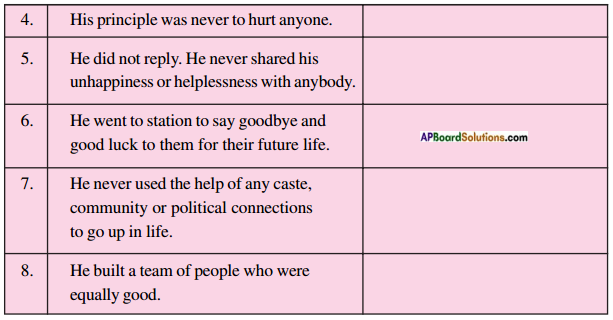
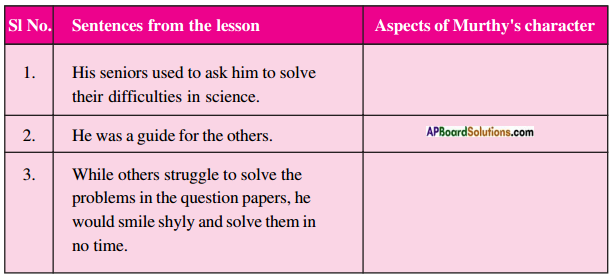
II. Given below are some sentences from the lesson. What do they tell us about Narayana Murthy’s qualities? Use the adjectives given in the box to describe Murthy’s character. You may also use some more adjectives you like.
AP SSC 10th Class English Solutions Chapter 1C I Will Do It 1
AP SSC 10th Class English Solutions Chapter 1C I Will Do It 2AP SSC 10th Class English Solutions Chapter 1C I Will Do It 3
Answer:

Sentences from the lessonAspects of Murthy’s character
1. His seniors used to ask him to solve their difficulties in science.bright
2. He was a guide for the others.intelligent
3. While others struggle to solve the problems in the question papers, he would smile shyly and solve them in no time.brilliant
4. His principle was never to hurt anyone.gentle
5. He did not reply. He never shared his unhappiness or helplessness with anybody.introverted
6. He went to station to say goodbye and good luck to them for their future life.encouraging
7. He never used the help of any caste, community or political connections to go up in life.uncompromising
8. He built a team of people who were equally good.hard-working

AP SSC 10th Class English Solutions Chapter 1C I Will Do It

Vocabulary

Let’s look at some more one-word substitutes.

WordMeaning
fatalista person who believes in fate
centenariana person who is above hundred years
omnipresentone who is present everywhere
mercenarya person who can do anything for money
misogynistone who hates women
monogamya practice of having one wife or husband
autobiographya life history written by oneself
biographya life history written by somebody else
honorarya position for which no salary is paid
ambiguousa sentence whose meaning is unclear
inimitablethat which cannot be imitated
theistone who believes in God
spendthriftone who spends too much
teetotalerone who abstains from taking alcohol

Tick (✓) the most appropriate one-word substitutes for the following.
1. A person or thing that cannot be corrected
a) unintelligible
b) Indelible
c) illegible
d) incorrigible
Answer: d

2. A persoiì of good understanding. knowledge and reasoning power
a) expert
b) intellectual
c) snob
d) literate
Answer: b

3. A person who knows many languages
a) linguist
b) grammarian
c) polyglot
d) bilingual
Answer: c

4. One who possesses many talents
a) versatile
b) prodigy
c) exceptional
d) gifted
Answer: a

5. Words inscribed on a tomb
a) epitome
b) epistle
c) epilogue
d) epitaph
Answer: d

AP SSC 10th Class English Solutions Chapter 1C I Will Do It

Project Work

You have read about Nick Vujicic, who has accomplished every seemingly impossible thing in life despite having the most difficult form of disability. You have read about Narayana Murthy, who is one of the most remarkable examples to win over the unbeatable difficulties. You may also have heard or read about some remarkable Indian women such as Sudha Murthy, Sudha Chandran, Kiran Bedi and many other women who have crossed all the hurdles to become successful.

Now, work in pairs and collect information about the women who you think have excelled in their lives though they may not have come into limelight.

You may read articles in newspapers, magazines, books (autobiographies, biogra¬phies etc.), browse internet and watch TV reports on women.

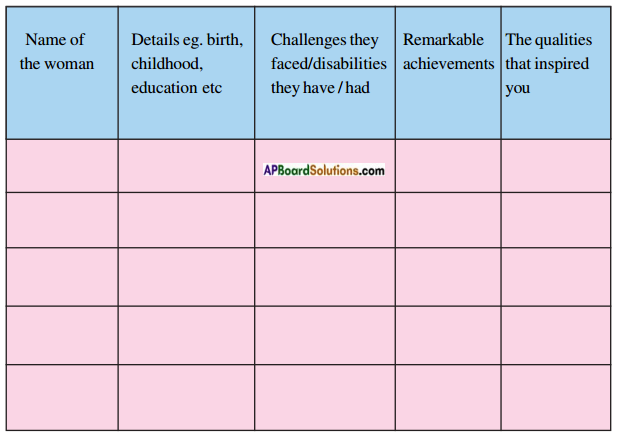
AP SSC 10th Class English Solutions Chapter 1C I Will Do It 4
Answer:

Name of the womanDetails eg. birth, childhood, education, etc.Challenges they faced/disabilities they have / hadRemarkable achievementsThe qualities that inspired you
Mary GriffithA 13 year old girl. She is studying at Mundelein Middle SchoolShe has cerebral palsySet records at the National Junior Disabi­lity Champion­ship.Hard work and will power
Karin KorbA 38-year-old woman. She spent her childhood with her grandparents. She had studied well till she broke her back. Later she joined a law school.She broke her back at age 17 while competing in gymnastics.Wheelchair tennis competitorCourage and determination
Emily Anne SchaeferA 44 year old woman. A French town resident. She spent her childhood in a foster s care.When she was a child, she suffe­red from trauma­tic brain injuries. She is develop­mentally disabled.The facilitator for the project’s network in Hunterdon County. Despite the trauma, she earned a college degree in fine arts. She is a printmaker and painter, and has self- published two books on art and poetry,Grit and perseverance
Rama LakshmiShe is the resident of T. Nagar, Tamil Nadu. She was born on 20th May, 1995. Spent her childhood very joyously till she lost her sight in a ghastly incident. Now she is a stu­dent of engineering.She became blind when she was 12 years old in an accident.She is a play­wright and poet. She has written more than twenty poems and eight plays,Courage and determination
SrivalliShe is the resident of Kothapet, Kurnool. She was born in a poor family on 15th August, 1992.
She took her degree in arts with distinc­tion marks.
She lost both her legs in an accident.She is a wonder­ful singer. She composes songs.Will power, determination perseverance

AP SSC 10th Class English Solutions Chapter 1C I Will Do It

I. Based on the information you gather about the persons, prepare a short biographical account of the person you like the most, emphasizing the exemplary work done by him/her and present it to the group/ whole class.
Answer:
Ms. Srivalli was born on 15th August, 1992. She came from a poor family. Her father was a musician and her mother was a teacher. She was a bright student. Unfortunately, she met with an accident when she was eleven and the doctors amputated both her legs. After two years of relentless struggle, she could go back to her school. She could walk with the help of artificial limbs and slowly run. Now, she can do anything like a normal woman. She learnt music from guru Rama Sastry and now she is a good singer and composer of songs. In spite of her disability, she has worked hard with great determination, discipline and dedication and achieved her target.

After she had met with the accident, her heart sank in sorrow. Sometimes she wanted to die. She hated God for doing this to her. She was terrified of her losing both the limbs. Her doctor Mr. Rao always encouraged her by telling her that she could walk and run normally. She tried and tried until she could walk. She didn’t give up at any stage. Srivalli always says, “The challenges in our lives are there to strengthen our convictions. They are not there to run us over.” With the help of her parents, friends . and guru, Srivalli has managed to reach such a position in her life. She has proved that anything can be done, if one tries hard. From her life, we can understand that one need not lose hope. Her life shows us that one s disability can’t prevent one from reaching one’s target. I feel that her life is a source of inspiration to every woman. She is able to do all these only because of her strong will power. Hence, I believe in will power with which one can achieve wonders in one’s life. I would like to wish all the best for her in the future.

II. You may also present this write up on the occasion of “Women’s Day” in your school.
Answer:
Our beloved headmaster, dear teachers and my fellow students!
I wish you a very good morning and welcome you all to the programme. At the outset, I would like to greet all the women a very happy ‘Women’s Day.’

As we all know that 8th March is celebrated as International Women’s Day to commemorate women’s achievements and the contributions made by them to the society This day is also known as the United Nations Day for women’s rights and international peace.

I have a great pleasure to say a few words about a great girl Mary Griffith on this occasion. Mary Griffith, a thirteen year old girl, has set national records in track and swimming. She has been studying at the Mundelein Middle School and has cerebral palsy. In spite of her disability she set her records in 2004 and 2005 at the National Junior Disability Championships. She always say that sports have given her a lot more confidence and taught her to balance her life. Though she has been suffering from cerebral palsy, she hasn’t lost her hope. With great faith and determination she has done so well and set her own records. Her efforts are inspirational to all the women.

We all wish her a great future and with this I will end my speech. I thank one and all for giving me this chance to share my views with you.

AP SSC 10th Class English Solutions Chapter 1C I Will Do It

I Will Do It Summary in English

Nagavara Ramarao Narayana Murthy is the founder of Infosys, a leading IT company in the world. He is an icon of simplicity, uncompromising quality and fairness, apart from being a philanthropist. He believes in the motto, ‘Powered by intellect and driven by values.’

As a school going lad, Narayana Murthy was the brightest boy in his class. He could solve the most difficult problems which were very hard for his seniors. He came from a poor but educated family. His father was a high-school teacher. As all other students, Narayana Murthy wanted to get admission in the IIT. He appeared for the entrance test and did well. He always dreamt of studying at IIT. He was thrilled to know that he had passed the test with a high rank.

When Narayana Murthy told his father that he wanted to join IIT, his father reminded him of their poverty. Murthy’s father advised him to stay in Mysore and study as much as he wanted. His father was very sad to say this. Murthy was disappointed and his heart sank in sorrow. He was an introvert so he never shared his sorrowfulness or helplessness with anybody. When his classmates were leaving for Madras, Murthy went to the station to say goodbye to them. Though they were all excited and talking loudly, Murthy remained silent. He wished them and they waved at him as the train slowly left the platform. Even after the train had left, he stood there motionless. He believed that he only could change his life by hard work. He unknowingly followed “Your best friend is yourself and your worst enemy is yourself, the philosophy of the Bhagavath Gita. With great determination, Narayana Murthy reached great heights in his life. He proved that it was possible to earn wealth legally and ethically.

I Will Do It about the Author

Sudha Murthy, wife of N.R. Narayana Murthy, is an Indian social worker and author. Murthy began her professional career as a computer scientist and engineer. She is the chairperson of the Infosys Foundation. She has founded several orphanages, participated in rural development efforts, supported the movement to provide all Karnataka government schools with computer and library facilities, and established the ‘The Murthy Classical Library of India’ at Harvard University.

Murthy also teaches Computer Science. She composed a fiction, Dollar Sose. The present story is an extract from one of her most successful stories ‘How I Taught my Grandmother to Read & Other Stories.’

AP SSC 10th Class English Solutions Chapter 1C I Will Do It

I Will Do It Glossary

sharp (adj): quick to notice something/able to grasp quickly

bright (adj): clever / intelligent / sharp / brilliant

unnoticed (adj): ignored / overlooked

spark (n): a small amount of particular quality or feeling

grasp (v): understand something completely

avid (adj): doing something as much as possible

literature (n): written works like novels, plays, poems, technical works, newspapers and magazines

admission (n): the right to join an institution

aspirant (n): someone who hopes to get a position of importance or honour

sleepy (adj): quiet and peaceful

guide (n): a person who can advise others

mandap (n): a raised platform

uitlmate (adj): main and most important / vital / final

D-Day (n): a date on which something important is expected to happen.(From the name given to June 6, 1944. the day on which the US., British, and other armies landed on the beaches of northern France in the Second World War.)

Implied (v): gave the meaning / meant

Anna (n): a word used to address a respectable elder 1 older male

afford (v): pay for / have funds for

expenses (n): expenditure / money that one spends on something

bitter (adj): making somebody feel unhappy

burnt to ashes: lost hopes

fondest (adj): most liking

introvert(n): a quite person who is interested in his / her own thoughts and feelings.

chirping (v): making short high sounds

monsoon (n): rainy season

set in (phr.v.): begin / start

drizzle (v): light rain / sprinkle

motionless (adj): without movement

jealously (adv): being unhappy over something

philosophy (n): attitude / way of life

ethically (adv): morally

pioneer (n): a person who is the first to do something

wave (n): raise or increase

icon (n): a famous person or thing that people admire and see as a symbol of a particular idea, way of life, etc.

uncompromising (adj): unwilling to change opinions or behaviour

philanthropist (n): one who devotes his service or wealth for the love of mankind

powered by intellect and driven by values: According to Narayana Murthy Intellect (mind power) should be the power of every man. He should be driven (influenced) by values.

AP Board 8th Class Social Studies Important Questions Chapter 7 Money and Banking

AP State Syllabus AP Board 8th Class Social Studies Important Questions Chapter 7 Money and Banking.

AP State Syllabus 8th Class Social Studies Important Questions 7th Lesson Money and Banking

Question 1.
How do we usually exchange old clothes?
Answer:
We usually exchange old clothes with steel utensils. This depends mostly on the seller.

Question 2.
How do we usually exchange plastic & newspaper?
Answer:
We usually exchange these with onion traders. He gives 1 1/2 kg onions for 1 kg plastic or newspaper.

AP Board 8th Class Social Studies Important Questions Chapter 7 Money and Banking

Question 3.
How do we exchange hair?
Answer:
Money is offered for hair.

Question 4.
How do we exchange paddy?
Answer:
In our village paddy is exchanged for services rendered by washerman, barber etc.

Question 5.
Ask your parents how washermen, barbers, need kaavalikaru were paid for their work in villages and towns.
Answer:
Nowadays they are paid money only. But 15 years ago our parents paid them in the form of paddy.

Question 6.
When should one use fixed deposits for savings?
Answer:
The money invested in fixed deposits should not be withdrawn in the given period. Then only one can use fixed deposits for savings.

AP Board 8th Class Social Studies Important Questions Chapter 7 Money and Banking

Question 7.
If a very large number of account-holders do not wish to keep their money in the bank, how will it affect the bank’s working?
Answer:
This affects the reserves of a bank. The bank cannot lend loans to customers. This affects their income. As a result it is impossible to run a bank.

Question 8.
Suppose you need Rs. 2000. You fill a cheque and give it to your friend and send her to get the money in cash. What happens?
Answer:
Bankers reject this cheque. Bankers never give cash to the cheques. The sister should have an account in the branch. Then only she can withdraw the amount.

Question 9.
What are the names of some banks you know?
Answer:

  1. Kotak Mahindra,
  2. State Bank of India,
  3. Andhra Bank,
  4. Indian Bank.

Question 10.
Name some durable metals.
Answer:
Copper, bronze, silver and gold.

AP Board 8th Class Social Studies Important Questions Chapter 7 Money and Banking

Question 11.
Are all the problems solved with the invention of money?
Answer:
With the invention of money, some problems remained and new problems came up.

Question 12.
Why were metals preferred for use as money?
Answer:
Copper, bronze, silver and gold are durable, can be divided into parts and be carried around Since they were scarce they became acceptable by all. So the metals were preferred for use as money.

Question 13.
Do you think minting of coins was a good idea?
Answer:
Yes, I think so. But the quality and measurement should be perfect as per norms.

Question 14.
Why do banks ask for security while lending?
Answer:
There is no personal relation and identification between the bank people and their customers. If the bank people failed to recollect the debts, it leads to bankrupt. So banks ask for security while lending.

AP Board 8th Class Social Studies Important Questions Chapter 7 Money and Banking

Question 15.
What will happen if some borrowers do not repay the bank loan?
Answer:
The bank collects the loan from the guarantors or disposes the mortgage.
For e.g.: If any customer fails to repay the housing loan, the bank sells the house in auction. It takes the loan amount and gives the remaining amount to the customer.

Question 16.
What a crossed cheque?
Answer:
The cheque which is crossed as on the left side top of the cheque.

Question 17.
Fill in the blanks:
1. If we use ———– there will be no problem in exchanging commodities.
2. Exchange of goods and services with each other is called ———– system.
Answer:
1. money
2. barter

AP Board 8th Class Social Studies Important Questions Chapter 7 Money and Banking

Question 18.
Why do we save money in a bank?
Answer:
Money kept at home does not earn interest. But, money kept in a bank account does. If you keep money in the bank it wili grow.
In the villages, poor peoples incomes are irregular and unpredictable. You have to cope with a bad crop season, loss of employment, illness or death in the family. You also need money for marriages and festivals. Saving money in a bank account helps you smoothen your income.
Money is safe in bank, please check, if the bank in which you intend to keep your hard earned money is licensed, please do not share bank account details with anybody. Protecting your bank acount is as important as opening and using it.

Question 19.
How do we open a bank account for a Minor?
Answer:
A savings/fixed/recurring bank deposit account can be opened by a minor of any age through his/her natural or legally appointed guardian.
Minors above the age of 10 years are allowed to open and operate savings bank accounts independently, subject to bank’s risk management systems that are in place.
Additional banking facilities like internet banking, ATM / debit card, cheque book facility etc., are allowed. But minor accounts are not allowed to be overdrawn and should always remain in credit.

AP Board 8th Class Social Studies Important Questions Chapter 7 Money and Banking

Question 20.
Read the following paragraph and answer the following questions.
Over time, people preferred scarce and attractive metals as medium of exchange. Copper, bronze, silver and gold are durable, can be divided into parts and be carried around. Since they were scarce, they became acceptable by all. People could buy and sell with the assurance that the money they had in hand would be valuable and sought by others. They did not have to worry that their money might lose value as could happen with grains or cattle. However, some problems remained and new problems came up. For every exchange, the metal had to be weighed and later on traders were not sure about the quality of the metal. What one might get in exchange may not be pure gold or silver. After sometime, there was a serious problem of trust in the quality of metal that was used as money for exchange.
1. Name some durable metals.
Answer:
Copper, bronze, silver and gold

2. What was the assurance of the people?
Answer:
People could buy and sell with the assurance that the money they had in hand would be valuable and sought by others.

3. Why did the people not have to worry?
Answer:
They did not have to worry that their money might lose value as could happen with grains or cattle.

4. Are all the problems solved with the invention of money?
Answer:
With the invention of money, some problems remained and new problems came up.

5. People preferred scarce and attractive metals as
Answer:
Medium of exchange.

AP Board 8th Class Social Studies Important Questions Chapter 7 Money and Banking

Question 21.
Read the following paragraph and answer the following questions.
In many towns and cities representatives of all banks meet on each day to settle what each bank has to pay to the other and receive from the other. Cheques that have been verified are handed over to each other. One of the banks works as the Clearing Bank where all the banks have an account. The payments and receipts between banks are done by this Clearing Bank.

In the present system, all banks and most of their branches are linked by computers. All deposit holder accounts and their signatures can be accessed by the branches anywhere. Hence representatives don’t have to meet nor do banks have to send cheques to the outstation branches. The transaction between one bank and another is done through interlinked com-puters. This makes the whole system work faster and in an easier manner.

1. Who meet on each day?
Answer:
In many towns and cities representatives of all banks meet on each day.

2. What did they exchange?
Answer:
Cheques that have been verified are handed over to each other.

3. What is the work of Clearing Bank?
Answer:
The payments and receipts between banks are done by the Clearing Bank.

4. What is the novelty in the present system?
Answer:
In the present system all banks and most of their branches are linked by computers.

5. What is the result of this?
Answer:
This makes the whole system work faster and in an easier manner.

AP Board 8th Class Social Studies Important Questions Chapter 7 Money and Banking

Question 22.
Read the following passage and prepare two questions.
Paper money also has its defects. It will tear and get dirty. So there is an idea of using plastic material for notes. Plastic or polymer currency is easy to handle, more durable and forgery can be detected easily. It is water-proof and eco friendly (recycling is easy). From metal to paper and now probably paper to plastic.
Answer:

  1. What are the defects of paper money?
  2. What are the advantages of paper or polymer currency?

Question 23.
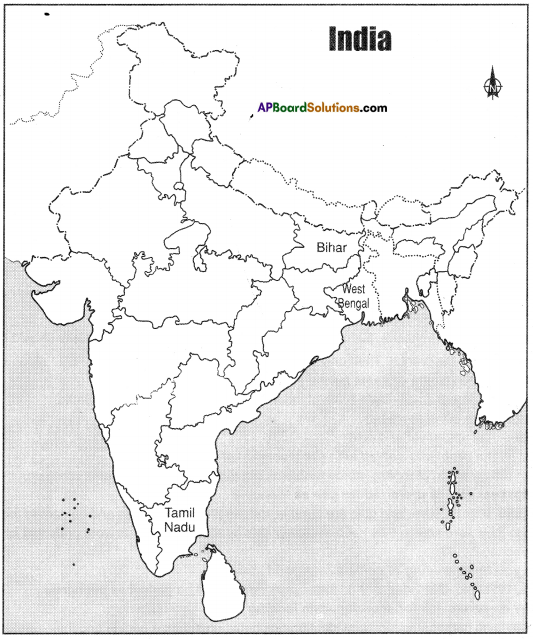
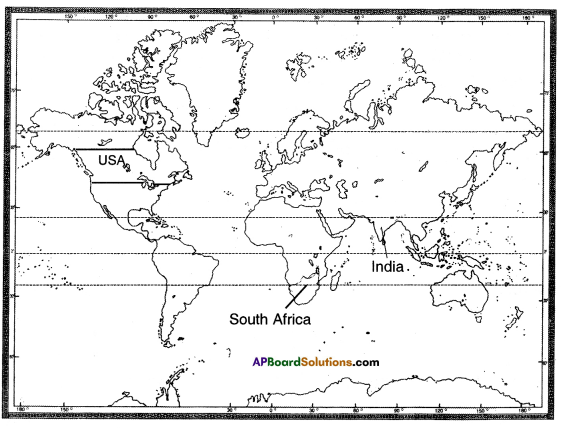
Locate any three places of early bankers of India in the given Indian map.
Answer:
AP Board 8th Class Social Studies Important Questions Chapter 7 Money and Banking 1

AP Board 8th Class Social Studies Important Questions Chapter 7 Money and Banking

Discussion
Invite the local postmaster/postman to your class and conduct the interaction on different saving schemes.
Answer:
Children: Good morning, Sir.
Postmaster: Good morning, Children.
Children: Sir, we want to know about different saving schemes in the post office.
Postmaster: For especially students some saving schemes are introduced in post offices to habituate the savings by children whenever they get pocket money without wastage, it is useful to them buy books in higher classes.
Children: Please Sir, explain such schemes.
Postmaster: Recurring deposit: This is one of the important saving scheme.
Children: Sir, how should we save money in this scheme?
Postmaster: Children this is monthly scheme. From above Rs.10 to how much we need we should save for a certain period of time.
Children: Sir, is there any other schemes.
Postmaster: Savings account.
Children: Sir, How should we maintain this?
Postmaster: Children, in this scheme we opened an account on our name and whenever we have surplus amount should deposit in our account.
Children: Sir, very interesting, is there any other schemes?
Postmaster: Sukanya scheme, this is for only girls.
Children: Sir, we have interest to know about more schemes.
Postmaster: Children, another scheme is also there, that is fixed deposit.
Children: Please, explain Sir.
Postmaster: In this scheme we will deposit our money for a certain period of time, like 1 year, 2 years, 3 years. But we will get interest on behalf of this deposit.
Children: Thank you Sir, today we know more valuablé information about saving schemes in the post office.

AP Board 8th Class Social Studies Important Questions Chapter 7 Money and Banking

AP SSC 10th Class Maths Solutions Chapter 14 Statistics Ex 14.2

AP State Board Syllabus AP SSC 10th Class Maths Textbook Solutions Chapter 14 Statistics Ex 14.2 Textbook Questions and Answers.

AP State Syllabus SSC 10th Class Maths Solutions 14th Lesson Statistics Exercise 14.2

10th Class Maths 14th Lesson Statistics Ex 14.2 Textbook Questions and Answers

Question 1.
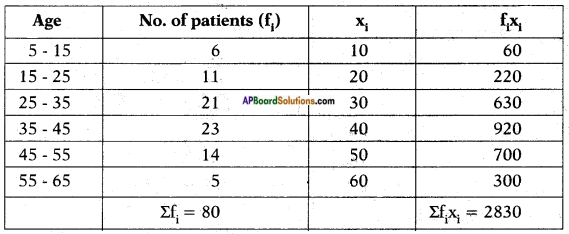
The following table shows the ages of the patients admitted in a hospital during a year:
AP SSC 10th Class Maths Solutions Chapter 14 Statistics Ex 14.2 1
Find the mode and the mean of the data given above. Compare and interpret the two measures of central tendency.
Answer:
Maximum number of patients joined in the age group 35 – 45.
∴ Modal class is 35 – 45.
Lower limit of the modal class ‘l’ = 35
Class size h = 10
Frequency of modal class, f1 = 23
Frequency of the class preceding the modal class f0 = 21
Frequency of the class succeeding the modal class f2 = 14
AP SSC 10th Class Maths Solutions Chapter 14 Statistics Ex 14.2 2
∴ Mode = \(l+\frac{\left(f_{1}-f_{0}\right)}{2 f_{1}-f_{0}-f_{2}} \times h\)
\(\begin{array}{l}
=35+\left(\frac{23-21}{2 \times 23-21-14}\right) \times 10 \\
=35+\left(\frac{2}{46-35}\right) \times 10
\end{array}\)
= 35 + \(\frac{2}{11}\) × 10
= 35 + 1.81818……
= 36.8 years.
Mean x = \(\frac{\Sigma \mathrm{f}_{\mathrm{i}} \mathrm{x}_{\mathrm{i}}}{\Sigma \mathrm{f}_{\mathrm{i}}}\)
= \(\frac{2830}{80}\)
= 35.37 years.
Interpretation: Mode age is 36.8 years, Mean age = 35.37 years.
Maximum number of patients admitted in the hospital are of the age 36.8 years, while on an average the age of patients admitted to the hospital is 35.37 years. Mode is less than the Mean.

AP SSC 10th Class Maths Solutions Chapter 14 Statistics Ex 14.2

Question 2.
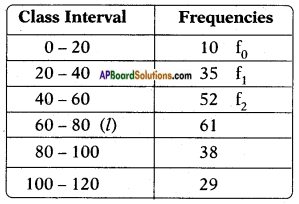
The following data gives the information on the observed lifetimes (in hours) of 225 electrical components:
AP SSC 10th Class Maths Solutions Chapter 14 Statistics Ex 14.2 3
Determine the modal lifetimes of the components.
Answer:
AP SSC 10th Class Maths Solutions Chapter 14 Statistics Ex 14.2 4
Since the maximum frequency 61 is in the class 60 – 80, this is the required modal class.
Modal class frequency, f1 = 61.
Frequency of the class preceding the modal class f0 = 52
Frequency of the class succeeding the modal class f2 = 38
Lower boundary of the modal class, l = 60
Height of the class, h = 20
∴ Mode (Z) = \(l+\frac{\left(f_{1}-f_{0}\right)}{2 f_{1}-f_{0}-f_{2}} \times h\)
\(=60+\left[\frac{61-52}{2 \times 61-(52+38)}\right] \times 20\)
= 60 + \(\frac{9}{122-90}\) × 20
= 60 + \(\frac{9}{32}\) × 20
= 60 + 5.625
= 65.625 hours.

AP SSC 10th Class Maths Solutions Chapter 14 Statistics Ex 14.2

Question 3.
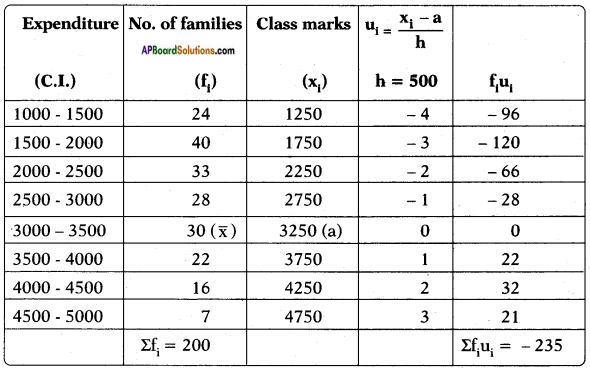
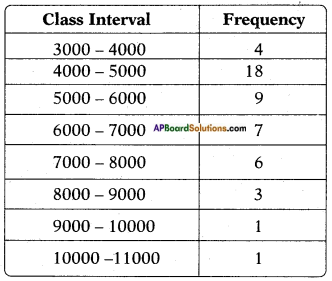
The following data gives the distribution of total monthly household expenditure of 200 families of a village. Find the modal monthly expenditure of the families. Also, find the mean monthly expenditure:
AP SSC 10th Class Maths Solutions Chapter 14 Statistics Ex 14.2 5
Answer:
AP SSC 10th Class Maths Solutions Chapter 14 Statistics Ex 14.2 6
Since the maximum families 40 lies in the class 1500 – 2000, this is the required modal class.
Lower boundary of the modal class (l) = 1500
Frequency of the modal class (f1) = 40
Frequency of the class preceding the modal class f0 = 24
Frequency of the class succeeding the modal class f2 = 33
Height of the class, h = 500
Hence, modal monthly income = Rs. 1847.83.
Assumed mean (a) = 3250
∑fi = 200, ∑uifi = -235
Mean monthly income = \(\overline{\mathrm{x}}=\mathrm{a}+\frac{\Sigma \mathrm{f}_{\mathrm{i}} \mathrm{u}_{\mathrm{i}}}{\Sigma \mathrm{f}_{\mathrm{i}}} \times \mathrm{h}\)
= 3250 – \(\frac{235}{200}\) × 500
= 3250 – 587.5
= Rs. 2662.50

AP SSC 10th Class Maths Solutions Chapter 14 Statistics Ex 14.2

Question 4.
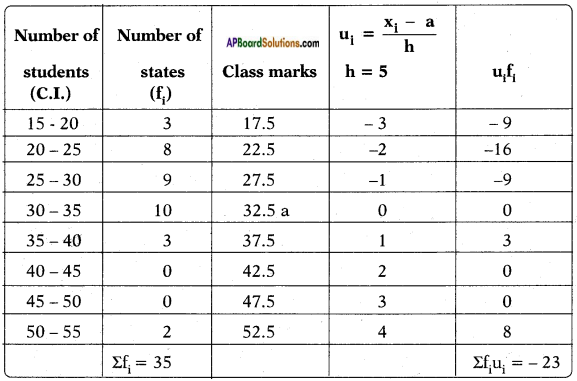
The following distribution gives the state-wise, teacher-student ratio in higher secondary schools of India. Find the mode and mean of this data. Interpret the two measures.
AP SSC 10th Class Maths Solutions Chapter 14 Statistics Ex 14.2 7
Answer:
AP SSC 10th Class Maths Solutions Chapter 14 Statistics Ex 14.2 8
Since the maximum number of states ‘10’ lies in the class interval 30-35, this is the modal class.
Lower boundary of the modal class, l = 30
Frequency of the modal class, f1 = 10
Frequency of the class preceding the modal class = f0 = 9
Frequency of the class succeeding the modal class = f2 = 3
Height of the class, h = 5
∴ Mode (Z) = \(l+\left(\frac{\mathrm{f}_{1}-\mathrm{f}_{0}}{\left(\mathrm{f}_{1}-\mathrm{f}_{0}\right)+\left(\mathrm{f}_{1}-\mathrm{f}_{2}\right)}\right) \times \mathrm{h}\)
\(=30+\frac{10-9}{(10-9)+(10-3)} \times 5\)
= 30 + \(\frac{1×5}{1+7}\)
= 30 + \(\frac{5}{8}\)
= 30 + 0.625
= 30.625
Mean \(\overline{\mathrm{x}}=\mathrm{a}+\frac{\Sigma \mathrm{f}_{\mathrm{i}} \mathrm{u}_{\mathrm{i}}}{\Sigma \mathrm{f}_{\mathrm{i}}} \times \mathrm{h}\)
a = assumed mean = 32.5; h = height of the class = 5
∴ x = 32.5 – \(\frac{23}{35}\) × 5
= 32.5 – 3.28
= 29.22
Mean = 30.625
Mode = 29.22
Mode states have a students – teacher ratio 29.22 and on an average this ratio is 30.625.

AP SSC 10th Class Maths Solutions Chapter 14 Statistics Ex 14.2

Question 5.
The given distribution shows the number of runs scored by some top batsmen of the world in one-day international cricket matches.
AP SSC 10th Class Maths Solutions Chapter 14 Statistics Ex 14.2 9
Find the mode of the data.
Answer:
AP SSC 10th Class Maths Solutions Chapter 14 Statistics Ex 14.2 10
Maximum number of batsmen are in the class 4000 – 5000.
∴ Modal class is 4000 – 5000.
Lower boundary of the modal class ‘l’ = 4000
Frequency of the modal class, f1 = 18
Frequency of the class preceding the modal class, f0 = 4
Frequency of the class succeeding the modal class, f2 = 9
Height of the class, h = 1000
Mode (Z) = \(l+\left(\frac{\mathrm{f}_{1}-\mathrm{f}_{0}}{\left(\mathrm{f}_{1}-\mathrm{f}_{0}\right)+\left(\mathrm{f}_{1}-\mathrm{f}_{2}\right)}\right) \times \mathrm{h}\)
Mode (Z) = \(4000+\frac{18-4}{(18-4)+(18-9)} \times 1000\)
= 4000 + \(\frac{14}{14+9}\) × 1000
= 4000 + \(\frac{14000}{23}\)
= 4000 + 608.695
= 4608.69
≃ 4608.7 runs

AP SSC 10th Class Maths Solutions Chapter 14 Statistics Ex 14.2

Question 6.
A student noted the number of cars passing through a spot on a road for 100 periods, each of 3 minutes, and summarised this in the table given below.
AP SSC 10th Class Maths Solutions Chapter 14 Statistics Ex 14.2 11
Find the mode of the data.
Answer:
AP SSC 10th Class Maths Solutions Chapter 14 Statistics Ex 14.2 12
Since the maximum frequency is 20, the modal class is 40 – 50.
Lower boundary of the modal class ‘l’ = 40
Frequency of the modal class, f1 = 20
Frequency of the class preceding the modal class, f0 = 12
Frequency of the class succeeding the modal class, f2 = 11
Height of the class, h = 10;
Mode (Z) = \(l+\left(\frac{\mathrm{f}_{1}-\mathrm{f}_{0}}{\left(\mathrm{f}_{1}-\mathrm{f}_{0}\right)+\left(\mathrm{f}_{1}-\mathrm{f}_{2}\right)}\right) \times \mathrm{h}\)
Mode (Z) = \(40+\frac{(20-12)}{(20-12)+(20-11)} \times 10\)
= 40 + \(\frac{8}{8+9}\) × 10
= 40 + \(\frac{80}{17}\)
= 40 + 4.70588
= 44.705
≃ 44.7 cars


AP Board 8th Class Social Studies Important Questions Chapter 6 Minerals and Mining

AP State Syllabus AP Board 8th Class Social Studies Important Questions Chapter 6 Minerals and Mining.

AP State Syllabus 8th Class Social Studies Important Questions 6th Lesson Minerals and Mining

Question 1.
How has been the contribution of mining to economy identified in this chapter?
Answer:
India is underdeveloped country immediately after independence. These mines yield income to the government and also get royalty, when the mines were given to others. So I think this is the contribution of mining to economy.

Question 2.
What is the use of the stick in coal mines?
Answer:
The stick is used to check the blasted place in the mine by tapping.

AP Board 8th Class Social Studies Important Questions Chapter 6 Minerals and Mining

Question 3.
What is meant by SCCL?
Answer:
Singareni Collieries Company Limited.

Question 4.
Write about the quality of Barytes.
Answer:
Barytes available in the upper layers are of lower grade while those mined from depth are of higher grade. Quality is determined by the grain size of the stone.

Question 5.
How many kinds of minerals are there? What are they?
Answer:
Environmentalists differentiate minerals into two kinds of resources-renewable and non-renewable. Renewable resources are those which can be regenerated like wood.
Most minerals are non-renewable. There is only a limited amount of these available on the earth. If we finish them then there will not be any more of it. These are called non-renewable sources of energy, e.g.: gold, coal, petroleum.

AP Board 8th Class Social Studies Important Questions Chapter 6 Minerals and Mining

Question 6.
Match the following.
1) Bauxite     ( ) A) Non-conductors of electricity
2) Mica         ( ) B) Roof sheets
3) Chrome    ( ) C) Aluminium
4) Asbestos  ( ) D) Wash basin
5) Feldspar   ( ) E) Stainless steel
Answer:
1) C,
2) A,
3) E,
4) B,
5) D

Question 7.
Fili in the blanks:
1. Ten rings in Hollage indicates danger.
2. Narrow tunnel in mine is mine shaft.
3. Coal layer is called coal seam.
4. The coal drilling area is called face.
5. Coal is transported through conveyor belts.

Question 8.
Appreciate the mineral resources of Andhra Pradesh.
Answer:
Mineral Resources of Andhra Pradesh:
Andhra Pradesh is very rich in mineral resources. It is a large producer of granites of various colours, Kadapa stones, etc., used in buildings. It also produces limestone and dolomite used in cement industry. Northern districts have large coal deposits (Kothagudem in Godavari valley) while the Krishna Godavari basin has great potential for mineral oil and gas. AP is historically known for its famous diamond mines too and some of the largest diamonds in the world were found here.

AP Board 8th Class Social Studies Important Questions Chapter 6 Minerals and Mining

Question 9.
What are the sensitivities in obtaining minerals from mines?
Answer:
Most of the mining practices result in disturbing the surface area – it can mean cutting down forests, destroying fields and habitations, creating large pits or mounds. Mines also need large amounts of water to wash the minerals. This results in polluting the nearby rivers and water sources. This usually means that older use of the land cannot be continued and farmers or tribal people have to leave the land. Even people who live nearby face problems created by mining. At the same time mining employs a large number of people who come to live in nearby areas and build new townships. It thus provides livelihood for nearly ten lakh people in India and over one lakh people in Andhra Pradesh. The work of miners is also very hazardous, as they are constantly exposed to accidents besides breathing in poisonous substances which cause long term health damage.

Question 10.
What aspects of regulations in the mining by the government do you agree with? And why?
Answer:
If the government introduced sophisticated methods and technology instead of giving the mines on lease, I feel better.
The reasons are:

  1. The private people may not take the safety measures.
  2. Their attitudes may cause ‘0’ (zero) minerals to the future citizens.
  3. The right percentage of royalty may not reach the government properly.
  4. The unused mines may not be closed in view of expenditure.

So I support the government regulation only.

AP Board 8th Class Social Studies Important Questions Chapter 6 Minerals and Mining

Question 11.
Why is the SCCL interested in open cast?
Answer:
When compared to underground mines, the open casts are less expensive. Machines can be used widely in these. So SCCL is interested in open casts.

Question 12.
Why is the mining of atomic fuels in the hands of government?
Answer:
Atomic fuels are most valuable. We have less reserves of them. They play a key role in our safety. So they are in the hands of government.

Question 13.
Why should the residents of mining areas be rehabilitated?
Answer:
The residents of mining areas are the owners of those lands. The lands are confiscated from them by force. So they should be rehabilitated.

AP Board 8th Class Social Studies Important Questions Chapter 6 Minerals and Mining

Question 14.
Read a news report of 29 June 2009:

Sinqareni coal mines open wounds

By Our Correspondent
WARANGAL, June 28: Singareni Collieries Company Limited (SCCL) has decided to adopt Open Cast Mining (OCM), to meet the demand for coal. The decision could render 20,000 people homeless and affect 200 villages. The mines will also affect an estimated 3,000 hectares of forests.

“If the mining underground produces 1,500 tonnes of coal a day, open cast mines pro-duce 10,000 tonnes per day and obviously at a much lesser cost,” said a senior SCCL official.

While that is so, the open cast mining will displace thousands of families, destroy scores of habitations and cause loss of livelihood to locals. According to the company official, the company will pay compensatory afforestation charges and develop forests on an equal amount of land where it has lopped off the jungles. It will pay Rs. 4.38 to Rs. 10.43 lakh per hectare, he said. The local people also complained that due to these mines which dig up the earth and create huge artificial hills of loose earth, rivers and streams are getting choked and ground water is getting polluted and there is acute scarcity of even drinking water.

Now answer the following questions.
1. When was this news published?
Answer:
It was of 29-6-2009.

2. What is meant by SCCL?
Answer:
Singareni Collieries Company Limited.

3. What will happen with this decision?
Answer:
The decision could render 20,000 people homeless and affect 200 villages. The mines will also affect an estimated 3,000 hectares of forests.

4. Underground mines, open cast mines – which are profitable to the company?
Answer:
Opencast mines

5. What did the local people complain?
Answer:
The local people complained that due to these mines which dig up the earth and create huge artificial hills of loose earth, rivers and streams are getting choked and ground water is getting polluted and there is acute scarcity of even drinking water.

AP Board 8th Class Social Studies Important Questions Chapter 6 Minerals and Mining

Question 15.
Look at the mineral map of Andhra Pradesh and fill the table.
AP Board 8th Class Social Studies Important Questions Chapter 6 Minerals and Mining 1
Answer:

MineralDistricts
BarytesP.S.R. Nellore, Y.S.R Kadapa, Ongole.
LimestoneAnanthapur, Y.S.R. Kadapa, Ongole, Kurnool, Vizianagaram, Guntur, West Godavari.
GraniteChittoor, Ongole, Krishna, Srikakulam, Vizianagaram.
Iron oreY.S.R. Kadapa, Ananthapur, Ongole, Krishna.
MicaNellore
Crude oilWest Godavari

AP Board 8th Class Social Studies Important Questions Chapter 6 Minerals and Mining

AP SSC 10th Class Maths Solutions Chapter 10 Mensuration Ex 10.4

AP State Board Syllabus AP SSC 10th Class Maths Textbook Solutions Chapter 10 Mensuration Ex 10.4 Textbook Questions and Answers.

AP State Syllabus SSC 10th Class Maths Solutions 10th Lesson Mensuration Exercise 10.4

10th Class Maths 10th Lesson Mensuration Ex 10.4 Textbook Questions and Answers

Question 1.
A metallic sphere of radius 4.2 cm. is melted and recast into the shape of a cylinder of radius 6 cm. Find the height of the cylinder.
Answer:
Given, sphere converted into cylinder.
Hence volume of the sphere = volume of the cylinder.
Sphere:
Radius, r = 4.2 cm
Volume V = \(\frac{4}{3}\)πr3
= \(\frac{4}{3}\) × \(\frac{22}{7}\) × 4.2 × 4.2 × 4.2
= 4 × 22 × 0.2 × 4.2 × 4.2
= 4 x 22 x 0.2 x 4.2 x 4.2
= 310.464
Cylinder:
Radius, r = 6 cm
Height h = h say
Volume = πr2h
= \(\frac{22}{7}\) × 6 × 6 × h
= \(\frac{22 \times 36}{7} h\)
= \(\frac{792}{7} h\)
Hence, \(\frac{792}{7} h\) = 310.464
h = \(\frac{310.464 \times 7}{792}\) = 2.744cm
!! π can be cancelled on both sides i.e., sphere = cylinder
AP SSC 10th Class Maths Solutions Chapter 10 Mensuration Ex 10.4 1

AP SSC 10th Class Maths Solutions Chapter 10 Mensuration Ex 10.4

Question 2.
Three metallic spheres of radii 6 cm., 8 cm. and 10 cm. respectively are melted together to form a single solid sphere. Find the radius of the resulting sphere.
Answer:
Given : Radii of the three spheres r1 = 6 cm r2 = 8 cm r3 = 10 cm
These three are melted to form a single sphere.
Let the radius of the resulting sphere be ‘r’.
Then volume of the resultant sphere = sum of the volumes of the three small spheres.
AP SSC 10th Class Maths Solutions Chapter 10 Mensuration Ex 10.4 2
AP SSC 10th Class Maths Solutions Chapter 10 Mensuration Ex 10.4 3
∴ 1728 = (2 × 2 × 3) × (2 × 2 × 3) × (2 × 2 × 3)
r3 = 12 × 12 × 12
r3 = 123
∴ r = 12
Thus the radius of the resultant sphere = 12 cm

Question 3.
A 20 m deep well with diameter 7 m. is dug and the earth got by digging is evenly spread out to form a rectangu¬lar platform of base 22 m. × 14 m. Find the height of the platform.
Answer:
Volume of earth taken out = πr2h
= \(\frac{22}{7}\) × \(\frac{7}{2}\) × \(\frac{7}{2}\) × 20
= 770 m
Let height of plot form = H m.
∴ 22 × 14 × H = \(\frac{22}{7}\) × \(\frac{7}{2}\) × \(\frac{7}{2}\) × 20
H = \(\frac{35}{14}\) = \(\frac{5}{2}\) = \(2 \frac{1}{2} \mathrm{~m}\)
∴ The height of the plat form is \(2 \frac{1}{2} \mathrm{~m}\)

AP SSC 10th Class Maths Solutions Chapter 10 Mensuration Ex 10.4

Question 4.
A well of diameter 14 m. is dug 15 m. deep. The earth taken out of it has been spread evenly all around it in the shape of a circular ring of width 7 m to form an embankment. Find the height of the embankment
Answer:
Volume of the well = Volume of the embank
Volume of the cylinder = Volume of the embank
Cylinder :
Radius r = \(\frac{d}{2}\) = \(\frac{14}{2}\) = 7 cm
Height/depth, h = 15 m
Volume V = πr2h
= \(\frac{22}{7}\) × 7 × 7 × 15
= 22 × 7 × 15
= 2310 m3
Embank:
AP SSC 10th Class Maths Solutions Chapter 10 Mensuration Ex 10.4 4
Let the height of the embank = h m
Inner radius ‘r’ = Radius of well = 7 m
Outer radius, R = inner radius + width
= 7m + 7m = 14 m
Area of the base of the embank = (Area of outer circle) – (Area of inner circle)
= πR2 – πr2
= π(R2 – r2)
= \(\frac{22}{7}\)\(\left(14^{2}-7^{2}\right)\)
= \(\frac{22}{7}\) × (14+7) × (14-7)
= \(\frac{22}{7}\) × 21 × 7
= 462 m2
∴ Volume of the embank = Base area × height
= 462 × h = 462 h m3
∴ 462 h m3 = 2310 m3
h = \(\frac{2310}{462}\) = 5 m.

AP SSC 10th Class Maths Solutions Chapter 10 Mensuration Ex 10.4

Question 5.
A container shaped like a right circular cylinder having diameter 12 cm. and height 15 cm. is full of ice-cream. The ice-cream is to be filled into cones of height 12 cm. and diameter 6 cm., having a hemispherical shape on the top. Find the number of such cones which can be filled with ice-cream.
Answer:
Let the number of cones that can be filled with the ice-cream be ‘n’.
Then total volume of all the cones with a hemi spherical top = Volume of the ice-cream
AP SSC 10th Class Maths Solutions Chapter 10 Mensuration Ex 10.4 5
Ice-cream cone = Cone + Hemisphere = πr2h
AP SSC 10th Class Maths Solutions Chapter 10 Mensuration Ex 10.4 6
Cone:
Radius = \(\frac{d}{2}\) = \(\frac{6}{2}\) = 3 cm
Height, h = 12 cm
Volume V = \(\frac{1}{3}\)πr2h
= \(\frac{1}{3}\) × \(\frac{22}{7}\) × 3 × 3 × 12
= \(\frac{22}{7}\) × 36
= \(\frac{792}{7}\)
Hemisphere:
Radius = \(\frac{d}{2}\) = \(\frac{6}{2}\) = 3 cm
Volume V = \(\frac{2}{3}\)πr3
= \(\frac{2}{3}\) × \(\frac{22}{7}\) × 3 × 3 × 3
= \(\frac{44 \times 9}{7}\)
= \(\frac{396}{7}\)
∴ Volume of each cone with ice-cream = \(\frac{792}{7}\) + \(\frac{396}{7}\) = \(\frac{1188}{7}\) cm3
Cylinder:
Radius = \(\frac{d}{2}\) = \(\frac{12}{2}\) = 6 cm
Height, h = 15 cm
Volume V = πr2h
= \(\frac{22}{7}\) × 6 × 6 × 15
= \(\frac{22 \times 36 \times 15}{7}\)
= \(\frac{11880}{7}\)
∴ \(\frac{11880}{7}\) = n × \(\frac{11880}{7}\)
⇒ n = \(\frac{11880}{7}\) × \(\frac{7}{1188}\) = 10
∴ n = 10.

AP SSC 10th Class Maths Solutions Chapter 10 Mensuration Ex 10.4

Question 6.
How many silver coins, 1.75 cm in diameter and thickness 2 mm., need to be melted to form a cuboid of dimensions 5.5 cm × 10 cm × 3.5 cm?
Answer:
Let the number of silver coins needed to melt = n
Then total volume of n coins = volume of the cuboid
n × πr2h = lbh [∵ The shape of the coin is a cylinder and V = πr2h]
AP SSC 10th Class Maths Solutions Chapter 10 Mensuration Ex 10.4 7
∴ 400 silver coins are needed.

Question 7.
A vessel is in the form of an inverted cone. Its height is 8 cm. and the radius of its top is 5 cm. It is filled with water up to the rim. When lead shots, each of which is a sphere of radius 0.5 cm are dropped into the vessel, 1/4 of the water flows out. Find the number of lead shots dropped into the vessel.
Answer:
AP SSC 10th Class Maths Solutions Chapter 10 Mensuration Ex 10.4 13
Let the number of lead shots dropped = n
Then total volume of n lead shots = \(\frac{1}{4}\) volume of the conical vessel.
Lead shots:
Radius, r = 0.5 cm
Volume V = \(\frac{4}{3}\)πr3
= \(\frac{4}{3}\) × \(\frac{22}{7}\) × 0.5 × 0.5 × 0.5
Total volume of n – shots
= n × \(\frac{4}{3}\) × \(\frac{22}{7}\) × 0.125
Cone:
Radius, r = 5 cm;
Height, h = 8 cm
Volume, V = \(\frac{1}{3}\) πr2h
= \(\frac{1}{3}\) × \(\frac{22}{7}\) × 5 × 5 × 8
= \(\frac{1}{3}\) × \(\frac{22}{7}\) × 200
AP SSC 10th Class Maths Solutions Chapter 10 Mensuration Ex 10.4 8
∴ Number of lead shots = 100.

AP SSC 10th Class Maths Solutions Chapter 10 Mensuration Ex 10.4

Question 8.
A solid metallic sphere of diameter 28 cm is melted and recast into a number of smaller cones, each of diameter 4 \(\frac{d}{2}\) cm and height 3 cm. Find the number of cones so formed.
Answer:
Let the no. of small cones = n Then,
total volume of n cones = Volume of sphere Diameter = 28 cm.
Cones:
Radius r = \(\frac{d}{2}\)
AP SSC 10th Class Maths Solutions Chapter 10 Mensuration Ex 10.4 9
Height, h = 3 cm
AP SSC 10th Class Maths Solutions Chapter 10 Mensuration Ex 10.4 10
Total volume of n-cones = n . \(\frac{154}{9}\) cm3
Sphere:
Radius = \(\frac{d}{2}\) = \(\frac{28}{2}\) = 14 cm
AP SSC 10th Class Maths Solutions Chapter 10 Mensuration Ex 10.4 12
No. of cones formed = 672.

AP SSC 10th Class Maths Solutions Chapter 10 Mensuration Ex 10.3

AP State Board Syllabus AP SSC 10th Class Maths Textbook Solutions Chapter 10 Mensuration Ex 10.3 Textbook Questions and Answers.

AP State Syllabus SSC 10th Class Maths Solutions 10th Lesson Mensuration Exercise 10.3

10th Class Maths 10th Lesson Mensuration Ex 10.3 Textbook Questions and Answers

Question 1.
An iron pillar consists of a Cylindrical portion of 2.8 m. height and 20 cm. in diameter and a cone of 42 cm. height surmounting it. Find the weight of the pillar if 1 cm3 of iron weighs 7.5 g.
Answer:
Volume of the iron pillar = Volume of the cylinder + Volume of the cone
Cylinder:
AP SSC 10th Class Maths Solutions Chapter 10 Mensuration Ex 10.3 1
Radius = \(\frac{d}{2}\) = \(\frac{20}{2}\) = 10 cm
Height = 2.8 m = 280 cm
Volume = πr2h
= \(\frac{22}{7}\) × 10 × 10 × 280
= 88000 cm3
Cone:
Radius ‘r’ = \(\frac{d}{2}\) = \(\frac{20}{2}\) = 10 cm
height ‘h’ = 42 cm
Volume = \(\frac{1}{3}\)πr2h
= \(\frac{1}{3}\) × \(\frac{22}{7}\) × 10 × 10 × 42
= 4400 cm3
∴ Total volume = 88000 + 4400 = 92400 cm3
∴ Total weight of the pillar at a weight of 7.5 g per 1 cm3 = 92400 × 7.5
= 693000 gms
= \(\frac{693000}{1000}\) kg
= 693 kg.

AP SSC 10th Class Maths Solutions Chapter 10 Mensuration Ex 10.3

Question 2.
A toy is made in the form of hemisphere surmounted by a right cone whose circular base is joined with the plane surface of the hemisphere. The radius of the base of the cone is 7 cm. and its volume is 3/2 of the hemisphere. Calculate the height of the cone and the surface area of the toy correct to 2 places of decimal.
(Take π = \(3 \frac{1}{7}\))
Answer:
AP SSC 10th Class Maths Solutions Chapter 10 Mensuration Ex 10.3 2
Given r = 7 cm and
Volume of the cone = \(\frac{3}{2}\) volume of the hemisphere
\(\frac{1}{3}\)πr2h = \(\frac{3}{2}\) × \(\frac{2}{3}\) × πr3
∴ h = 3r
= 3 × 7 = 21 cm
Surface area of the toy = C.S.A. of the cone + C.S.A. of hemisphere
Cone:
Radius (r) = 7 cm
Height (h) = 21 cm
Slant height l = \(\sqrt{r^{2}+h^{2}}\)
= \(\sqrt{7^{2}+21^{2}}\)
= \(\sqrt{49+441}\)
= √490
= 22.135 cm.
∴ C.S.A. = πrl
= \(\frac{22}{7}\) × 7 × 22.135 = 486.990 cm2
Hemisphere:
Radius (r) = 7 cm
C.S.A. = 2πr2
= 2 × \(\frac{22}{7}\) × 7 × 7
= 308 cm2
C.S.A. of the toy = 486.990 + 308 = 794.990 cm2

Question 3.
Find the volume of the largest right circular cone that can be cut out of a cube whose edge is 7 cm.
Answer:
Radius of the cone with the largest volume that can be cut out from a cube of edge 7 cm = \(\frac{7}{2}\) cm
AP SSC 10th Class Maths Solutions Chapter 10 Mensuration Ex 10.3 3
Height of the cone = edge of the cube = 7 cm
∴ Volume of the cone V = \(\frac{1}{3}\)πr2h
= \(\frac{1}{3}\) × \(\frac{22}{7}\) × \(\frac{7}{2}\) × \(\frac{7}{2}\) × 7
= 89.83 cm3.

AP SSC 10th Class Maths Solutions Chapter 10 Mensuration Ex 10.3

Question 4.
A cylindrical tub of radius 5 cm and length 9.8 cm is full of water. A solid in the form of right circular cone mounted on a hemisphere is immersed into the tub. The radius of the hemi¬sphere is 3.5 cm and height of cone outside the hemisphere is 5 cm. Find the volume of water left in the tub. (Take π = \(\frac{22}{7}\))
Answer:
AP SSC 10th Class Maths Solutions Chapter 10 Mensuration Ex 10.3 4
The tub is in the shape of a cylinder, thus
Radius of the cylinder (r) = 5 cm
Length of the cylinder (h) = 9.8 cm
Volume of the cylinder (V) = πr2h
= \(\frac{22}{7}\) × 5 × 5 × 9.8
Volume of the tub = 770 cm3.
Radius of the hemisphere (r) = 3.5 cm
Volume of the hemisphere = \(\frac{2}{3}\)πr3
= \(\frac{2}{3}\) × \(\frac{22}{7}\) × 3.5 × 3.5 × 3.5
= \(\frac{22 \times 12.25}{3}\)
= \(\frac{269.5}{3}\)
Radius of the cone (r) = 3.5 cm
Height of the Cone (h) = 5 cm
Volume of the cone V = \(\frac{1}{3}\)πr2h
= \(\frac{1}{3}\) × \(\frac{22}{7}\) × 3.5 × 3.5 × 5
= \(\frac{192.5}{3}\)
Volume of the solid = Volume of the hemisphere + Volume of the cone
= \(\frac{269.5}{3}\) + \(\frac{192.5}{3}\) = \(\frac{462}{3}\) = 154 cm3
Now, when the solid is immersed in the tub, it replaces the water whose volume is equal to volume of the solid itself.
Thus the volume of the water replaced = 154 cm3.
∴ Volume of the water left in the tub = Volume of the tub – Volume of the solid = 770 – 154 = 616 cm3.

AP SSC 10th Class Maths Solutions Chapter 10 Mensuration Ex 10.3

Question 5.
In the adjacent figure, the height of a solid cylinder is 10 cm and diameter 7 cm. Two equal conical holes of radius 3 cm and height 4 cm are cut off as shown in the figure. Find the volume of the remaining solid.
AP SSC 10th Class Maths Solutions Chapter 10 Mensuration Ex 10.3 5
Answer:
Volume of the remaining solid = Volume of the given solid – Total volume of the two conical holes
Radius of the given cylinder (r) = \(\frac{d}{2}\) = \(\frac{7}{2}\) = 3.5 cm
Height of the cylinder (h) = 10 cm
Volume of the cylinder (V) = πr2h
= \(\frac{22}{7}\) × 3.5 × 3.5 × 10
= \(\frac{2695}{7}\)
= 385 cm3.
Radius of each conical hole, ‘r’ = 3 cm
Height of the conical hole, h = 4 cm
Volume of each conical hole,
V = \(\frac{1}{3}\)πr2h = \(\frac{1}{3}\) × \(\frac{22}{7}\) × 3 × 3 × 4
= \(\frac{792}{21}\)
= \(\frac{264}{7}\)
Total volume of two conical holes = 2 × \(\frac{264}{7}\) = \(\frac{528}{7}\) cm3
Hence, the remaining volume of the solid
AP SSC 10th Class Maths Solutions Chapter 10 Mensuration Ex 10.3 8

Question 6.
Spherical marbles of diameter 1.4 cm. are dropped into a cylindrical beaker of diameter 7 cm., which contains some water. Find the number of marbles that should be dropped into the beaker, so that water level rises by 5.6 cm.
Answer:
Rise in the water level is seen in cylindrical shape of Radius = Beaker radius
= \(\frac{d}{2}\) = \(\frac{7}{2}\) = 3.5 cm
AP SSC 10th Class Maths Solutions Chapter 10 Mensuration Ex 10.3 6
Height ‘h’ of the rise = 5.6 cm.
∴ Volume of the ‘water rise’ = πr2h
= \(\frac{22}{7}\) × 3.5 × 3.5 × 5.6
= \(\frac{22 \times 12.25 \times 5.6}{7}\)
= 215.6
Volume of each marble dropped = \(\frac{4}{3}\)πr3
Where radius r = \(\frac{d}{2}\) = \(\frac{1.4}{2}\) = 0.7 cm
∴ V = \(\frac{4}{3}\) × \(\frac{22}{7}\) × 0.7 × 0.7 × 0.7
= 1.4373 cm3
∴ Volume of the ‘rise’ = Total volume of the marbles.
Let the number of marbles be ‘n’ then n × volume of each marble = volume of the rise.
n × 1.4373 = 215.6
= \(\frac{215.6}{1.4373}\)
∴ Number of marbles = 150.

AP SSC 10th Class Maths Solutions Chapter 10 Mensuration Ex 10.3

Question 7.
A pen stand is made of wood in the shape of cuboid with three conical depressions to hold the pens. The dimensions of the cuboid are 15 cm by 10 cm by 3.5 cm. The radius of each of the depression is 0.5 cm and the depth is 1.4 cm. Find the volume of wood in the entire stand.
AP SSC 10th Class Maths Solutions Chapter 10 Mensuration Ex 10.3 7
Answer:
Volume of the wood in the pen stand = Volume of cuboid – Total volume of three depressions.
Length of the cuboid (l) = 15 cm
Breadth of the cuboid (b) = 10 cm
Height of the cuboid (h) = 3.5 cm
Volume of the cuboid (V) = lbh = 15 × 10 × 3.5 = 525 cm3.
Radius of each depression (r) = 0.5 cm
Height / depth (h) = 1.4 cm
Volume of each depressions V = \(\frac{1}{3}\)πr2h
= \(\frac{1}{3}\) × \(\frac{22}{7}\) × 0.5 × 0.5 × 1.4
= \(\frac{7.7}{3 \times 7}\) = \(\frac{1.1}{3}\) cm3
Total volume of the three depressions = 3 × \(\frac{1.1}{3}\)
= 1.1 cm3
∴ Volume of the wood = 525 – 1.1 = 523.9 cm3

AP Board 7th Class Maths Solutions Chapter 8 Exponents and Powers Ex 8.2

SCERT AP 7th Class Maths Solutions Pdf Chapter 8 Exponents and Powers Ex 8.2 Textbook Exercise Questions and Answers.

AP State Syllabus 7th Class Maths Solutions 8th Lesson Exponents and Powers Ex 8.2

Question 1.
Simplify the following by using Laws of Exponents.
(i) 37 × 38
Answer:
37 × 38
We know am × an = am+n
37 × 38 = 37 + 8 = 315
∴ 37 × 38 =315

(ii) 92 × 90 × 93
Answer:
92 × 90 × 93
We know ap × aq × ar = p + q + r
92 × 90 × 93 = 92 + 0 + 3 = 95
∴ 92 × 90 × 93 = 95

(iii) (28)3
Answer:
(28)3
We know (am)n = amn
(28)3 = 28×3 =224
∴ (28)3 = 224

(iv) (a5)4
Answer:
(a5)4
We Know (am)n = amn
(a5)4 = a5×4 = a20
(a5)4 = a20

(v) \(\left(\frac{2}{5}\right)^{4} \times\left(\frac{2}{5}\right)^{3} \times\left(\frac{2}{5}\right)^{8}\)
Answer:
AP Board 7th Class Maths Solutions Chapter 8 Exponents and Powers Ex 8.2 1

(vi) 75 ÷ 78
Answer:
75 ÷ 78
We know am = \(\frac{1}{a^{n-m}}\) (n>m)
75 ÷ 78 = \(\frac{1}{7^{8-5}}=\frac{1}{7^{3}}\)
∴ 75 ÷ 78 = \(\frac{1}{7^{3}}\)

(vii) \(\frac{(-6)^{9}}{(-6)^{5}}\)
Answer:
\(\frac{(-6)^{9}}{(-6)^{5}}\)
We Know am ÷ an = am-n(m > n)
\(\frac{(-6)^{9}}{(-6)^{5}}\) = (-6)9-5 = (-6)4
∴ \(\frac{(-6)^{9}}{(-6)^{5}}\) = (-6)4

(viii) (64 × 62) ÷ 65
Answer:
(64 × 62) ÷ 65
We know atm X a = a”
= (64+2) ÷ 65
= 66 ÷ 65
We know am ÷ an = am-n (m> n)
= 66-5 = 61 = 6
∴ (64 × 62) ÷ 65 = 6

(ix) \(\frac{5^{3}}{2^{3}}\)
Answer:
\(\frac{5^{3}}{2^{3}}\)
We know \(\frac{a^{m}}{b^{m}}=\left(\frac{a}{b}\right)^{m}\)
∴ \(\frac{5^{3}}{2^{3}}=\left(\frac{5}{2}\right)^{3}\)

(x) (-3)3 × (-3)10 × (-3)7
Answer:
(-3)3 × (-3)10 × (-3)7
we know ap . aq. ar = ap+q+r
(-3)3 × (-3)0 × (-3)7 = (-3)3+10+7
∴ (- 3)3 × (- 3)10 × (- 3)7 = (- 3)20

AP Board 7th Class Maths Solutions Chapter 8 Exponents and Powers Ex 8.2

Question 2.
Simplify and express each of the following in Exponential form.
(i) \(\left(\frac{a^{5}}{a^{3}}\right)\) × a8
Answer:
\(\left(\frac{a^{5}}{a^{3}}\right)\) × a8
We Know \(\frac{a^{m}}{a^{n}}\) = am-n(m > n)
= (a5-3) × a8
= a2 × a8

We know am × an = am+n
= a2+8 = a10
∴ \(\left(\frac{a^{5}}{a^{3}}\right)\) × a8 = a10

(ii) 20 + 30 – 40
Answer:
20 + 30 – 40
We know a0 = 1
AP Board 7th Class Maths Solutions Chapter 8 Exponents and Powers Ex 8.2 2
∴ 20 + 30 – 40 = 1

(iii) (23 × 2)2
Answer:
(23 × 2)2
We know am.an = am+n
(23 × 2)2 = (23+1)2 = (24)2

We know (am)n = am.n
= 24×2 = 28
∴(23 × 2)2 = 28

(iv) [(52)3 × 54] ÷ 57
Answer:
[(52)3 × 54] ÷ 57

We know (am) = am.n
= [52×3 × 54] ÷ 57
= [56 < 54] ÷ 57

We know am .an = am+n
= [56+4] ÷ 57
= 510 ÷ 57
We know am ÷ an = am-n (m > n)
= 510-7 = 53
∴ [(52)3 × 54] ÷ 57 = 53

Question 3.
Simplify \(\left(\frac{x^{a}}{x^{b}}\right) \times\left(\frac{x^{b}}{x^{c}}\right) \times\left(\frac{x^{c}}{x^{a}}\right)\)
Answer:
\(\left(\frac{x^{a}}{x^{b}}\right) \times\left(\frac{x^{b}}{x^{c}}\right) \times\left(\frac{x^{c}}{x^{a}}\right)\)
AP Board 7th Class Maths Solutions Chapter 8 Exponents and Powers Ex 8.2 3

Question 4.
Find the value of the following.
(i) (-1)1000
Answer:
(-1)1000
(-1)1 = – 1
(-1)2 = – 1 × – 1 = + 1
(-1)3 = – 1 × -1 × -1 = – 1
(-1)4 = -1 × -1 × – 1 × – 1 = + 1
(-1)5 = -1 × -1 × -1 × -1 × -1 = -1
(-1)100 = -1 × -1 × -1 × ………… 100 times = + 1

So, (-1)odd number = -1 and
(-1)even number = + 1

Here 1000 is even number
So, (-1)1000 = + 1

(ii) (1)250
Answer:
1250 = 1 × 1 × 1 ……… 250 times = 1
∴ 1250 = 1

(iii) (1)121
Answer:
1121 = -1 × -1 × -1 ……..(121 times)
Here 121 is an odd number
So, (1)121 = – 1

(iv) (10000)0
Answer:
(10000)0
we know a0 = 1
So, (10000)0 = 1

Question 5.
If 75 × 73x = 720 then find the value of ’x’.
Answer:
Given, 75 × 73x = 720
W know am X an = am+n
75 + 3x = 720
If the bases are equal, then the powers should also be equal.
⇒ 5 + 3x = 20
⇒ 5 + 3x – 5 = 20 – 5
⇒ 3x = 15
⇒ \(\frac{3 x}{3}=\frac{15}{3}\) = 5
∴ x = 5

AP Board 7th Class Maths Solutions Chapter 8 Exponents and Powers Ex 8.2

Question 6.
If 10y = 10000 then 5y =?
Answer:
Given, 10y = 10000
10y = 10 × 10 × 10 × 10
10y = 104
If the bases are equal, then the powers should also be equal.
⇒ y = 4
Multiply by 5 on bothsides,
5 × y = 5 × 4
∴ 5y = 20

Question 7.
If 5x = 100 then find the following values.
(i) 5x+y
Answer:
Given 5x+y = 100
5x = 102
Multiply by 52
5x × 52 = 100 × 52
5x+2 = 100 × 25 (∵ am × an = am+n)
∴ 5x+2 = 2500

(ii) 5x-2
Answer:
Given 5x = 100
5x = 102
Divide by 52 on both sides
5x ÷ 52 = 100 ÷ 52
AP Board 7th Class Maths Solutions Chapter 8 Exponents and Powers Ex 8.2 4
∴ 5x-2 = 4

Question 8.
By what number should 34 be multiplied so that the product is 243?
Answer:
Given number is 34
If we multiply 34 by ‘a’ the product is 243.
i.e. 34 × a = 243
= 3 × 3 × 3 × 3 × 3
34 × a = 35
Divide by 34 on both sides
AP Board 7th Class Maths Solutions Chapter 8 Exponents and Powers Ex 8.2 5
If we multiply 34 by 3 we get 243.

Question 9.
Arushi computed (52)4 as 516 Has she done it correctly or not’? Justify your answer.
Answer:
Given, (52)4
We know) (am)n = am.n
= 52×4 = 58
∴ (52)4 = 58
But Arushi got 516 So, (52)4 ≠ 516
Therefore Arushi did wrong.

AP Board 7th Class Maths Solutions Chapter 8 Exponents and Powers Ex 8.2

Question 10.
Is 35 × 45 equal to 1225? If not why? Justify your answer.
Answer:
Given, 35 × 45
We know am × bm = (a × b)m
So, 35 × 45 = 12 but not 125×5
= (3 × 4)5
= (12)5
35 × 45= 125
But given 35 × 45 = 1225.
So, this is wrong.
So, 35 × 45 ≠ 1225

AP Board 7th Class Telugu Solutions 1st Lesson అక్షరం

SCERT AP Board 7th Class Telugu Solutions 1st Lesson అక్షరం Textbook Questions and Answers.

AP State Syllabus 7th Class Telugu 1st Lesson Questions and Answers అక్షరం

7th Class Telugu 1st Lesson అక్షరం Textbook Questions and Answers

వినడం – అలోచించి మాట్లాడడం

AP Board 7th Class Telugu Solutions 1st Lesson అక్షరం 1
ప్రశ్న 1.
చిత్రంలో ఎవరెవరున్నారు?
జవాబు:
చిత్రంలో తల్లీ, పిల్లలు ఉన్నారు.

ప్రశ్న 2.
తల్లి ఏం చేస్తోంది?
జవాబు:
పిల్లలకు తల్లి చదువు (అక్షరాలు) చెబుతోంది.

ప్రశ్న 3.
పిల్లలు ఏం చేస్తున్నారు?
జవాబు:
తల్లి చెప్పే విషయాలను (అక్షరాలను) జాగ్రత్తగా గమనిస్తున్నారు.

Improve Your Learning (అభ్యసనాన్ని మెరుగుపరచుకుందాం)

ప్రశ్న 1.
ఈ వచనకవితను భావయుక్తంగా చదవండి.
జవాబు:
సూచన : ఉపాధ్యాయుడు చదివే విధానాన్ని గమనించండి. ఆయనతో బాటు చదవండి. కఠిన పదాల ఉచ్చారణ చాలా జాగ్రత్తగా గమనించండి. చదవండి. దోషాలు గుర్తించండి. సవరించుకోండి. పదే పదే చదివి బాగా చదవడం అలవరుచుకోండి.

AP Board 7th Class Telugu Solutions 1st Lesson అక్షరం

ప్రశ్న 2.
మీరు తల్లి దగ్గర ఏమి నేర్చుకున్నారు?
జవాబు:
నాకు మా అమ్మ నడక నేర్పింది. నడత నేర్పింది. మాటలు కూడా మా అమ్మ దగ్గరే నేర్చుకొన్నాను. పళ్లు తోము కోవడం నేర్చుకొన్నాను. స్నానం చేయడం నేర్చుకొన్నాను. అన్నం తినడం నేర్చుకొన్నాను. భయపడకుండా ధైర్యంగా ఉండడం కూడా మా అమ్మ దగ్గరే నేర్చుకొన్నాను. చిన్న చిన్న పనులు చేయడం నేర్చుకొన్నాను. బట్టలు మడత పెట్టడం నేర్చుకొన్నాను. నేను అక్షరాలు వ్రాయడం, చదవడం, అంకెలు వేయడం, వారాల పేర్లు, నెలల పేర్లు, చిట్టీ చిలకమ్మ వంటి పాటలు, అభినయం, శరీరభాగాలు చూపించడం మొదలైనవన్నీ మా అమ్మ దగ్గరే నేర్చుకొన్నాను. ఈ రోజు నేను చేసే ప్రతి పనినీ ప్రాథమిక స్థాయిలో మా అమ్మ దగ్గరే నేర్చుకొన్నాను.

ప్రశ్న 3.
మీ చిన్నప్పటి అనుభవాలను తెల్పండి.
జవాబు:
నా చిన్నతనంలో నాకు తొందరగా నడవడం రాలేదు. మా అమ్మ చేయి పట్టుకొని నడిపించేది. కొన్ని మాటలు పలకడం వచ్చేది కాదు. మా అమ్మ ఆ మాటలను పదేపదే పలికించేది. అలా నేర్పింది. ఒకసారి ఒకటవ తరగతిలో ఒక అబ్బాయి నన్ను కొట్టాడు, దానితో బడికి వెళ్లనని ఏడ్చాను. మా అమ్మ నన్నెంతో బ్రతిమాలింది. అయినా వినలేదు. చివరకు అమ్మ కూడా కొట్టింది. తర్వాత చాక్లెట్లు ఇచ్చి బుజ్జగించింది. నన్ను ఎత్తుకొని కబుర్లు చెబుతూ, నవ్విస్తూ బడికి తీసుకొని వచ్చింది. నన్ను కొట్టిన అబ్బాయితో మాట్లాడింది. కొట్టుకోవడం తప్పని చెప్పింది. వాడికీ చాక్లెట్లు నా చేత ఇప్పించింది. స్నేహంగా ఉండాలని చెప్పింది. అప్పటి నుంచీ ఇద్దరం ప్రాణ స్నేహితులుగా మారిపోయాం . వాడే నా స్నేహితుడు రాము.

ప్రశ్న 4.
కింది దేశభక్తి గేయాన్ని ఆలపించండి. ప్రశ్నలకు జవాబులు రాయండి.
జయము జయము భరతమాత జయము నీకు జగన్మాత
ఈ జగాన సాటి ఎవ్వరే ఓ యమ్మ నీకు
గంగ-యమున గోదారీ సింధు కృష్ణ కావేరీ
బ్రహ్మపుత్ర తుంగభద్ర తపతీ నర్మద పెన్నా
పొంగి పొరలె తరంగాలు నీ మెడలో హారాలు
జీవనదుల కన్నతల్లివే ఓయమ్మ నీవు ||జయము, జయము||

హిమ వింధ్యా పర్వతాలు దేవతలకు నిలయాలు
దట్టమైన అరణ్యాలు మహామునుల స్థావరాలు
పసిడి పంట క్షేత్రాలు పంచలోహ ఖనిజాలు
నిజముగ నువు రత్న గర్భవే ఓయమ్మ నీవు || జయము జయము||

లోకమంత చీకటిలో తల్లడిల్లుతున్నప్పుడు
నాగరికత లేక నరులు పామరులై ఉన్నప్పుడు
వేదాలను వెతికి తెచ్చి జ్ఞాన భిక్ష పెట్టినావు.
నిజముగ నీవు జగద్గురువువే ఓయమ్మ నీవు ||జయము జయము||

ప్రశ్నలు :
అ) మన జీవనదులు ఏవి?
జవాబు:
మన జీవనదులు గంగ, యమున, గోదావరి, సింధు, కృష్ణ, కావేరి, బ్రహ్మపుత్ర, తుంగభద్ర, తపతి, నర్మద, పెన్నా.

ఆ) మహామునుల స్థావరాలు ఏవి?
జవాబు:
దట్టమైన అరణ్యాలు మహామునుల స్థావరాలు.

ఇ) ఎవరికి జయము పలకాలి?
జవాబు:
భరతమాతకు జయము పలకాలి.

ఈ) పై గేయం ఆధారంగా ప్రశ్నలు తయారుచేయండి.
జవాబు:
సూచన : ఒకే ప్రశ్న తయారుచేయమని అడుగుతారు.

  1. భరతమాత మెడలో హారాలుగా వేటిని చెప్పారు?
  2. జీవనదులకు కన్నతల్లి ఎవరు?
  3. దేవతలకు నిలయాలేవి?
  4. రత్నగర్భ అని ఎవరినంటారు?
  5. జ్ఞాన భిక్షను పెట్టినవేవి?
  6. జగద్గురువుగా ఎవరిని పేర్కొన్నారు?

వ్యక్తీకరణ – సృజనాత్మకత

అ) కింది ప్రశ్నలకు నాలుగైదు వాక్యాలలో జవాబులు రాయండి.

ప్రశ్న 1.
అక్షరాలు ఎక్కడ కవాతు చేస్తాయని కవి అన్నాడు?
జవాబు:
అక్షరాలు కవి హృదయంలో కవాతు చేస్తున్నాయి అన్నాడు. తన కనురెప్పలపై కవాతు చేస్తున్నాయి అన్నాడు. తన గుండె నిండా అక్షరాలే ఉన్నాయి అన్నాడు. తను నిద్రపోదామని కళ్లు మూస్తే తన కనురెప్పలపై అక్షరాలు కవాతు చేస్తున్నాయి అన్నాడు. అందుచేత తనకు నిద్రాభంగం కలుగుతోంది అన్నాడు.

AP Board 7th Class Telugu Solutions 1st Lesson అక్షరం

ప్రశ్న 2.
అన్నప్రాసన నాడు జరిగిన సంఘటన గురించి రాయండి.
జవాబు:
అన్నప్రాసన నాడు పెన్ను, పుస్తకాలు, దేవుడి బొమ్మ, బొమ్మ కత్తి, బొమ్మలు మొదలైనవన్నీ కవిగారి చిన్నతనంలో చుట్టూ వేశారు. వాటిలో ఏదో ఒకటి తీయమన్నారు. సహజంగానే ఎర్రగా ఉన్న పెన్ను కవిని ఆకర్షించింది. దానినే తీశాడు. కలం పట్టుకొన్నందుకు వాళ్లమ్మ చాలా ఆనందించింది. బిడ్డను అక్కున చేర్చుకొంది. ఒళ్లంతా ముద్దులు పెట్టుకొంది. తన బిడ్డ కలం చేతబట్టి గొప్ప వాడవుతాడని మురిసిపోయింది.

ఆ) కింది ప్రశ్నలకు 8 నుండి 10 వాక్యాలలో జవాబులు రాయండి.

ప్రశ్న 1.
‘అక్షరం’ గేయం సారాంశాన్ని మీ సొంతమాటల్లో రాయండి.
జవాబు:
కవిగారి హృదయంలో ఎప్పుడూ చదువు గురించే ఆలోచన. నిద్రపోయేటపుడు కూడా అతని కళ్లలో చదువు గురించే కలలు. అందుకే తరచుగా నిద్రాభంగమయ్యేది.

వాళ్లమ్మగారు ఉపాధ్యాయురాలు. అతని కలలు చదువు గురించే ఉండేవి. అన్ని ప్రదేశాలూ చదువుకు స్థావరాలే. – తను నిద్రపోయేటపుడు వాళ్లమ్మ అక్షరాల దుప్పటి కప్పిందేమో అందుకే అతనికి నిద్రలోనూ, మెలకువలోనూ కూడా చదువు ధ్యాసే ఉండేది.

కవి చిన్నతనంలో అన్నప్రాశన చేశారు. ఆ రోజు అతని చుట్టూ చాలా వస్తువులు పెట్టారు. అన్నింటిలో అతనికి ఎర్రగా ఉన్న పెన్ను నచ్చింది. పెన్నునే పట్టుకొన్నాడు. అది చూసి వాళ్లమ్మ చాలా ఆనందించింది. తన .” బిడ్డ బాగా చదువుకొని ప్రపంచాన్ని పరిపాలిస్తాడని మురిసిపోయింది. అతనిని ఒళ్లంతా ముద్దులతో ముంచెత్తింది.

ఆ ముద్దులలో అతనికి అక్షరాల ముద్దరలు ఉన్నట్లు అనిపించేయి. తన ఒంటినిండా చదువుకు సంబంధించిన మంచి మాటలే ఆ ముద్దులలో కనిపించాయి.

ఇప్పుడు ప్రతి అక్షరంలోనూ అమ్మే కనిపిస్తోంది. తనను అక్షరాల రాశిగా చేసిన అమ్మకు తనొక చదువుల సరస్వతిగా మారి తనను తాను సమర్పించుకొన్నాడు.

ప్రశ్న 2.
జీవితంలో చదువు విలువ ఎంత ముఖ్యమో తెల్పండి.
జవాబు:
జీవితంలో చదువు చాలా ముఖ్యమైనది. చదువు వలన వినయం వస్తుంది. దాని వలన గౌరవం పెరుగుతుంది. విద్య, వినయం, గౌరవప్రదమైన ప్రవర్తన వలన మంచి ఉద్యోగం వస్తుంది. దాని వలన ధనం వస్తుంది. దానితో ధర్మాన్ని నిలబెట్టవచ్చు.

మనిషిని మహోన్నతునిగా తీర్చిదిద్దేది చదువు. చదువు వలన జ్ఞానం పెరుగుతుంది. జ్ఞానం వలన గౌరవం పెరుగుతుంది. ధనమును దొంగలు దోచుకొంటారు. అన్నదమ్ములు వాటాలు అడుగుతారు. కాని, చదువును కానీ, దాని వలన వచ్చిన జ్ఞానాన్ని కానీ దొంగలెత్తుకుపోలేరు. ఎవ్వరూ వాటాలు అడగలేరు. అందుచేత ధనం కంటె విలువైనది చదువు.

ధనం ఖర్చు పెడితే తరిగిపోతుంది. సంపదలన్నీ తరిగిపోతాయి. చదువు మాత్రం ఇతరులకు చెప్పే కొలది ” మనకు జ్ఞానం పెరుగుతుంది. అందుకే అన్ని దానాల కంటే విద్యాదానం గొప్పది అంటారు.

ఎవరికైనా అన్నం పెడితే అప్పటికే ఆకలి తగ్గుతుంది. డబ్బిస్తే కొంతకాలమే ఉంటుంది. ఇల్లు కట్టిస్తే కొంత .కాలానికి కూలిపోతుంది. కాని, చదువు చెప్పిస్తే బ్రతకడం తెలుస్తుంది. శరీరంలో బలం కూడా అనారోగ్యాల వలన, కాలక్రమేణా తగ్గవచ్చు. కానీ చదువు విలువ, దాని వలన వచ్చిన తెలివీ పెరుగుతుంది తప్ప తగ్గదు. అందుచేత జీవితంలో అన్నిటికంటే చదువు విలువైనదీ, ముఖ్యమైనది అని చెప్పవచ్చును.

ప్రశ్న 3.
అమ్మ ప్రేమ గురించి మీ మాటల్లో రాయండి.
జవాబు:
అమ్మ ప్రేమతో సమానమైనదేదీ లేదు. తను తినకపోయినా తన పిల్లలకు కడుపునిండా అన్నం పెడుతుంది. తను ఎన్ని కష్టాలనైనా భరిస్తుంది. కానీ, తన పిల్లలకు చిన్న కష్టం కూడా రానివ్వదు. తన పిల్లల కోసం ప్రాణాలైనా అర్పిస్తుంది. తన పిల్లలకు ఎంతో ప్రేమగా ఆటలు నేర్పుతుంది. మాటలు నేర్పుతుంది. చదువు చెబుతుంది. పిల్లలు చెడు మార్గంలోకి వెడుతుంటే మంచి మాటలతో వారిని మంచిదార్లో పెడుతుంది. అనారోగ్యం వస్తే అల్లాడిపోతుంది. పిల్లలు భయపడితే ధైర్యం చెబుతుంది. మారాం చేస్తుంది. బుజ్జగిస్తుంది. తప్పు చేస్తే దండిస్తుంది. బాధపడుతుంటే ఓదారుస్తుంది. పిల్లలకు కావలసినవన్నీ వండి పెడుతుంది. అమ్మ దైవం కంటే గొప్పది. భగవంతుడికైనా కోపం వస్తుందేమో కానీ అమ్మకు కోపం రాదు. అలసట రాదు. నీరసం రాదు. చిరాకు రాదు. అమ్మ ప్రేమ గురించి వ్రాయడానికి పదాలు చాలవు.

భాషాంశాలు

అ) కింది పదాలకు అర్థాలను జతపరచండి.

1. గవాక్షంఅ) నేల
2. తావుఆ) హృదయం
3. గుండెఇ) కిటికీ
4. ఇలఈ) స్థానం

జవాబు:

1. గవాక్షంఇ) కిటికీ
2. తావుఈ) స్థానం
3. గుండెఆ) హృదయం
4. ఇలఅ) నేల

ఆ) కింద ఇచ్చిన పదాలకు సమానార్థకపదాలు (పర్యాయపదాలు) వాక్యాలలో గుర్తించి రాయండి.

1. శరీర శుభ్రతను పాటించాలి. తనువును ఆరోగ్యంగా ఉంచుకోవాలి.
జవాబు:
కాయం = శరీరం, తనువు

2. నేత్రాలను సురక్షితంగా ఉంచుకోవాలి. నయనాలు లేనిదే లోకాన్ని చూడలేము.
జవాబు:
కన్ను = నేత్రం, నయనం

3. అమ్మను మించిన దైవం లేదు. మాతను పూజించాలి.
జవాబు:
తల్లి = అమ్మ, మాత

ఇ) కింది పదాలలో ప్రకృతి వికృతులను గుర్తించి రాయండి.
AP Board 7th Class Telugu Solutions 1st Lesson అక్షరం 2

ప్రకృతి – వికృతి
1. నిద్ర – నిదుర
2. అంబ – అమ్మ
3. రాత్రి – రాతిరి
4. ముద్ర – ముద్దర
5. అక్షరము – అక్కరము

ఈ) కింది ఖాళీలను సరైన పదాలతో పూరించండి.

1. నేను తల్లిదండ్రులను ఎల్లప్పుడూ గౌరవిస్తాను.
ఎల్లప్పుడూ గౌరవిస్తాను, కొంచెం గౌరవిస్తాను

2. నేను కష్టపడి చదువుతాను.
చదువుతాను, చదవను

3. చేతులు శుభ్రంగా కడుగుతాను.
కడుగుతాను, కడగను

4. మంచి వాళ్ళతో స్నేహం చేస్తాను.
చేస్తాను, చేయను

ఉ) కింది పదాలకు సొంతవాక్యాలు రాయండి.
ఉదా : అక్షరాలు

మన జీవితానికి అక్షరాలు మార్గదర్శకాలు.
1. నిరంతరం = ఎల్లప్పుడు,
నిరంతరం పరిశుభ్రంగా ఉండాలి.

2. అనుబంధం = ఎప్పుడూ ఉండే సంబంధం
మంచివారితో అనుబంధం పెంచుకోవాలి.

3. కంబళి = రగ్గు, దుప్పటి
చలికాలంలో కంబళి కప్పుకోవాలి.

4. నిద్రాభంగం = నిద్రకు ఆటంకం
ఎవ్వరికీ నిద్రాభంగం చేయకూడదు.

5. అక్కున చేర్చుకొను = గుండెకు హత్తుకొను
మదర్ థెరిసా పేద రోగులను అక్కున చేర్చుకొని కాపాడింది.

AP Board 7th Class Telugu Solutions 1st Lesson అక్షరం

ఊ) కింది వాక్యాలు ఆధారంగా మన బంధుత్వాలను గళ్ళలో నింపండి.
AP Board 7th Class Telugu Solutions 1st Lesson అక్షరం 3

అడ్డం :

  1. తల్లికి ఇంకొక పేరు (2)
  2. తల్లిగారి చెల్లిని ఏమని పిలుస్తారు? (3)
  3. తల్లిగారి అక్కను ఏమని పిలుస్తారు? (3)

నిలువు :

  1. తల్లిగారి తల్లిని ఏమని పిలుస్తారు? (3)
  2. తండ్రిగారి తల్లిని ఏమని పిలుస్తారు? (3)
  3. తండ్రిగారి అక్కచెల్లిని ఏమని పిలుస్తారు? (తిరగబడింది) (3)

AP Board 7th Class Telugu Solutions 1st Lesson అక్షరం 4

వ్యాకరణాంతాలు

పూర్వ పదం – పరపదం

అ) కింది వాక్యాలను గమనించండి. గీతగీసిన పదాలను విడదీయండి.

1. దేశమును ప్రేమించుమన్నా మంచి యన్నది పెంచుమన్నా.
2. భద్రాద్రి రామయ్య కళ్యాణం కన్నుల పండువగా జరుగుతుంది.
3. చదువు నేర్పే గురువులకిదే మా వందనం.
4. శ్రీశైల మల్లన్న కోరిన కోర్కెలు తీర్చే దైవం.
5. సింహాద్రి అప్పన్న నమ్మిన భక్తులకు కొండంత అండ.
ఉదా : రామయ్య = రామ + అయ్య
1. ప్రేమించుమన్న = ప్రేమించుము + అన్న
2. పెంచుమన్న = పెంచుము + అన్న
3. గురువులకిదే = గురువులకు + ఇదే
4. అప్పన్న = అప్ప + అన్న
5. మల్లన్న = మల్ల + అన్న

పై ఉదాహరణలను గమనించండి. ఉదాహరణలో రామయ్య అనే పదం ఉంది కదా ! దీనిలో రెండు పదాలు ఉన్నాయి. అవి రామ, అయ్య అనేవి. వీటిలో ‘రామ’ అనేది మొదటి పదం కదా ! దీనినే పూర్వపదం అంటారు.

రెండవ పదం ‘అయ్య’ అనేది. దీనిని పరపదం అంటారు. ఈ రెండు పదాలు (పూర్వపదం, పరపదం) కలయిక వలన ‘రామయ్య’ అనే పదం ఏర్పడింది. ఇదే విధంగా మిగిలిన పదాలు కూడా గమనించండి.

పూర్వ స్వరం – పర స్వరం

ఆ) కింది వాక్యాలను గమనించండి. గీత గీసిన పదాలను విడదీయండి.

1. దేశమంటే మనుషులోయ్ అని గురజాడ అన్నారు.
2. గాంధీజీ లేఖలు మనకందరికీ ఆదర్శం.
3. ప్రపంచమందు భారతీయులు చాలా దేశాల్లో ఉన్నారు.
4. అల్లూరి, టంగుటూరి వంటి వారంతా స్వాతంత్ర్య సమరయోధులు.
5. అమూల్యమైన పుస్తకాలకు నిలయం గ్రంథాలయం.
ఉదా : దేశమంటే = దేశము + అంటే

పై ఉదాహరణలో పూర్వపదం చివరలో ఉన్న ‘ము’ ను విడదీస్తే ‘మ్ + ఉ’ = ‘ము’. ఇలా పూర్వపదం చివర ఉన్న ‘ఉ’ అనే అచ్చును పూర్వస్వరం అంటారు. పరపదమైన ‘అంటే’ అనే పదంలోని మొదటి అచ్చు ‘అ’. దీనినే పరస్వరం అని అంటారు. అచ్చులను స్వరాలు / ప్రాణాలు / నాదాలు అని కూడా అంటారు.

కింది పదాలను గమనించండి. పూర్వ పర స్వరాలను గుర్తించి రాయండి.
AP Board 7th Class Telugu Solutions 1st Lesson అక్షరం 5

సంధి

ఇ) కింది వాక్యాలను చదవండి.

1. కృష్ణుడతడు మహాభారతానికి సూత్రధారి.
2. దుర్యోధనుడెక్కడ అంటూ భీముడు గర్జించాడు.
3. సీత పుట్టినింటికి మెట్టినింటికి పేరు తెచ్చింది.
4. చిన్నదైన ఉడుత రామునికి సాయం చేసింది.

ఈ) గీత గీసిన పదాలను విడదీయండి. కలిసినప్పుడు జరుగుతున్న మార్పులను గమనించండి.
ఉదా : కృష్ణుడతడు = కృష్ణుడు + అతడు.

1. దుర్యోధనుడెక్కడ = ‘దుర్యోధనుడు + ఎక్కడ (డ్ + ఉ + ఎ = డె)
2. పుట్టినింటికి = పుట్టిన + ఇంటికి (న్ + అ + ఇ = ని)
3. మెట్టినింటికి = మెట్టిన . + ఇంటికి (న్ + అ + ఇ = ని)
4. చిన్నదైన = చిన్నది + ఐన (దే + ఇ + ఐ = దై)
5. చూసినవన్నీ = చూసినవి +. అన్నీ . (వ్ + ఇ + అ = వ)

పై ఉదాహరణలో పూర్వస్వరం (ఉ), పరస్వరం (అ) కలిశాయి. ఆ రెంటికి బదులుగా పరస్వరం (అ) ఒక్కటే వచ్చి ముందు ఉన్న హల్లు (డ్)తో కలిసింది. ‘డె’ ఏర్పడింది కదా ! దీనికే ‘సంధి’ అని పేరు. మిగిలిన ఉదాహరణలలోని మార్పులను కూడా
2) న్ + అ + ఇ = ని
3) న్ + అ + ఇ = ని
4) దే + ఇ + ఐ = దై
5) వ్ + ఇ + అ = వ – లను గమనించండి. అవగాహన చేసుకోండి.

AP Board 7th Class Telugu Solutions 1st Lesson అక్షరం

ఉ) కింది పదాలను విడదీసి రాయండి.
ఉదా : అక్షరాలంటని = అక్షరాలు + అంటని
1. కప్పిందేమో = కప్పింది + ఏమో
2. బాగుందని = బాగుంది + అని
3. మరేమివ్వగలరు = మరి + ఏమి + ఇవ్వగలరు

ఊ) కింది పదాలను కలిపి రాయండి.
ఉదా : అక్షరాన్ని + అవ్వడం = అక్షరాన్నవ్వడం
1. ముద్దర్లు + ఉన్నట్లు = ముద్దర్లున్నట్లు
2. దున్నుతాడు . + అని = దున్నుతాడని
3. చుట్టూరు + ఏసి = చుట్టూరేసి

ద్వితీయా విభక్తి

ఋ) కింది పట్టికను గమనించండి. వాక్య రూపంలో రాయండి.

లక్ష్మణుడు

(ని/ను)

కాపాడాలి
దేవుడుగౌరవించాలి
చెట్లుభార్య ఊర్మిళ
తల్లిదండ్రులునమ్మేవారు ఆస్తికులు
పర్యావరణంనరకవద్దు

ఉదా :
లక్ష్మణుని భార్య ఊర్మిళ

1. దేవుని నమ్మేవారు ఆస్తికులు.
2. చెట్లను నరకవద్దు.
3. తల్లిదండ్రులను గౌరవించాలి.
4. పర్యావరణమును కాపాడాలి.

పై ఉదాహరణ వాక్యాల్లో ‘ని-ను’ అనే విభక్తి ప్రత్యయాలు వాక్యాలను అర్థవంతం చేశాయి. ఇలా వాక్యంలోని పదాల మధ్యన చేరే నిన్, నున్, లన్, కూర్చి, గురించి అనే ప్రత్యయాలను ద్వితీయావిభక్తి అంటారు. సాధారణంగా కర్మను గురించి తెలియజేసే సందర్భంలో ద్వితీయా విభక్తి ప్రత్యయాలను ఉపయోగిస్తాం.

ప్రాజెక్టుపని

అక్షరం/ అమ్మకు సంబంధించిన పాటలను సేకరించండి. తరగతి గదిలో పాడండి.
జవాబు:
పల్లవి :
అమ్మను మించి దైవమున్నదా
ఆత్మను మించి అద్దమున్నదా
అమ్మను మించి దైవమున్నదా
ఆత్మను మించి అద్దమున్నదా
జగమే పలికే శాశ్వత సత్యమిదే
అందరినీ కనే శక్తి అమ్మ ఒక్కతే
అవతార పురుషుడైనా
ఓ అమ్మకు కొడుకే
అందరినీ కనే శక్తి అమ్మ ఒక్కతే
అవతార పురుషుడైనా
ఓ అమ్మకు కొడుకే

చరణం -1:
రఘురాముడి లాంటి కొడుకు ఉన్నా
తగిన కోడలమ్మ లేని లోటు తీరాలి.
సుగుణరాశి సీతలాగా తాను
కోటి ఉగాదులే నా గడపకు తేవాలి.
మట్టెలతో నట్టింట్లో తిరుగుతుంటే
ఈ లోగిలి కోవెలగా మారాలి
అమ్మను మించి దైవమున్నదా
ఆత్మను మించి అద్దమున్నదా
జగమే పలికే శాశ్వత సత్యమిదే
అందరినీ కనే శక్తి అమ్మ ఒక్కతే
‘అవతార పురుషుడైనా – ఓ అమ్మకు కొడుకే

చరణం -2:
తప్పటడుగులేసిన చిననాడు
అయ్యో తండ్రీ అని గుండెకద్దుకున్నావు
తప్పటడుగులేస్తే ఈనాడు
నన్ను నిప్పుల్లో నడిపించు ఏనాడు
నింగికి నిచ్చెనలేసే మొనగాడినే
ఐనా నీ ముంగిట అదే అదే పసివాడినే

గానం : ఎస్.పి. బాలు, పి. సుశీల
రచన : డాక్టర్ సి. నారాయణ రెడ్డిగారు

నీతి పద్యం
ఆ||వె||
అమ్మయనెడి రెండు అక్షరములె గాని
అందులోని మహిమకంతు లేదు
అమ్మ మాట మధురమానంద భరితమౌ
అంతు లేని ప్రేమ అమ్మ ప్రేమ

భావం :
అమ్మ అనేది రెండక్షరాల మాట. కాని, అందులో చాలా .మహిమ ఉంది. అమ్మ మాట మధురంగా ఉంటుంది. అమ్మ మాట వింటే చాలా ఆనందం కల్గుతోంది. అమ్మ ప్రేమ అంతులేనిది.

మీకు తెలుసా?

కవాతు :
సైనికులు బృందంగా క్రమశిక్షణతో లయబద్ధంగా నడిచే పద్ధతి ‘కవాత్’ అని అంటారు. ఒక మార్గంలో అందరూ కలిసి ఒకేసారి కదలడం (పాద విన్యాసం). కవాతు నిర్వహించడం ద్వారా సైనికుల నిబద్ధత తెలుస్తుంది.

అన్న ప్రాశన :
శిశువుకు మొదటిసారి అన్నం తినిపించే తంతు. దీని వలన శిశువుకు ఆయువు, తేజస్సు అభివృద్ధి చెందుతాయి. అన్నప్రాశన రోజు శిశువు ముందు బంగారు నగలు, డబ్బు, పుస్తకాలు, పెన్ను, కత్తి, పూలు మొదలైన వస్తువులను పెడతారు. శిశువు ఏ వస్తువును తాకుతాడో ఆ వస్తువుతో సంబంధమైన జీవనోపాధి లభిస్తుందని ఒక నమ్మకం.

AP Board 7th Class Telugu Solutions 1st Lesson అక్షరం

ఉపాధ్యాయులకు సూచనలు

* కన్నబిడ్డలను కంటికి రెప్పలాగా కాపాడుకొనే అమ్మను ఎలా గౌరవించాలో, వృద్ధాప్యంలో ఎలా చూసుకోవాలో విద్యార్థులకు వివిధ రూపాలలో వివరించగలరు.
జవాబు:
అమ్మను గౌరవించడం, వృద్ధాప్యంలో చూసుకోవడం గురించి కథలు, నాటికలు, సంభాషణలు మొదలైన వాటి ద్వారా చెప్పవచ్చు.
ఉదా : కథ

అమ్మప్రేమ
రామాపురం అనే గ్రామంలో సీతమ్మ, రామయ్య అనే వృద్ధ దంపతులు ఉండేవారు. వారికి ముగ్గురు కొడుకులు. రామయ్య చాలా ఆస్తి, డబ్బు, బంగారం సంపాదించాడు. ఒకరోజు రామయ్యకు జబ్బు చేసింది. మరణించాడు. ముగ్గురు కొడుకులు ఆస్తిని, డబ్బును, బంగారాన్ని సమానంగా పంచేసుకున్నారు. తల్లికి చిల్లిగవ్వ ఇవ్వలేదు. ఆమె చేత సంతకాలు పెట్టించేసి ఇంటిని కూడా లాగేసుకున్నారు. ఆమెను ఇంటిలోంచి గెంటేశారు. ఊరి చివర స్మశానంలో పాక వేశారు. ఆమెకు కొంత పిండి, నూనె, సరుకులు ఇచ్చారు.

సీతమ్మకు అట్లంటే చాలా ఇష్టం. తనూ, తన భర్తా రోజూ అట్లు వేసుకొని తినేవారు. పిల్లలకు కూడా రోజూ పెట్టేది. ఈరోజు తన అట్లు తినేవారు లేరని బాధపడింది. ముగ్గురు కోడళ్లకు వంట సరిగ్గా రాదు. రోజు తనే వండి పెట్టేది. ఇంటెడు చాకిరీ చేసేది. అయినా జాలి కూడా లేకుండా గెంటేశారు. సీతమ్మ తన బిడ్డలకు భోజనాలు ఎలా ? అనే బాధ పడింది.

ఆ రాత్రి నిద్ర పట్టలేదు. టైమెంతయిందో తెలీదు. అట్లు వేద్దామనుకుంది. స్నానం చేసింది. పొయ్యి వెలిగించింది. అట్లు వేస్తోంది. అంతలో ముగ్గురు చిన్నపిల్లలు వచ్చారు. “అట్లు పెట్టవా ? మామ్మా !” అని అడిగారు. చిన్నప్పటి తన పిల్లలే గుర్తు వచ్చారు. కళ్లు చెమర్చాయి. కళ్లు తుడుచుకుంది.

“తప్పకుండా పెడతాను. రండమ్మా !” అని ఆప్యాయంగా పిలిచింది. వేసిన అట్లన్నీ తినేశారు. తృప్తిగా చూసింది. “మరి నీకో!” అన్నారు. “మీరు తింటే నా కడుపు నిండిపోతుందర్రా !” “ఇంకా కావాలా?” అంది. “వద్దు! మామ్మా ! చాల్చాలు,” అని నవ్వుతూ “డబ్బులిమ్మంటావా?” అన్నారు. “ఛీ ! ఛీ ! డబ్బులా? వద్దు ! వద్దు ! మీరు నా మనవలు”, అంది. ” “రోజూ పెడతావా?” అన్నారు. “తప్పకుండా పెడతాను. రండి !” అంది.

వాళ్లు ముగ్గురూ మూడు చేతి సంచులు ఆమె పక్కన పెట్టి వెళ్లిపోయేరు. తర్వాత చూసుకొంది. వాటి నిండా బంగారం, వజ్రాలు, డబ్బులు ఉన్నాయి. పిల్లలు మరిచిపోయేదేమో అనుకొంది.

మర్నాడు రాత్రి మళ్లీ వచ్చారు. సంచుల గురించి అడిగింది. తామే ఇచ్చామన్నారు. ఇలా కొన్నాళ్లు సాగేటప్పటికి సీతమ్మకు అక్కడే ఒక పెద్దమేడను కట్టించి ఇచ్చారు. ఆ పిల్లలు, దానిలో అన్ని సదుపాయాలు కల్పించారు. ఈ విషయం కొడుకులకు తెలిసింది. భార్యలతో వచ్చేశారు. సీతమ్మ చాలా ఆనందించింది. అసలు విషయం చెప్పింది. దానితో వాళ్లకి ఆశ పెరిగిపోయింది. మర్నాడు రాత్రి సీతమ్మను గదిలో పెట్టి తలుపేసేశారు. కోడళ్లు పొయ్యి వెలిగించారు. ముగ్గురు పిల్లలూ వచ్చారు. అట్లడిగారు. డబ్బులిస్తేనే పెడతామన్నారు. సీతమ్మ గురించి అడిగారు. లేదన్నారు. వాళ్లకు కోపం వచ్చింది. అవి దెయ్యాలు, తమ నిజ స్వరూపాలు చూపించాయి.

కొడుకుల్నీ, కోడళ్లనీ చితకబాదేశాయి. సీతమ్మను విడిపించాయి. ఆమె మంచితనాన్ని, గొప్పతనాన్ని వాళ్లకు ఆ దెయ్యాలు మూడు చెప్పాయి. ఇటు పైన తల్లిని నిర్లక్ష్యం చేస్తే తమ తడాఖా చూపిస్తామన్నాయి. అప్పటి నుండి ముగ్గురు కొడుకులూ, కోడళ్లూ సీతమ్మను చాలా జాగ్రత్తగా చూసుకుంటున్నారు. అందరూ ఆనందంగా కలిసి మెలిసి ఉంటున్నారు. దెయ్యాలు కూడా గుర్తించిన తమ తల్లి గొప్పతనాన్ని తాము గుర్తించలేనందుకు వాళ్లు రోజూ బాధపడతారు, సిగ్గుపడుతున్నారు.

రామయ్య చాలా ఆస్తి, డబ్బు, బంగారం సంపాదించాడు. ఒకరోజు రామయ్యకు జబ్బు చేసింది. మరణించాడు. ముగ్గురు కొడుకులు ఆస్తిని, డబ్బును, బంగారాన్ని సమానంగా పంచేసుకున్నారు. తల్లికి చిల్లిగవ్వ ఇవ్వలేదు. ఆమె చేత సంతకాలు పెట్టించేసి ఇంటిని కూడా లాగేసుకున్నారు. ఆమెను ఇంటిలోంచి గెంటేశారు. ఊరి చివర స్మశానంలో పాక వేశారు. ఆమెకు కొంత పిండి, నూనె, సరుకులు ఇచ్చారు.

సీతమ్మకు అట్లంటే చాలా ఇష్టం. తనూ, తన భర్తా రోజూ అట్లు వేసుకొని తినేవారు. పిల్లలకు కూడా రోజూ పెట్టేది. ఈరోజు తన అట్లు తినేవారు లేరని బాధపడింది. ముగ్గురు కోడళ్లకు వంట సరిగ్గా రాదు. రోజు తనే వండి పెట్టేది. ఇంటెడు చాకిరీ చేసేది. అయినా జాలి కూడా లేకుండా గెంటేశారు. సీతమ్మ తన బిడ్డలకు భోజనాలు ఎలా? అనే బాధ పడింది.

ఆ రాత్రి నిద్ర పట్టలేదు. టైమెంతయిందో తెలీదు. అట్లు వేద్దామనుకుంది. స్నానం చేసింది. పొయ్యి వెలిగించింది. అట్లు వేస్తోంది. అంతలో ముగ్గురు చిన్నపిల్లలు వచ్చారు. “అట్లు పెట్టవా ? మామ్మా !” అని అడిగారు. చిన్నప్పటి తన పిల్లలే గుర్తు వచ్చారు. కళ్లు చెమర్చాయి. కళ్లు తుడుచుకుంది.

“తప్పకుండా పెడతాను. రండమ్మా !” అని ఆప్యాయంగా పిలిచింది. వేసిన అట్లన్నీ తినేశారు. తృప్తిగా చూసింది. “మరి నీకో!” అన్నారు. “మీరు తింటే నా కడుపు నిండిపోతుందర్రా !” “ఇంకా కావాలా?” అంది. “వద్దు! మామ్మా ! చాల్చాలు,” అని నవ్వుతూ
“డబ్బులిమ్మంటావా?” అన్నారు.
“ఛీ! ఛీ ! డబ్బులా ? వద్దు ! వద్దు ! మీరు నా మనవలు”, అంది.
“రోజూ పెడతావా?” అన్నారు.
“తప్పకుండా పెడతాను. రండి !” అంది.

వాళ్లు ముగ్గురూ మూడు చేతి సంచులు ఆమె పక్కన పెట్టి వెళ్లిపోయేరు. తర్వాత చూసుకొంది. వాటి నిండా బంగారం, వజ్రాలు, డబ్బులు ఉన్నాయి. పిల్లలు మరిచిపోయేరేమో అనుకొంది. మర్నాడు రాత్రి మళ్లీ వచ్చారు. సంచుల గురించి అడిగింది.

తామే ఇచ్చామన్నారు. ఇలా కొన్నాళ్లు సాగేటప్పటికి సీతమ్మకు అక్కడే ఒక పెద్దమేడను కట్టించి ఇచ్చారు. ఆ పిల్లలు, దానిలో అన్ని సదుపాయాలూ కల్పించారు. ఈ విషయం కొడుకులకు తెలిసింది. భార్యలతో వచ్చేశారు. సీతమ్మ చాలా ఆనందించింది. అసలు విషయం చెప్పింది. దానితో వాళ్లకి ఆశ పెరిగిపోయింది. మర్నాడు రాత్రి సీతమ్మను గదిలో పెట్టి తలుపేసేశారు. కోడళ్లు పొయ్యి వెలిగించారు. ముగ్గురు పిల్లలూ వచ్చారు. అట్లడిగారు. డబ్బులిస్తేనే పెడతామన్నారు. సీతమ్మ గురించి అడిగారు. లేదన్నారు. వాళ్లకు కోపం వచ్చింది. అవి దెయ్యాలు, తమ నిజ స్వరూపాలు చూపించాయి.

కొడుకుల్నీ, కోడళ్లనీ చితకబాదేశాయి. సీతమ్మను విడిపించాయి. ఆమె మంచితనాన్ని, గొప్పతనాన్ని వాళ్లకు . ఆ దెయ్యాలు మూడు చెప్పాయి. ఇటుపైన తల్లిని నిర్లక్ష్యం చేస్తే తమ తడాఖా చూపిస్తామన్నాయి. అప్పటి నుండి ముగ్గురు కొడుకులూ, కోడళ్లూ సీతమ్మను చాలా జాగ్రత్తగా చూసుకుంటున్నారు. అందరూ ఆనందంగా కలిసి మెలిసి ఉంటున్నారు. దెయ్యాలు కూడా గుర్తించిన తమ తల్లి గొప్పతనాన్ని తాము గుర్తించలేనందుకు వాళ్లు రోజూ బాధపడతారు, సిగ్గుపడుతున్నారు.

కవి పరిచయం

కవి పేరు : రావినూతల ప్రేమ కిషోర్
జననం : ప్రకాశం జిల్లాలోని కొండపి గ్రామంలో 1-8-1965న జన్మించారు.
తల్లిదండ్రులు: మరియమ్మ, అంకయ్య అనే పుణ్యదంపతులు
విద్య : 1 నుండి 7వ తరగతి వరకు – కొండపి గ్రామంలో 8 నుండి 10వ తరగతి వరకు – కందుకూరులో ఇంటర్మీడియట్ ఉలవపాడులో బి.ఎ, యమ్.ఎ (హిస్టరీ) – ఒంగోలులో చదివారు.
భార్య : అపరంజిని
సంతానం : ప్రేమ సాత్విక్, ప్రేమ సాదృశ్య

రచనలు : శ్రమవద్గీత, అజమాయిషీ, నిశి, రెక్కల పుడమి, ఇంకుచుక్క నిశ్శబ్ద గాయం , టామి, కల్లందిబ్బ మొదలైన 40 రచనలు చేశారు.

అవార్డులు : వీరు రాసి నటించిన నాటికలకు రాష్ట్ర, రాష్ట్రతర ప్రదేశాలలో అనేక ఉత్తమ అవార్డులు, ప్రశంసలు లభించాయి. ప్రస్తుత పాఠ్యాంశం ‘నలుగురమవుదాం’ అనే కవితా సంపుటిలోనిది. , 7.10.2019న స్వర్గస్తులయ్యారు.

పద్యాలు – అర్థాలు – భావాలు

1. నా గుండె గవాక్షాల్లోనే కాదు
మూసిన నా కనురెప్పలపై కూడా
అక్షరాలు కవాతు చేస్తుంటాయ్
నిరంతరం నిద్రాభంగం చేస్తుంటాయ్
కలలు రాలని రాత్రి
నా కంటికి, ఒంటికి లేవుగా ….
ఎంతైనా
పంతులమ్మగారి బుజ్జోణ్ణి
ఆ మాత్రం అక్షరానుబంధం ఉండదా… !?
నిద్ర పోయేటప్పుడు
అమ్మ అచ్చరాల కంబళి కప్పిందేమో.

అర్థాలు:
గవాక్షం : కిటికీ
కవాతు : (సైన్యము చేయు) కసరత్తు
నిరంతరం = ఎల్లప్పుడు
నిద్రాభంగం = నిద్రకు ఆటంకం
తావు = ప్రదేశం
కంబళి – దళసరి దుప్పటి (లేదా) రగ్గు

భావం:
నా హృదయంలోనే కాదు. నేను కళ్లు మూసినా నా కనురెప్పలపై అక్షరాలే కసరత్తు చేస్తుంటాయి. ఆ అక్షరాల అలజడిలో నాకు నిద్రాభంగం కలుగుతుంది. అంటే నా హృదయంలో ఎప్పుడూ చదువు గురించే ఆలోచన. నేను నిద్రపోతున్నా చదువు గురించే ఆలోచిస్తాను. నాకు కలలు రాని అక్షరాలంటని తావు రాత్రి లేదు. అక్షరాలు తాకని ప్రదేశం లేదు. మా అమ్మ పంతులమ్మ (ఉపాధ్యాయురాలు). నేను ఆమె ముద్దుల కొడుకుని కాబట్టి నాకు పగలూ, రాత్రీ చదువే లోకం. నేను నిద్రపోయేటపుడు అమ్మ అక్షరాల దుప్పటి కప్పిందేమో ! అందుకే నా కలలన్నీ చదువు గురించే, అని కవిగారు అన్నారు.

AP Board 7th Class Telugu Solutions 1st Lesson అక్షరం

2. చిన్నప్పుడు అన్నప్రాసననాడు
తలావొకటి నా చుట్టూరేసి
పట్టుకోమన్నప్పుడు
ఎర్రగా బాగుందని పెన్ను పట్టుకుంటే
అమ్మ అక్కున చేర్చుకుని
కలంపట్టిన బిడ్డ ఇలను దున్నుతాడని
ఆనందంతో
ఒళ్ళంతా ముద్దుల్లో నింపిందట
అమ్మ ముద్దులో
అక్షరాల ముద్దర్లున్నట్టుంది
ఒంటినిండా అచ్చరాల సుద్దలే….
ఇప్పుడు
ప్రతి అక్షరంలోనూ అమ్మే కన్పిస్తుంది
నన్నో అక్షరాల పుట్టని చేసిన
అమ్మకు అక్షరాన్నవ్వడం మినహా
మరేమివ్వగలను?

అర్థాలు:
అన్నప్రాశన = ‘చంటి పిల్లలకు తొలిసారి అన్నం తినిపించే వేడుక
చుట్టూరేసి = చుట్టూ పెట్టి
అక్కున చేర్చుకోవడం = అభిమానంతో గుండెలకు హత్తుకోవడం
ఇల = భూమి
ముద్దర్లు = ముద్దరలు, గుర్తులు
అచ్చరాలు = అక్షరాలు
(సుద్దలు) సుద్దులు = సూక్తులు, మంచిమాటలు
అక్షరాల పుట్ట = అక్షరాల రాశి
మినహా = తప్పించి

భావం:
అన్నప్రాశన నాడు తనచుట్టూ ఉన్నవాటిలో ఎర్రగా ఉన్న పెన్నును పట్టుకొన్నాడు. వాళ్ళమ్మ గారు చాలా ఆనందించింది. బిడ్డను అక్కున చేర్చుకొంది. ఆ బిడ్డ బాగా చదువుకొని భూమిని పరిపాలిస్తాడని భావించి బిడ్డను ముద్దులలో ముంచెత్తింది. అమ్మ ముద్దులలో కూడా కవికి అక్షరాల గుర్తులే కనిపించాయి. చదువు గురించిన మంచిమాటలే కనిపించాయి. అందుకే కవికి ప్రతి అక్షరంలోనూ అమ్మే కనిపించింది. తన తల్లి తనను అక్షరాల రాశిగా చేసిందని కవి భావించాడు. తనొక అక్షరంగా (విజ్ఞానఖనిగా) మారి తనను తాను అమ్మకు సమర్పించు కోవాలని కవి భావించాడు.

AP Board 7th Class Telugu Solutions 1st Lesson అక్షరం

బాల్యంలో మనకు అమ్మ ఎన్నో సేవలు చేసింది కదా ! ఇప్పుడు మీరు అమ్మకు ఎలాంటి సేవలు చేయగలరో చర్చించండి.
జవాబు:
రాము : కిరణ్ ! అమ్మ మనకు చాలా సేవలు చేసింది కదా ! .
కిరణ్ : ఇప్పటికీ చేస్తోంది కదా ! వంట చేస్తోంది. మనకు పెడుతోంది. చదువు చెబుతోంది.
లత : నిజమే ! బట్టలు ఉతుకుతోంది. బూట్లు కూడా శుభ్రం చేస్తోంది.
రాము : నేను మాత్రం అమ్మకు అన్ని పనులలో సహాయం చేస్తాను.
కిరణ్ : అమ్మకు, నీళ్లుపట్టడంలోను, సామాన్లు సర్దడంలోనూ సహాయపడతాను.
లత : నేను కూడా ఇల్లు శుభ్రం చేయడంలోనూ, బట్టలు ఉతకడంలోనూ, సామాన్లు శుభ్రం చేయడంలోనూ సహాయపడతాను.
రాము, కిరణ్, లత : ఈ రోజు నుండీ అమ్మకు అన్ని పనులలోనూ మనందరం సహాయపడదాం.

సారాంశం

కవి తనకు అక్షరాలతో ఉన్న అనుబంధాన్ని గురించి వివరిస్తున్నాడు.

తన హృదయంలో నిరంతరం చదువు గురించే ఆలోచన అని కవిగారు చెప్పారు. తనకు కళ్లు మూసినా తెరిచినా అక్షరాలే కనిపిస్తుంటాయి అని అన్నారు. తనకు నిద్రను కూడా పట్టనివ్వనంతగా తన ధ్యాసంతా ! చదువుపైనే అని కవిగారు చెప్పారు.

నిద్రించని తనకు కలలు రావన్నారు. చదువులేని ప్రదేశమేదీ తన కంటికీ, ఒంటికీ. లేదన్నారు.

తను పంతులమ్మగారి అబ్బాయి కనుక తనకు అక్షరాలతో అనుబంధం ఏర్పడిందన్నారు. నిద్రపోయేటపుడు తనకు వాళ్లమ్మగారు అక్షరాల దుప్పటి కప్పినందు వలననే తనకు పగలూ రాత్రీ చదువు ధ్యాసేనని చమత్కరించారు.

అక్షరం చిన్నతనంలో అన్నప్రాశననాడు చాలా వస్తువులు చుట్టూ పెట్టారు. కవిగారు ప్రాకుతూ వెళ్లి కలం పట్టుకున్నారట. దానితో వాళ్లమ్మగారు చాలా సంతోషించారు. తనను అక్కున చేర్చుకొన్నారుట. కలం పట్టినవాడు తన జ్ఞానంతో ఇలను దున్నుతాడని సంతోషించారు. బుల్లి కవిగారిని ఒళ్లంతా ముద్దులతో నింపారుట.

అమ్మ పెట్టిన ముద్దులలో కూడా అక్షరాల ముద్దరలున్నాయి. ఒంటినిండా’ అక్షరాల గుసగుసలే. కవిగారికి ! ప్రతి అక్షరంలోనూ వాళ్లమ్మగారే కనిపిస్తున్నారు. తననో చదువుల పుట్టను చేసిన తన తల్లికి తానొక జ్ఞానమూర్తిగా (అక్షరంగా) మారి తనను తాను సమర్పించుకోవడం తప్ప, ఏమివ్వగలనని చెప్పారు.

AP Board 8th Class Social Studies Important Questions Chapter 13 The Indian Constitution

AP State Syllabus AP Board 8th Class Social Studies Important Questions Chapter 13 The Indian Constitution.

AP State Syllabus 8th Class Social Studies Important Questions 13th Lesson The Indian Constitution

Question 1.
Write some of the inequalities prevalent in our society at the time of Independence.
Answer:

  1. Economic inequalities
  2. Social inequalities

Question 2.
Write some of the discriminations prevalent in our society at the time of Independence.
Answer:

  1. Racial discrimination
  2. Gender discrimination

AP Board 8th Class Social Studies Important Questions Chapter 13 The Indian Constitution

Question 3.
“A Constitution is a set of rule. ” Write any two rules.
Answer:

  1. How the country should be governed,
  2. How the government should be formed.

Question 4.
Why do you think the kings were allowed to nominate members to the Constitutent Assembly?
Answer:
The kings were familiar with the ideas of their people. They could integrate the ideas of their people. So the kings were allowed to nominate members to the Constituent Assembly.

Question 5.
Why do you think there were so few women members? Do you think it would have been better if there had been more women members?
Answer:
At that time the educated women and the women politicians were very less in number. Even today we are fighting for 33% of women reservations. So there were so few women members. Yes, I think it would have been better if there had been more women members.

AP Board 8th Class Social Studies Important Questions Chapter 13 The Indian Constitution

Question 6.
Which of the guiding principles in the Objective Resolution, do you think is the most important?
Answer:
“Welfare of all mankind” – This guiding principle in the Objective Resolution is the most important.

Question 7.
Why is it necessary for an elected parliament to make laws?
Answer:
Our constitution provides us a parliamentary form of government. The Parliament, consisting of representatives of the people makes laws. These laws are according to the needs and views of the citizens/people. Judiciary comments on this.

Question 8.
Why do you think the Prime Minister and his Cabinet should get their decisions and actions approved by the Parliament and answer the questions raised by the members of Parliament?
Answer:
The Prime Minister and the Cabinet are answerable to the Parliament. The members of Parliament are the representatives elected by the civilians directly. So they are answerable to them.

AP Board 8th Class Social Studies Important Questions Chapter 13 The Indian Constitution

Question 9.
Some countries have a different structure, in which there is only a central government which makes laws for the entire country and governs all the provinces or states. Do you think such a system is suited for India?
Answer:
India is a land of many diversities. Different regions have different cultures. All these things should be taken into consideration to make laws. So such system is not suited for India.

Question 10.
Discuss why the courts and judges should be independent of the state and central government authorities.
Answer:
To safeguard the Constitution, the courts and judges should be independent. Otherwise there is a chance of sidetrack. So they should be independent.

Question 11.
Why should the Election Commission be autonomous?
Answer:
The Election Commission should be autonomous to conduct free and fair elections.

AP Board 8th Class Social Studies Important Questions Chapter 13 The Indian Constitution

Question 12.
Read the section ‘Dream and Promise’ again. Draw a table with statements that you consider as dream in the first column and promise in second column.
Answer:

DreamPromise
1) Release India from all thraldom and patronage.1) No room for the curse of untouchability.
2) Land of no classes.2) Or the curse of intoxicating drinks and drugs.
3) Perfect harmony.3) Women will enjoy the same rights as men.
4) One man, one vote and one vote, one value.4) Political equality.
5) Service of India, never ending work.5) The ending of inequalities, to wipe every tear from every eye.

Question 13.
Observe the following picture and write your comments.
AP Board 8th Class Social Studies Important Questions Chapter 13 The Indian Constitution 1
Answer:
This picture belongs to the celebrations of 26th January, the Republic Day. These are NCC students/cadets. They are marching in daylight without gender discrimination. Their faces are bright with self-reliance.

AP Board 8th Class Social Studies Important Questions Chapter 13 The Indian Constitution

Question 14.
Match the names of the leaders with their photos.
AP State Syllabus 8th Class Social Studies Important Questions 12th Lesson The Indian Constitution 2a
Answer:
1) D,
2) C,
3) A,
4) B

Question 15.
Which aspects of the dreams and promises can you identify in the words used in preamble? Create a chart to show the relationships.
Answer:
AP State Syllabus 8th Class Social Studies Important Questions 12th Lesson The Indian Constitution 3

AP Board 8th Class Social Studies Important Questions Chapter 13 The Indian Constitution

Question 16.
Read the following passage.
When India gained its freedom from colonial rule it was decided to put together basic principles for which we stood and principles and procedures by which our country would be ruled. These were written down in a book called the ‘Constitution of India’.

A Constitution is a set of rules about how the country should be governed- how the laws that run it would be made or changed, how the government should be formed, what would be the role of the citizens, what would be their rights, etc. Above all, the Constitution sets before the country the goals for which the country has to strive.

Now answer the following questions:
1. From whom did India gain freedom?
Answer:
India gained its freedom from colonial rule.

2. Where were the basic principles and procedures written?
Answer:
These were written in a book called The Indian Constitution’.

3. “A Constitution is a set of rule.” Write any two rules.
Answer:

  1. How the country should be governed?
  2. How the government should be formed?

4. Above all the Constitution sets before the country ———– the for which the has to strive.
Answer:
goals.

AP Board 8th Class Social Studies Important Questions Chapter 13 The Indian Constitution

Question 17.
Read the following passages.

Some of you may have noticed a name missing from the sketches of the makers of the Constitution: Mahatma Gandhi. He was not a member of the Constituent Assembly. Yet there were many members who followed his vision. Writing in the magazine Young India in 1931, he had spelt out what he wanted the Constitution to do:
I shall strive for a Constitution which will release India from all thraldom and patronage… I shall work for an India in which the poorest shall feel that it is their country in whose making they have an effective voice; an India in which there shall be no high class and low class of people; an India in which all communities shall live in perfect harmony. There can be no room in such an India for the curse of untouchability or the curse of the intoxicating drinks and drugs. Women will enjoy the same rights as men… I shall be satisfied with nothing else. – Mahatma Gandhi
Now answer the following questions :
1. Whose name was missing from the sketches of the making of the Constitution?
Answer:
The sketch of Mahatma Gandhi.

2. Where was the dream written?
Answer:
In a magazine called ‘Young India’.

3. Whose dream was this?
Answer:
This was the dream of Mahatma Gandhiji.

4. There can be no room in such an India for the curse of ———–, ———– and ———–.
Answer:
Untouchability, drinks, drugs

5. ———– will enjoy the same rights as men.
Answer:
Women.

AP Board 8th Class Social Studies Important Questions Chapter 13 The Indian Constitution

Question 18.
Locate the following in the given World map.

  1. India
  2. South Africa
  3. U.S.A.

Answer:
AP State Syllabus 8th Class Social Studies Important Questions 12th Lesson The Indian Constitution 4

AP Board 8th Class Social Studies Important Questions Chapter 13 The Indian Constitution

AP Board 8th Class Social Studies Important Questions Chapter 12 Freedom Movement in Hyderabad State

AP State Syllabus AP Board 8th Class Social Studies Important Questions Chapter 12 Freedom Movement in Hyderabad State.

AP State Syllabus 8th Class Social Studies Important Questions 12th Lesson Freedom Movement in Hyderabad State

Question 1.
Was there any difference between the attitude of the British and the Nizams when it came to democracy?
Answer:
No. Both suppressed the people.

Question 2.
Write any two demands of Andhra Maha Sabha in 1935.
Answer:
The demands of Andhra Maha Sabha in 1935:

  1. Compulsory primary education should be implemented.
  2. Mother tongue (Telugu) should be the medium of instruction.

AP Board 8th Class Social Studies Important Questions Chapter 12 Freedom Movement in Hyderabad State

Question 3.
What are the languages spoken in your area?
Answer:
Telugu, Urdu and Hindi are the languages mostly spoken in our area.

Question 4.
What is the medium of teaching in schools and colleges today in our state?
Answer:
The mediums of teaching in schools and colleges today are Telugu and Urdu. There are many schools also which teach in other statutory languages.

Question 5.
Do you think all teaching should be done in one’s mother tongue?
Answer:
No. I don’t think so. The teaching should be in their own mother tongue.

AP Board 8th Class Social Studies Important Questions Chapter 12 Freedom Movement in Hyderabad State

Question 6.
Why do you think it is important to publish books in mother tongues?
Answer:
Books are knowledge giving ones. If they are in other languages, nobody can read them. So to attain knowledge it is important to publish in mother tongues.

Question 7.
Why do you think the doras who were Hindus helped the Razakars?
Answer:
Doras, who were Hindus, ruled as dictators. Razakars also had anti-democratic views and they fought the democratic political parties and communist led peasants. Hence, Doras supported and helped the Razakars.

Question 8.
Why do you think the Nizam rule ended on 26th January 1950?
Answer:
The Constitution of India came into force on that day. So we can say that the Nizam rule ended on 26th January, 1950.

AP Board 8th Class Social Studies Important Questions Chapter 12 Freedom Movement in Hyderabad State

Question 9.
What was the role of women in Telangana Armed struggle?
Answer:
Women in the Telangana Struggle:
Women suffered most under the rule of Nizams and doras. They were constantly harassed. They not only had to work for the landlords but also to serve the visiting officials. Many women were made slaves of the landlords. Such women attended the night schools of Andhra Maha Sabha and decided to join the Sanghams and the Communist Party. Some of them took arms and fought the Razakars, some of them sang songs and inspired people, some of them acted as doctors and nurses. But they had to make supreme sacrifices for the sake of the movement.

Question 10.
What were the demands of the Andhra Maha Sabha in 1935?
Answer:
The demands of Andhra Maha Sabha in 1935:

  1. Compulsory primary education should be implemented.
  2. Mother tongue (Telugu) should be the medium of instruction.
  3. The legitimate rights of the people in Jagirs should be protected.
  4. Child marriages should be discouraged.
  5. Local Self Government should be introduced.
  6. Untouchability should be eradicated and the untouchables should be given due place in the society.

AP Board 8th Class Social Studies Important Questions Chapter 12 Freedom Movement in Hyderabad State

Question 11.
How was the Telangana Armed Struggle in 1947-48?
Answer:
The movement was transformed in 1947-48 into a broad anti-Nizam and anti-feudal struggle demanding merging of Hyderabad with independent India. The people burnt the records of the village officials and moneylenders and seized the grains hoarded by the landlords and the merchants. To broaden the scope of the movement and integrate various sections into it, the demand was raised to merge Telangana with the other Telugu speaking regions to create Vishal Andhra.

Question 12.
How was the Hyderabad state merged in India?
Answer:
When India became independent in 1947, Osman Ali Khan, the Nizam wanted Hyderabad to remain as an independent kingdom. The common people of the state wanted to join Independent India and a large campaign was organized by the Hyderabad State Congress led by Ramananda Theertha. The Razakars attacked them too. Then the Indian government decided to end this anarchy and sent armed forces to Hyderabad. Hyderabad was finally integrated into Indian Union in September 1948.

AP Board 8th Class Social Studies Important Questions Chapter 12 Freedom Movement in Hyderabad State

Question 13.
You read about the demands of Andhra Maha Sabha (1935). Explain in what way the demands are being implemented now.
Answer:

  1. Compulsory Primary Education is implemented (RTE Act)
  2. Telugu Medium schools are established.
  3. All people have legitimate rights irrespective of caste, race, religion and region.
  4. Child marriages are banned.
  5. Now untouchability is a crime. They are given due place in the society.

Question 14.
Observe the map and fill in the blanks.
AP State Syllabus 8th Class Social Studies Important Questions 12th Lesson The Indian Constitution 1

  1. Hyderabad was in ———–.
  2. ———– Green colour (Refer to textbook on P.No. 140) indicates
  3. Aurangabad is present in ———–.
  4. The Presidency on West side was ———–.
  5. The South-west part was ———–.

Answer:

  1. Surf-e-Khas
  2. Samsthanas
  3. Maharashtra
  4. Bombay Presidency
  5. Jagir.

AP Board 8th Class Social Studies Important Questions Chapter 12 Freedom Movement in Hyderabad State

AP Board 8th Class Social Studies Important Questions Chapter 11B National Movement: The Last Phase 1919-1947

AP State Syllabus AP Board 8th Class Social Studies Important Questions Chapter 11B National Movement: The Last Phase 1919-1947.

AP State Syllabus 8th Class Social Studies Important Questions 11th Lesson National Movement: The Last Phase 1919-1947

Question 1.
Do you think it is right to give the police such powers to suppress revolts?
Answer:
Terrorism and showing anger through demonstrations are two delicate issues. The police should recognize the tenderness and difference between these two. Then only it is right to give such powers.

Question 2.
“On August 23rd, 1945, Subhash Chandra Bose is reported to have lost his life in an air crash while going from Bangkok to Tokyo,”
Why is the death of Subhash Chandra Bose not confirmed?
Answer:
The death of Subhash Chandra Bose is a puzzle till today. Many people believe that he died on that day. The Indian government appointed 3 commissions on this issue. But it is not yet decided and confirmed.

AP Board 8th Class Social Studies Important Questions Chapter 11B National Movement: The Last Phase 1919-1947

Question 3.
Who was Subhash Chandra Bose?
Answer:
He was a Swarajist and a radical nationalist.

Question 4.
What is the meaning of ‘Azad Hind‘?
Answer:
Independent Bharath.

Question 5.
When was the Indian flag hoisted in Kohima?
Answer:
It was hoisted in March, 1944.

AP Board 8th Class Social Studies Important Questions Chapter 11B National Movement: The Last Phase 1919-1947

Question 6.
What are the names of two cities that affected with Atom Bombs in World War II?
Answer:
Hiroshima and Nagasaki are the two cities that affected with Atom Bombs in World War II.

Question 7.
Why do you think people were so much against such laws during the freedom movement?
Answer:

  1. Most of the police and higher officials were Britishers at that time.
  2. It was most difficult for the people to been the dictatorship.
  3. Introducing such laws at that time was like pouring ghee into the fire.

So they were against such laws.

Question 8.
Describe communalism and secularism.
Answer:
Communalism believes in the promotion of the interest of a particular religious community and not the general interests of all. It also believes that the state and government should be run keeping in mind the interest of that particular religious group. This is in contrast to nationalism which believes that the nation is above individual communities and represents the interests of all people including those who may not have any religion at all. This view is also called ‘Secular’ as it holds that the government should neither interfere in the affairs of a religion nor allow any religion to interfere with the government.

AP Board 8th Class Social Studies Important Questions Chapter 11B National Movement: The Last Phase 1919-1947

Question 9.
Write about Subhash Chandra Bose and INA.
Answer:
Subhash Chandra Bose had been a Swarajist and a radical nationalist. He organized the Indian National Army (INA) with the cooperation of Rash Bihari Bose in Burma and Andamans. The INA consisted of more than sixty thousand soldiers. He received the help of the Japanese in this fight. On 21 st October 1943, the provisional Government of Independent India (Azad Hind) was set up in Singapore. On March 18th, 1944 the INA crossed the frontiers of Burma and entered India with a slogan “Dilli Chalo” – (on to Delhi).
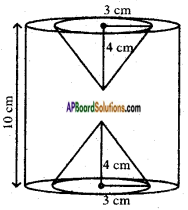
In March 1944, the Indian Flag was hoisted in Kohima. But with the change of fortunes in the war, the launching of a counter-offensive by the British in the winter of 1944-45 and the final defeat of Japan in the Second World War the INA movement collapsed. On August 23rd, 1945, Subhash Chandra Bose is reported to have lost his life in an air crash while going from Bangkok to Tokyo.

Question 10.
The radicals and radical organizations helped the freedom struggle to attain freedom. Explain it.
Answer:
The period after 1940 was characterised by intensive activities of radical organisations like the Communist party, trade unions, women’s organisations, kisan sabhas and dalit organisations. They mobilised the poor and marginalized peasants and workers, tribals and dalits not only against the British but also against the local exploiters like moneylenders, factory owners and upper caste landlords. They were keen that in the new independent India their interests should be properly represented and their long years of suffering should end and they should get equal rights and opportunities. The national movement which was till then dominated by upper class people gained a new dimension and energy which eventually helped to throw out the British rule.

AP Board 8th Class Social Studies Important Questions Chapter 11B National Movement: The Last Phase 1919-1947

Question 11.
Read the following passages and answer the questions.
Subhash Chandra Bose and INA
Subhash Chandra Bose had been a Swarajist and a radical nationalist. He organized the Indian National Army (INA) with the cooperation of Rash Bihari Bose in Burma and Andamans. The INA consisted of more than sixty thousand soldiers. He received the help of the Japanese in this fight. On 21st October 1943, the provisional Government of Independent India (Azad Hind) was set up in Singapore. On March 18th 1944 the INA crossed the frontiers of Burma and entered India with a slogan “Dilli Chalo” – (on to Delhi).
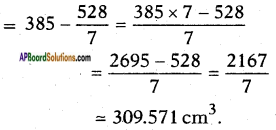
In March 1944, the Indian Flag was hoisted in Kohima. But with the change of fortunes in the war, the launching of a counter-offensive by the British in the winter of 1944-45 and the final defeat of Japan in the Second World War the INA movement collapsed.
1. Who was Subhash Chandra Bose?
Answer:
He was a Swarajist and a radical nationalist.

2. Whose cooperation was taken to organise INA?
Answer:
The cooperation of Rash Bihari Bose was taken.

3. Who helped Bose in this fight?
Answer:
Japan helped Bose in this fight.

4. What is the meaning of ‘Azad Hind’?
Answer:
Independent Bharath

5. When was the Indian flag hoisted in Kohima?
Answer:
It was hoisted in March, 1944.

AP Board 8th Class Social Studies Important Questions Chapter 11B National Movement: The Last Phase 1919-1947

Question 12.
Read the following passage and answer the questions.
Germany led by Hitler and his Nazi party wanted to gain control over the whole world and declared war on Britain, France, USSR, and other countries. USA joined on the side of England, France and USSR (called Allied Countries). Germany was supported by Japan and Italy. One of the worst wars in human history broke out in 1939 and lasted till 1945 when USSR’s armies captured Berlin and the USA dropped atom bomb over Hiroshima and Nagasaki in Japan. Most people who cherished the values of democracy and freedom op-posed Hitler and supported the Allied Countries in the war. However, in India it created a dilemma as Indians were at the same time fighting the British.
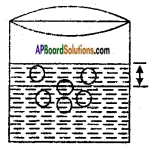
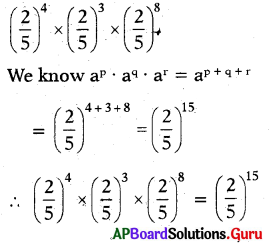
1. The party of Hitler was
Answer:
Nazi Party.

2. What were the Allied countries?
Answer:
England, France, Russia and USA.

3. Italy supported to
Answer:
Germany.

4. What are the names of two cities that affected with Atom Bombs?
Answer:
Hiroshima and Nagasaki.

5. Was Hitler a democratic personality or a dictator?
Answer:
Hitler was a dictator.

AP Board 8th Class Social Studies Important Questions Chapter 11B National Movement: The Last Phase 1919-1947

Question 13.
Collect the details of Bhagat Singh and write an essay on it.
Answer:
AP Board 8th Class Social Studies Important Questions Chapter 11B National Movement The Last Phase 1919-1947 1
Bhagat Singh ….
Born on 28-9-1907
Died on 23-3-1931
He was an Indian Nationalist and influential revolutionist.
He is often referred to as Shaheed. He was born in a Sikh family.
He studied European revolutions, movements and attached to anarchist and Marxist ideologies.
Seeking revenge for the death of Lala Lajapathi Roy at the hands of the police, Singh was involved in the assassination of British police officer John Saunders. Together with Bhatukeshwar Dutt, he undertook a successful effort to throw two bombs and leaflets inside the Central Legislative Assembly while shouting slogans of “Inquilab Zindabad”.

Subsequently, they volunteered to surrender and be arrested. Held on this charge he gained widespread national support. When he underwent a 116 day fast in jail, demanding equal rights for British and Indian political prisoners.
During this time, sufficient evidence was brought against him for a conviction in Saunders case.
A trial was orchestrated by a special tribunal and appeal at the Privy Council in England. He was convicted and subsequently hanged for his participation in the assassination of John Saunders.
He is one of the Heroes of our Nation.

AP Board 8th Class Social Studies Important Questions Chapter 11B National Movement: The Last Phase 1919-1947

Question 14.
The disparities between Hindu and Muslim ¡n our country were raised in 1906? Were they disappeared after independence? Write the reasons for your answers.
Answer:
No, they were not disappeared even after independence, those the present today also. Pak occupied Kashmir, Kargil war, Parliament attack, Mumbai attacks, Hyderabad attacks — Lumbini park, Gokulchat and Dilsukh Nagar reveal this issue.
Reasons:

  1. Because of partition of India associated with Pakistan.
  2. There was no way that the communal tensions were going to subside.
  3. Sensationalism I vote bank over humanism are also other reasons.

Question 15.
Why did World War — II create a dilemma in Indians?
Answer:
The countries in the world joined the two groups in the war.
The people who supported democratic ideas and opposed dictatorship fought against Hitler and supported the allied countries in war. But at the same time India was against the British n our country. So there was a dilemma.

AP Board 8th Class Social Studies Important Questions Chapter 11B National Movement: The Last Phase 1919-1947