AP 8th Class Maths Notes 9th Lesson సమతల పటముల వైశాల్యములు

Students can go through AP Board 8th Class Maths Notes 9th Lesson సమతల పటముల వైశాల్యములు to understand and remember the concept easily.

AP Board 8th Class Maths Notes 9th Lesson సమతల పటముల వైశాల్యములు

→ త్రిభుజ వైశాల్యము = \(\frac{1}{2}\) × భూమి × ఎత్తు
= \(\frac{1}{2}\)bh

→ చతుర్భుజ వైశాల్యము = \(\frac{1}{2}\) × కర్ణం పొడవు × కర్ణంపై గీయబడిన లంబాల పొడవుల మొత్తం
= \(\frac{1}{2}\)h(h1 + h2)

→ సమలంబ చతుర్భుజ వైశాల్యం = \(\frac{1}{2}\) × సమాంతర భుజాల మధ్య దూరం × సమాంతర భుజాల పొడవుల మొత్తం
= \(\frac{1}{2}\)h(a + b).

→ సమచతుర్భుజం (రాంబస్) వైశాల్యం = కర్ణముల పొడవుల లబ్ధంలో సగం
= \(\frac{1}{2}\)d1d2

AP 8th Class Maths Notes 9th Lesson సమతల పటముల వైశాల్యములు

→ వృత్తం దాని కేంద్రం వద్ద చేయు కోణం 360°.
వృత్త వైశాల్యం = πr² (r – వృత్త వ్యాసార్ధం)

→ π విలువ = \(\frac{22}{7}\) (సుమారుగా 3.14)
వృత్త పరిధి = 2πr (r – వృత్త వ్యాసార్ధం)

→ కంకణాకార స్థల వైశాల్యం = π (R2 – r2) లేదాπ(R + r) (R – r)
ఇందులో R – బాహ్య వృత్త వ్యాసార్ధం,
I – అంతర వృత్త వ్యాసార్ధం.

→ కంకణాకార స్థల వెడల్పు, w = R – r
సెక్టారు వైశాల్యం, A = \(\frac{x^{\circ}}{360^{\circ}}\) × πr²
ఇందులో x° = సెక్టారు కోణం,
r = వృత్త వ్యాసార్ధం
(లేదా)
A = \(\frac{{lr}}{2}\)(l – సెక్టారు చాపం పొడవు, r – వృత్త వ్యాసార్ధం)

→ సెక్టారు చాపం పొడవు = \(\frac{x^{\circ}}{360^{\circ}}\) × 2πr
x° = సెక్టారు కోణం, r = వృత్త వ్యాసార్ధం.

AP 7th Class Social Notes 2nd Lesson Forests

Students can go through AP Board 7th Class Social Notes 2nd Lesson Forests to understand and remember the concept easily.

AP Board 7th Class Social Notes 2nd Lesson Forests

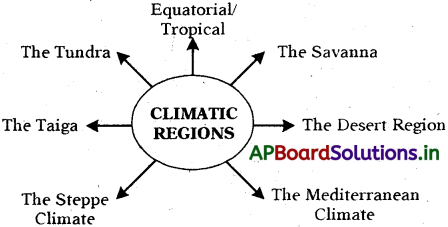
→ The world has several climatic zones.

→ Geographers defined the climatic region based on temperature and precipitation.

→ The tropical climatic region with dense forests are called “Selvas”.

→ Sahara desert is the biggest desert in the world.

→ The Tundra region stretch between the Arctic and Polar regions.

→ Large area covered with trees or shrubs in natural habitation in a particular place is called forest.

→ Forests are the places for survival for the tribals and variety of flora and fauna.

→ Forests are divided into five types based on climate, rainfall and types of soils.

AP 7th Class Social Notes 2nd Lesson Forests

→ According to the National Forest Policy -1952, forest should cover 33% of surface of total area.

→ Madhya Pradesh has the largest forest covei in the country

→ Haryana has the lowest forest cover in the country.

→ As per Indian State Forests Report 2019 Andhra Pradesh has a forest cover area of 37,392 sq kms, which amounts fo 22.94% of the total geographical area

→ In A.P, YSR Kadapa has highest forest area and Krishna has lowest forest area.

→ Deforestation is the cutting of trees in a large area, or the destruction of forest by people

→ Social forestry is a concept taken up for conservation of forests and afforestation in barren ‘ and deforested lands, forthe purpose of helping environment, social and rural development

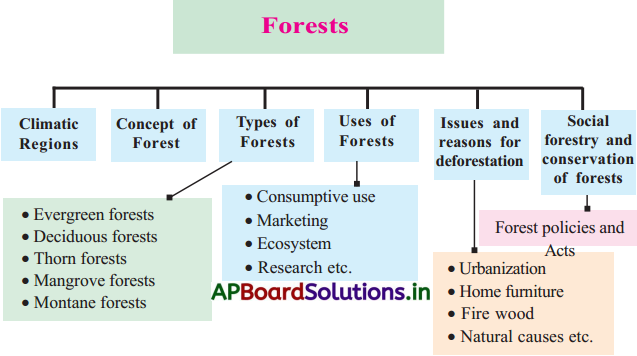
Climatic Regions : Climatic region refers to a continuous geographic area in which similar climate characteristics are observed. Climatic region based on temperature and precipitation.

Concept of Forest : Large area covered with trees or shrubs in natural habitation in a particular place is called forest.

Types of Forests : Forests are divided into five types based on climate, rainfall and types of soils.

AP 7th Class Social Notes 2nd Lesson Forests

Uses of forests : Forests are useful for so many ways. We depend on forestsfor our survival, from the air we breathe to the wood we use. Forests are useful to us for Consumptive use, Marketing, & Balancing ecosystem, etc.

Issues and reasons for deforestation : Cutting of trees in a large area is called deforestation.
Reasons : 1) Industrial purpose
2) Construction of roads and dams etc.

Social forestry and conservation of forests : Social forestry is the management and protection of forests and afforestation of barren and deforested lands with fhe purpose of helping environmental social and rural development.

Conservation of forest is the practice of planting more trees and maintaining the forested areas for the sustaina-bility for future generations.

1. Flora : The plants of a particular region.

2. Fauna : The animals of a particular region.

3. Dense forest : The trees that grow close together.

4. Climate : The weather conditions prevailing in an area over a long period.

5. Transpiration : The exhalation of water vapour through the stomato.

6. Sundarbans : The dominant mangrove species in West Bengal.

AP 7th Class Social Notes 2nd Lesson Forests

7. Coniferous trees : Shrubs having needle shaped leaves.

8. Urbanisation : Population shift from rural to urban areas.

9. Aboriginal : Inhabiting in a land from the earliest times.

10. Global warming : Rapid increase in Earth’s average surface temperature.

11. Soil Erosion : Gradual removal of top layers of the earth.

1.
AP 7th Class Social Notes 2nd Lesson Forests 1

2.
AP 7th Class Social Notes 2nd Lesson Forests 2

3.
AP 7th Class Social Notes 2nd Lesson Forests 3

AP Board 1st Class Telugu Solutions 2nd Lesson మేలుకొలుపు, ఉడత ఉడత హూచ్

Andhra Pradesh AP Board 1st Class Telugu Solutions 2nd Lesson మేలుకొలుపు, ఉడత ఉడత హూచ్ Textbook Exercise Questions and Answers.

AP State Syllabus 1st Class Telugu Solutions Chapter 2 మేలుకొలుపు, ఉడత ఉడత హూచ్

Textbook Page No. 30

మేలుకొలుపు

గ, ౦

చిన్నారి పొన్నారి చిట్టి నా తల్లి!
చుక్కల్లో చంద్రుడూ చూడవచ్చాడు
తెల్లవారొచ్చింది కోడి కూసింది
చూచేటి అక్కల్లు చూడరారమ్మ
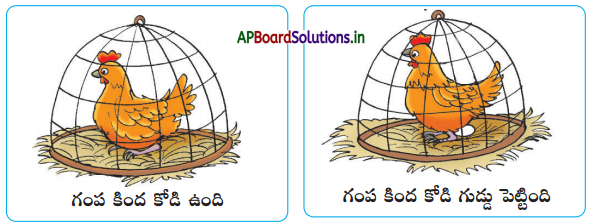
గంప కిందా కోడి గుడ్డు పెట్టింది
ఆడేటి పిల్లల్లు చూడరారమ్మ
ఆడేటి వారికి అచ్చావు పాలు
పాడేటి వారికి పాల మీగడలు
AP Board 1st Class Telugu Solutions 2nd Lesson మేలుకొలుపు, ఉడత ఉడత హూచ్ 1

Textbook Page No. 31

వినండి- మాట్లాడండి.

అ) గేయం పాడండి. అభినయించండి.
జవాబు:
గేయాన్ని పాడుట, అభినయించుట.

AP Board 1st Class Telugu Solutions 2nd Lesson మేలుకొలుపు, ఉడత ఉడత హూచ్

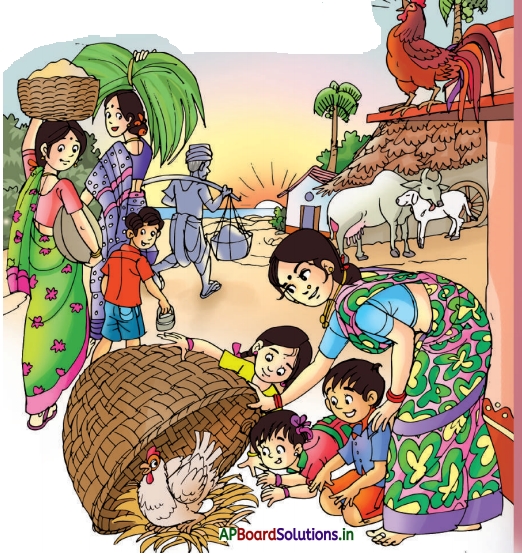
ఆ) పాఠం చిత్రంలో ఎవరేం చేస్తున్నారో చెప్ప౦డి.
జవాబు:

  1. తల్లి, పిల్లలు గంప కింద ఉన్న కోడిని చూస్తున్నారు. కోడి గుడ్డు పెట్టడం చూస్తున్నారు.
  2. కోడి కూస్తుంది.
  3. ఆవు, లేగ దూడను ముద్దు చేస్తుంది.
  4. కావడిలో రైతు వస్తువులు తీసుకువెళ్ళుతున్నాడు.
  5. పని వారలు స్త్రీలు తిరిగి చూస్తున్నారు.

ఇ) కింది చిత్రం ఆధారంగా మాట్లాడండి.
AP Board 1st Class Telugu Solutions 2nd Lesson మేలుకొలుపు, ఉడత ఉడత హూచ్ 2
జవాబు:
కూరలమ్మే అతను బండి మీద తీసుకువస్తున్నారు. చిన్న పాపతో కూరలు బేరం చేస్తుంది. ఒకామె పండ్లు, కూరలు అమ్ముతుంది. వాళ్ళ పాప ఆమె వెంట వెళుతుంది. పల్లెటూరి చిత్రం కనపడుతుంది.

చదవండి.

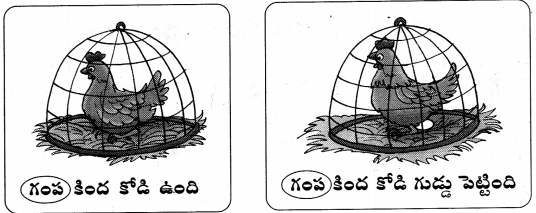
అ) గేయంలోని వాక్యాలలో “గంప” పదానికి AP Board 1st Class Telugu Solutions 2nd Lesson మేలుకొలుపు, ఉడత ఉడత హూచ్ 3 చుట్టండి.
జవాబు:
గేయంలో చూడాలి.

ఆ) కింది వాక్యాలలో “గంప” పదానికి AP Board 1st Class Telugu Solutions 2nd Lesson మేలుకొలుపు, ఉడత ఉడత హూచ్ 3 చుట్టండి.

AP Board 1st Class Telugu Solutions 2nd Lesson మేలుకొలుపు, ఉడత ఉడత హూచ్ 4
జవాబు:
AP Board 1st Class Telugu Solutions 2nd Lesson మేలుకొలుపు, ఉడత ఉడత హూచ్ 5

AP Board 1st Class Telugu Solutions 2nd Lesson మేలుకొలుపు, ఉడత ఉడత హూచ్

Textbook Page No. 32

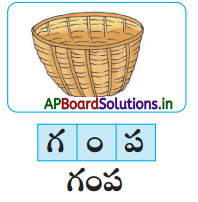
ఇ) చిత్రం చూడండి. పదం చదవండి. వర్ణమాలలో గుర్తించండి.

AP Board 1st Class Telugu Solutions 2nd Lesson మేలుకొలుపు, ఉడత ఉడత హూచ్ 6

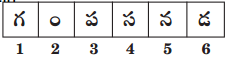
ఈ) కింది గళ్ళలో అక్షరాలు చెప్ప౦డి.
AP Board 1st Class Telugu Solutions 2nd Lesson మేలుకొలుపు, ఉడత ఉడత హూచ్ 7
1వ అక్షరం ఏమిటి ?
జవాబు:
2వ అక్షరం ఏమిటి ?
జవాబు:
1, 2 అక్షరాలు కలిపి చదవండి
జవాబు: గ౦
1, 2, 3 అక్షరాలు కలిపి చదవండి.
జవాబు: గంప
1, 6, 3 అక్షరాలు కలిపి చదవండి.
జవాబు: గడప
3, 2, 6, 1 అక్షరాలు కలిపి చదవండి. పండగ

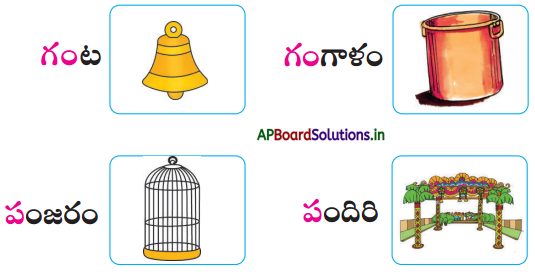
ఉ) కింది బొమ్మలు గం, ప అనే అక్షరాలతో మొదలవుతాయి. వాటి పేర్లు చెప్ప౦డి.
AP Board 1st Class Telugu Solutions 2nd Lesson మేలుకొలుపు, ఉడత ఉడత హూచ్ 8

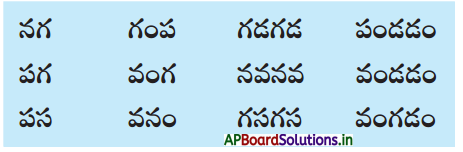
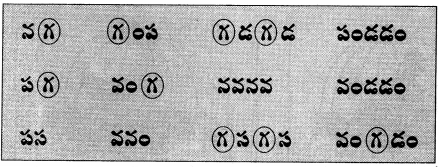
ఊ) పదాలను చదవండి. ‘గ’ అక్షరానికి AP Board 1st Class Telugu Solutions 2nd Lesson మేలుకొలుపు, ఉడత ఉడత హూచ్ 9 చుట్టండి.
AP Board 1st Class Telugu Solutions 2nd Lesson మేలుకొలుపు, ఉడత ఉడత హూచ్ 10
జవాబు:
AP Board 1st Class Telugu Solutions 2nd Lesson మేలుకొలుపు, ఉడత ఉడత హూచ్ 11

Textbook Page No. 33

రాయండి.

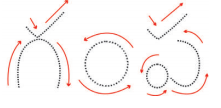
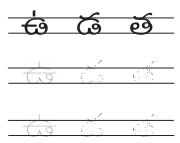
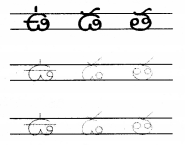
అ) గుర్తుల ఆధారంగా చుక్కలను కలుపుతూ అక్షరాలు రాయండి.
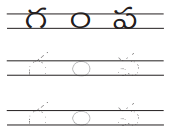
AP Board 1st Class Telugu Solutions 2nd Lesson మేలుకొలుపు, ఉడత ఉడత హూచ్ 12

ఆ) చుక్కలు కలుపుతూ గీతల్లో రాయండి.
AP Board 1st Class Telugu Solutions 2nd Lesson మేలుకొలుపు, ఉడత ఉడత హూచ్ 13
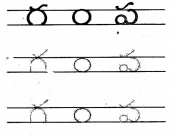
జవాబు:
AP Board 1st Class Telugu Solutions 2nd Lesson మేలుకొలుపు, ఉడత ఉడత హూచ్ 14

AP Board 1st Class Telugu Solutions 2nd Lesson మేలుకొలుపు, ఉడత ఉడత హూచ్

ఉ) కింది అక్షరాలతో ఏర్పడే పదాలను రాయండి.
AP Board 1st Class Telugu Solutions 2nd Lesson మేలుకొలుపు, ఉడత ఉడత హూచ్ 15
జవాబు:
AP Board 1st Class Telugu Solutions 2nd Lesson మేలుకొలుపు, ఉడత ఉడత హూచ్ 16

సృజనాత్మకత:

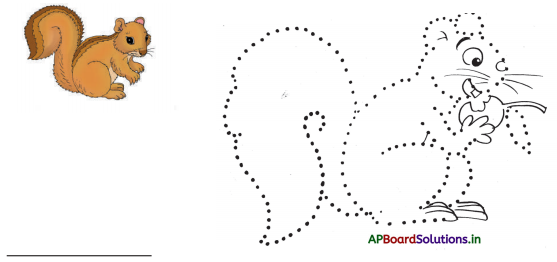
పిల్లలూ ! చుక్కలు కలుపుతూ చిత్రం గీయండి. రంగులు వేయండి. పేరు రాయండి.
AP Board 1st Class Telugu Solutions 2nd Lesson మేలుకొలుపు, ఉడత ఉడత హూచ్ 17
జవాబు:
గంప

Textbook Page No. 34

ఉడత ! ఉడత ! హూచ్ !

ఉ, త

AP Board 1st Class Telugu Solutions 2nd Lesson మేలుకొలుపు, ఉడత ఉడత హూచ్ 18
ఉడతఉడత… హూచ్
ఎక్కడికెళతావోచ్
సంతకు వెళతానోచ్
ఏమిటి తెస్తావోచ్
బెల్లం తెస్తానోచ్
నాకు ఇస్తావా ?
నేనివ్వను … పో … పో …
మా పాపకిస్తాను …

Textbook Page No. 35

వినండి- మాట్లాడండి.

అ) గేయం పాడండి. అభినయించండి.
జవాబు:
గేయాన్ని పాడుట, అభినయించుట.

ఆ) పాఠం చిత్రంలో ఎవరేం చేస్తున్నారో చెప్ప౦డి.
జవాబు:
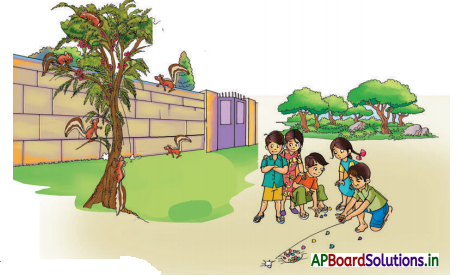
1. ఉడత, ఉడత పిల్ల చెట్టు మీద ఉన్నాయి.
2. స్నేహితులు అందరూ ఆడుకుంటున్నారు.
3. ఉడుతను చూస్తున్నారు. ఉడుతతో మాట్లాడుతున్నారు. కుక్క పిల్ల ఉడుతను చూస్తుంది. టాటా చెపుతున్నారు.

AP Board 1st Class Telugu Solutions 2nd Lesson మేలుకొలుపు, ఉడత ఉడత హూచ్

ఇ) కింది చిత్రం ఆధారంగా మాట్లాడండి.
AP Board 1st Class Telugu Solutions 2nd Lesson మేలుకొలుపు, ఉడత ఉడత హూచ్ 19
జవాబు:
చెట్టు మీద, గోడ మీద ఉడతలు ఉన్నాయి. పిల్లలు బొంగరాలు ఆట ఆడుతున్నారు. కొందరు బొంగరాన్ని చూస్తున్నారు. బొంగరం ఆట భలే మజాగా ఉంటుంది.

చదవండి.

అ) గేయంలోని వాక్యాలలో “ఉడత” పదానికి AP Board 1st Class Telugu Solutions 2nd Lesson మేలుకొలుపు, ఉడత ఉడత హూచ్ 20 చుట్టండి.
జవాబు:
గేయంలో చూడాలి

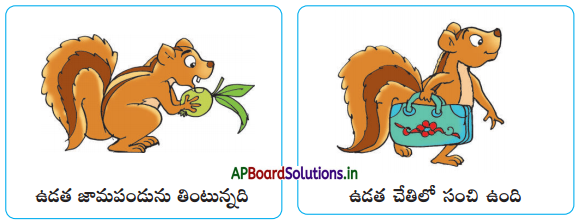
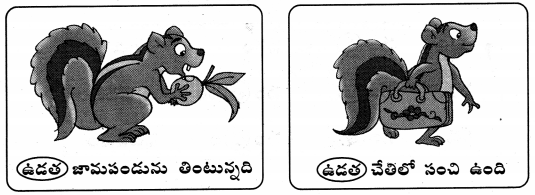
ఆ) కింది వాక్యాలలో “ఉడత” పదానికి AP Board 1st Class Telugu Solutions 2nd Lesson మేలుకొలుపు, ఉడత ఉడత హూచ్ 20 చుట్టండి.
AP Board 1st Class Telugu Solutions 2nd Lesson మేలుకొలుపు, ఉడత ఉడత హూచ్ 21
జవాబు:
AP Board 1st Class Telugu Solutions 2nd Lesson మేలుకొలుపు, ఉడత ఉడత హూచ్ 22

Textbook Page No. 36

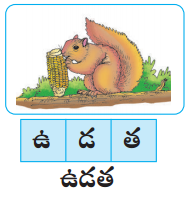
ఇ) చిత్రం చూడండి. పదం చదవండి. వర్ణమాలలో గుర్తించండి.
AP Board 1st Class Telugu Solutions 2nd Lesson మేలుకొలుపు, ఉడత ఉడత హూచ్ 23

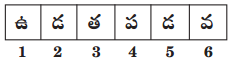
ఈ) కింది గళ్ళలో అక్షరాలు చెప్ప౦డి.
AP Board 1st Class Telugu Solutions 2nd Lesson మేలుకొలుపు, ఉడత ఉడత హూచ్ 24
1వ అక్షరం ఏమిటి ?
జవాబు:
2వ అక్షరం ఏమిటి ?
జవాబు:
3వ అక్షరం ఏమిటి ?
జవాబు:
1, 2, 3 అక్షరాలు కలిపి చదవండి.
జవాబు: ఉడత
4, 5, 6 అక్షరాలు కలిపి చదవండి.
పడవ

AP Board 1st Class Telugu Solutions 2nd Lesson మేలుకొలుపు, ఉడత ఉడత హూచ్

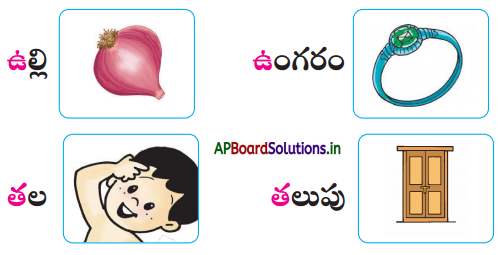
ఉ) కింది బొమ్మలు ఉ, త అనే అక్షరాలతో మొదలవుతాయి. వాటి పేర్లు చెప్ప౦డి.

AP Board 1st Class Telugu Solutions 2nd Lesson మేలుకొలుపు, ఉడత ఉడత హూచ్ 25

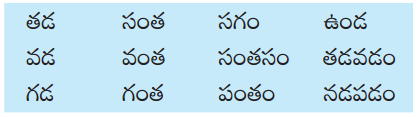
ఊ) పదాలను చదవండి. ‘త’ అక్షరానికి AP Board 1st Class Telugu Solutions 2nd Lesson మేలుకొలుపు, ఉడత ఉడత హూచ్ 26 చుట్టండి.
AP Board 1st Class Telugu Solutions 2nd Lesson మేలుకొలుపు, ఉడత ఉడత హూచ్ 27
జవాబు:
AP Board 1st Class Telugu Solutions 2nd Lesson మేలుకొలుపు, ఉడత ఉడత హూచ్ 28

Textbook Page No. 37

రాయండి.

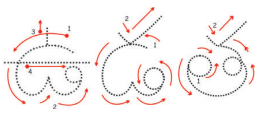
అ) గుర్తుల ఆధారంగా చుక్కలను కలుపుతూ అక్షరాలు రాయండి.

AP Board 1st Class Telugu Solutions 2nd Lesson మేలుకొలుపు, ఉడత ఉడత హూచ్ 29

ఆ) చుక్కలు కలుపుతూ గీతల్లో రాయండి.
AP Board 1st Class Telugu Solutions 2nd Lesson మేలుకొలుపు, ఉడత ఉడత హూచ్ 30
జవాబు:
AP Board 1st Class Telugu Solutions 2nd Lesson మేలుకొలుపు, ఉడత ఉడత హూచ్ 31

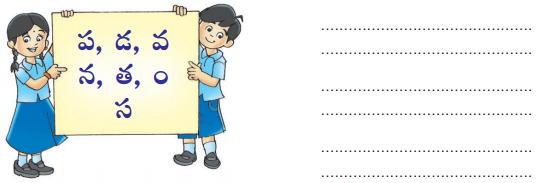
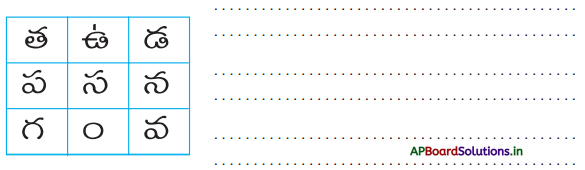
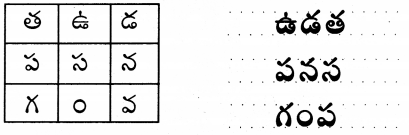
ఇ) కింది గళ్ళలోని అక్షరాలతో ఏర్పడే పదాలు రాయండి.
AP Board 1st Class Telugu Solutions 2nd Lesson మేలుకొలుపు, ఉడత ఉడత హూచ్ 32
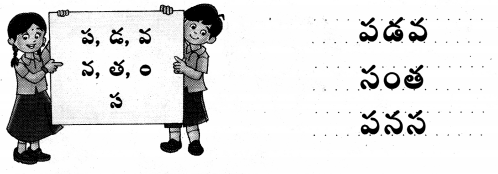
జవాబు:
AP Board 1st Class Telugu Solutions 2nd Lesson మేలుకొలుపు, ఉడత ఉడత హూచ్ 33

AP Board 1st Class Telugu Solutions 2nd Lesson మేలుకొలుపు, ఉడత ఉడత హూచ్

సృజనాత్మకత:

పిల్లలూ ! చుక్కలు కలుపుతూ చిత్రం గీయండి. రంగులు వేయండి. పేరు రాయండి.

AP Board 1st Class Telugu Solutions 2nd Lesson మేలుకొలుపు, ఉడత ఉడత హూచ్ 34
జవాబు:
ఉడత

AP Board 3rd Class EVS Solutions 7th Lesson Shelter for All

Andhra Pradesh AP Board 3rd Class EVS Solutions 7th Lesson Shelter for All Textbook Exercise Questions and Answers.

AP State Syllabus 3rd Class EVS Solutions Lesson 7 Shelter for All

I. Conceptual Understanding:

Question 1.
What is the difference between a Kutcha and Pucca house ?
Answer:
Differences between Kutcha and Pucca houses.

Kutcha housePucca house
1. The houses made of mud and straw are called ‘Kutcha houses’ 1. The houses made of bricks, sand and iron are called pucca houses.
2. They are not strong 2. They are strong
3. Examples are huts 3. Examples are buildings, Apartments

Question 2.
Why do we need a house ?
Answer:
House is a place in which we live. All living beings such as animals, birds, humans need a place to live. We need a house to protect ourselves from heat, cold, rain and enemies.

Question 3.
What help can be given to the people who live in tents and pipes ?
Answer:

  1. I can help the people who live in tents and pipes by donating Non-perishable items such as clothing, blankets, coats, books and small kitchen items.
  2. I can help them by showing some work if they are in need of money.

AP Board 3rd Class EVS Solutions 7th Lesson Shelter for All

II. Questioning and Hypothesis:

Question 4.
Deepthi observed a beehive on a tree. She wants to know about the beehive. What question would she ask her teacher ?
Answer:
Deepthi might have asked the following questions to her teacher.

  1. What is a beehive ?
  2. Will an empty beehive attract bees ?
  3. What plant is safe for beehives ?
  4. What does a beehive symbolize ?

III. Experiments & Field Observations:

Question 5.
Observe the different shelters of animals, birds and insects and name them.
Answer:

AnimalsShelters
1. DogKennel
2. Cows, BuffaloShed
3. PigSty
4. HorseStable
5. MonkeyTree
6. SnakesAnthill
7. LionDen
8. SheepFold

b) Bird Shelters :

BirdsShelters
1. SparrowNest
2. HenCoop
3. WoodpeckerHoles in the trunk

c) Insect Shelters :

InsectShelter
BeesBeehives
SpiderWeb
Silk wormSilk moth
AntsAnthill

AP Board 3rd Class EVS Solutions 7th Lesson Shelter for All

IV. Information Skills & Project Work:

Question 6.
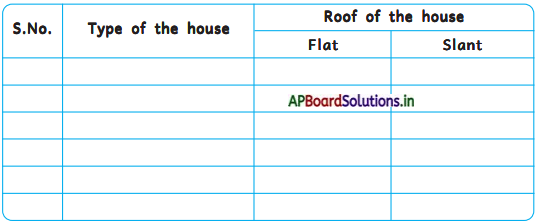
Observe the roofs of houses in your surroundings and fill in the given table.

AP Board 3rd Class EVS Solutions 7th Lesson Shelter for All 1

Answer:
Student activity.

V. Appreciation, values and creating awareness towards bio-diversity:

Question 7.
Make a model of a hut with ice cream sticks or matchsticks.
Answer;
Student activity.

VI. Appreciation, values and creating awareness towards bio-diversity:

Question 8.
If you have a bird or a cat or a dog as a pet, how would you take care of it?
Answer:
If I have a pet either a bird, cat or a dog I will take care of it.

  1. I will feed my pet a good and high quality food.
  2. Take them for a walk every day (animal).
  3. Provide them with the needed vaccination on time.
  4. Keep a clean and hygeinic environment for them.
  5. Engage and do not leave them alone for a long time.

AP Board 3rd Class EVS Solutions 7th Lesson Shelter for All

Additional Questions:

I. Conceptual Understanding:

Question 1.
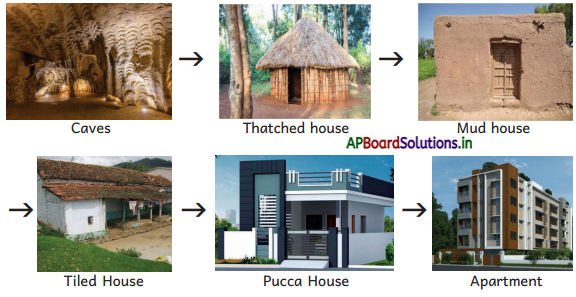
Draw a flow chart which shows evolution of houses from the beginning.
Answer:
Caves → Thatched house → Mud house → Tiled house → Pucca house → Apartments

AP Board 3rd Class EVS Solutions 7th Lesson Shelter for All 2

Question 2.
Building of houses depend on which factors ?
Answer:
People build houses depending on the following factors.

  1. Climate
  2. Economic condition
  3. Materials available
  4. Land availability.

AP Board 3rd Class EVS Solutions 7th Lesson Shelter for All

Question 3.
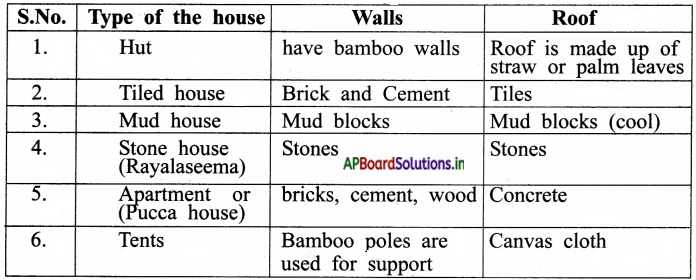
Mention the features of different types of houses in a table form.
Answer:

AP Board 3rd Class EVS Solutions 7th Lesson Shelter for All 3

Question 4.
Why do houses have sloped roof ?
Answer:
Most of the houses have sloped roofs in order to drain the rain water or snow falling on them.

Question 5.
How should we keep our houses clean and tidy ?
Answer:
Whatever the type of house we live in, a hut, tiled house or a pucca house, if we keep things properly in order, it will look neat and tidy. We should always throw the garbage and dirt away from our house. A clean house keeps us healthy.

AP Board 3rd Class EVS Solutions 7th Lesson Shelter for All

Question 6.
What happens if you leave garbage around your house ?
Answer:
When you leave garbage all arround without cleaning, foul smell comes out, mosquitoes and flies breed. We should always throw the garbage and dirt away from our houses (dust bins) to keep us healthy.

II. Information Skills & Project Work:

Question 7.
Draw a house that you like.
Answer:
Student activity.

III. Experiments & field Observations:

Question 8.
Visit your neighbour’s house and observe the facilities they have. A list of facilities is given in the table below. Put a tick mark (✓):

AP Board 3rd Class EVS Solutions 6th Lesson Water - The Gift from Nature 1

Answer:
Student activity.

AP Board 3rd Class EVS Solutions 7th Lesson Shelter for All

Multiple Choice Questions:

Question 1.
A ________ gives us shelter and protection.
a) tree
b) house
c) pets
d) none
Answer:
b) house

Question 2.
People who migrate live in ________.
a) Pucca houses
b) buildings
c) tents
d) none
Answer:
c) tents

Question 3.
________ is a house on wheels.
a) Tent
b) Caravan
c) Igloo
d) All
Answer:
b) Caravan

AP Board 3rd Class EVS Solutions 7th Lesson Shelter for All

Question 4.
Houses that keep changing locations are called ________.
a) temporary houses
b) permanent houses
c) a & b
d) none
Answer:
a) temporary houses

Question 5.
The top portion of a house is called the ________.
a) wall
b) floor
c) foundation
d) roof
Answer:
d) roof

Question 6.
Stone houses are found more in ________ range.
a) Andhra
b) Rayalaseema
c) Telangana
d) none
Answer:
b) Rayalaseema

AP Board 3rd Class EVS Solutions 7th Lesson Shelter for All

Question 7.
Rabbits and squirrels live in ________
a) nests
b) caves
c) burrows
d) none
Answer:
c) burrows

Question 8.
Lions and bears live in ________.
a) nests
b) caves
c) burrows
d )trees
Answer:
b) caves

Question 9.
________ are homeless animals.
a) Elephants
b) Monkeys
c) Giraffe
d) All
Answer:
d) All

AP Board 3rd Class EVS Solutions 7th Lesson Shelter for All

Question 10.
Temporary houses are set up at the time of ________.
a) floods
b) cyclones
c) a & b
d) none
Answer:
c) a & b

AP 7th Class Maths Notes 7th Lesson నిష్పత్తి మరియు అనుపాతం

Students can go through AP Board 7th Class Maths Notes 7th Lesson నిష్పత్తి మరియు అనుపాతం to understand and remember the concept easily.

AP Board 7th Class Maths Notes 7th Lesson నిష్పత్తి మరియు అనుపాతం

→ a : b మరియు c : d ల బహుళ నిష్పత్తి ac : bd.

→ a, b లు రెండు రాశులు అయిన, a పెరుగుతున్నపుడు b కూడా పెరుగుతూ లేదా a తగ్గుతున్నపుడు b కూడా తగ్గుతూ ఉంటే అప్పుడు a, b లు అనులోమానుపాతంలో ఉన్నాయి అని అంటాం.

→ a, b లు అనులోమానుపాతంలో ఉంటే \(\frac{a}{b}\) = k అవుతుంది. ఇక్కడ k ని అనుపాత స్థిరాంకం అంటారు.

→ a, b లు రెండు రాశులు అయిన, ‘a’ పెరుగుతున్నపుడు ‘b’ తగ్గుతుంటే లేదా ‘a’ తగ్గుతూ ఉన్నపుడు ‘b’ పెరుగుతూ ఉంటే a, b లు విలోమానుపాతంలో ఉన్నాయి అని అంటాం.

→ a, b లు విలోమానుపాతంలో ఉంటే a × b = k అవుతుంది. ఇక్కడ k ని అనుపాత స్థిరాంకం అంటారు.

→ కొన్నిసార్లు ఒక రాశిలో మార్పు రెండు లేదా అంతకంటే ఎక్కువ రాశులలో మార్పులపై ఆధారపడి ఉంటుంది. దీనినే మిశ్రమానుపాతం అంటాము.

→ 1% = 1/100 = 0.01 = 1: 100

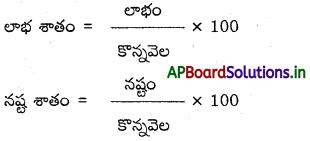
→ లాభం = అమ్మిన వెల – కొన్న వెల

→ నష్టం = కొన్న వెల – అమ్మిన వెల
AP 7th Class Maths Notes 7th Lesson నిష్పత్తి మరియు అనుపాతం 1
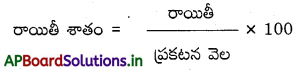
→ రాయితీ ఎల్లప్పుడూ ప్రకటన వెలపై లెక్కిస్తారు.

→ రాయితీ = ప్రకటన వెల – అమ్మిన వేల

→ సాధారణ వడ్డీ = \(\frac{\mathrm{P} \times \mathrm{T} \times \mathrm{R}}{100}\)

AP 7th Class Maths Notes 7th Lesson నిష్పత్తి మరియు అనుపాతం

→ నిష్పత్తి : ఒకే రకమైన రెండు రాశులను భాగహారం ద్వారా పోల్చడాన్ని నిష్పత్తి అంటాం. a మరియు b రాశుల నిష్పత్తిని \(\frac{a}{b}\) లేదా a : b గా సూచిస్తాము.
ఈ రాశుల నిష్పత్తిని కనుగొనడానికి ఆ రాశులు ఎల్లప్పుడూ ఒకే ప్రమాణాలలో ఉండాలి.
& a : b లో ‘a’ ని పూర్వపదం అని, ‘b’ ని పరపదం అని అంటాము

→ అనుపాతం : రెండు నిష్పత్తుల సమానత్వాన్ని అనుపాతం అంటాము.

  • a : b మరియు C : d సమానమైతే వాటిని a : b = c : d లేదా a : b :: c: d గా రాస్తాము.
  • a : b = c : d అయితే a, b, c, d లు అనుపాతంలో ఉన్నాయి అని, a, d లను అంత్యములు అని, b, c లను మధ్యమములు అని అంటాం.
  • a, b, c, d లు అనుపాతంలో ఉంటే ad = bc అనగా
    అంత్యముల లబ్ధం = మధ్యమముల లబ్ధం

→ బహుళ నిష్పత్తి : a : bమరియు c : d లు ఏవేని రెండు నిష్పత్తులైన వీని బహుళ నిష్పత్తి a × c: b × d అవుతుంది. (అనగా పూర్వపదాల లబ్ధం : పరపదాల లబ్ధం)
ఉదా : 2 : 3 మరియు 5 : 2 ల బహుళ నిష్పత్తి
= 2 × 5 : 3 × 2 = 10 : 6

→ అనులోమానుపాతం : రెండు రాశులలో ఒక రాశి పెరిగినపుడు, రెండవ రాశి కూడా అదే అనుపాతంలో పెరిగినా లేదా ఒక రాశి తగ్గినపుడు రెండవ రాశి కూడా అదే అనుపాతంలో తగ్గితే, అప్పుడు ఆ రెండు రాశులు అనులోమానుపాతంలో కలవు అంటారు.
x మరియు y అనే రాశులు అనులోమానుపాతంలో ఉంటే x ∝ y తో సూచిస్తాము. మరియు x = ky ఇక్కడ kను అనుపాత స్థిరాంకం అంటారు.
x ∝ y అయితే x = ky.
∴ \(\frac{x}{y}\) = k
అనగా X మరియు y ల నిష్పత్తి ఒకే విలువను కలిగి ఉంటుంది.
ఉదా : పనివాళ్ళ సంఖ్య (x) మరియు వారికి చెల్లించేందుకు అవసరమైన వేతనం (y) అనులోమానుపాతంలో ఉంటాయి.

→ విలోమానుపాతం : రెండు రాశులలో ఒక రాశి పెరిగినపుడు, రెండవరాశి అదే అనుపాతంలో తగ్గితే లేదా ఒక రాశి తగ్గినపుడు రెండవ రాశి అదే అనుపాతంలో పెరిగితే. అపుడు ఆ రెండు రాశులు విలోమానుపాతంలో ఉన్నాయని అంటాం.
x, y లు విలోమానుపాతంలో ఉంటే x ∝\(\frac{1}{y}\) గా రాస్తాము మరియు x = k. \(\frac{1}{y}\)
ఇక్కడ k ను అనుపాత స్థిరాంకం అంటారు.
x \(\frac{1}{y}\) అయితే x = k. \(\frac{1}{y}\) మరియు x . y = k అవుతుంది.
ఉదా : పనివాళ్ళ సంఖ్య (x) మరియు వారు ఒక పనిని పూర్తి చేయడానికి పట్టే రోజుల సంఖ్య (y) విలోమానుపాతంలో ఉంటాయి.

→ మిశ్రమానుపాతం : ఒక రాశిలోని మార్పు, ఏవైనా మరొక రెండు లేదా అంతకన్నా ఎక్కువ రాశులలో మార్పులపై ఏదో – ఒక అనుపాతంలో ఆధారపడి ఉంటుంది. దీనినే మిశ్రమానుపాతం అంటారు. మిశ్రమానుపాతం క్రింది విధంగా ఉండవచ్చును.

  • ఒక రాశి మిగిలిన రెండు రాశులతో అనులోమానుపాతం కలిగి ఉండవచ్చు.
  • ఒక రాశి మిగిలిన రెండు రాశులతో విలోమానుపాతం కలిగి ఉండవచ్చు.
  • ఒక రాశి మిగిలిన రెండు రాశులలో ఒకదానితో అనులోమానుపాతం, మరొక దానితో విలోమానుపాతం కలిగి ఉండవచ్చు.

పై వానిలో

  • వ సందర్భంలో మొదటి రాశుల నిష్పత్తికి, మిగిలిన రాశుల నిష్పత్తుల యొక్క బహుళ నిష్పత్తికి సమానం చేస్తాము.
  • వ సందర్భంలో మొదటి రాశుల నిష్పత్తికి, మిగిలిన రాశుల విలోమ నిష్పత్తుల యొక్క బహుళ నిష్పత్తికి సమానం చేస్తాము.
  • సందర్భంలో మొదటి రాశుల నిష్పత్తికి, మిగిలిన రాశులలో అనులోమానుపాతంలో గల రాశుల యొక్క నిష్పత్తికి మరియు విలోమానుపాతంలో గల రాశుల యొక్క విలోమ నిష్పత్తుల యొక్క బహుళ నిష్పత్తికి సమానము.

→ శాతాలు : శాతం అనగా వంద (100)కి అని అర్థం.
శాతాన్ని ‘%’ అనే గుర్తుతో సూచిస్తాము.
5% అనగా నూటికి 5 అని అర్థము.
5% = 5 × \(\frac{1}{100}=\frac{5}{100}\) = 5 : 100
శాతాలను వ్యాపారం, ప్రభుత్వ పాలన, విద్యావిషయాలు, వైద్యరంగం, మొదలగు వానిలో ఉపయోగిస్తారు.

→ లాభం లేదా నష్టం :

  • ఒక వస్తువును ఎంత ఖరీదుకు కొంటామో దానిని కొన్న వెల అని అంటాము. సూక్ష్మంగా కొ.వె. అని రాస్తాము.
  • ఒక వస్తువును ఎంత ఖరీదుకు అమ్ముతామో దానిని అమ్మిన వెల అని అంటాము. సూక్ష్మంగా అ.వె. అని రాస్తాము.
  • అమ్మిన వెల , కొన్న వెల కంటే ఎక్కువగా ఉంటే లాభం వస్తుంది.
    లాభం = అమ్మిన వెల – కొన్న వెల
    అమ్మిన వెల = కొన్న వెల + లాభం
  • కొన్న వెల, అమ్మిన వెల కంటే ఎక్కువగా ఉంటే నష్టం వస్తుంది.
    నష్టం = కొన్న వెల – అమ్మిన వెల
    కొన్న వెల = అమ్మిన వెల + నష్టం

AP 7th Class Maths Notes 7th Lesson నిష్పత్తి మరియు అనుపాతం

→ రాయితీ (ముదరా) : కొన్ని ప్రత్యేక సందర్భాలలో వ్యాపారులు తమ వద్ద గల సరుకులను వానిపై గల వెల కన్నా తగ్గించి అమ్ముతారు. ఇలా తగ్గించడాన్ని రాయితీ లేదా (ముదరా) అంటారు. వస్తువుపై చూపించే ధరను “ప్రకటన వెల” అంటారు.
రాయితీని సాధారణంగా ప్రకటన వెలపై లెక్కించి శాతంగా ప్రకటిస్తుంటారు. రాయితీ = ప్రకటన వెల – అమ్మిన వెల .
AP 7th Class Maths Notes 7th Lesson నిష్పత్తి మరియు అనుపాతం 2

→ సాధారణ వడ్డీ : తీసుకొన్న అప్పు మీద అదనంగా చెల్లించే సొమ్మును వడ్డీ అంటారు. తీసుకున్న అప్పును అసలు (P) అంటారు. వడ్డీని సాధారణంగా వంద (100) కు పరిమిత కాలానికి చెల్లిస్తారు.
ఇలా వందకు చెల్లించే సొమ్మును వడ్డీ రేటు (R) అని, పరిమిత కాలాన్ని కాలం (T) అని సూచిస్తాము. వడ్డీని I తో సూచిస్తాము.
సాధారణ వడ్డీ I = \(\frac{\text { PTR }}{100}\)
T కాలం తరువాత చెల్లించాల్సిన మొత్తం = అసలు + వడ్డీ = P + I
= P + \(\frac{\text { PTR }}{100}\) = P\(\left(1+\frac{\mathrm{TR}}{100}\right)\)
సాధారణంగా వడ్డీ శాతాన్ని సంవత్సరానికి తెలుపుతారు.

AP 7th Class Maths Notes 6th Lesson దత్తాంశ నిర్వహణ

Students can go through AP Board 7th Class Maths Notes 6th Lesson దత్తాంశ నిర్వహణ to understand and remember the concept easily.

AP Board 7th Class Maths Notes 6th Lesson దత్తాంశ నిర్వహణ

→ Dr. కాలియంపూడి రాధాకృష్ణరావు (C.R. రావు) – భారతదేశం : ప్రముఖ సాంఖ్యక శాస్త్రజ్ఞుడు. ఈయన రచించిన “థియరీ ఆఫ్ ఎస్టిమేషన్” అనే గ్రంథము ప్రాచుర్యము పొందినది. ఈయన క్రామర్ – రావు ఇనీక్వాలిటీ మరియు ఫిషర్ – రావు సిద్ధాంతా లను రూపొందించారు. గూడూరు, నూజివీడు, నందిగామ, విశాఖపట్నంలో ఆయన పాఠశాల విద్యను పూర్తి చేసారు. ఆంధ్ర విశ్వవిద్యాలయం నుండి గణితశాస్త్రంలో .M.A. చేసారు. ఆయన సర్ ఆర్.ఎ.ఫిషర్ ఆధ్వర్యంలో Ph.D. డిగ్రీ పొందారు.

→ సంఖ్యలు, పదాలు లేదా చిత్రాల రూపంలో సేకరించిన సమాచారమే “చత్తాంశము”.

→ సమాచారాన్ని సేకరించే పద్ధతిని బట్టి దత్తాంశాన్ని “ప్రాథమిక దత్తాంశము” మరియు “గౌణ (ద్వితీయ) దత్తాంశము” అనే రెండు రకాలుగా విభజించవచ్చు.

→ ఇచ్చిన దత్తాంశములోని గరిష్ఠ మరియు కనిష్ఠ విలువల మధ్య భేదాన్నే “వ్యాప్తి” అంటారు.

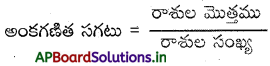
→ సర్వసాధారణంగా ప్రాతినిధ్య విలువ లేదా కేంద్రీయ స్థాన విలువగా “సగటు” లేదా “అంకగణిత సగటు”ను ఉపయోగిస్తారు.
AP 7th Class Maths Notes 6th Lesson దత్తాంశ నిర్వహణ 1

→ అంకగణిత సగటు ఎల్లప్పుడూ అత్యల్ప మరియు అత్యధిక పరిశీలనా విలువల మధ్య ఉంటుంది.

→ దత్తాంశములో ఎక్కువ సార్లు పునరావృతం అయ్యే రాశిని “బాహుళకం” అంటారు.

→ ఒకే ఒక రాశి బాహుళకముగా గల దత్తాంశమును “ఏక బాహుళక దత్తాంశము” అని మరియు రెండు రాశులు బాహుళకముగా గల దత్తాంశమును “ద్వి బాహుళక దత్తాంశము” అంటారు.

→ దత్తాంశములోని రాశులను ఆరోహణ లేదా అవరోహణ క్రమములో అమర్చగా, ఆ అమరికలోని మధ్యమ విలువను . “మధ్యగతం” అంటారు.

AP 7th Class Maths Notes 6th Lesson దత్తాంశ నిర్వహణ

→ దత్తాంశములో రాశుల సంఖ్య (బ) బేసి సంఖ్య అయిన మధ్యగతము \(\left(\frac{\mathrm{n}+1}{2}\right)\) వ పదము అగును.

→ ఇచ్చిన దత్తాంశములో రాశుల సంఖ్య (n) సరి సంఖ్య అయిన మధ్యగతము \(\left(\frac{\mathrm{n}}{2}\right)\) వ పదము \(\left(\frac{\mathrm{n}}{2}+1\right)\) వ పదాల సరాసరి.

→ దత్తాంశమును సమాన వెడల్పు గల ఉన్న కమ్మీల రూపములో ప్రదర్శించుటనే కమ్మీ చిత్రం అంటారు.

→ ఏకరీతి వెడల్పు కలిగిన కమ్మీలను ఉపయోగించడం ద్వారా ఒకే గ్రాఫ్ మీద రెండు విభిన్న దత్తాంశములను ప్రదర్శించుటను డబుల్ బార్ గ్రాఫ్ లేదా రెండు వరుసల కమ్మీ చిత్రం అంటారు.

→ వృత్తంను సెక్టార్లుగా విభజించుట ద్వారా దత్తాంశమును ప్రదర్శించుటనే వృత్తరేఖా చిత్రము లేదా పై చిత్రము – అంటాము. పై చిత్రంలో ప్రతీ సెక్టారు వృత్త కేంద్రం వద్ద చేసే కోణము (సెక్టారు వైశాల్యము) అది సూచించే అంశ విలువకు అనులోమానుపాతంలో ఉంటుంది.

AP 7th Class Maths Notes 6th Lesson దత్తాంశ నిర్వహణ 2

→ ప్రాథమిక దత్తాంశము : వ్యక్తిగత అనుభవాలు, ఇంటర్వ్యూలు, ప్రత్యక్ష పరిశీలనలు, భౌతిక పరీక్ష మొదలైన పద్ధతుల ద్వారా ప్రత్యక్షంగా సేకరించిన దత్తాంశమును ప్రాథమిక దత్తాంశము అంటారు. దీనినే ముడిదత్తాంశము అని కూడా అంటారు. ఉదా : తరగతి ఉపాధ్యాయుడు వ్యక్తిగత మార్కుల రిజిష్టర్ లో నమోదు చేసిన మార్కులు.

→ గౌణ దత్తాంశము లేదా ద్వితీయ దత్తాంశము : గతంలో వేరొకరు సేకరించిన సమాచారాన్ని ప్రస్తుత అవసరాలకు పరిశోధకుడు ఉపయోగించుకున్న దత్తాంశమును గౌణ లేదా ద్వితీయ దత్తాంశం అని అంటారు.
ఉదా : గ్రామ జనాభా వివరాలను జనాభా లెక్కల రిజిష్టరు నుండి సేకరించడము.

→ కేంద్రీయ స్థాన మాపనములు : విభిన్న రూపములోని దత్తాంశములకు విభిన్న ప్రాతినిధ్య విలువలు అవసరమవుతాయి. ఈ ప్రాతినిధ్య విలువలను కేంద్రీయ స్థాన విలువలు అంటాము.
ఇవి : 1. అంకగణిత సగటు 2. బాహుళకము 3. మధ్యగతము.

1. అంకగణిత సగటు (లేదా) సరాసరి : అంకగణిత సగటు (సరాసరి) అనేది ఒక సంఖ్య. ఇది దత్తాంశములోని అన్ని పరిశీలనల యొక్క కేంద్రీయ స్థాన విలువను సూచిస్తుంది.

AP 7th Class Maths Notes 6th Lesson దత్తాంశ నిర్వహణ 3
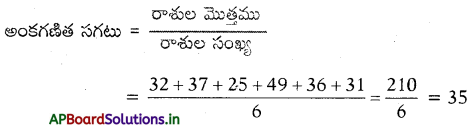
ఉదా : 32, 37, 25, 49, 36, 31 రాశుల సరాసరి ఎంత ?
జవాబు:
AP 7th Class Maths Notes 6th Lesson దత్తాంశ నిర్వహణ 4
అంకగణిత సగటు (సరాసరి) దత్తాంశములోని అత్యల్ప మరియు అత్యధిక పరిశీలనా విలువల మధ్య ఉంటుంది. ఇది ఆ దత్తాంశంలోని పరిశీలనా విలువ కావచ్చు, కాకపోవచ్చును.

AP 7th Class Maths Notes 6th Lesson దత్తాంశ నిర్వహణ

2. బాహుళకము : ఇవ్వబడిన దత్తాంశములో ఎక్కువసార్లు పునరావృతం అయ్యేరాశిని బాహుళకం అంటారు.
ఉదా – 1 : 6, 8, 5, 6, 6, 5, 7, 5, 6, 5, 4, 7, 6 ల బాహుళకం ఎంత ?
జవాబు:
ఇచ్చిన రాశులను ఒకే విలువ గల రాశులను ఒక క్రమ పద్ధతిలో అమర్చగా
4, 5, 5, 5, 5, 6, 6, 6, 6, 6, 7, 7, 8.
మిగతా వాని కన్నా 6 ఎక్కువసార్లు పునరావృతం అయినది.
బాహుళకం = 6

ఉదా – 2 : 3, 5, 4, 3, 6, 5, 8, 5, 6, 3, 2 రాశుల బాహుళకం ఎంత ?
జవాబు:
2, 3, 3, 3, 4, 5, 5, 5, 6, 6, 8.
మిగతా అన్నింటికన్నా ఎక్కువసార్లు 3 మరియు 5 లు సమానంగా రావడం జరిగినది.
బాహుళకం = 3 మరియు 5

→ ఒక దత్తాంశమునకు ఒకటి లేదా అంతకన్నా ఎక్కువ బాహుళకాలు ఉండవచ్చును. అలాగే ఒక్కొక్కసారి బాహుళకం ఉండకనూ పోవచ్చును.
ఉదా -1 :
మొదటి 10 సహజసంఖ్యల బాహుళకం ఎంత ?
జవాబు:
మొదటి 10 సహజ సంఖ్యలు : 1, 2, 3, 4, 5, 6, 7, 8, 9, 10
ఇందులో ఏ రాశి కూడా ఎక్కువసార్లు పునరావృతం కాలేదు. కాబట్టి ఈ దత్తాంశమునకు బాహుళకం లేదు.

ఉదా – 2 :
2, 3, 5, 4, 4, 2, 5, 3, 4, 3, 2, 5 రాశుల బాహుళకం ఎంత ?
జవాబు:
2, 2, 2, 3, 3, 3, 4, 4, 4, 5, 5, 5 (దత్తాంశంలోని రాశులను క్రమపద్ధతిలో అమర్చగా)
దత్తాంశంలోని రాశులు అన్ని సమానంగా పునరావృతం అవుతున్నాయి. ఈ సందర్భంలో ఇచ్చిన దత్తాంశమునకు బాహుళకం లేదు. ఇలాంటి దత్తాంశాన్ని బాహుళకరహిత దత్తాంశం అంటారు.

→ బాహుళకంగా ఒకే ఒక రాశిగల దత్తాంశమును “ఏక బాహుళక దత్తాంశం” అని, బాహుళకముగా రెండు రాశులు గల దత్తాంశాన్ని “ద్వి బాహుళక దత్తాంశము” అని అంటారు.

3. మధ్యగతము : దత్తాంశములోని రాశులను ఆరోహణ లేదా అవరోహణ క్రమంలో అమర్చగా, ఆ అమరికలోని
మధ్యమ విలువను మధ్యగతం అంటారు. మధ్యగతం దత్తాంశమును రెండు సమాన భాగాలుగా విభజిస్తుంది.
ఇచ్చిన దత్తాంశములోని రాశుల సంఖ్య (n) బేసి సంఖ్య అయిన మధ్యగతవ \(\left(\frac{\mathrm{n}+1}{2}\right)\)
వ రాశి అవుతుంది.
అలాగే దత్తాంశములోని రాశుల సంఖ్య (n) సరిసంఖ్య అయిన మధ్యగతము \(\left(\frac{n}{2}\right)\) వ రాశి మరియు \(\left(\frac{\mathrm{n}}{2}+1\right)\) వ రాశుల సరాసరి అవుతుంది.

ఉదా -1 :
20, 15, 17, 14, 21, 18, 19 రాశుల మధ్యగతము ఎంత ?
జవాబు:
ఇచ్చిన రాశులు ఆరోహణ క్రమములో అమర్చితే 14, 15, 17, 18, 19, 20, 21 పరిశీలనల సంఖ్య 7 ఒక బేసి సంఖ్య.
కావున, \(\frac{\mathrm{n}+1}{2}=\frac{7+1}{2}=\frac{8}{2}\) = 4వ రాశి మధ్య పదం అగును.
∴ మధ్యగతం = 18.

ఉదా – 2 :
13, 10, 12, 11, 14, 15 రాశుల మధ్యగతము ఎంత ?
జవాబు:
ఇచ్చిన రాశులు ఆరోహణ క్రమములో అమర్చితే 10, 11, 12, 13, 14, 15
పరిశీలనల సంఖ్య 6 ఒక సరి సంఖ్య. కావున, \(\left(\frac{n}{2}\right)\) వ మరియు \(\left(\frac{\mathrm{n}}{2}+1\right)\) పదాల సరాసరి మధ్యగతము ; n = 6
= \(\left(\frac{6}{2}\right),\left(\frac{6}{2}+1\right)\)
= 3, 4 పదాల సరాసరి అగును.
∴ మధ్యగతం = \(\frac{12+13}{2}=\frac{25}{2}\) = 12.5

→ వ్యాప్తి : దత్తాంశములోని గరిష్ఠ, కనిష్ఠ విలువల భేదాన్ని వ్యాప్తి అంటారు.
ఉదా :
6, 9, 3, 7, 11, 14, 2, 15 ల వ్యాప్తిని కనుగొనండి.
జవాబు:
వ్యాప్తి = గరిష్ఠ విలువ – కనిష్ఠ విలువ
దత్తాంశాన్ని ఆరోహణ క్రమంలో రాయగా
2, 3, 6, 7, 9, 11, 14, 15
వ్యాప్తి = 15 – 2 = 13
వ్యాప్తి కేంద్రీయ స్థాన విలువ కాదు.
అంకగణిత సగటు, బాహుళకం, మధ్యగతంలు కేంద్రీయ, స్థాన విలువలు.

AP 7th Class Maths Notes 6th Lesson దత్తాంశ నిర్వహణ

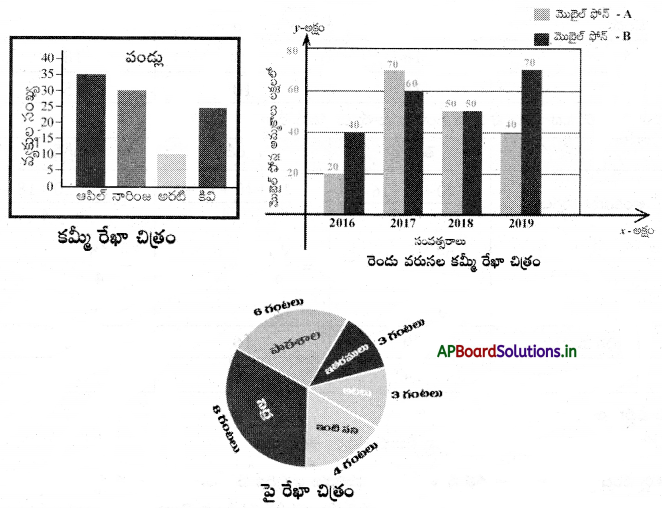
→ కమ్మీ రేఖా చిత్రం : ఇచ్చిన సంఖ్యా దత్తాంశాన్ని సమాన వెడల్పు గల కమ్మీల రూపంలో ప్రదర్శించటాన్ని “కమ్మీ రేఖా చిత్రము” అంటారు. కమ్మీ రేఖా చిత్రంలోని కమ్మీల వెడల్పు సమానంగా ఉండును. మరియు కమ్మీల ఎత్తు (పొడవు) అది సూచించే అంశం యొక్క విలువకు అనులోమానుపాతంలో ఉంటుంది.

→ రెండు వరుసల కమ్మీ రేఖా చిత్రం (డబుల్ బార్ గ్రాఫ్) : ఏకరీతి వెడల్పు కలిగిన కమ్మీలను ఉపయోగించడం ద్వారా ఒకే గ్రాఫ్ (రేఖాచిత్రం) మీద రెండు విభిన్న దత్తాంశములను ప్రదర్శించుటను రెండు వరుసల కమ్మీ రేఖా చిత్రం (లేదా) డబుల్ బార్ గ్రాఫ్ అంటారు.

→ పై (π) రేఖా చిత్రం (లేదా) వృత్త రేఖా చిత్రము : వృత్తమును సెక్టార్లుగా విభజించుట ద్వారా దత్తాంశమును ప్రదర్శించుటనే వృత్త. రేఖాచిత్రము లేదా పై (π) రేఖా చిత్రము అంటారు.
AP 7th Class Maths Notes 6th Lesson దత్తాంశ నిర్వహణ 5

AP 7th Class Maths Notes 10th Lesson Construction of Triangles

Students can go through AP Board 7th Class Maths Notes 10th Lesson Construction of Triangles to understand and remember the concept easily.

AP Board 7th Class Maths Notes 10th Lesson Construction of Triangles

→ The triangles can be constructed given the following cases :

  • Three sides of a triangle.
  • The lengths of any two sides and the measure of the angle between these sides.
  • The measures of two angles and the lengths of side included between them.

→ To Construct a triangle we need at least the measure of one side.
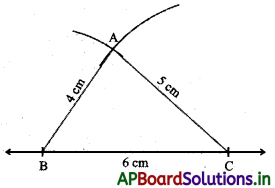
Construct a triangle ABC given that AB = 4 cm, BC = 6 cm and AC = 5 cm.
AP 7th Class Maths Notes 10th Lesson Construction of Triangles 1
Steps of construction:

  • Draw a line segment BC = 6 cm.
  • With B as centre and radius 4 cm, draw an arc.
  • With C as centre and radius 5 cm, draw another arc, cutting the previous arc atA.
  • Join BA and CA.
  • ∆ABC is formed.

AP 7th Class Maths Notes 10th Lesson Construction of Triangles

→ Construction of a triangle given two sides and an included angle.
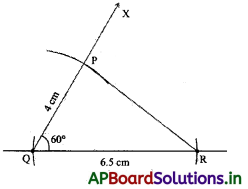
Construct triangle PQR given that PQ = 4cm,QR = 6.5cm and ∠Q = 60°.

Steps of construction:
AP 7th Class Maths Notes 10th Lesson Construction of Triangles 2

  • Draw a line segment QR = 6.5 cm.
  • Using a protractor, draw ∠PQR = 60°.
  • With Q as centre and radius 4 cm, draw an arc, cutting the ray \(\overrightarrow{\mathrm{QX}}\) at P
  • Join RP
  • ∆PQR is formed.

→ Construction of a right angled triangle given a base and hypotenuse.
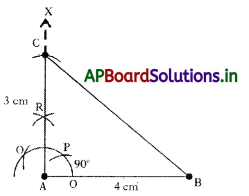
Construct a right angled triangle ABC given that AB = 4 cm, ∠A = 90°, AC = 3 cm.
AP 7th Class Maths Notes 10th Lesson Construction of Triangles 3
For making angle 90:

  • Take A as center and with any radius, draw an arc intersecting AB at O.
  • Now O as center and same radius as before, draw an arc intersecting previous arc at P.
  • Now P as center and same radius as before, draw an arc intersecting previous arc at Q.

Steps of Construction:

  • Draw a line segment AB = 4 cm. .
  • At A, draw an angle of 90° and name the line as AX;
  • With A as centre and radius 3 cm, draw an arc cutting the line AX at C.
  • Join BC.
  • ∆ABC is formed.

→ Construction of a triangle given two angles and a side included between them.
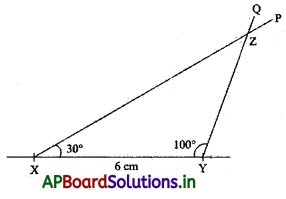
Construct a triangle XYZ in which ∠X = 30°, ∠Y = 100° and XY = 6 cm.
AP 7th Class Maths Notes 10th Lesson Construction of Triangles 4
Steps of Construction:

  • Draw a line segment XY of length 6 cm.
  • Using a protractor, draw ∠YXP = 30° at point X.
  • Again using the protractor, draw ∠XYQ = 100° at point Q, intersecting the ray PX at Z.
  • ∆XYZ is formed.

AP 7th Class Maths Notes 10th Lesson Construction of Triangles

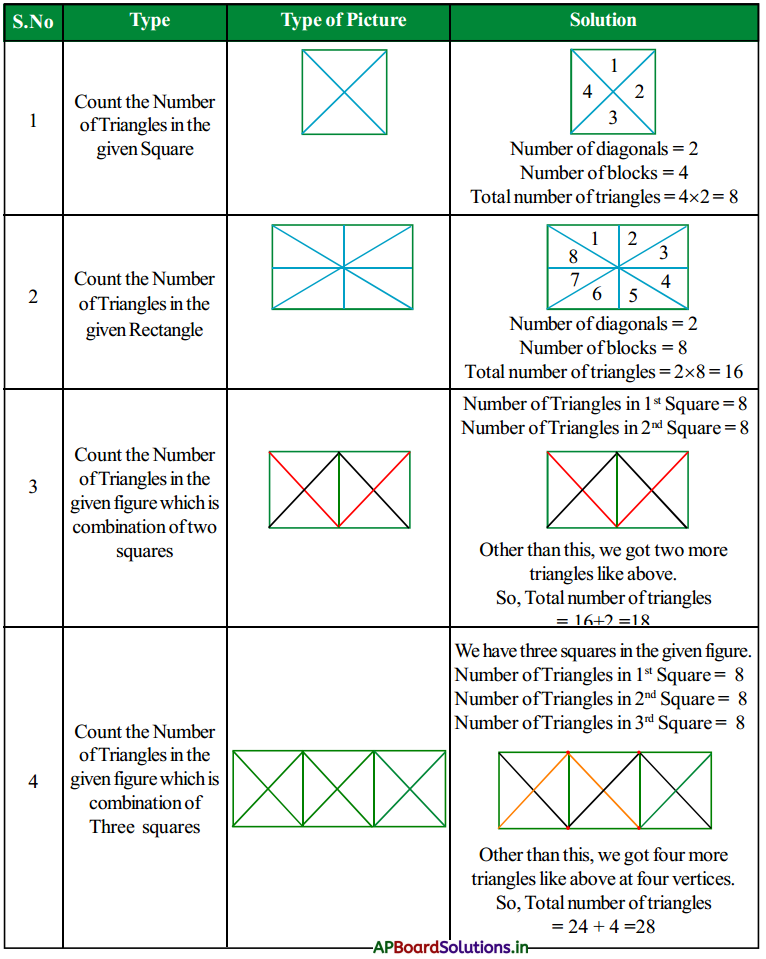
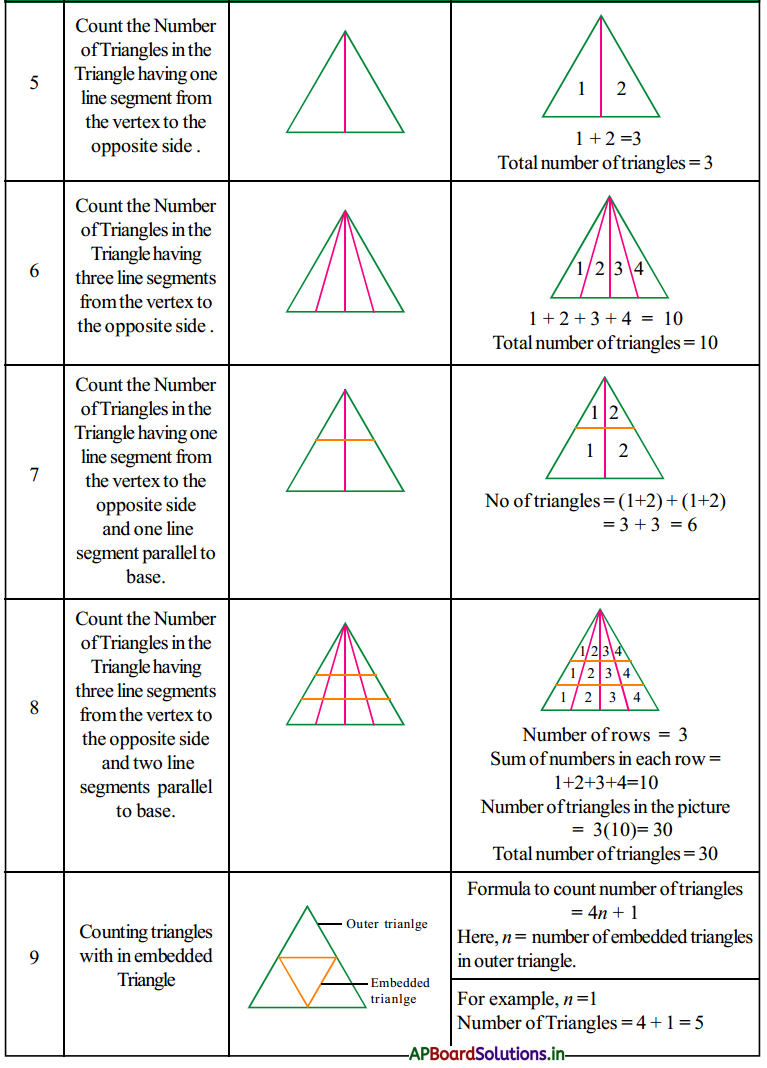
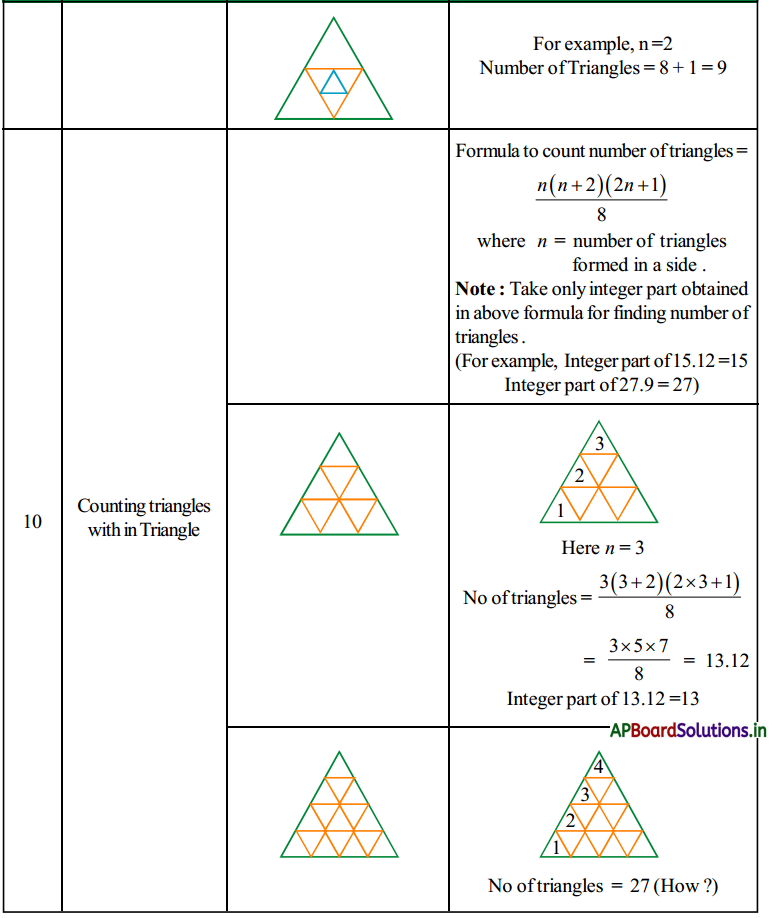
→ Counting of Triangles
AP 7th Class Maths Notes 10th Lesson Construction of Triangles 5
AP 7th Class Maths Notes 10th Lesson Construction of Triangles 6
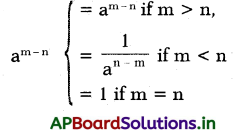
AP 7th Class Maths Notes 10th Lesson Construction of Triangles 7

AP 7th Class Maths Notes 8th Lesson Exponents and Powers

Students can go through AP Board 7th Class Maths Notes 8th Lesson Exponents and Powers to understand and remember the concept easily.

AP Board 7th Class Maths Notes 8th Lesson Exponents and Powers

→ To make large numbers easy to read, write and understand in a simple man¬ner exponents help us in doing so
Ex: 2 × 2 × 2 × 2× 2 × 2 = 26
a × a × a … ‘n’ times = an

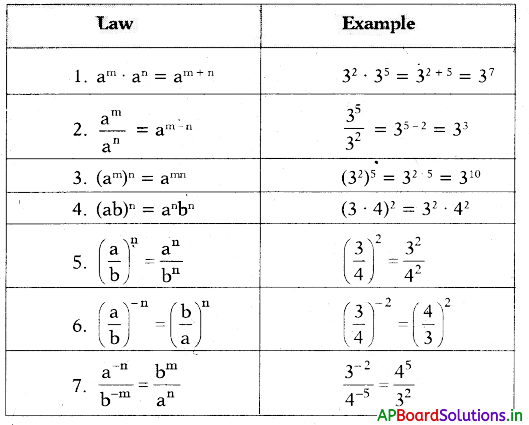
→ Laws of exponents :
For any non-zero integers ‘a’ and ‘b’ and integers ‘m’ and ‘n

  • am × an = am+n
  • (am)n = amn

AP 7th Class Maths Notes 8th Lesson Exponents and Powers 1

  • am × bm = (ab)m
  • am ÷ bm = \(\left(\frac{a}{b}\right)^{m}\)
  • a0 = 1 (where a ≠ 0)
  • (-1)even number = 1
  • (-1 )odd number = -1

→ In standard form a number is expressed as the product of largest integer exponent of 10 and any decimal number from 1 to 9.

→ Repeated addition can be expressed as multiplication i.e., if a number ‘a’ is added to itself for n-times we write it as na.
a + a + a + a + ………………… a (n-times) = n.a = na

AP 7th Class Maths Notes 8th Lesson Exponents and Powers

→ If a number a is multiplied by itself n- number of times, We can express in exponential form.
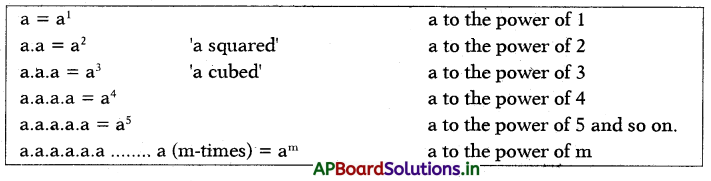
a . a . a . a . a . a . a . a . a ……………….. (n-times) = an. This is read as a to the power of n. Here a is called base and n is called exponent.

→ Exponential Form:
Example:
AP 7th Class Maths Notes 8th Lesson Exponents and Powers 2

→ A natural number can be expressed in exponential form using its prime factors. Write the given number as product of primes and the express in, exponential form.
Example : 72 = 2 × 2 × 2 × 3 × 3 = 23 × 32
405 = 3 × 3 × 3 × 3 × 5 = 34 × 5

→ Laws of Exponents:

Zero Exponenta0 = 1 a ≠ 0Any value to the power of £) equals 1 , unless the value is 0
Exponent of onea1 = aAny value to the power of 1 is itself
Negative exponenta-m = 1/am
Inversea-1 = 1/a
Productam × an = a(m+n)If both bases are the same, add the exponents
Quotientam/an = a(m-n)If both bases are the same, subtract the exponents
Power of a power(am)n = amn
Power of a productambm = (ab)m

AP 7th Class Maths Notes 8th Lesson Exponents and Powers

AP 7th Class Maths Notes 8th Lesson Exponents and Powers 3
→ Standard form: In standard form, a number is expressed as a product of integer exponent of 10 and a decimal number from 1 to 9.
Example: 8569 = 8.569 × 1000 = 8.569 × 10³

AP 7th Class Maths Notes 7th Lesson Ratio and Proportion

Students can go through AP Board 7th Class Maths Notes 7th Lesson Ratio and Proportion to understand and remember the concept easily.

AP Board 7th Class Maths Notes 7th Lesson Ratio and Proportion

→ Compound Ratio of a: b and c: d is ac: bd.

→ a, b are two quantities if a increases, b also increases or a decreases, b also decreases then a and b are said to be in direct proportion.

→ a and b are in direct proportion, then \(\frac{a}{b}\) = k, where k is proportional constant.

→ a, b are two quantities, if ‘a’ increases, ‘b’ decreases or ‘a’ decreases, ‘b’ increases, then ‘a’ and ‘b’ are said to be in inverse proportion.

→ a and b are in inverse proportion, then a × b = k, where k is proportional constant.

→ Sometimes change in one quantitiy depends upon the change in two or more quantities in some proportion, which is called compound proportion.
1% = 1/100 = 0.01 = 1:100

→ Profit = Selling price – Cost price
Loss = Cost price – Selling price
Profit percentage = \(\frac{\text { profit }}{\text { C.P }}\) × 100

→ Loss percentage = \(\frac{\text { loss }}{\text { C.P }}\) × 100

→ Discount always calculated on marked price

AP 7th Class Maths Notes 7th Lesson Ratio and Proportion

→ Discount = Marked price – Selling

→ Simple Interest I = \(\frac{P \times T \times R}{100}\)

→ Ratio: Comparing two quantities of the same kind by virtue of division is called ‘Ratio’ of these two quantities.

  • The ratio of ‘a’ and ‘b’ is a ÷ b or \(\frac{a}{b}\) and is denoted by a: b. and read as ‘a’ is to ‘b’.
  • In a: b the first term ‘a’ is called antecedent and the second term ‘b’ is called consequent.
  • The terms of the ratio should be expressed in same units.
  • Generally a ratio is expressed in its simplest form.
    Ex: The ratio of 200 ml and 3l is?
    200: 3000 = 1: 15

→ Compound ratio: For two or more ratios, if we take antecedent as product of antecedents of the ratios and conse-quent as product of consequents of the ratios, then the ratio thus formed is called mixed or compound ratio.

  • When two or more ratios are multiplied term-wise; the ratio thus obtained is called compound ratio.
  • The compound ratio of a: b and c: d is ac: bd.
  • The compound ratio of a: b, c: d and e: f is ace: bdf and so on.

→ Direct proportion:
Direct proportion is the relationship between two variables whose ratio is equal to a constant value. In other words, the direct proportion is a situation where an increase in one quantity causes a corresponding increase in the other quantity, or a decrease in one quantity results in a decrease in the other quantity.

→ If a and b are in direct proportion, then an increase (decrease) in a causes an increase (decrease) in b at the same rate. This is represented by a ∝ b
\(\frac{a}{b}\) = k or a = kb where k is proportionality constant.

Example:

  • If the number of individuals visiting a restaurant increases, earning of the restaurant also increases and vice versa.
  • Speed is directly proportional to distance.
  • The cost of the fruits or vegetable increases as the weight for the same increase. Indirect proportion: Two quantities a and b are said to be in inverse proportion if an increase in the quantity a, there will be a decrease in the quantity b, and vice-versa. In other words, the product of their corresponding values should remain constant. Sometimes, it is also known as inverse variation.

→ The statement ‘a is inversely proportional to b’ is written as
a ∝ \(\frac{1}{b}\)
ab = k, where k is called proportionality constant.
That is, if ab = k, then a and b are said to vary inversely. In this case, if b1, b2 are the values of b corresponding to the values a1 > a2 of a respectively, then a1 b1 = a2 b2 or a1 / a2 = b2 / b1

Example:

  • If speed increases, then the time taken to cover the same distance decreases.
  • If number of men increases, then time taken to complete a given work decreases.

→ Compound proportion:
The proportion involving two or more quantities is called Compound propor¬tionality. The quantities could be directlly related or inversely related or both.

Ex.: 195 men working 10 hours a day can finish a job in 20 days. How many men are employed,to finish the job in 15 days if they work 13 hours a day ?
Answer:
Let x be the no. of men required

DaysHoursMen
2010195
1513x

20 × 10 × 195 = 15 × 13 × x
x = \(\frac{20 \times 10 \times 195}{15 \times 13}\)
= 200 men

→ CASE – 1: If quantity 1 and quantity 2 are directly related and quantity 2 and quantity 3 are also directly related, then we use the following rule:
\(\frac{\mathrm{a} \times \mathrm{b}}{\mathrm{c}}=\frac{\mathrm{d} \times \mathrm{e}}{\mathrm{x}}\)

AP 7th Class Maths Notes 7th Lesson Ratio and Proportion

→ CASE – 2: If quantity 1 and quantity 2 are directly related and quantity 2 and quantity 3 are inversely related, then we use the following rule:
\(\frac{b \times c}{a}=\frac{e \times x}{d}\)

→ CASE – 3: If quantity 1 and quantity 2 are inversely related and quantity 2 and quantity 3 are directly related, then we use the following rule:
\(\frac{a \times b}{c}=\frac{d \times e}{x}\)

→ CASE – 4: If quantity 1 and quantity 2 are inversely related and quantity 2 and quantity 3 are also inversely related, then we use the following rule:
a × b × c = d × e × x

→ Application of percentages: A percentage is a number or ratio that can be expressed as a fraction of 100. If we have to calculate percent of a number, divide the number by whole and multiply by 100. Hence, the percentage means, a part per hundred. The word per cent means per 100. It represented by the symbol %.

  • Percentages have no units. Hence it is called a dimensionless/unitless number.
  • If we say, 50% of a number, then it means 50 per cent of its whole.

→ Percentage formula: The formula to calculate percentage of a number out of another number is:
Percentage = (Original number/ Another number) × 100
Express the given number as a part of whole or equivalent fraction. Multiply the fraction with 100.
Assign the symbol %.

→ What is the percentage of 45 out of 150?
Answer:
(45/150) × 100 = 30%

→ What is 40% of 120 ?
Answer:
40% of 120
= 40/100 × 120 = 48

→ Cost Price: It is the price at which a product is purchased. It is commonly abbreviated as C.P.
Example: A shopkeeper has bought 1 kg of apples for Rs.100, then C.P of apples is Rs. 100.

→ Selling Price: It is the price at which a product is sold. It is commonly abbre-viated as S.P.
Example:

  • A shopkeeper has bought 1 kg of apples for Rs.100. And sold it for Rs. 120 per kg.
  • The S.P of apples is Rs.120

→ Profit or gain: If the selling price of a product is more than the cost price, there will be profit in the deal.
Therefore, Profit or Gain = S.P. – C.P

Example: A shopkeeper has bought 1 kg of apples for Rs.100 and sold it for Rs. 120 per kg, then the profit is
S.P. – C.P. = 120 – 100 = Rs. 20

AP 7th Class Maths Notes 7th Lesson Ratio and Proportion

→ Loss: If the selling price of a product is less than the cost price, the seller will incur a loss. Therefore,
Loss = C.P – S.P.

Example: A shopkeeper has bought 1 kg of apples for Rs.100 and sold it for Rs. 80 per kg, then the loss is
C.P. – S.P = 100 – 80 = Rs. 20.
The profit percent or loss percent is always calculated as some percent of cost price.

→ Profit percentage = (Profit/Cost Price) × 100
Example: A shopkeeper has bought 1 kg of apples for Rs. 100 and sold it for Rs. 120 per kg then the profit percent is?
= (Loss / Cost price) × 100

Example: A shopkeeper has bought 1 kg of apples for Rs.100 and sold it for Rs. 80 per kg. then the loss percent is ?
Loss percent = \(\frac{\text { C.P-S.P. }}{\text { C.P. }}\) × 100%
= \(\frac{100-80}{100}\) × 100%
= \(\frac{20}{100}\) × 100% = 20%

→ Marked Price Formula (M.P): The price shown on an item is called its marked price. This is basically labelled by shop-keepers to offer a discount.

→ Discount: Discount is often given as a percent on C.P.
Discount = Marked Price – Selling Price

Discount percent = \(\frac{\text { M.P. }-\text { S.P. }}{\text { M.P. }}\) × 100%

→ Simple Interest: Sum lent or borrowed is called the Principle denoted by P. Time after which a loan is repaid is called the Time Period denoted by T.
The extra amount to be paid on a loan at the end of agreed time period is always expressed as a percent on P and is known as Rate of interest denoted by R%.

So Interest = R% of P for T years
= R × \(\frac{\mathrm{P}}{100}\) × T = \(\frac{\mathrm{P} \times \mathrm{T} \times \mathrm{R}}{100}\)

Amount = Principle + Interest
= P + \(\frac{\mathrm{P} \times \mathrm{T} \times \mathrm{R}}{100}\) = P\(\left(1+\frac{\mathrm{TR}}{100}\right)\)

AP 7th Class Maths Notes 5th Lesson త్రిభుజాలు

Students can go through AP Board 7th Class Maths Notes 5th Lesson త్రిభుజాలు to understand and remember the concept easily.

AP Board 7th Class Maths Notes 5th Lesson త్రిభుజాలు

→ మూడు సరళ రేఖలచే ఏర్పడిన సరళ సంవృత సమతల పటమును త్రిభుజం అంటారు.

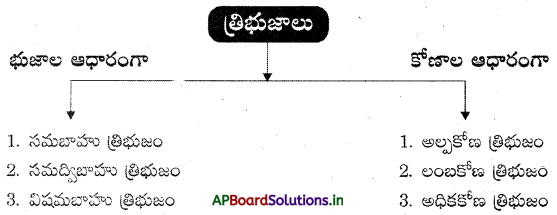
→ భుజముల ఆధారంగా, త్రిభుజములు మూడు రకములు. అవి :

  1. సమబాహు త్రిభుజం,
  2. సమద్విబాహు త్రిభుజం,
  3. విషమబాహు త్రిభుజం.

→ కోణములు ఆధారంగా త్రిభుజములు మూడు రకములు. అవి :

  1. అల్పకోణ త్రిభుజం,
  2. అధికకోణ త్రిభుజం,
  3. లంబకోణ త్రిభుజం.

→ త్రిభుజములో అంతర కోణముల మొత్తము 180°.

→ ఒక త్రిభుజంలో బాహ్యకోణం, దాని అంతరాభిముఖ కోణముల మొత్తమునకు సమానము.

AP 7th Class Maths Notes 5th Lesson త్రిభుజాలు

→ త్రిభుజములో భుజముల కొలతల ధర్మాలు :

  • ఒక త్రిభుజంలో ఏవైనా రెండు భుజముల మొత్తము, మూడవ భుజం కన్నా ఎక్కువ.
  • ఒక త్రిభుజములో ఏ రెండు భుజముల భేదమైన మూడవ భుజం కన్నా తక్కువ.

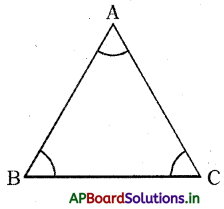
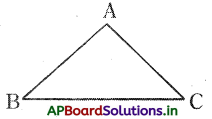
→ త్రిభుజము : మూడు రేఖా ఖండాలతో ఏర్పడిన సరళ సంవృత పటాన్ని త్రిభుజము అంటారు.
AP 7th Class Maths Notes 5th Lesson త్రిభుజాలు 1
త్రిభుజంలోని భాగాలు : మూడు శీర్షాలు, మూడు కోణాలు, మూడు భుజాలు.
త్రిభుజం ABC లో (AABCలో)
మూడు శీర్షాలు : A, B మరియు C
మూడు కోణాలు : A, B మరియు ∠C (లేదా) ∠BAC, ∠ABC మరియు ∠BCA
మూడు భుజములు : \(\overline{\mathrm{AB}}, \overline{\mathrm{BC}}\) మరియు \(\overline{\mathrm{CA}}\)

→ త్రిభుజాల వర్గీకరణ : త్రిభుజాలను

  • భుజాల కొలతను బట్టి,
  • కోణాలను బట్టి రెండు విధాలుగా విభజిస్తారు.

AP 7th Class Maths Notes 5th Lesson త్రిభుజాలు 2

→ భుజాల కొలతల ఆధారంగా, త్రిభుజాలను మూడు రకాలుగా వర్గీకరించవచ్చు. అవి :
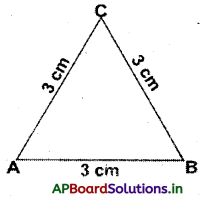
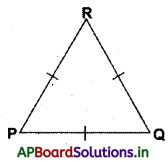
1. సమబాహు త్రిభుజం : అన్ని భుజాలు సమానంగా ఉన్న త్రిభుజమును సమబాహు త్రిభుజం అంటారు.
ఉదా :
(i) ∆ARC లో.
AB = BC = CA = 3 సెం.మీ.
AP 7th Class Maths Notes 5th Lesson త్రిభుజాలు 3

(ii) ∆PQRలో PQ = QR = RP
AP 7th Class Maths Notes 5th Lesson త్రిభుజాలు 4

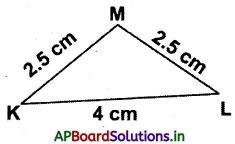
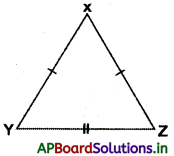
2. సమద్విబాహు త్రిభుజం : రెండు భుజాలు సమానంగా ఉన్న త్రిభుజమును సమద్విబాహు త్రిభుజం అంటారు.
ఉదా :
(i) ∆KLM లో KM = ML = 2.5 సెం.మీ.
AP 7th Class Maths Notes 5th Lesson త్రిభుజాలు 5
(ii) ∆XYZ లో,
XY = XZ
AP 7th Class Maths Notes 5th Lesson త్రిభుజాలు 6

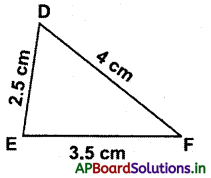
→ విషమబాహు త్రిభుజం : ఏ రెండు భుజాలు సమానంగా లేని త్రిభుజమును విషమబాహు త్రిభుజము అంటారు.
ఉదా :
(i) ∆DEF లో
DE ≠ EF ≠ FD
AP 7th Class Maths Notes 5th Lesson త్రిభుజాలు 7
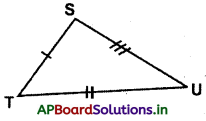
(ii) ∆STU లో
ST ≠ TU ≠ US
AP 7th Class Maths Notes 5th Lesson త్రిభుజాలు 8

→ కోణాల కొలతల ఆధారంగా త్రిభుజాలను మూడు రకాలుగా వర్గీకరించవచ్చును. అవి :
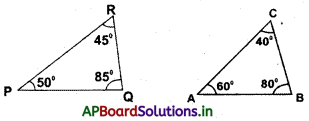
1. అల్పకోణ త్రిభుజం : త్రిభుజము యొక్క అన్ని కోణాలు అల్పకోణములుగా గల త్రిభుజమును అల్పకోణ త్రిభుజం అంటారు. ఉదా :
AP 7th Class Maths Notes 5th Lesson త్రిభుజాలు 9

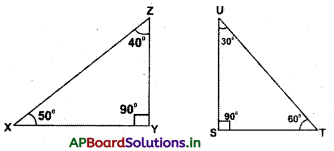
2. లంబకోణ త్రిభుజం : త్రిభుజములో ఒక కోణం లంబకోణం గల త్రిభుజమును లంబకోణ త్రిభుజం అంటారు.
ఉదా
AP 7th Class Maths Notes 5th Lesson త్రిభుజాలు 10

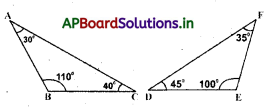
3. అధికకోణ త్రిభుజం : త్రిభుజములో ఒక కోణం అధిక కోణంగా గల త్రిభుజమును అధిక కోణ త్రిభుజం అంటారు.
ఉదా :
AP 7th Class Maths Notes 5th Lesson త్రిభుజాలు 11

AP 7th Class Maths Notes 5th Lesson త్రిభుజాలు

→ త్రిభుజ అంతరకోణాల మొత్తము-ధర్మము : త్రిభుజం లోని మూడు అంతర కోణాల మొత్తం 180°.
∆ABC లో ∠A + ∠B + ∠C = 180°.
AP 7th Class Maths Notes 5th Lesson త్రిభుజాలు 12
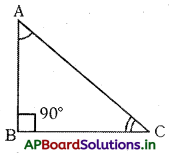
ఒక లంబకోణ త్రిభుజంలో లంబకోణేతర కోణాలు రెండూ అల్పకోణాలు మరియు ఆ రెండు కోణాలు పూరకాలు. అనగా ఆ రెండు కోణాల మొత్తము 90°. ∆ABC లో, ∠B = 90°. కనుక ∆ABC ఒక లంబకోణ త్రిభుజము.
AP 7th Class Maths Notes 5th Lesson త్రిభుజాలు 13
∆ABC లో ∠A + ∠C = 90°.

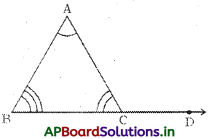
→ త్రిభుజ బాహ్యకోణ ధర్మము : ఒక త్రిభుజంలోని బాహ్య కోణము, దాని యొక్క అంతరాభిముఖ కోణాల మొత్తమునకు సమానము.
AP 7th Class Maths Notes 5th Lesson త్రిభుజాలు 14
∆ABC లో ∠ACD = ∠A + ∠B

→ త్రిభుజము యొక్క భుజాల అసమానత్వ ధర్మాలు :
i) ఒక త్రిభుజంలోని ఏవైనా రెండు భుజాల మొత్తం మూడవ భుజం కన్నా ఎక్కువ.
AP 7th Class Maths Notes 5th Lesson త్రిభుజాలు 15
∆ABC లో,

  • AB + AC > BC
  • BC + AC > AB
  • AB + BC > AC

(ii) ఒక త్రిభుజంలోని ఏ రెండు భుజాల భేదము, మూడవ భుజం కన్నా తక్కువ.
AP 7th Class Maths Notes 5th Lesson త్రిభుజాలు 16

  • AB – BC < AC
  • BC – AC < AB
  • AC – AB < BC

AP 7th Class Maths Notes 5th Lesson త్రిభుజాలు

→ త్రిభుజ భుజాలకు మరియు కోణాలకు మధ్య గల సంబంధము :
(i) ఏ త్రిభుజంలో అయిన అతి చిన్న కోణమునకు ఎదురుగా ఉన్న భుజము, మిగిలిన రెండు భుజాల కన్నా చిన్నది. అలాగే

(ii) ఏ త్రిభుజంలో అయిన అతి పెద్ద కోణమునకు ఎదురుగా గల భుజము మిగిలిన రెండు భుజాల కన్నా పెద్దది.
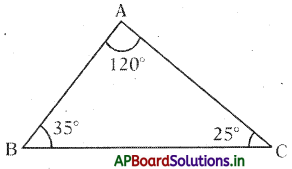
AP 7th Class Maths Notes 5th Lesson త్రిభుజాలు 17
∆ABC లో, ∠A = 120°, ∠B = 35°, ∠C = 25°
∠C కోణము అతి చిన్నది. కావున ∠C కి ఎదురుగా గల భుజము BC మిగిలిన AC, AB కన్నా చిన్నదిగా ఉంటుంది.
∠C < ∠B కావున \(\overline{\mathrm{AB}}<\overline{\mathrm{AC}}\) మరియు
∠C < ∠A కావున \(\overline{\mathrm{AB}}<\overline{\mathrm{BC}}\) అలాగే ∠A కోణము అతి పెద్ద కోణము. కావున ∠A కు ఎదురుగా గల భుజం \(\overline{\mathrm{BC}}\) మిగిలిన రెండు భుజాల కన్నా పెద్దది. ∠A > ∠B కావున \(\overline{\mathrm{BC}}<\overline{\mathrm{AC}}\) మరియు ∠A > ∠C కావున \(\overline{\mathrm{BC}}<\overline{\mathrm{AB}}\).

→ లంబకోణ త్రిభుజంలో లంబకోణము (90°) మిగిలిన కోణాల కన్నా పెద్దది. కావున 90° గా గల కర్ణము. మిగిలిన రెండు భుజాల కన్నా పెద్దది.
∆ABC లో,
∠B = 90° కావున ∠B కి ఎదురుగా గల భుజం AC (కర్ణము) అతి పెద్ద భుజము అవుతుంది.

(iii) ఒక త్రిభుజంలో సమాన కోణాలకు ఎదురుగా గల భుజాలు సమానము. అలాగే సమాన భుజాలకు ఎదురుగా గల కోణాలు సమానము.
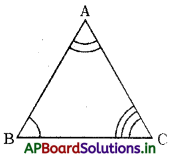
AP 7th Class Maths Notes 5th Lesson త్రిభుజాలు 18
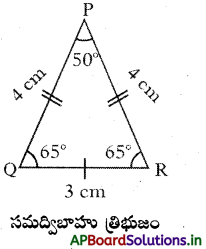
3 cm సమద్విబాహు త్రిభుజం సమద్విబాహు త్రిభుజంలో, PQ = PR కావున ∠R = ∠Q అలాగే ∠Q = ∠R కావున PQ = PR అవుతుంది.
AP 7th Class Maths Notes 5th Lesson త్రిభుజాలు 19
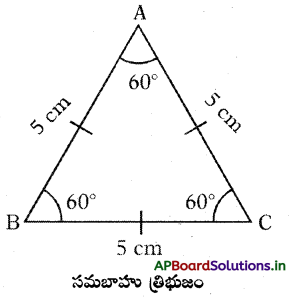
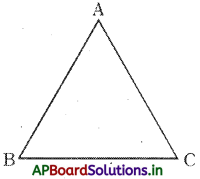
సమబాహు త్రిభుజం సమబాహు త్రిభుజంలో ప్రతికోణము సమానము. అనగా ప్రతికోణము .60. ∠A = ∠B = ∠C = 60° మరియు BC = AC = AB

AP 7th Class Maths Notes 4th Lesson రేఖలు మరియు కోణాలు

Students can go through AP Board 7th Class Maths Notes 4th Lesson రేఖలు మరియు కోణాలు to understand and remember the concept easily.

AP Board 7th Class Maths Notes 4th Lesson రేఖలు మరియు కోణాలు

→ యూక్లిడ్ (323 – 283 BC) ఒక .గ్రీకు గణిత శాస్త్రవేత్త. ఆయన “రేఖాగణిత పితామహుడు”గా ప్రసిద్ధి చెందాడు. ఆయన “ఎలిమెంట్స్” అనే పేరుతో ఒక పుస్తకాన్ని రచించెను. ఇది రేఖాగణితాన్ని గురించి వివరించే 13 పుస్తకాల సమాహారం. గణిత శాస్త్ర చరిత్రలో “ఎలిమెంట్స్” అత్యంత ప్రభావితమైన రచన. ఆయన తన పుస్తకాల్లో అనేక స్వీకృతాలను ఉపయోగించి అనేక సిద్ధాంతాలను వివరించారు. ఈ సిద్ధాంతాలు యూక్లిడియన్ జ్యామితి అధ్యయనంలో ఇప్పటికీ ఉపయోగించబడుతున్నాయి.

→ రెండు కోణాల మొత్తం 90° అయితే, ఆ రెండు కోణాలను ఒకదానికొకటి పూరక కోణాలు అంటారు.

→ రెండు కోణాల మొత్తం 180° అయితే, ఆ రెండు కోణాలను ఒకదానికొకటి సంపూరక కోణాలు అంటారు.

→ రెండు కోణాల మొత్తం 360° అయితే, ఆ రెండు కోణాలను ఒకదానికొకటి సంయుగ్మ కోణాలు అంటారు.

→ రెండు కోణాలు ఉమ్మడి శీర్షం, ఉమ్మడి భుజం కలిగి ఆ రెండు కోణాలు ఉమ్మడి భుజానికి చెరోవైపున ఉన్నచో వాటిని ఆసన్న కోణాలు అంటారు.

→ రెండు ఆసన్న కోణాల మొత్తం 180° అయినచో వాటిని రేఖీయ కోణాల జత లేదా రేఖీయ ద్వయం అని అంటారు.

→ రెండు సరళరేఖలు ఒకదానికొకటి ఖండించుకొన్నప్పుడు, ఆ ఖండన బిందువు వద్ద ఏర్పడిన అభిముఖ కోణాల – జతను శీర్షాభిముఖ కోణాలు అని అంటారు.

→ శీర్షాభిముఖ కోణాలు సమానం.

AP 7th Class Maths Notes 4th Lesson రేఖలు మరియు కోణాలు

→ రెండు లేదా అంతకంటే ఎక్కువ సరళరేఖలను విభిన్న బిందువుల వద్ద ఖండించే సరళరేఖను తిర్యక్ రేఖ అంటారు.

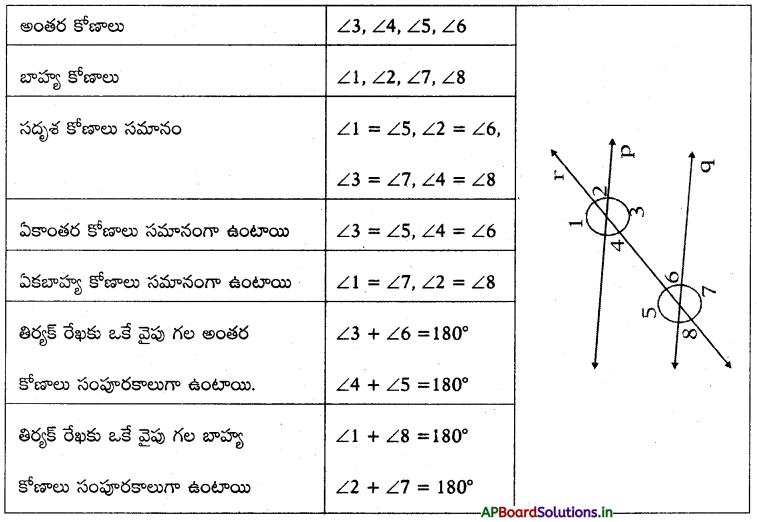
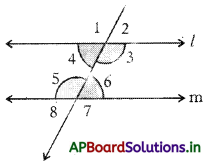
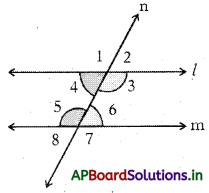
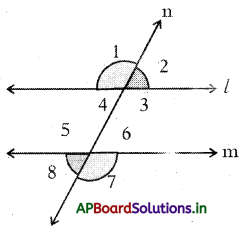
→ ఒక జత సమాంతర రేఖలు p, q లను ఒక తిర్యగ్రేఖ r ఖండించినప్పుడు, ఏర్పడిన కోణాలు ∠1, ∠2, ∠3, ∠4, ∠5, ∠6, ∠7 మరియు ∠8 అని అనుకొనుము.
AP 7th Class Maths Notes 4th Lesson రేఖలు మరియు కోణాలు 1
→ ఒక తిర్యక్ రేఖ ఒక జత సరళరేఖలను ఖండించినపుడు,
AP 7th Class Maths Notes 4th Lesson రేఖలు మరియు కోణాలు 2
→ పూరక కోణాలు : రెండు కోణాల మొత్తం 90° అయితే, ఆ రెండు కోణాలను ఒకదానికొకటి పూరక కోణాలు అంటారు.
ఉదా : 50° కు పూరకకోణం 40°
అలాగే 40° కు పూరక కోణం 50°
(ఎందుకనగా 50° + 40° = 90°)
x° కు పూరకకోణము 90 – x° అవుతుంది.

→ సంపూరక కోణాలు : రెండు కోణాల మొత్తం 180° అయితే, ఆ రెండు కోణాలను ఒకదానికొకటి సంపూరక కోణాలు అంటారు.
ఉదా : 50° కు సంపూరకకోణం 130°
అలాగే 130° కు సంపూరకకోణం 50°
(ఎందుకనగా 50° + 130° = 180°)
x°కు సంపూరక కోణము 180 – x అవుతుంది.

→ సంయుగ్మ కోణాలు : రెండు కోణాల మొత్తం 360° అయితే, ఆ రెండు కోణాలను ఒకదానికొకటి సంయుగ్మ కోణాలు అంటారు.
ఉదా : 50° కు సంయుగ్మకోణము 310°
అలాగే 310° కు సంయుగ్మకోణము 50°
x° కు సంయుగ్మకోణము 360 – x° అవుతుంది.

→ ఆసన్న కోణాలు : రెండు కోణాలకు ఉమ్మడి శీర్షం, ఉమ్మడి భుజం కలిగి ఆ రెండు కోణాలు ఉమ్మడి భుజానికి చెరోవైపున ఉన్నచో వాటిని ఆసన్న కోణాలు అంటారు.
ఉదా 1:
AP 7th Class Maths Notes 4th Lesson రేఖలు మరియు కోణాలు 3
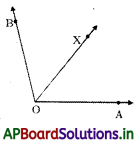
∠AOX మరియు ∠BOXలకు ఉమ్మడి శీర్షము – ‘O’
ఉమ్మడి భుజం – OX
ఉమ్మడి భుజం OXకు ∠AOX మరియు ∠BOX లు చెరొకవైపు కలవు.
కావున ∠AOX మరియు ∠BOX లు ఆసన్న కోణాలు.

ఉదా 2:
AP 7th Class Maths Notes 4th Lesson రేఖలు మరియు కోణాలు 4
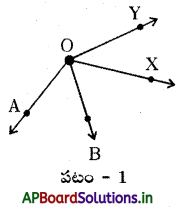
పటం – 1 లో ‘O’ ఉమ్మడి శీర్షం అయితే ∠AOB మరియు ∠XOY లకు ఉమ్మడి భుజం లేదు. కావున ఈ రెండు కోణాలు ఆసన్న కోణాలు కావు.
AP 7th Class Maths Notes 4th Lesson రేఖలు మరియు కోణాలు 5
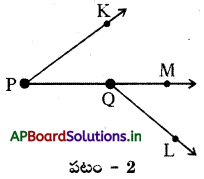
పటం – 2 లో ఉమ్మడి భుజం PM మరియు ∠KPM, ∠MQL లు భుజం PM కు చెరొకవైపు కలవు. కాని రెండు కోణాలకు ఉమ్మడి శీర్చం లేదు.
కావున ∠KPM మరియు ∠MQL లు ఆసన్న కోణాలు కావు.

AP 7th Class Maths Notes 4th Lesson రేఖలు మరియు కోణాలు

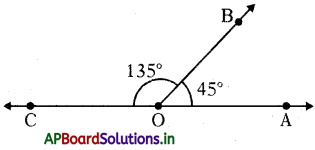
→ రేఖీయ కోణాల జత (లేదా) రేఖీయ ద్వయం : రెండు ఆసన్న కోణాల మొత్తం 180° అయినచో వాటిని రేఖీయ కోణాల జత లేదా రేఖీయ ద్వయం అని అంటారు.
∠AOB మరియు ∠BOC లు ఆసన్న కోణాలు BO మరియు వాని మొత్తం 45° + 135° = 180°.
కావున, ∠AOB మరియు ∠BOC లు రేఖీయ కోణాల జత లేదా రేఖీయ ద్వయం.
ఉదా :
AP 7th Class Maths Notes 4th Lesson రేఖలు మరియు కోణాలు 6

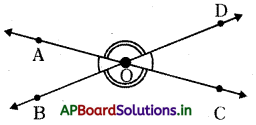
→ శీర్షాభిముఖ కోణాలు : రెండు సరళరేఖలు ఒకదానికొకటి ఖండించుకొన్నప్పుడు, ఆ ఖండన బిందువు వద్ద ఏర్పడిన అభిముఖ (ఆసన్నం కానటువంటి) కోణాలను శీర్షాభిముఖ కోణాలు అని అంటారు.
ఉదా :
AP 7th Class Maths Notes 4th Lesson రేఖలు మరియు కోణాలు 7
∠AOB, ∠COD లు ఒక జత ∠BOC, ∠AOD లు మరొక జత శీర్షాభిముఖ కోణాలు. శీర్షాభిముఖ కోణాలు ఎప్పటికీ ఆసన్నకోణాల జత కావు. c శీర్షాభిముఖ కోణాలు ఎల్లప్పుడూ సమానము.

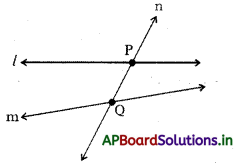
→ తిర్యక్ రేఖ : రెండు లేదా అంతకంటే ఎక్కువ సరళరేఖలను విభిన్న బిందువుల వద్ద ఖండించే సరళరేఖను తిర్యక్ రేఖ అంటారు.
ఉదా :
AP 7th Class Maths Notes 4th Lesson రేఖలు మరియు కోణాలు 8
l, m సరళరేఖలను n సరళరేఖ, P మరియు Q అనే వేర్వేరు బిందువుల వద్ద ఖండిస్తున్నది. కావున n తిర్యక్ రేఖ.

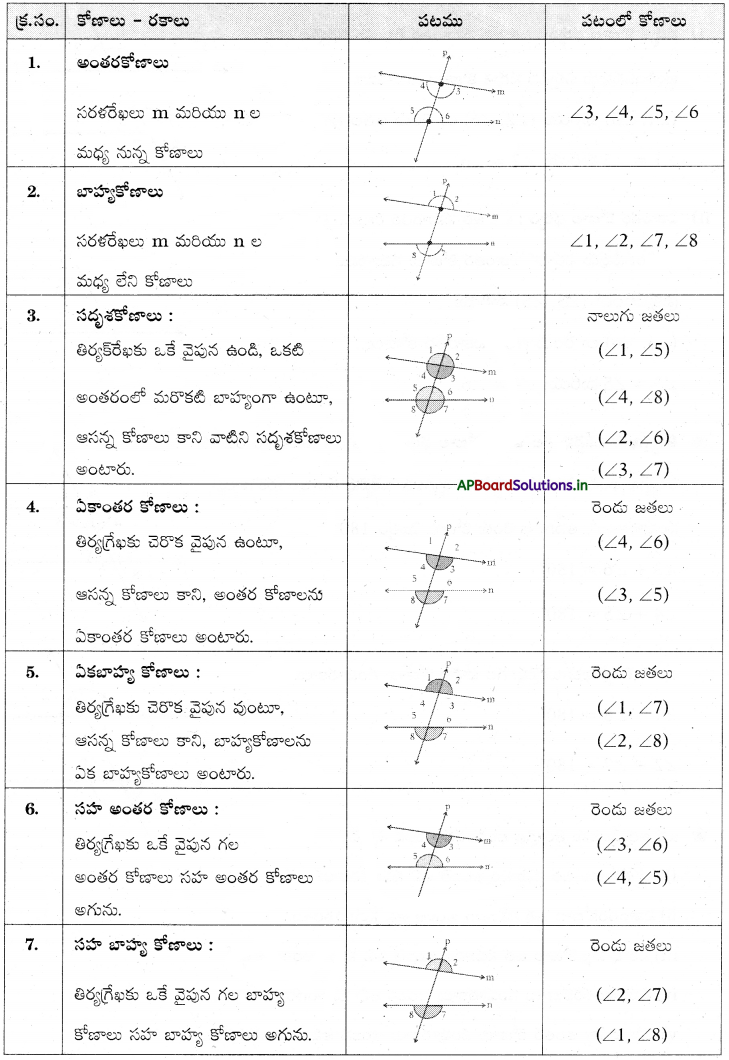
→ తిర్యక్ రేఖతో ఏర్పడే కోణాలు, కోణాల జతలు :
AP 7th Class Maths Notes 4th Lesson రేఖలు మరియు కోణాలు 9

→ సమాంతర రేఖలపై తిర్యగ్రేఖలో ఏర్పడే కోణాల ధర్మాలు :
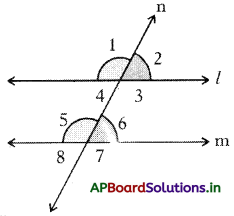
(i) సదృశ కోణాల ధర్మం : ఒక జత సమాంతర రేఖలను తిర్యగ్రేఖ ఖండించినపుడు ఏర్పడిన సదృశ కోణాలు సమానము.
(∠1, ∠5) మరియు (∠2, ∠6) లు రెండు జతల సదృశ కోణాలు.
∠1 = ∠5 మరియు 22 = 26.
AP 7th Class Maths Notes 4th Lesson రేఖలు మరియు కోణాలు 10

(ii) ఏకాంతర కోణాల ధర్మం : ఒక జత సమాంతర రేఖలను తిర్యగ్రేఖ ఖండించినపుడు ఏర్పడిన ఏకాంతర కోణాలు సమానము. ప్రక్కపటంలో (∠3, ∠5) మరియు (∠4, ∠6) లు రెండు జతల ఏకాంతర కోణాలు.
AP 7th Class Maths Notes 4th Lesson రేఖలు మరియు కోణాలు 11
∠3 = ∠5 మరియు ∠4 = ∠6.

→ తిర్యగ్రేఖకు ఒకేవైపు గల అంతరకోణాల ధర్మం : “ఒక జత సమాంతర రేఖలను తిర్యగ్రేఖ ఖండించినపుడు ఏర్పడిన తిర్యగ్రేఖకు, ఒకేవైపు గల అంతరకోణాలు సంపూరకాలు”. అనగా ఆ రెండు కోణాల మొత్తం 180°.
AP 7th Class Maths Notes 4th Lesson రేఖలు మరియు కోణాలు 12
∠3 + ∠6 = 180°
∠4 + ∠5 = 180°
అలాగే తిర్యగ్రేఖకు ఒకేవైపు గల బాహ్య కోణాలు సంపూరకాలు.
AP 7th Class Maths Notes 4th Lesson రేఖలు మరియు కోణాలు 13
∠1 + ∠8 = 180°
∠2 + ∠7 = 180°

AP 7th Class Maths Notes 4th Lesson రేఖలు మరియు కోణాలు

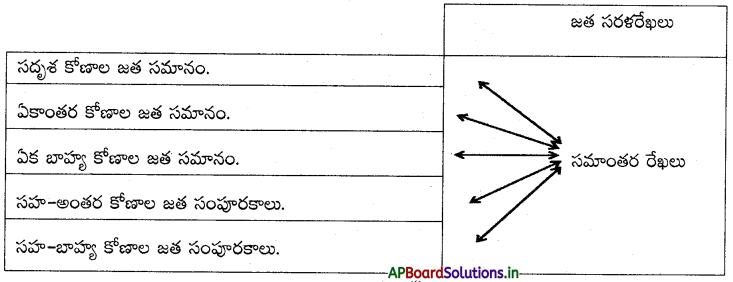
→ ఒక జత రేఖలను తిర్యగ్రేఖ ఖండించడం వలన ఏర్పడే

  • సదృశకోణాల జత సమానం అయితే అవి సమాంతరాలు.
  • ఏకాంతర కోణాల జత సమానం అయితే అవి సమాంతరాలు.
  • ఏక బాహ్య కోణాల జత సమానం అయితే అవి సమాంతరాలు అలాగే
  • సహ అంతర కోణాలు సంపూరకాలు అయిన అవి సమాంతరాలు.
  • సహ బాహ్య అంతర కోణాలు సంపూరకాలు అయిన అవి సమాంతర రేఖలు.

AP 7th Class Maths Notes 3rd Lesson సామాన్య సమీకరణాలు

Students can go through AP Board 7th Class Maths Notes 3rd Lesson సామాన్య సమీకరణాలు to understand and remember the concept easily.

AP Board 7th Class Maths Notes 3rd Lesson సామాన్య సమీకరణాలు

→ భాస్కర – 2 : ప్రాచీన భారతదేశపు ప్రసిద్ధ గణిత శాస్త్రజ్ఞుడు. అతను 1150 A.D. లో 36 సంవత్సరాల వయస్సులో సిద్ధాంత శిరోమణి రాశాడు మరియు ఈ’ రచన (సుమారు 1450 శ్లోకాలను కలిగి ఉంది). నాలుగు భాగాలుగా విభజించబడింది.

  1. లీలావతి (ARITHMETIC) లో 278 శ్లోకాలు ఉన్నాయి.
  2. జగణితం (ALGEBRA) గణితంలో 213 శ్లోకాలు ఉన్నాయి.
  3. గోలాధ్యయ (గోళ | ఖగోళ భూగోళం) 451 శ్లోకాలను కలిగి ఉంది. మరియు
  4. గ్రహగణిత్ (గ్రహాల గణితం)లో 501 శ్లోకాలు ఉన్నాయి.

ఒక చరరాశిలో రేఖీయ సమీకరణాలు (సామాన్య సమీకరణాలు), ఒకటి కంటే ఎక్కువ చరరాసులలో రేఖీయ సమీకరణాలు వాటి సాధనాల మీద ఎక్కువ పరిశోధనలు చేసారు.

→ భాస్కర – 2 లీలావతి గణితంలో వ్రాసిన ఒక సమస్య :
“తేనెటీగల సమూహంలో ఐదవ భాగం కదంబ పువ్వు మీద, మూడవవంతు సిలిండా పువ్వు మీద విశ్రాంతి తీసుకుంది. ఈ రెండు సంఖ్యల మధ్య తేడాకు మూడు రెట్లు తేనె టీగలు క్రుతాజా పువ్వుపైకి ఎగిరాయి. మరియు ఒక తేనెటీగ ఒంటరిగా గాలిలో ఉండిపోయింది. అయిన సమూహంలో ఎన్ని తేనెటీగలు ఉన్నాయి ?

→ ‘ = ‘ గుర్తును కలిగిన అనిశ్చిత వాక్యాన్ని సమీకరణం అంటారు.

→ ఒకే చరరాశి గల సమీకరణంలో గరిష్ఠ ఘాతాంకం 1 అయితే అటువంటి సమీకరణాన్ని సామాన్య సమీకరణం అంటారు.

→ సమీకరణంను తృప్తిపరచే చరరాశి యొక్క విలువను సాధన లేదా సమీకరణం యొక్క మూలం అంటారు.

AP 7th Class Maths Notes 3rd Lesson సామాన్య సమీకరణాలు

→ సామాన్య సమీకరణాలు సాధించేటపుడు పాటించే నియమాలు :
(a) సమీకరణం ఇరువైపులా ఒకే విలువను కలుపడం వలన సమీకరణంలో ఎటువంటి మార్పు ఉండదు.
(b) సమీకరణం ఇరువైపులా ఒకే విలువను తీసివేయడం వలన సమీకరణంలో ఎటువంటి మార్పు ఉండదు.
(c) సమీకరణం ఇరువైపులా ఒకే విలువతో గుణించడం వలన సమీకరణంలో ఎటువంటి మార్పు ఉండదు.
(d) సమీకరణం ఇరువైపులా ఒకే విలువ (0 శూన్యేతర సంఖ్య)తో భాగించడం వలన సమీకరణంలో ఎటువంటి మార్పు ఉండదు.

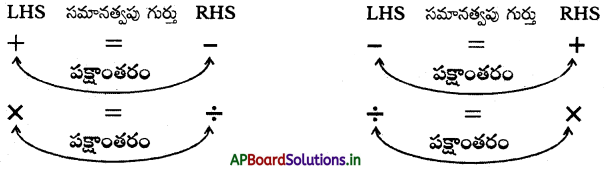
→ సమీకరణంలో ఒక వైపునున్న పదాన్ని మరొక వైపుకు మార్చే ప్రక్రియను పక్షాంతరం అంటారు. పక్షాంతరం చెందినపుడు గుర్తును మార్చి, సమీకరణం యొక్క మరొక వైపుకు తీసుకువెళతాము.
ఈ విధంగా, LHS నుండి RHS కు పదాలను మార్చడంలో

  • ‘ + పరిమాణం’ ‘ – పరిమాణం’ అవుతుంది.
  • ‘-‘ పరిమాణం’ ‘ +’ పరిమాణం’ అవుతుంది.
  • ‘×’ పరిమాణం’ ‘ ÷’ పరిమాణం’ అవుతుంది.
  • ‘÷’ పరిమాణం’ ‘ ×’ పరిమాణం’ అవుతుంది.

→ సమీకరణం : సమానత్వపు గుర్తు ‘=’ ను కలిగిన అనిశ్చిత వాక్యాన్ని సమీకరణం అంటారు.
ఉదా :

  • 3x + 5 = 20
  • x2 + 4x + 5 = 3x3 -9 .
  • 3x + 4y = 9
  • x – 2y = 37

→ సామాన్య (సరళ) సమీకరణం : ఒకే చరరాశి గల సమీకరణంలో చరరాశి గరిష్ఠ ఘాతాంకం 1 అయితే అటువంటి సమీకరణాన్ని సామాన్య సమీకరణం అంటారు.
ఉదా :

  • x + 5 = 12
  • 2y + 9 = 3y + 1
  • 3m – 15 = 3
  • p + 2 =6

→ సాధన లేదా మూలం : ఒక సమీకరణమును తృప్తిపరిచే చరరాశి యొక్క విలువను ఆ సమీకరణం యొక్క సాధన లేదా మూలం అంటారు.
ఉదా : x + 3 = 5
x = 2 అయినపుడు (2) + 3 = 5 అవుతుంది.
అనగా x + 3 = 5 సమీకరణం X = 2 అయినపుడు సత్యమవుతుంది. కావున, x + 3 = 5 సమీకరణం యొక్క సాధన లేదా మూలం 2 అవుతుంది.

→ L.H.S (Left Hand Side) : సమీకరణంలో సమానత్వపు గుర్తుకు ఎడమవైపు గల సమీకరణ భాగాన్ని L.H.S అంటారు.
ఉదా : 2x-3 = x + 4 సమీకరణంలో 2x-3 అనేది L.H.S అవుతుంది.

→ R.H.S (Right Hand Side) : సమీకరణంలో సమానత్వపు గుర్తుకు కుడివైపు గల సమీకరణ భాగాన్ని R.H.S అంటారు.
ఉదా : 2X – 3 = x + 4 సమీకరణంలో x + 4 అనేది R.H.S అవుతుంది.

→ సామాన్య సమీకరణాన్ని సాధించు పద్ధతులు :

  1. చరరాశిని వేరు చేసి సాధించడం.
  2. పడ్డాంతర పద్ధతి.

(1) చరరాశిని వేరు చేసి సాధించు పద్ధతిలో పాటించే నియమాలు :
() సమీకరణం ఇరువైపులా ఒకే విలువను కలుపడం వలన సమీకరణంలోని సమానత్వపు గుర్తులో ఎటువంటి మార్పు రాదు.
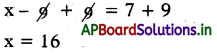
ఉదా : x – 9 = 71
ఇరువైపులా 9ని కలుపగా
AP 7th Class Maths Notes 3rd Lesson సామాన్య సమీకరణాలు 1

(ii) సమీకరణం ఇరువైపులా ఒకే విలువను తీసివేయడం వలన సమీకరణంలోని సమానత్వపు గుర్తులో ఎటువంటి మార్పు రాదు.
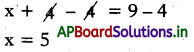
ఉదా : x + 4 = 9
ఇరువైపులా 4ను తీసివేయగా .
AP 7th Class Maths Notes 3rd Lesson సామాన్య సమీకరణాలు 2

(iii) సమీకరణంలో ఇరువైపులా ఒకే విలువతో గుణించడం వలన సమీకరణంలోని సమానత్వపు గుర్తులో ఎటువంటి మార్పు ఉండదు.
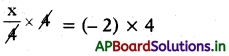
ఉదా : \(\frac{x}{4}\) = -2
ఇరువైపులా 4తో గుణించగా
AP 7th Class Maths Notes 3rd Lesson సామాన్య సమీకరణాలు 3
∴ x = -8

(iv) సమీకరణంలో ఇరువైపులా ఒకే విలువ (‘0’ కాని సంఖ్య)తో భాగించడం వలన సమీకరణంలోని సమానత్వపు గుర్తు మారదు.
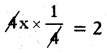
ఉదా : 4x = 8
ఇరువైపులా 4తో భాగించగా
4x ÷ 4 = 8 ÷ 4
AP 7th Class Maths Notes 3rd Lesson సామాన్య సమీకరణాలు 4
x = 2

(2) పక్షాంతర పద్ధతి (Method of transposition) : సమీకరణంలో సమానత్వపు గుర్తుకు ఒక వైపు గల పదాన్ని లేదా రాశి మరొక వైపుకు మార్చే ప్రక్రియను పక్షాంతరం అంటారు. ఈ విధంగా సాధనను కనుగొను పద్దతిని పక్షాంతర పద్దతి అంటారు. పదాన్ని లేదా రాశిని పక్షంతరం చేసినపుడు పదం లేదా రాశి యొక్క గుర్తులు క్రింది విధంగా మారుతాయి.

AP 7th Class Maths Notes 3rd Lesson సామాన్య సమీకరణాలు

→ పదాన్ని లేదా రాశిని i) LHS నుండి RHS కు లేదా ii) RHS నుండి LHS కు మార్చడంలో

  • ‘+’ గుర్తు గల పదం, ‘ ‘ గుర్తు గల పదంగా
  • ‘-‘ గుర్తు గల పదం, ‘+’ గుర్తు గల పదంగా,
  • ‘×’ గుర్తు గల రాశి, ‘÷’ గుర్తు గల రాశిగా
  • ‘÷’ గుర్తు గల రాశి, “×” గుర్తు గల రాశిగా మారుతుంది.

AP 7th Class Maths Notes 3rd Lesson సామాన్య సమీకరణాలు 5
ఉదా : 5x + 8 = 2x-7 ను సాధించండి.
5x = 2x-1-8 (+8 ని LHS నుండి RHS కు పక్షాంతరం చేశాము..)
5x = 2x – 15
5x – 2x = -15 (+ 2x ను RHS నుండి LHS కు పక్షాంతరం చేశాము.)
3x = -15
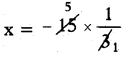
x =- 15 ÷ 3 (×3 ని LHS నుండి RHS కు పక్షాంతరం చేశాము. )
AP 7th Class Maths Notes 3rd Lesson సామాన్య సమీకరణాలు 6
∴ x = -5

→ తుల్య సమీకరణాలు : ఒకే సాధనను కలిగిన సమీకరణాలను తుల్య సమీకరణాలు అంటారు.
ఉదా :

  • x – 4 = 2
  • 2x = 12

పై మూడు సమీకరణాలకు సాధన x = 6. కావున, పై మూడు సమీకరణాలను తుల్య సమీకరణాలు అంటారు.