AP 7th Class Social Important Questions Chapter 8 Industrial Revolution

AP State Syllabus 7th Class Social Important Questions 8th Lesson Industrial Revolution

Question 1.
Write any two innovations which led to the industrial revolution in Europe.
Answer:

  1. Spinning Jenney
  2. Steam engine

Question 2.
Development and expansion of industries lead to a gradual increase in people to Urban areas. Comment on consequences of Urbanisation.
Answer:
Due to this

  1. Slums are increasing.
  2. Substandard housing with very poor living conditions.
  3. Physical deterioration of its housing overcrowding, high density, poor access, and lack of infrastructure services.
  4. Restricted access to the water supply.
  5. Increase living conditions.
  6. Inadequate health care facilities etc.

AP 7th Class Social Important Questions Chapter 8 Industrial Revolution

Question 3.
Explain Industrial Revolution considering the following points,

  1. the putting-out system.
  2. proto – industrialisation,
  3. major inventions and their contribution,
  4. the factory system of production.

Answer:

  1. The putting-out system:
    In this system, traders gave advances to small farmers and artisans to produce textile goods.
    1. In this system capitalists controlled what product was to be made.
    2. Different activities could be done in different parts of the country.
    In this system is more time-consuming.
  2. Proto – Industrialisation:
    In this system, traders brought together the crafts persons under one roof so that they did not have to go to each one’s home or explain their requirements to each person.
    Here, the control of the trader over the crafts persons increased.
  3. Major inventions and their contributions:
    In this period so many new machines were invented by Europeans. Those are useful in the production process.
    Ex: James Watt – Steam Engine
  4. Factory system of production:
    In this system in the place of simple tools and manual power, new machines and steam power came to be increasingly used.

Question 4.
“Major changes swept industries with the coming of machines, Machines could be worked by even unskilled persons. Thus, skilled artisans were no longer required. In their place, a large number of women and children were employed and made to work for meager wages.”
Discuss the hardships faced by women and child laborers during the industrial revolution.
Answer:

  1. Conditions had often been toxic and dangerous.
  2. Women face abuse and discrimination.
  3. Women were paid less than men.
  4. Child labour also worked more than 12 hours a day.
  5. Children were often faced with difficulties and workplace abuses.
  6. In mines, factories or other workplaces, kids would work in hot and hazardous conditions for low wage rates and that for long exhausting hours.
  7. The factories and mines were unsafe and demanding places to work.

AP 7th Class Social Important Questions Chapter 8 Industrial Revolution

Question 5.
If Pravallika argues “Railways in India were built for the benefits of the colonial rulers”. Express your opinion about this argument.
Answer:
No. It is not true. The English built railways not only for the benefit of Indian people but to transport raw material to Indian ports and manufactured goods of England from Indian ports into the country. To transport cheap labour from villages to cities, and to transport their troops fast and easily to the nooks and corners of the country to link up all their trading centers in all parts of the country British established railways in India.

Question 6.
However, as times changed, European countries began to useless and less of their own mineral resources and relied on imports from other countries. The old mining towns and factories were closed down and new factories grew in new areas.
Question: “Due to the Industrial revolution Europe has become a developed continent. Write your comment.
Answer:

  1. The industrial revolution spurred growth and attracted a lot of people from villages to cities.
  2. Cities expanded rapidly and new cities were being built near factories to house industrial workers who had to live somewhere.
  3. This kind of urbanization was not a good thing.
  4. City people often lived in cramped, overcrowded housing with poor sanitation and disease and crime multiplied.
  5. Workers face harsh conditions both at home and workplace.
  6. People laboured for long hours with low wages in dangerous conditions with no job security. That is why the govt enacts laws to improve working conditions.

AP 7th Class Social Important Questions Chapter 8 Industrial Revolution

Question 7.
In the 19th century, the industrial workers of Europe had to face several hardships.
Let us read about the experiences of a child employed in an English coal mine.
“I have been working in these mines since I was four. Workers hew coal with pickaxes and fill the large wagons with it. Our job is to push these loaded wagons to the point from where horses or mules can haul them. This is a very difficult job. Hauling the loaded wagons through water and slush, and over very steep slopes, leaves us very tired. We have to work in this way for more than 12 hours a day. By the time we return home, we are so tired that we don’t even feel like eating. Yesterday, I fell asleep on my way home. My mother searched for me and carried me home.
Q. Comment on the need for the complete removal of child labour from our society.
Answer:

  1. The present children are future citizens.
  2. Below 14 years if they are working their childhood is exploited and their life span is less.
  3. If children are employed in hazardous work they effect by diseases and no longer work.
  4. Our country’s development is on children only. So with skill youth not available in India.

Question 8.
When did the factory system of production emerge? How?
Answer:

  1. During 1750 – 1850, a new system called the ‘factory system’ emerged.
  2. In the place of simple tools and manual power, new machines and steam power came to be increasingly used.
  3. Production was now carried on in a place called ‘factory’. Earlier the production was happening in homes.
  4. Hundreds of workers were brought together to work in these large factories.
  5. Machines became important in place of minor tools and handlooms.
  6. They produced goods on a very large scale.
  7. Capitalists invested money to bring workers, raw materials, and machines.
  8. Everything belonged to the owner of the factory, from raw materials and machines to finished products.

AP 7th Class Social Important Questions Chapter 8 Industrial Revolution

Question 9.
What is meant by Revolution?
Answer:
Revolution means, to bring a fundamental change or transformation of the existing practice. Revolution also means a transformation of ideas, thoughts, and practices of the people. Without revolution or changes, society and its structure remain static.

Question 10.
What is meant by Industrial Revolution?
Answer:

  1. During the 18th century, new changes took place in the field of production and distribution.
  2. On account of the industrial revolution, manpower was replaced by machine power.
  3. Production increased by leaps and bounds.
  4. These rapid changes came to be known as Industrial Revolution.
  5. Industrial Revolution may be defined as a marked change in the system of production of goods.

Question 11.
What does capitalism mean? Write two advantages of capitalism.
Answer:
Capitalism means the form of organization where industrialists owning money, purchase machinery, raw materials, and run the industries. They enjoy the profits.
Advantages:

  1. Goods were produced in plenty.
  2. There was employment generation.

AP 7th Class Social Important Questions Chapter 8 Industrial Revolution

Question 12.
Who was employed to work on machines?
Answer:
Machines could be worked by even unskilled persons. Thus skilled artisans are no longer required. In their place, a large number of women and children were employed and made to work for meager wages.

Question 13.
Compare the conditions of workers of a leather tannery and the English workers 150 years ago and find out similarities and differences.
Answer:

S.No.Conditions of workers in a leather tanneryConditions of English workers 150 years ago
1.Most of the workers in a tannery feed the leather to the machines.In place of skilled workers, women and children were employed.
2.Machines could be worked by unskilled workers.Most of the workers start as laborers and learn their skills on the job.
3.In wet operations, workers wear rubber aprons and gloves to handle wet and slippery hides.No protection wear was given to the workers. Working in unhygienic conditions.
4.Dry end workers handle only lightweight.Children were employed to push heavily loaded wagons to the point where the horses or mules can haul them.
5.Some tasks in this industry may be unpleasant because of the sights and smells.In the dyeing units of the textile industry and in other chemical Industries there used to be unhygienic conditions.
6.Many tannery workers work the day shift eight hours a day, forty hours a week.Workers had to work more than 12 hours a day.
7.The average earnings of a worker is Rs. 500 to Rs. 600 a day.The workers had to work with meager wages, with which they cannot satisfy their minimum needs.
8.Most tanneries offer health insurance, paid holidays, and paid vacations. Some tanneries offer pensions.No such facilities were there.
9.Workers form unions to protect their rights.Workers did not have any right to form unions.

AP 7th Class Social Important Questions Chapter 8 Industrial Revolution

Question 14.
What is meant by Proto – industrialization?
Answer:

  1. The traders brought together the craftspersons under one roof so that they did not
    have to go to each one’s home or explain their requirements to each person.
  2. They set up small workshops called manufactories.
  3. The craftsmen brought their own tools and worked with raw materials given by the trader.
  4. The trader then took the produce and sold it in the market.
  5. In this way slowly the control of the trader over the craftspersons increased. This phase is called ‘Proto – industrialization’.

Question 15.
How did the need for self-driven machines emerge in England?
Answer:
As the demand for cloth, and other handicrafts increased many times, many artisans could not increase the production to cope with the demand. In addition to that cloth made on looms by the artisans was very much expensive. If there were machines that could spin yarn faster and wave cloth faster, the cloth could be produced at a lower price. As a result of the pressure of trade and work, several people attempted making self-driven machines in England.

Question 16.
Explain the Transport Revolution caused by the invention of the Steam Engine.
Answer:
The invention of the steam engine boosted the shipping industry. It also reduced the cost of transportation by one-third of the cost of road transport. Yet people looked for better ways of transportation. The next big thing in the context of transport was the adaptation of steam engines to locomotives. George Stephenson’s locomotive pulled heavy loads along a 64-kilometer track from Liverpool to Manchester at 46-kilometer speed in an hour.
In the 1840s, John Loudon Me Adam devised a method of laying roads using broken stones. This created a hard surface which was an important advancement in road construction. Within another decade bitumen-based binding which we see in our areas as tar(mac) roads were built. This was further followed by the use of motor cars.

AP 7th Class Social Important Questions Chapter 8 Industrial Revolution

Question 17.
Read the following passage and answer the questions.
During 1750 – 1850, a new system called the ‘factory system’ emerged. In the place of simple tools and manual power, new machines and steam power came to be increasingly used. Production was now carried on in a place called ‘factory’, unlike what we read earlier where production was happening in homes. Hundreds of workers were brought together to work in these large factories. Machines became important in place of minor tools and handlooms. They produced goods on a very large scale.
1. When did the new system emerge?
Answer:
During 1750 – 1850 a new system emerged which is called the ‘factory system’.

2. What is meant by the factory?
Answer:
A place where production was carried on is called a factory.

3. Which became important in place of minor tools?
Answer:
Machines

4. How did they produce goods?
Answer:
They produced goods on a large scale.

5. Where was the production happening earlier?
Answer:
Earlier the production was happening in the houses of workers or craftsmen.

Question 18.
“Industrial revolution led to increasing of urban slums in towns and life in slums became common scenario.” Explain it. (OR)
What are the problems faced by the people living in the urban slums?
(OR)
Which type of problems are the people who reside in urban slums facing today?
Answer:

  1. Industries and other urban activities gave people the necessary livelihood.
  2. People moved to the towns and settled down in makeshift houses and shelters.
  3. They were cramped and had little sanitation and other facilities.
  4. Accidents, diseases, and epidemics were common. Most workers’ residential areas lacked proper ventilation, health, and sanitation facilities.
  5. Slums became a common scenario in towns and cities especially near the factories and
    mines.
  6. At the same time, distinct quarters came up for the rich and powerful which were well provided in terms of open spaces, sanitation, water supply, roads, and other facilities.
  7. Slowly people fought for civic rights and the conditions of the worker’s quarters too improved.
  8. People were accustomed to luxurious life and towns were polluted.

AP 7th Class Social Important Questions Chapter 8 Industrial Revolution

Question 19.
What are the sources of energy needed to run machines?
Answer:

  1. Energy is available from coal, electricity, petroleum, and so on.
  2. Initially, industries depended upon energy coal, and steam.
  3. Subsequently, several other sources of energy like thermal and hydroelectricity, petroleum, natural gas, nuclear energy, and solar energy have been harnessed.

Question 20.
Do you know any factories nearby?
Compare the conditions of work of that factory with that of English factories 150 years ago.
Answer:
Yes. I know many factories nearby. There is a spinning mill in our area.
150 years ago i.e., in the nineteenth century the industrial workers of Europe had to face several hardships. The early factories were dreadful places of work.

  1. With the Industrial revolution, machinery was used heavily in industrial production. With the introduction of machinery, skilled workers were expelled from their jobs. But these days it cannot be done. These days workers have the right to employment security.
  2. In place of skilled labour, the women and children were employed and made to work for meagre wages. But these days child labour is banned and it is a punishable crime if anyone employs children under 14. More than that under the right to income security every worker has the right to get adequate and regular income.
  3. Those days the labour were forced to work for more than 12 hours under the whip. But these days every worker should work for only 8 hours a day and he has the right to leisure and rest.
  4. Thus the conditions of labourers have been improved a lot these days comparing to those of 150 years ago.

AP 7th Class Social Important Questions Chapter 8 Industrial Revolution

Question 21.
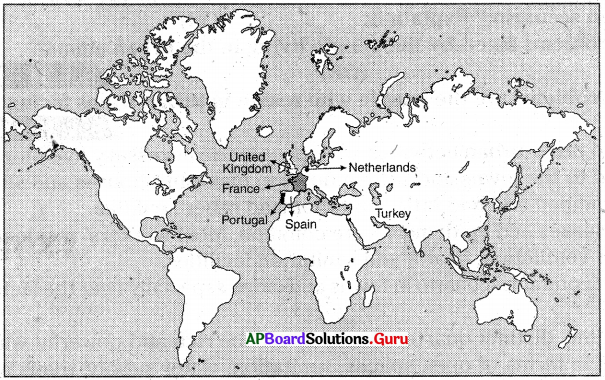
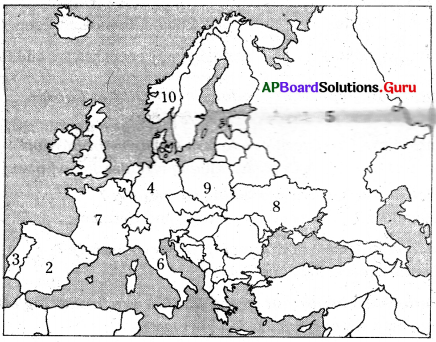
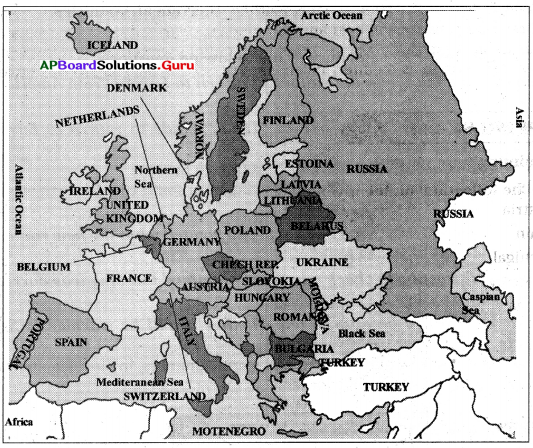
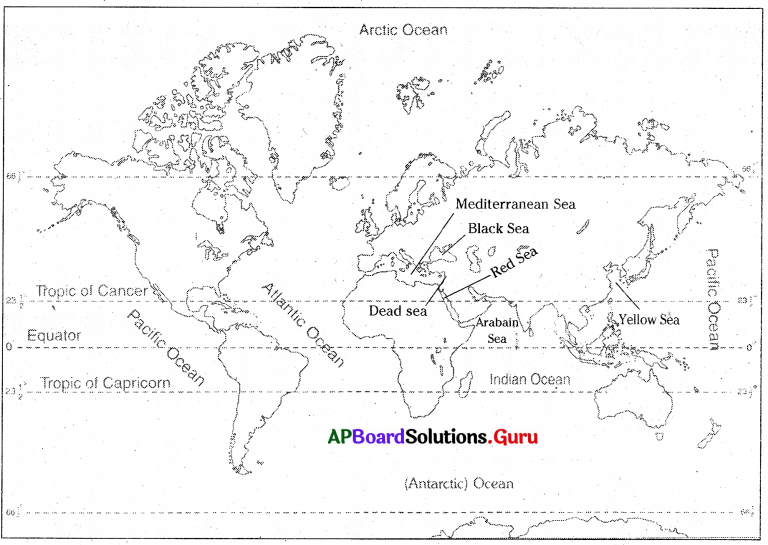
Locate the following on the world map.

  1. United Kingdom
  2. France
  3. Portugal
  4. Spain
  5. Netherlands
  6. Turkey

Answer:
AP 7th Class Social Important Questions Chapter 6 Africa 8

Question 22.
Do you think the arrangement between a scientist-inventor and a capitalist is fair? Give reasons.
Answer:
Yes. It was an agreement. The capitalist Boulton invested the necessary money and also paid Watt a salary. Watt made the steam engine. They made an agreement between them to share profit, two-third to Boulton’s and one-third to Watt’s. These two persons made a large number of steam engines, sold them, and made huge profits.

AP 7th Class Social Important Questions Chapter 8 Industrial Revolution

Question 23.
How were the colonies established?
Answer:
Because of the industrial revolution, industrial production increased so much that the large-scale production of goods needs raw materials in large amounts. But in countries where the industrial revolution took place, the raw materials were not produced.
At the same time production of goods in industries increased manifold. They were unable to sell all their products in their own country. For selling the surplus production they are required to acquire markets of other countries. To buy the raw materials needed for their markets at cheaper rates, and to sell their manufactured products at higher rates to get maximum profits, the industrial countries want to colonize the countries like India.

AP 7th Class Social Important Questions

AP Board 7th Class Maths Solutions Chapter 2 Fractions, Decimals and Rational Numbers Ex 2.1

SCERT AP 7th Class Maths Solutions Pdf Chapter 2 Fractions, Decimals and Rational Numbers Ex 2.1 Textbook Exercise Questions and Answers.

AP State Syllabus 7th Class Maths Solutions 2nd Lesson Fractions, Decimals and Rational Numbers Exercise 2.1

Question 1.
In Jagananna Gorumudda (MDM) scheme each student got \(\frac{3}{20}\) kg. rice per day, find the weight of the rice required for 60 students in a class per day.
Answer:
Given quantity of rice each student get per day = \(\frac{3}{20}\) kg.
Quantity of rice 60 students get per day
= \(\frac{3}{20} \times \frac{60}{1}\)
= \(\frac{3 \times 60}{20 \times 1}\)
= \(\frac{180}{20}\) = 9

∴ Quantity of rice required for 60 students per day = 9 kg.

Question 2.
What is a perimeter of an equilateral triangle, if each*side of a triangle is 5\(\frac{3}{10}\)cm?
Answer:
Let the side of an equilateral triangle be x cm.
Perimeter of an equilateral triangle = 3x.
= 3 × 5 \({30}{10}\)
= \(\frac{3}{1} \times \frac{53}{10}\)
= \(\frac{3 \times 53}{1 \times 10}\)

∴ Perimeter of triangle = \(\frac{159}{10}\) or 15\(\frac{9}{10}\) cm

AP Board 7th Class Maths Solutions Chapter 2 Fractions, Decimals and Rational Numbers Ex 2.1

Question 3.
Surya can walk \(\frac{18}{5}\)kilo meters in an hour. How much distance can he walk in 2\(\frac{1}{2}\) hours ?
Answer:
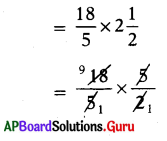
Given, distance walked by Surya in 1 hour = \(\frac{18}{5}\)km.
Distance walked by Surya in 2\(\frac{1}{2}\)hours
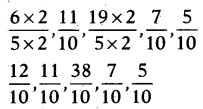
AP Board 7th Class Maths Solutions Chapter 2 Fractions, Decimals and Rational Numbers Ex 2.1 1

∴ Distance walked in 2\(\frac{1}{2}\)hours
= \(\frac{9}{1}\) = 9 km

Question 4.
If the length and breadth of a rectan-gular garden are \(\frac{27}{2}\)m and \(\frac{15}{2}\)m respectively, then find the area of the garden.
Answer:
Given, the length of a garden = \(\frac{27}{2}\)m.
breadth of a garden = \(\frac{15}{2}\)m.
Area of rectangular garden = length × breadth
= \(\frac{27}{2} \times \frac{15}{2}\)
= \(\frac{27 \times 15}{2 \times 2}\)

∴ Area of the garden = \(\frac{405}{4}\) or 101\(\frac{1}{4}\)

Question 5.
Gopal bought 3\(\frac{1}{2}\)kg. of potatoes in the market. If he paid ?84, then find the cost of 1 kg. of potatoes.
Answer:
Given, cost of 3\(\frac{1}{2}\) kgs of potatoes = ₹ 84
Cost of 1 kg of potatoes = 84 ÷ 3\(\frac{1}{2}\)
= 84 ÷ \(\frac{7}{2}\)
= \(\frac{84}{1} \times \frac{2}{7}\)

∴ Cost of one kg of potatoes = \(\frac{168}{7}\)
= ₹ 24

Question 6.
A car travelled 225 km. in 4 \(\frac{1}{2}\) hours with uniform speed. Find the distance travelled in 1 hour.
Answer:
Given, distance travelled in 4\(\frac{1}{2}\) hours = 225 km
Distance travelled in 1 hour
= 225 ÷ 4\(\frac{1}{2}\)
= 225 ÷ \(\frac{9}{2}\)
= \(\frac{225}{1} \times \frac{2}{9}\)
= \(\frac{225 \times 2}{1 \times 9}\)

∴ Distance travelled by car in 1 hour
= \(\frac{450}{2}\) = 50 km

Question 7.
If 24 students share 4\(\frac{4}{5}\)kg. of cake, then how much cake does each one get?
Answer:
Given, quantity of cake shared by 24 students = 4\(\frac{4}{5}\)kg

Quantity of cake each one got
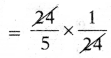
= 4\(\frac{4}{5}\) ÷ 24 .
= \(\frac{24}{5} \div \frac{24}{1}\)
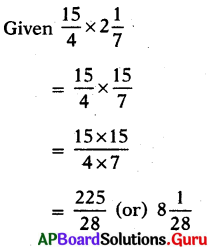
AP Board 7th Class Maths Solutions Chapter 2 Fractions, Decimals and Rational Numbers Ex 2.1 2
∴ Quantity of cake each one got = \(\frac{1}{5}\)kg (or) 0.2 kg (or) 200 gm.

AP Board 7th Class Maths Solutions Chapter 2 Fractions, Decimals and Rational Numbers Ex 2.1

Question 8.
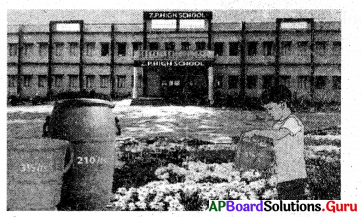
A drum contains 210 l of water. How many times does the boy get the water for watering die plants with 3\(\frac{1}{2}\) l of full bucket from the drum ?
AP Board 7th Class Maths Solutions Chapter 2 Fractions, Decimals and Rational Numbers Ex 2.1 3
Answer:
Given, Capacity of water drum = 210 l
Capacity of bucket = 3\(\frac{1}{2}\) l

Number of buckets of water the boy get = 210 ÷ 3\(\frac{1}{2}\)
= 210 ÷ \(\frac{7}{2}\)
= \(\frac{210}{1} \times \frac{2}{7}\)
= \(\frac{420}{7}\) = 60

∴ Number of buckets the boy get = 60

AP Board 7th Class Hindi Solutions 12th Lesson कोंडापल्ली की यात्रा

SCERT AP Board 7th Class Hindi Study Material 12th Lesson कोंडापल्ली की यात्रा Textbook Questions and Answers.

AP State Syllabus 7th Class Hindi 12th Lesson Questions and Answers कोंडापल्ली की यात्रा

7th Class Hindi 12th Lesson कोंडापल्ली की यात्रा Textbook Questions and Answers

सोचिए-बोलिए
AP Board 7th Class Hindi Solutions 12th Lesson कोंडापल्ली की यात्रा 1

प्रश्न 1.
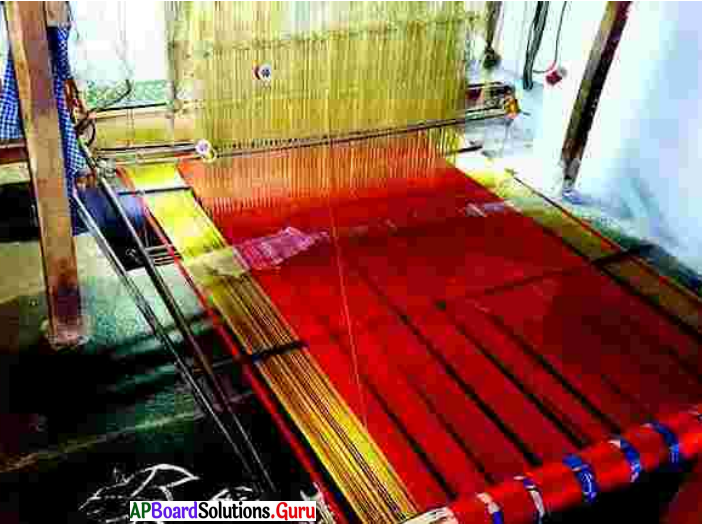
इस चित्र में आपको क्या – क्या दिखाई दे रहे हैं? (ఈ చిత్రంలో మీకు ఏమేమి కన్పించుచున్నవి?)
उत्तर:
इस चित्र में एक हथकरघा, आदमी, कपडे, पंखा आदि दिखाई दे रहे हैं। )
(ఈ చిత్రంలో ఒక చేతి మగ్గం, మనిషి, బట్టలు, ఫ్యాన్ మొదలుగునవి కనిపించుచున్నవి.)

AP Board 7th Class Hindi Solutions 12th Lesson कोंडापल्ली की यात्रा

प्रश्न 2.
कपड़े बनानेवाले को क्या कहते हैं? (బట్టలు తయారు చేయు వానిని ఏమందురు??)
उत्तर:
कपडे बनानेवाले को जुलाहा कहते हैं। (బట్టలు తయారు చేయువానిని పద్మసాలీలు అంటారు.)

कोडापल्ली की यात्रा (కొండపల్లి యాత్ర)

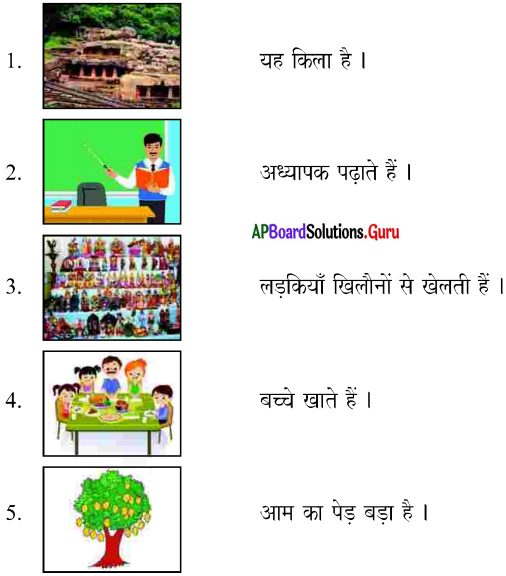
आँध्रप्रदेश के कृष्णा जिले में एक गाँव है। इसका नाम कोंडापल्ली है। यह विजयवाडा से 24 कि.मी. की दूरी पर है। यह प्रांत हाथ से बनी लकड़ी के खिलौनों के लिए प्रसिद्ध है। इन्हें देखने के लिए दूर – दूर से लोग आते हैं। एक दिन पाठशाला के कुछ छात्र अपने अध्यापक के साथ रविवार को कोंडापल्ली की यात्रा पर गये। वहाँ पर एक पुराना किला है। इस किले को 14 वीं शताब्दी के राजाओं ने बनाया। इसे देखकर बच्चे बहुत खुश हुए। उसके बाद वहाँ के खिलौने देखने गए।

अध्यापक और छात्रों को देखकर स्थानीय खिलौने बनानेवाले कारीगरों ने उनका स्वागत किया। आंध्रप्रदेश में लोग संक्रांति और दशहरा के पर्व दिनों में ‘गोलू’ यानी, ‘बोम्मल कोलुवु’ रखते हैं। ये खिलौने आसपास के ‘तेल्ला पोणिकी’ नामक नरम लकड़ी से बनाये जाते हैं। इन्हें प्राकृतिक रंगों से रंगा जाता है।

यहाँ कई प्रकार के खिलौने बनते हैं। इन खिलौनों में दशावतार, ताड़ का पेड़, बैलगाड़ी, गीतोपदेश, पालकी, वर-वधु, नर्तकी, हाथी का हौदा, ग्रामीण वातावरण के खिलौने प्रसिद्ध हैं।

आजकल ये हस्तकलाएँ धीरे – धीरे लुप्त होती जा रही हैं। आंध्र प्रदेश सरकार ‘लेपाक्षी’ नामक बिक्री केंद्रों द्वारा इन्हें बेचती है। इससे कारीगरों को आजीविका और प्रोत्साहन मिलता है।

సారాంశము

ఆంధ్రప్రదేశ్ లోని కృష్ణాజిల్లాలో ఒక గ్రామము కలదు. దీని పేరు కొండపల్లి. ఇది విజయవాడ నుండి 24 కి.మీ దూరాన కలదు. ఈ ప్రదేశము చేతితో చేయు కొయ్య ఆటబొమ్మలకు ప్రసిద్ధి. వీటిని చూచుటకు దూర-దూర ప్రాంతాల నుండి ప్రజలు వచ్చెదరు. ఒకరోజు పాఠశాలకు చెందిన కొంతమంది విద్యార్థులు తమ ఉపాధ్యాయునితో ఆదివారము నాడు కొండపల్లి యాత్రకు వెళ్ళిరి. అక్కడ ఒక పాత కోట ఉన్నది. ఈ కోటను 14వ శతాబ్దమునకు చెందిన రాజులు కట్టించిరి. దీనిని చూసి పిల్లలు చాలా సంతోషించిరి.. ఆ తర్వాత అక్కడి ఆట బొమ్మలను చూచుటకు వెళ్ళిరి.

ఉపాధ్యాయులు మరియు విద్యార్థులను చూసి స్థానిక ఆటబొమ్మలను తయారు చేయు పనివాళ్ళు వారికి స్వాగతం పలికిరి. ఆంధ్రప్రదేశ్ లో ప్రజలు సంక్రాంతి మరియు దసరా పండుగ రోజుల్లో ‘గోలూ” అనగా “బొమ్మల కొలువు” ను ఏర్పాటు చేయుదురు. ఈ బొమ్మలను గ్రామ సమీపంలోని “తెల్ల పొణికి” అను మెత్తని కర్ర నుండి తయారుచేస్తారు. వీటిని ప్రాకృతిక (సహజ) రంగులతో రంగులు వేస్తారు.

ఇక్కడ ఎన్నో రకముల ఆటబొమ్మలు తయారు చేస్తారు. ఈ బొమ్మలలో దశావతారములు, తాటిచెట్లు, ఎద్దుల బండ్లు, గీతోపదేశము, పల్లకీ, వరుడు వధువు, నర్తకీ, ఏనుగు అంబారీ, గ్రామీణ వాతావరణపు ఆట వస్తువులు ముఖ్యమైనవి.

ఈ రోజుల్లో ఈ చేతికళలు (హస్తకళలు) అడుగంటి పోతున్నాయి. ఆంధ్రప్రదేశ్ ప్రభుత్వము లేపాక్షి అను పేరు గలిగిన విక్రయ కేంద్రాల ద్వారా వీటిని అమ్ముతున్నది. అందువలన బొమ్మలను తయారు చేయు చేతి కళాకారులకు జీవితాంతము జీవనోపాధి మరియు ప్రోత్సాహము లభించుచున్నది.

Summary

There is a village in Krishna district of Andhra Pradesh. Its name is Kondapalli. It is 24 km away from Vijayawada. This place is famous for hand-made wooden toys. People from distant places come to see these toys. One day some students of a school went on an excursion on Sunday accompanied by their teacher. An old fort is located there. Kings who belonged to 14th century built this fort. The children were elated on seeing this. Later, they went to see the locally made toys.

The crafts persons who make the toys welcomed the teacher and the students. In Andhra Pradesh, the people arrange ‘Bommala Koluvu’ (Display of Toys) called ‘Golu’. They make toys with the softwood of “Tella poniki’ available near the village. They use natural colours for the toys.

Different kinds of toys are made here. The toys describing dasavataras, palmyra trees, bullock carts, Gitopadesa, pallak, bride and groom, narthak, a howdah on an elephant’s back, village’s serene atmosphere are important among them.

Nowadays the handicrafts are losing their lustre. The government of Andhra Pradesh is selling these toys through ‘Lepakshi’ centre. Therefore the crafts persons who make the toys are able to earn their living and get encouragement throughout their life.

Intext Questions & Answers

प्रश्न 1.
अपने गाँव की हस्तकलाओं के बारे में आप क्या जानते हैं? (మీ గ్రామపు హస్త కళలను గురించి మీకు ఏమి తెలియును?)
उत्तर:
मेरा गाँव कोंडपल्ली है। हमारा गाँव हाथ से बनी लकडी के खिलौनों के लिए प्रसिद्ध है। हमारे गाँव में खिलौने बनाकर इन्हें प्राकृतिक रंगों से रंगा जाता है।
(మా గ్రామము కొండపల్లి. మా గ్రామము చేతితో తయారు చేయబడిన చెక్క బొమ్మలకు ప్రసిద్ది. మా గ్రామంలో బొమ్మలను తయారుచేసి వాటికి ప్రాకృతిక రంగులు అద్దెదరు.)

Improve Your Learning

सुनिए-बोलिए

प्रश्न 1.
आंध्रप्रदेश की हस्त कलाओं के बारे में बताइए। (ఆంధ్రప్రదేశ్ లోని హస్తకళల గురించి తెలపండి.)
उत्तर:
कलमकारी आँध्रप्रदेश में प्रचलित कला है। इसमें सब्ज़ियों के रंगों से र्धामिक चित्र बनाये जाते हैं। इसकी जड़ें आँध्र के श्रीकालहस्ति और मचिलीपट्टनम से हैं। बोब्बिलि में वीणा तैयार की जाती है। आँध्रा में हैंडलमू हस्तकला भी है। चीराला, गद्वाल, मंगलगिरि, उप्पाडा, आदि इसके लिए प्रसिद्ध है।
(కలంకారీ ఆంధ్రప్రదేశ్ లోని ప్రసిద్ధి చెందిన ఒక చిత్రించే కళ. వెదురుతో చేసిన కలంతో సహజమైన రంగులను ఉపయోగించి ధార్మిక చిత్రాలు చిత్రిస్తారు. వీటి మూలాలు శ్రీకాళహస్తి మరియు మచిలీపట్నంలో ఉన్నాయి. బొబ్బిలిలో వీణ తయారు చేయబడుతుంది. ఆంధ్రలో చేనేత హస్తకళ కూడా ఉంది. చీరాల, గద్వాల్, మంగళగిరి, ఉప్పాడ మొదలైనవి వీటికి ప్రసిద్ది.)

AP Board 7th Class Hindi Solutions 12th Lesson कोंडापल्ली की यात्रा

प्रश्न 2.
कोंडापल्ली किले का निर्माण किस शताब्दी में हुआ? (కొండపల్లి కోట నిర్మాణము ఏ శతాబ్దములో జరిగినది?)
उत्तर:
कोंडपल्ली किले का निर्माण 14 वीं शताब्दी में हुआ।
(కొండపల్లి కోట నిర్మాణము 14వ శతాబ్దములో జరిగినది.)

प्रश्न 3.
गोलू किसे कहते हैं? (‘గోలూ’ అని దేనిని అంటారు?)
उत्तर:
आंध्रप्रदेश में लोग संक्रांति और दशहरा के पर्व दिनों में बोम्मल कोलुवु रखते हैं। इस बोम्मल कोलुवु को ही ‘गोलु’ कहते हैं।
(ఆంధ్రప్రదేశ్ లో సంక్రాంతి మరియు దసరా పండుగ రోజుల్లో బొమ్మల కొలువు ఉంటుంది. ఈ బొమ్మల కొలువునే “గోలూ” అని అంటారు).

पढ़िए

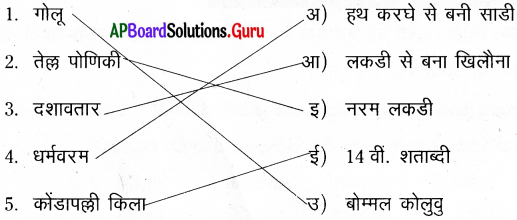
अ) जोड़ी बनाइए।

1. गोलूउ) बोम्मल कोलुवु
2. तेल्ल पोणिकीइ) नरम लकडी
3. दशावतारअ) हथ करघे से बनी साडी
4. धर्मवरम।आ) लकडी से बना खिलौना
5. कोंडापल्ली किलाई) 14 वीं. शताब्दी

AP Board 7th Class Hindi Solutions 12th Lesson कोंडापल्ली की यात्रा 2

आ) पाठ में वाक्यों के सही क्रम को पहचानकर क्रम संख्या कोष्ठक में लिखिए।

1. आजकल ये हस्तकलाएँ लुप्त होती जा रही हैं। [ 4 ]
2. तेलुगु में गोलू को बोम्मला कोलुवु कहते हैं। [ 3 ]
3. इस किले का निर्माण 14 वीं शताब्दी में हुआ। [ 1 ]
4. इससे कारीगरों को आजीविका मिल रही है। [ 5 ]
5. उसके बाद कोंडापल्ली के खिलौने देखने गए। [ 2 ]

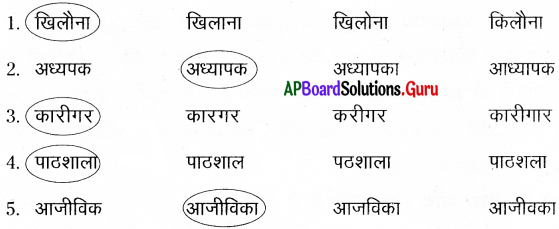
इ) सही वर्तनी वाले शब्दों पर गोला “O” बनाइए।
AP Board 7th Class Hindi Solutions 12th Lesson कोंडापल्ली की यात्रा 3

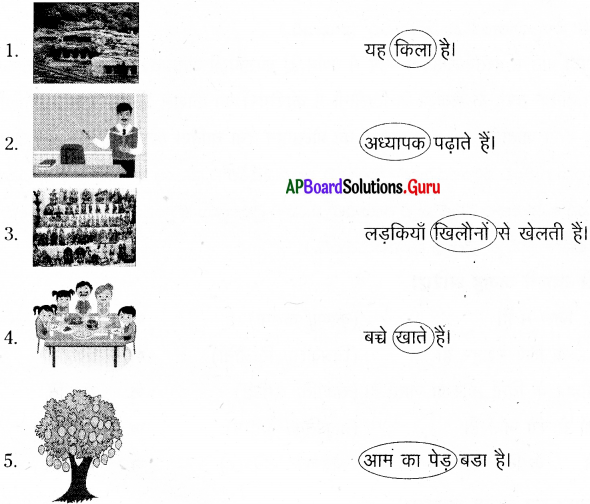
ई) नीचे दिए गए वाक्यों में चित्रों से संबंधित शब्दों पर गोला “O” बनाइए।
AP Board 7th Class Hindi Solutions 12th Lesson कोंडापल्ली की यात्रा 4
उत्तर:
AP Board 7th Class Hindi Solutions 12th Lesson कोंडापल्ली की यात्रा 5

लिखिए

अ) नीचे दिये गये प्रश्नों के उत्तर छोटे – छोटे वाक्यों में लिखिए।
క్రింది ఇవ్వబడిన ప్రశ్నలకు సమాధానములు చిన్న – చిన్న వాక్యములలో వ్రాయండి.

1. कोंडापल्ली विजयवाड़ा से कितने किलोमीटर की दूरी पर है? (కొండపల్లి, విజయవాడ నుండి ఎన్ని కిలోమీటర్ల దూరాన ఉన్నది?)
उत्तर:
कोंडपल्ली विजयवाडा से 24 किलोमीटर की दूरी पर है।
(కొండపల్లి, విజయవాడ నుండి 24 కి.మీ. దూరాన కలదు.)

AP Board 7th Class Hindi Solutions 12th Lesson कोंडापल्ली की यात्रा

2. कोंडापल्ली में खिलौने बनानेवालों को सरकार किस तरह प्रोत्साहन दे रही है? (కొండపల్లిలో బొమ్మలు తయారు చేయువారిని ప్రభుత్వము ఏ విధముగా ప్రోత్సహించుచున్నది?)
उत्तर:
कोंडपल्ली में खिलौने बनानेवालों के खिलौनों को आंध्रप्रदेश सरकार खरीदकर उन्हें लेपाक्षी बिक्री केंद्रों में बेचती हैं। इससे कारीगरों को आजीविका और प्रोत्साहन मिलते हैं।
(కొండపల్లిలో బొమ్మలు తయారు చేయువాని బొమ్మలను ఆంధ్రప్రదేశ్ ప్రభుత్వం కొని వాటిని లేపాక్షి విక్రయ కేంద్రంలో అమ్ముతుంది. దీనితో – కార్మికులకు ఉపాధి మరియు ప్రోత్సాహం లభిస్తాయి.)

आ) नीचे दिये गये प्रश्न का उत्तर पाँच – छह वाक्यों में लिखिए।
క్రింది ఇవ్వబడిన ప్రశ్నకు సమాధానము 5 -6 వాక్యములలో వ్రాయండి.

1. “कोंडापल्ली की यात्रा” पाठ का सारांश अपने शब्दों में लिखिए। (‘కొండపల్లి యాత్ర’ పాఠ్య సారాంశము మీ మాటల్లో వ్రాయండి.)
उत्तर:
कोंडापल्ली की यात्रा पाठ में हस्तकलाओं के बारे में वर्णन है। कोंडापल्ली आँध्रप्रदेश का प्रसिद्ध हस्तकला केंद्र है। यहाँ बने अनेक तरह के लकड़ी के खिलौनों में कारीगरों का कौशल दिखाई देता है। संक्रांति पर्व के दिन गोलू रखा जाता है। हमें हस्तकलाओं को प्रोत्साहन देना चाहिए।
(కొండపల్లి యాత్ర అను ఈ పాఠంలో హస్తకళలను గురించి వర్ణించడమైనది. కొండపల్లి ఆంధ్రప్రదేశ్ లోని ప్రముఖ హస్తకళా క్షేత్ర కేంద్రము. ఇక్కడ తయారుచేసిన అనేక రకాల చెక్కబొమ్మల తయారీలో పనివారి నైపుణ్యము కన్పించును. సంక్రాంతి పండుగ రోజున “గోలూ” అనగా బొమ్మల కొలువు వుంచబడుతుంది.)

इ) उचित शब्दों से खाली जगह भरिए।

1. कोंडापल्ली ……. जिले में है। (कृष्णा/ कड़पा)
उत्तर:
कृष्णा

2. कोंडापल्ली …….. के लिए मशहूर है। (चित्रकला/ खिलौनों)
उत्तर:
खिलौनों

3. गोलू …….. त्यौहार के दिनों में रखा जाता है। (संक्रांति/ उगादी)
उत्तर:
संक्रांति

4. खिलौने …. रंगों से रंगे जाते हैं। (प्राकृतिक/ कृत्रिम)
उत्तर:
प्राकृतिक

5. कोंडापल्ली देखने …. के दिन गए। (सोमवार रविवार)
उत्तर:
रविवार

AP Board 7th Class Hindi Solutions 12th Lesson कोंडापल्ली की यात्रा

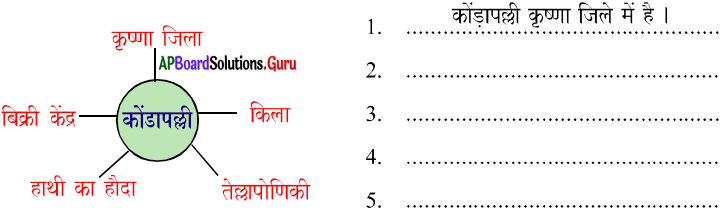
ई) संकेतों के आधार पर वाक्य बनाइए।
AP Board 7th Class Hindi Solutions 12th Lesson कोंडापल्ली की यात्रा 6
उत्तर:
1. कोंडापल्ली कृष्णा जिले में हैं।
2. कोंडपल्ली में एक पुरातन किला है।
3. हाथी का हौदा ग्रामीण वातावरण का खिलौना है।
4. लेपाक्षी एक बिक्री केंद्र है।
5. खिलौने तेल्लापोणिकी नामक नरम लकडी से बनाये जाते हैं।

उ) वर्ण विच्छेद कीजिए।

1. खिलौना : ख् + इ + ल् + औ + न् + आ

2. कोंडापल्ली : ………………….
उत्तर:
क् + ओं + ड् + आ + प् + अ + ल् + ल् + ई

3. संक्रांति : ……………………..
उत्तर:
स + अं + क् + र् + आ + त् + ई

4. गोलू : …………………….
उत्तर:
ग + ओ + ल् + ऊ

5. प्रसिद्ध
उत्तर:
प + र् + अ + स् + इ + द् + ध् + अ

भाषांश

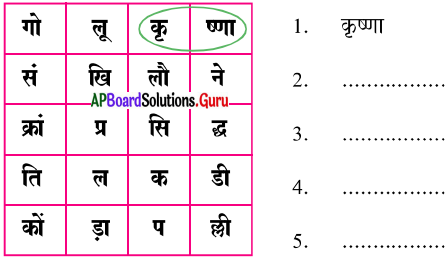
अ) वर्ग पहेली से पाठ में आये शब्दों को ढूंढकर लिखिए।
AP Board 7th Class Hindi Solutions 12th Lesson कोंडापल्ली की यात्रा 7
उत्तर:
1. कृष्णा
2. गोलू
3. संक्रांति
4. कोंडापल्ली
5. खिलौने
6. लकडी
7. प्रसिद्ध

AP Board 7th Class Hindi Solutions 12th Lesson कोंडापल्ली की यात्रा

आ) पर्यायवाची शब्द लिखिए।

1. हाथ – कर, हस्त

2. पाठशाला – ……………
उत्तर:
विद्यालय, स्कूल

3. छात्र – ……………
उत्तर:
विद्यार्थी, शिक्षार्थी

4. दर्शन – ……………
उत्तर:
देखना, वीक्षण

5. कारीगर – ……………
उत्तर:
कर्मचारी, काम करनेवाले

इ) विलोम शब्द लिखिए।

1. शहर × गाँव
2. प्रसिद्ध × अप्रसिद्ध
3. बेचना × खरीदना
4. खुश × नखुश
5. पास × दूर

सृजनात्मकता

अ) किसी एक यात्रा का वर्णन अपने शब्दों में कीजिए।
(ఏదేని యాత్ర గురించి మీ మాటల్లో వర్ణించండి.)
उत्तर:
हम सभी अपनी गर्मी की छुट्टियाँ बिताने के लिए किसी न किसी पर्यटक स्थल पर अवश्य जाते हैं। मैं भी अपनी गर्मी की छुट्टियाँ बिताने के लिए पर्वतीय प्रदेश शिमला गया था। मैं गर्मी के मौसम में भी ठंडक का आनंद ले सकूँ। मैं और मेरा परिवार शाम की बस से शिमला गये और पहाडों में बना रास्ता हमें डरा रहा था। हमने रास्ते में घर का बना खाना खाया, गाने गाए और प्राकृतिक सौंदर्य का आनंद लिया। हम रात के नौ बजे शिमला पहुंचे जहाँ हमने थोडा सा विश्राम कर माल रोड घूमा जिसकी शोभा रात के समय में दो गुनी हो जाती है।

अगले दिन हम सब तैयार होकर जाखू मंदिर में हनुमान जी के दर्शन करने गए और नीचे उतरकर रीज में गए। इस समय तक हल्की – हल्की बारिश होने लगी । जिसने ठंडे मौसम को और अधिक ठंडा कर दिया था। हम उस दिन शाम को कुफरी के लिए निकल गए जहाँ पर बर्फ पड रही थी। अगले दिन हम ने स्वींग का आंनद लिया, चिडियाघर देखा और बर्फ में खूब खेले। हमारा वहाँ इतना मन लगा कि हमने वहीं दो दिन व्यतीत किये। उसके बाद हम शिमला वापिस आए और वहाँ की संस्कृति और संग्रहालय देखा। अगले दिन हम वापिस घर के लिए निकले और हमारे दिल में यात्रा की यादें थी। वह मेरी आज तक की सब से बेहतरीन यात्रा थी।

आ) परियोजना कार्य :

मिट्टी या कागज़ से खिलौनों को बनाकर कक्षा में दिखाइए।
(మట్టితో లేదా కాగితముతో ఆటబొమ్మలను తయారుచేసి తరగతిలో చూపించండి.)
उत्तर:
छात्र गतिविधि

AP Board 7th Class Hindi Solutions 12th Lesson कोंडापल्ली की यात्रा

इ) अनुवाद कीजिए।

1. बच्चों को खिलौने पसंद हैं।
उत्तर:
बच्चों को खिलौने पसंद हैं। పిల్లలకు ఆటబొమ్మలు ఇష్టము.

2. वीणा लकड़ी से बनाई जाती है।
उत्तर:
वीणा लकड़ी से बनाई जाती है। వీణను కొయ్యతో తయారు చేస్తారు.

3. दिल्ली देश की राजधानी है।
उत्तर:
दिल्ली देश की राजधानी है। ఢిల్లీ దేశ రాజధాని.

4. बेंगलूरु सुंदर नगर है।
उत्तर:
बेंगलूरू सुंदर नगर है। బెంగళూరు సుందర నగరం.

5. हिंदी सरल भाषा है।
उत्तर:
हिंदी सरल भाषा है। హిందీ సరళమైన భాష.

व्याकरणांश

AP Board 7th Class Hindi Solutions 12th Lesson कोंडापल्ली की यात्रा 8

क्रिया विशेषण

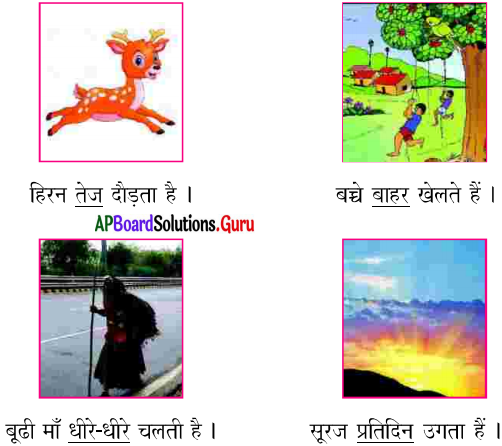
रेखांकित शब्द क्रिया की विशेषता बताते हैं। क्रिया की विशेषता बतानेवाले शब्दों को क्रिया – विशेषण कहते हैं।
(గీత గీయబడిన పదములు క్రియ యొక్క విశేషతను తెలియజేయుచున్నవి. వీటిని క్రియా విశేషణములు అందురు.)
उदा : धीरे – धीरे, तेज, सुंदर, प्रतिदिन, खूब आदि।

अ) नीचे दिये गये वाक्यों में क्रिया – विशेषण शब्द को पहचानकर लिखिए।

1. दीपा धीरे – धीरे खाती है।
उत्तर:
धीरे – धीरे

2. परसों मैं दिल्ली जाऊँगा।
उत्तर:
परसों

3. नदी निरंतर बहती है।
उत्तर:
निरंतर

4. तुम जल्दी आओ।
उत्तर:
जल्दी

5. रमा वहाँ बैठी है।
उत्तर:
वहाँ

अध्यापकों के लिए सूचना :

लकडी से बने खिलौनों के लिए प्रसिद्ध अन्य प्रदेशों के बारे में कक्षा में चर्चा कीजिए।
(Sradogss తయారుచేసే ఆట బొమ్మల కోసం ప్రసిద్ది చెందిన ఇతర ప్రదేశాలను గురించి తరగతి గదిలో చర్చించండి.)
उत्तर:
लकडी से बने खिलौनों के लिए प्रमुख अन्य प्रदेशों में एक है एटिकोप्पाका। आंध्रप्रदेश के एटिकोप्पाका खिलौने विख्यात हैं। लकडी के पारंपरिक एटिकोप्पाका खिलौने बनाने की कला,जो लक्कपिडतलु नाम से प्रचलित हैं | करीब 400 साल से अधिक पुरानी है। लकडी से बने खिलौनों के लिए और एक प्रसिद्ध स्थान है धर्मनगरी। वारणासी को ही धर्म नगरी कहते हैं।

मध्यप्रदेश में ग्वालियर तथा इंदौर, केरल में तैनीचेरी व कोझीकोडे, उत्तर प्रदेश में मधुरा व आग्रा राजस्थान में जयपुर, तमिलनाडु में पनरुपति, कुड्डालेरु और तन्जौर प्रांतों में भी खिलौने तैयार किये जाते हैं। उदयपुर भी एक प्रसिद्ध लकडी के खिलौनों का केंद्र है। राजस्थान में गलियाकोट लकडी के खिलौनों के लिए प्रसिद्ध शहर है। आंध्रप्रदेश के बोब्बिली में भी वीणा के साथ – साथ खिलौनों की तैयारी की जाती है।

पाठ का सारांश

कोंडापल्ली की यात्रा पाठ में हस्तकलाओं के बारे में वर्णन है। कोंडापल्ली आँध्रप्रदेश का प्रसिद्ध हस्तकला केंद्र है। यहाँ बने अनेक तरह के लकड़ी के खिलौनों में कारीगरों का कौशल दिखाई देता है। संक्रांति पर्व के दिन गोलू रखा जाता है। हमें हस्तकलाओं को प्रोत्साहन देना चाहिए।

పాఠ్య సారాంశం

కొండపల్లి యాత్ర అను ఈ పాఠంలో హస్తకళలను గురించి వర్ణించడమైనది. కొండపల్లి, ఆంధ్రప్రదేశ్ లోని ప్రముఖ హస్తకళా క్షేత్ర కేంద్రము. ఇక్కడ తయారుచేసిన అనేక రకాల చెక్కబొమ్మల తయారీలో పనివారి నైపుణ్యము కన్పించును. సంక్రాంతి పండుగ రోజున “గోలూ” అనగా బొమ్మల కొలువు వుంచబడుతుంది.

Summary

The handicrafts are described in this lesson named ‘Excursion to Kondapalli’. Kondapalli is famous centre for handicrafts in Andhra Pradesh. The expertize of the craftspersons is found in making of different toys that are made here. On the occasion of Sankranthi day, Bommala Koluvu (Display of Toys) called ‘Golu’ is arranged in Andhra Pradesh. We should encourage the handicrafts.

व्याकरणांश (వ్యాకరణాంశాలు)

लिंग बदलिए (లింగములను మార్చండి)

बच्चा – बच्ची
स्त्री – पुरुष
नर – मादा
बेटा – बेटी
नर – नारी
लडका – लडकी
आदमी – औरत
बूढ़ा – बूढ़ी
स्त्री – पुरुष
माँ – बाप
माता – पिता
दादा – दादी
बाल – बाला
ग्वाला – ग्वालिन
चाचा – चाची
पडोसी – पडोसिन
बालक – बालिका
बलवान – बलवती

AP Board 7th Class Hindi Solutions 12th Lesson कोंडापल्ली की यात्रा

वचन बदलिए (వచనములను మార్చండి)

गाँव – गाँव
करघा – करघे
साडी – साडियाँ
खिलौना – खिलौने
कला – कलाएँ
लकडी – लकड़ियाँ
लोग – लोग
छात्र – छात्र
यात्रा – यात्राएँ
किला – किले
शताब्दी – शताब्दियाँ
राजा – राजा
लोग – लोग
कारीगर – कारीगर
पर्व – पर्व
बच्चा – बच्चे

विलोम शब्द (వ్యతిరేక పదములు)

प्रसिद्ध × अप्रसिद्ध
गाँव × शहर
पुराना × नया
खुश × नखुश
बनाना × बिगाडना
नरम × कडा
प्राकृतिक × कृत्रिम/अप्राकृतिक
यहाँ × वहाँ
बेचना × खरीदना

शब्दार्थ (అర్థాలు) (Meanings)

लोग = जनता, ప్రజలు, the people
नज़दीक = पास, దగ్గర, near
अध्यापक = शिक्षक, ఉపాధ్యాయుడు, a teacher
रविवार = इतवार,ఆదివారం, Sunday
बिक्री = विक्रय, అమ్మకము, sale
आजीविका = रोजगार, జీవనోపాధి, livelihood
किला = दुर्ग, కోట, fort
स्वागत = रिसेप्शन अभिनंदन, ఆహ్వానము, welcome
पर्व = त्यौहार, పండుగ, festival

AP Board 7th Class Hindi Solutions 12th Lesson कोंडापल्ली की यात्रा

श्रुत लेख : శ్రుతలేఖనము : Dictation

अध्यापक या अध्यापिका निम्न लिखित शब्दों को श्रुत लेख के रूप में लिखवायें। छात्र अपनी-अपनी नोट पुस्तकों में लिखेंगे। अध्यापक या अध्यापिका इन्हें जाँचे।
ఉపాధ్యాయుడు లేదా ఉపాధ్యాయిని క్రింద వ్రాయబడిన శబ్దములను శ్రుతలేఖనంగా డిక్లేట్ చేయును. విద్యార్థులు వారి వారి నోట్ పుస్తకాలలో వ్రాసెదరు. ఉపాధ్యాయుడు లేదా ఉపాధ్యాయిని వాటిని దిద్దెదరు.
AP Board 7th Class Hindi Solutions 12th Lesson कोंडापल्ली की यात्रा 9

AP Board 10th Class Biology Solutions 6th Lesson ప్రత్యుత్పత్తి – పునరుత్పాదక వ్యవస్థ

SCERT AP 10th Class Biology Study Material 6th Lesson ప్రత్యుత్పత్తి – పునరుత్పాదక వ్యవస్థ Textbook Questions and Answers.

AP State Syllabus 10th Class Biology 6th Lesson Questions and Answers ప్రత్యుత్పత్తి – పునరుత్పాదక వ్యవస్థ

10th Class Biology 6th Lesson ప్రత్యుత్పత్తి – పునరుత్పాదక వ్యవస్థ Textbook Questions and Answers

అభ్యసనాన్ని మెరుగుపరుచుకోండి

ప్రశ్న 1.
కేవలం మనుగడ కొనసాగించటానికే ప్రత్యుత్పత్తి ఉపయోగపడుతుందని మీరు భావిస్తున్నారా?
జవాబు:

  1. లేదు. కేవలం మనుగడ సాగించటానికే ప్రత్యుత్పత్తి ఉపయోగపడుతుందని నేను భావించటం లేదు.
  2. ప్రత్యుత్పత్తి వలన జన్యుపదార్థ వినిమయం జరిగి కొత్త లక్షణాలు ఏర్పడతాయి.
  3. కొత్త లక్షణాలు జీవి మనుగడకు అవకాశాలను మెరుగుపర్చుతాయి.
  4. కొత్త లక్షణాలు కేంద్రీకరణ వలన కొత్త జాతులు ఏర్పడతాయి.
  5. ప్రకృతివరణానికి కావలసిన ముడిపదార్థాలను (వైవిధ్యాలను) ప్రత్యుత్పత్తి అందిస్తుంది.
  6. పారమీషియం వంటి ప్రాథమిక జీవులు లైంగిక ప్రత్యుత్పత్తి (సంయుగ్మము) వలన ఉత్తేజితమవుతాయి.
  7. బాక్టీరియా వంటి సూక్ష్మజీవులు అనుకూల పరిస్థితులలో ద్విదావిచ్ఛిత్తి ద్వారా, అననుకూల పరిస్థితులలో బహుదా విచ్ఛిత్తి ద్వారా ప్రత్యుత్పత్తి జరుపుతాయి. అంటే ప్రత్యుత్పత్తి అననుకూల పరిస్థితులను అధిగమించటానికి, సందర్భానుసారంగా మనుగడ సాగించటానికి తోడ్పడుతుంది.
  8. ప్లాస్మోడియం దోమలో లైంగిక ప్రత్యుత్పత్తిని, మానవునిలో అలైంగిక ప్రత్యుత్పత్తిని జరుపుతూ తన మనుగడ అవకాశాలను మెరుగుపరచుకుంటుంది.

ప్రశ్న 2.
జీవులు ఎలా పెరుగుతాయి? దెబ్బ తగలడం వంటి సందర్భాలలో, పాడైపోయిన, తొలగించబడిన కణాల స్థానం ఎలా భర్తీ అవుతుంది? ఇందుకోసం ఉపయోగపడే ఏదైనా ప్రత్యేక ప్రత్యుత్పత్తి విధానం ఉందా?
జవాబు:

  1. కణవిభజన ప్రక్రియ వలన జీవులలో కణాల సంఖ్య పెరిగి జీవులు పెరుగుతాయి.
  2. పాడైపోయిన కణాల స్థానం భర్తీ చేయటానికి, కణాల మరమ్మత్తుకు కణవిభజన తోడ్పడుతుంది.
  3. ఇటువంటి సందర్భాలలో కణాలు ప్రధానంగా సమవిభజన చెంది, కణాల సంఖ్య పెంచుతుంది.

ప్రశ్న 3.
చేప మరియు కప్పలాంటి జీవులు ప్రతిసారీ అసంఖ్యాకమైన అందాలను విడుదల చేయటానికి గల కారణాలు ఏమిటి? (AS1)
జవాబు:

  1. చేప మరియు కప్పవంటి జీవులలో బాహ్యఫలదీకరణ జరుగుతుంది. ఇది ప్రకృతిచే నియంత్రించబడుతుంది.
  2. అంటే శుక్రకణాలు అండాలతో శరీరం బయట నీటిలో కలుస్తాయి.
  3. ఈ సందర్భంలో కొన్ని అండాలు, శుక్రకణాలు కొట్టుకొనిపోవచ్చు.
  4. కొన్ని శుక్రకణాలు అండాలను చేరకపోవచ్చు.
  5. ఫలదీకరణ చెందిన అండాలకు రక్షణ ఉండదు.
  6. ఎదుగుతున్న పిండాలను ఇతర జీవులు తినవచ్చు.
  7. కావున ఈ జీవులు అధిక సంఖ్యలో పిల్లలను ఉత్పత్తి చేయవలసిన అవసరం ఉంది.
  8. అధిక సంఖ్యలో పిల్లలను ఉత్పత్తి చేయటానికి ఈ జీవులు ప్రతిసారి అసంఖ్యాకమైన అండాలను, శుక్రకణాలను విడుదల చేస్తాయి.
  9. ఫలితంగా అధిక జీవులు ఏర్పడి, కొన్ని జీవులు నశించినప్పటికీ, తమ జాతిని కొనసాగించగలుగుతున్నాయి.

AP Board 10th Class Biology Solutions 6th Lesson ప్రత్యుత్పత్తి – పునరుత్పాదక వ్యవస్థ

ప్రశ్న 4.
బాహ్య ఫలదీకరణం అంటే ఏమిటో వివరించండి. ఉదాహరణలు రాయండి. (AS1)
జవాబు:

  1. స్త్రీ, పురుష సంయోగబీజాల కలయికను ఫలదీకరణం అంటారు.
  2. ఈ ఫలదీకరణం స్త్రీ జీవి శరీరానికి బయట జరిగితే దాని బాహ్య లేదా బహిర్గత ఫలదీకరణం అంటారు.
  3. ఈ ప్రక్రియలో పురుషజీవి తన శుక్రకణాలను స్త్రీ జీవి అండాలను తమ చుట్టూ ఉన్న మాధ్యమంలోనికి (నీరు) విడుదల చేస్తాయి.
  4. ఈ మాధ్యమంలో శుక్రకణాలు అండాలతో కలసి ఫలదీకరణం జరుగుతుంది. ఉదా : చేపలు, కప్పలు.

ప్రశ్న 5.
కిందివాని మధ్య గల భేదాలను రాయండి. (AS1)
ఎ) కేసరావళి – అండకోశం
బి) సమవిభజన – క్షయకరణ విభజన
జవాబు:
ఎ) కేసరావళి – అందకోశం :

కేసరావళిఅండకోశం
1. ఇవి పుష్ప మూడవ వలయంలో ఉంటాయి.1. ఇవి పుష్పాసనం నాల్గవ వలయంలో ఉండే భాగము.
2. ఇవి పురుష ప్రత్యుత్పత్తి అవయవాలు.2. ఇది అండాశయము, కీలము, కీలాగ్రము అను భాగాలను కలిగి ఉంటుంది.
3. కేసరావళి, కేసరదండము, పరాగకోశము అను భాగాలను కలిగి ఉంటుంది.3. అండాశయములో అండములు ఉంటాయి.
4. పరాగకోశాలలో పరాగరేణువులు తయారవుతాయి.4. ఇవి అండాశయంలో అండన్యాస స్థానం వద్ద అమరిఉంటాయి.

బి) సమవిభజన – క్షయకరణ విభజన :

సమవిభజనక్షయకరణ విభజన
1. శాఖీయ కణాలలో జరుగుతుంది.1. లైంగిక కణాలలో జరుగుతుంది.
2. కేంద్రకం ఒక్కసారే విభజన చెందుతుంది.2. కేంద్రకం రెండుసార్లు విభజన చెందుతుంది.
3. పిల్లకణాలు రెండు ఏర్పడతాయి.3. నాలుగు పిల్లకణాలు ఏర్పడతాయి.
4. పిల్లకణాలు ద్వయ స్థితికంలో ఉంటాయి.4. పిల్లకణాలు ఏకస్థితికంలో ఉంటాయి.
5. చాలా తరచుగా జరుగుతుంది.5. అరుదుగా జరుగుతుంది.
6. పిల్లకణాలు శాఖీయ భాగాలను ఏర్పరుస్తుంది.6. పిల్లకణాలు సంయోగబీజాలను ఏర్పరుస్తాయి.
7. ప్రథమదశ, మధ్యదశ, చలనదశ మరియు అంత్యదశ అనే ఉపదశలు ఉంటాయి.7. ప్రతి దశ రెండుసార్లు ఉంటుంది. ప్రథమదశ – 1 లో 5 ఉపదశలు ఉంటాయి.
8. క్రోమోజోమ్ ల సంఖ్య మారదు.8. పిల్లకణాలలో క్రోమోజోమ్ సంఖ్య సగానికి తగ్గించబడుతుంది.
9. విభజనకు ముందు క్రోమోజోమ్ లు రెట్టింపు అవుతాయి.9. ప్రథమ క్షయకరణ విభజన తరువాత క్రోమోజోమ్స్ సంఖ్య రెట్టింపు అవుతుంది.
10. వినిమయం జరగదు.10. వినిమయం జరుగుతుంది.

ప్రశ్న 6.
మొక్కల్లోని ఫలదీకరణ ప్రక్రియను గురించి వివరించండి. (AS1)
జవాబు:
AP Board 10th Class Biology Solutions 6th Lesson ప్రత్యుత్పత్తి – పునరుత్పాదక వ్యవస్థ 1

  1. ఫలదీకరణము జరుగుటకు ముందు పరాగరేణువులు కీలాగ్రము మీదకి చేరుతాయి.
  2. అవి అంకురించి పరాగనాళములను ఇస్తాయి. అందులో ఒక్క పరాగనాళము మాత్రమే పిండకోశమును చేరుకోగలుగుతుంది.
  3. ఈ పరాగనాళములో రెండు పురుష సంయోగబీజాలు ఉంటాయి.
  4. సాధారణంగా అండం ద్వారం ద్వారా పరాగనాళిక అండములోనికి చేరుతుంది. దానిలో ఉన్న రెండు పురుష సంయోగబీజాలను, నాళిక ఆ అండ కోశంలోకి విడుదల చేస్తుంది
  5. ఆ రెండింటిలో ఒక పురుష సంయోగబీజము, స్త్రీ బీజకణం వైపు సమీపించి దానితో సంయోగము జరిపి, ద్వయ స్థితికలో ఉండే సంయుక్తబీజమును ఏర్పరుస్తుంది. ఇది మొదటి ఫలదీకరణము అవుతుంది.
    AP Board 10th Class Biology Solutions 6th Lesson ప్రత్యుత్పత్తి – పునరుత్పాదక వ్యవస్థ 3
  6. రెండవ పురుష సంయోగబీజము, ’27’ స్థితిలో ఉన్న ద్వితీయ కేంద్రకముతో సంయోగము చెంది ‘3n’ స్థితిలో ఉండే అంకురచ్ఛద కేంద్రకాన్ని ఏర్పరుస్తుంది. ఇది పిండకోశములో జరిగే రెండవ ఫలదీకరణము.
    AP Board 10th Class Biology Solutions 6th Lesson ప్రత్యుత్పత్తి – పునరుత్పాదక వ్యవస్థ 4
  7. మొదటి ఫలదీకరణము వలన ఏర్పడిన సంయుక్తబీజము పెరిగి పిండముగా అభివృద్ధి అవుతుంది. సంయుక్త బీజకేంద్రకము పలుసార్లు విభజన చెంది హృదయాకారపు నిర్మాణముగా మారి అండపు లోపలి స్థలాన్ని ఆక్రమించుకుంటుంది.
  8. బాగా ఎదిగిన పిండములో ప్రథమ కాండము, ప్రథమ మూలము, బీజదళములు ఉంటాయి. ద్విదళ బీజ మొక్కలు రెండు బీజదళాలను కలిగి ఉంటాయి. ఏక బీజదళ మొక్కలు ఒకే బీజదళాన్ని కలిగి ఉంటాయి.

ప్రశ్న 7.
అలైంగిక ప్రత్యుత్పత్తి విధానాలను గురించి తగిన ఉదాహరణలతో వివరించండి. (AS1)
జవాబు:
అలైంగికోత్పత్తి :
సంయోగబీజాల కలయిక లేకుండా, కేవలం ఒక జనకజీవి ప్రమేయంతోనే జరిగే ప్రత్యుత్పత్తిని “అలైంగిక ప్రత్యుత్పత్తి” అంటారు. దీనిలో క్రింది రకాలు కలవు.

1. విచ్చిత్తి :
ఒక జీవి కణ విభజన ద్వారా, రెండుగా విడిపోవడాన్ని “ద్విధావిచ్చిత్తి” అని, అంతకంటే ఎక్కువ భాగాలుగా విడిపోతే, దానిని “బహుధావిచ్చిత్తి” అని అంటారు.
ఉదా : పారమీషియం

2. కోరకీభవనం :
ఒక జీవి శరీరం నుండి అవే పోలికలతో ఉన్న నిర్మాణం బయటకు పెరుగుతాయి. అది జనక జీవి నుండి వేరై స్వతంత్రంగా జీవిస్తుంది. ఈ ప్రక్రియను “కోరకీభవనం” అంటారు.
ఉదా: ఈస్ట్

3. ముక్కలగుట :
కొన్ని జీవులు ప్రమాదవశాత్తు, తెగిపోయి, శరీర ఖండాల నుండి పూర్తి జీవిగా పెరుగుతాయి. ఈ ప్రక్రియలో శరీరంలోని ఏ ఖండమైనా మొత్తం శరీరాన్ని ఏర్పరుస్తుంది.
ఉదా : స్పెరోగైరా, చదునుపురుగులు

4. అనిషేక ఫలాలు :
ఫలదీకరణం జరగకపోయినా అండం పిల్ల జీవులుగా ఎదగటాన్ని ‘పారినోజెనెసిస్’ అంటారు. దీని వలన మొక్కలలో విత్తన రహిత కాయలు ఏర్పడతాయి.
ఉదా : తేనెటీగలు, చీమలు

5. పునరుత్పత్తి :
పూర్తిగా విభేదనం చెందిన అనేక జీవులు తమ శరీరఖండాల నుండి నూతన జీవిని ఇచ్చే సామర్థ్యాన్ని “పునరుత్పత్తి” అంటారు.
ఉదా : ప్లనేరియా, స్పంజికలు

6. శాఖీయ ప్రత్యుత్పత్తి :
కొన్ని మొక్కలు శాఖీయ భాగాలైన వేరు, కాండం, పత్రం వంటి శాఖీయ భాగాల నుండి కొత్త మొక్కలను ఏర్పరుస్తాయి. దీనిని “శాఖీయోత్పత్తి” అంటారు.
ఉదా : మందార, రణపాల

AP Board 10th Class Biology Solutions 6th Lesson ప్రత్యుత్పత్తి – పునరుత్పాదక వ్యవస్థ

ప్రశ్న 8.
లైంగిక ప్రత్యుత్పత్తి ఏ విధంగా అలైంగిక ప్రత్యుత్పత్తితో విభేదిస్తుంది? మూడు కారణాలు తెలపండి. (AS1)
జవాబు:
1. లైంగిక ప్రత్యుత్పత్తిలో, స్త్రీ, పురుష జీవులు రెండూ పాల్గొంటాయి. అలైంగిక ఉత్పత్తిలో ఒక జీవి నుండి మరొక జీవి ఏర్పడుతుంది.
2. లైంగిక ప్రత్యుత్పత్తిలో స్త్రీ, పురుష సంయోగబీజాలు ఏర్పడతాయి. అలైంగిక ప్రత్యుత్పత్తిలో సంయోగబీజాలు ఏర్పడవు.
3. లైంగిక ప్రత్యుత్పత్తిలో, ఫలదీకరణ జరిగి కొత్త జీవులు ఏర్పడితే, అలైంగిక ప్రత్యుత్పత్తిలో ఫలదీకరణ జరగదు. తల్లి జీవులను పోలిన జీవులు ఏర్పడతాయి.
వీటితో పాటు ఈ కింది భేదాలను గమనించవచ్చు.

లైంగిక ప్రత్యుత్పత్తిఅలైంగిక ప్రత్యుత్పత్తి
1. ఒకటిగాని, రెండు జీవుల కలయిక వల్లగాని జరుగుతుంది.1. ఒకే జీవిలో జరుగుతుంది.
2. మగ, ఆడ సంయోగబీజాలు ఏర్పడతాయి.2. సంయోగబీజాలు ఏర్పడవు.
3. మగ, ఆడ సంయోగబీజాలు సంయోగం చెందుతాయి.3. సంయోగబీజాలు సంయోగం చెందవు.
4. కణక్షయకరణ విభజనలు అవసరం అవుతాయి.4. కణ సమవిభజనలు మాత్రమే అవసరమవుతాయి.
5. తరువాతి తరంలో ఏర్పడే జీవులు కొన్ని జనక లక్షణాలను, కొన్ని జనని లక్షణాలను కలిగి ఉంటాయి.5. తరువాతి తరంలో ఏర్పడే జీవులు జనకతరపు జీవుల పోలికలను కలిగి ఉంటాయి.
6. జన్యు సంబంధ తేడాలకు ఎక్కువ అవకాశం ఉంది.6. యాదృచ్ఛిక పరివర్తన ద్వారా మాత్రమే జన్యు సంబంధం తేడా ఉంటుంది.
7. జాతి పరిణామ క్రమములో ప్రకృతి వరణమునకు ఎక్కువ సహాయపడుతుంది.7. జాతి పరిణామ క్రమములో ప్రకృతి వరణమునకు అంతగా సహాయపడదు.
8. స్త్రీ పురుష బీజకణములు ఏర్పడి వాటి కలయిక జరుగుతుంది.8. సిద్ధ బీజములు, ద్విదావిచ్ఛిత్తి, అంటుకట్టుట, కణజాల వర్ధనము మొదలైన పద్ధతుల ద్వారా అలైంగిక ప్రత్యుత్పత్తి జరుగుతుంది.

ప్రశ్న 9.
శుక్రకణాలు వాని విధులు నిర్వహించడానికై, ఏ విధమైన అనుకూలనాలను పొంది ఉన్నాయి? (AS1)
జవాబు:
శుక్ర కణనిర్మాణం తన విధి నిర్వహణకు అత్యంత అనుకూలంగా ఉంటుంది.
AP Board 10th Class Biology Solutions 6th Lesson ప్రత్యుత్పత్తి – పునరుత్పాదక వ్యవస్థ 5

  1. తల నిర్మాణం గుండ్రంగా ఉండి ముందు భాగం మొనతేలి ఉండుటవలన సులువుగా చొచ్చుకు పోగల్గుతుంది.
  2. తలమీద ఉండే ఎక్రోసోమ్ నిర్మాణం అండాన్ని ఛేదించటానికి తోడ్పడుతుంది.
  3. మధ్యభాగం అధిక సంఖ్యలో మైటోకాండ్రియాలను కలిగి చలనానికి కావలసిన శక్తిని ఉత్పత్తి చేస్తుంది.
  4. తోక పొడవుగా ఉండి శుక్రకణ చలనానికి తోడ్పడుతుంది.
  5. తోక సహాయంతో శుక్రకణం చలిస్తూపోయి, ఎక్రోసోమ్ ద్వారా అండానికి రంధ్రం చేసి ఫలదీకరణ గావిస్తుంది.

ప్రశ్న 10.
ఫలదీకరణ చెందిన అండాన్ని గర్భాశయంలో నిలుపుకోవడం కోసం ఋతుస్రావచక్రం పనిచేస్తూ మరియు పునరావృతమవుతూ ఉంటుంది. సాధారణంగా ఋతుచక్రం మొదలై, పూర్తవుటకు ఎంత సమయం తీసుకుంటుంది? (AS1)
జవాబు:

  1. స్త్రీ ప్రత్యుత్పత్తి వ్యవస్థలో జరిగే మార్పుల వరుసక్రమాన్ని “ఋతుచక్రం” అంటారు.
  2. ఇది ప్రతి 28 రోజులకు ఒకసారి జరుగుతుంది.
  3. దీని మొదటిదశను పెరుగుదల దశ అంటారు. ఇది 14-16 రోజుల వరకు ఉంటుంది.
  4. రెండవ దశను స్రావక దశ అంటారు. ఇది 25 వ రోజు వరకు ఉంటుంది.
  5. ఋతుస్రావం 25-28 రోజుల మధ్య ఉంటుంది.

ప్రశ్న 11.
గర్భాశయంలో పెరుగుతున్న పిండానికి పోషణ అవసరం. పిండానికి పోషకాలు ఎలా అందించబడతాయి? (AS1)
జవాబు:

  1. పిండాన్ని చుట్టుతూ పరాయువు (chorion) అనే వెలుపలి పొర ఉంటుంది.
  2. ఇది గర్భాశయ కుడ్యంలోనికి చొచ్చుకొని పోతుంది.
  3. పరాయువు, గర్భాశయ కణజాలం కలిసి జరాయువును ఏర్పరుస్తాయి.
  4. ఈ జరాయువు ద్వారా పిండానికి ఆహారం, ఆక్సిజన్ సరఫరా జరుగుతుంది.
  5. పిండం పెరిగే కొలది, జరాయువు, నాభిరజ్జువును ఏర్పరుస్తుంది.
  6. నాభిరువు రక్తనాళాలను కలిగి, తల్లికి, పిండానికి మధ్య వారధిలా పనిచేస్తుంది.

ప్రశ్న 12.
గర్భస్థ శిశువు ఏయే పదార్థాలను తల్లి రక్తం నుండి గ్రహిస్తుంది? (AS1)
జవాబు:
గర్భస్థ శిశువు తల్లి రక్తం నుండి ఆహారాన్ని, ఆక్సిజన్‌ను గ్రహిస్తుంది.

ప్రశ్న 13.
గర్భాశయంలోని ఉమ్మనీటి కోశం (amniotic sac) యొక్క విధి ఏమిటి? (AS1)
జవాబు:

  1. పిండాన్ని చుట్టుతూ బయటివైపు పరాయువు, దాని క్రింద ఉల్బం పొర ఉంటుంది.
  2. ఉల్బం లోపలి కుహరంలో ఉల్బక ద్రవం ఉంటుంది. ఇది పిండాన్ని ఆవరించి ఉంటుంది.
  3. ఈ ద్రవం ఎదుగుతున్న పిండానికి తేమను అందించటమే గాక, చిన్న చిన్న యాంత్రిక అఘాతాల నుండి రక్షణ కల్పిస్తుంది.

ప్రశ్న 14.
లైంగిక ప్రత్యుత్పత్తి యొక్క లాభాలేమిటి? (AS1)
జవాబు:

  1. లైంగిక ప్రత్యుత్పత్తి వలన, కొత్త లక్షణాలు ఉన్న జీవులు ఏర్పడతాయి.
  2. రెండు జీవుల ఉమ్మడి లక్షణాలు తరువాత తరానికి వస్తాయి.
  3. పరిసరాలలో సమర్థవంతంగా సర్దుబాటు చేసుకొనే సామర్థ్యం గల జీవులు ఏర్పడతాయి.
  4. కొత్త జాతుల ఉత్పత్తి లైంగిక విధానంలోనే సాధ్యం.
  5. ప్రకృతివరణానికి సహకరిస్తుంది.
  6. ప్రాథమిక జీవులలో లైంగికోత్పత్తి వలన జీవ పదార్థం చైతన్యవంతమౌతుంది.

ప్రశ్న 15.
జీవజాతుల యొక్క జనాభాలో నిలకడ/శాశ్వతంగా నిలుచుటకోసమై ప్రత్యుత్పత్తి ఎలా సహకరిస్తుంది? (AS1)
జవాబు:

  1. పుట్టిన ప్రతి జీవి కొంత కాలం తరువాత మరణిస్తుంది.
  2. మరికొన్ని జీవులు ప్రమాదవశాత్తు, వ్యాధులబారిన పడి, ఇతర జీవులకు ఆహారంగాను మరణిస్తాయి.
  3. మరణిస్తున్న జీవజాతిని నిలుపుకోవటానికి ప్రత్యుత్పత్తి ఒక్కటే మార్గం.

AP Board 10th Class Biology Solutions 6th Lesson ప్రత్యుత్పత్తి – పునరుత్పాదక వ్యవస్థ

ప్రశ్న 16.
సమవిభజన మరియు క్షయకరణ విభజనల మధ్య భేదాలను రాయండి. (AS1)
జవాబు:
సమవిభజన – క్షయకరణ విభజన :

సమవిభజనక్షయకరణ విభజన
1. శాఖీయ కణాలలో జరుగుతుంది.1. లైంగిక కణాలలో జరుగుతుంది.
2. కేంద్రకం ఒక్కసారే విభజన చెందుతుంది2. కేంద్రకం రెండుసార్లు విభజన చెందుతుంది.
3. పిల్లకణాలు రెండు ఏర్పడతాయి.3. నాలుగు పిల్లకణాలు ఏర్పడతాయి.
4. పిల్లకణాలు ద్వయ స్థితికంలో ఉంటాయి.4. పిల్లకణాలు ఏకస్థితికంలో ఉంటాయి.
5. చాలా తరచుగా జరుగుతుంది.5. అరుదుగా జరుగుతుంది.
6. పిల్లకణాలు శాఖీయ భాగాలను ఏర్పరుస్తుంది.6. పిల్లకణాలు సంయోగబీజాలను ఏర్పరుస్తాయి.
7. ప్రథమదశ, మధ్యదశ, చలనదశ మరియు అంత్యదశ అనే ఉపదశలు ఉంటాయి.7. ప్రతి దశ రెండుసార్లు ఉంటుంది. ప్రథమదశ -1లో 5 ఉపదశలు ఉంటాయి.
8. క్రోమోజోమ్ ల సంఖ్య మారదు.8. పిల్లకణాలలో క్రోమోజోమ్ సంఖ్య సగానికి తగ్గించబడుతుంది.
9. విభజనకు ముందు క్రోమోజోమ్ లు రెట్టింపు అవుతాయి.9. ప్రథమ క్షయకరణ విభజన తరువాత క్రోమోజోమ్స్ సంఖ్య రెట్టింపు అవుతుంది.
10. వినిమయం జరగదు.10. వినిమయం జరుగుతుంది.

ప్రశ్న 17.
ఋతుస్రావ సమయంలో గర్భాశయ గోడల్లో జరిగే మార్పులేమిటి? (AS1)
జవాబు:

  1. స్త్రీ ప్రత్యుత్పత్తి వ్యవస్థలో వచ్చే మార్పుల వరుసక్రమాన్ని ఋతుచక్రం అంటారు.
  2. ఈ ప్రక్రియ చివరి దశలో ఋతుస్రావం జరుగుతుంది. ఈ ప్రక్రియ మూడు నుండి ఐదు రోజులు జరుగుతుంది.
  3. స్త్రీ బీజకోశం నుండి విడుదలైన అండం ఫలదీకరణ చెందకపోతే, గర్భాశయ కణాల నుండి వేరైపోతుంది.
  4. ఫలదీకరణ చెందని అండం నశించి, గర్భాశయ లోపలి పొరలతో పాటుగా విసర్జింపబడుతుంది. దీనినే “ఋతుస్రావం” అంటారు.
  5. ఋతుస్రావంలో నిర్జీవ అండము, గర్భాశయ పొరలు, కొంత రక్తముతో పాటుగా విసర్జించబడతాయి.
  6. ఈ ప్రక్రియలో గర్భాశయం లోపల ఏర్పడిన రక్తకణాల పొరలు వేరైపోతాయి.
  7. గర్భాశయ కుడ్యానికి రక్త ప్రసరణ తగ్గుతుంది.
  8. గర్భాశయ కండరాలు సంకోచించి, లోపలి పొరలను విసర్జిస్తాయి.
  9. ఈ మొత్తం ప్రక్రియలో ఈస్ట్రోజన్ అనే హార్మోన్ కీలకపాత్ర వహిస్తుంది.

ప్రశ్న 18.
“ఏకకణ జీవులన్నీ అననుకూల పరిస్థితులలో సమవిభజన చెందుతాయి.”
పై వ్యాఖ్యను సమర్థిస్తారా? (AS2)
జవాబు:

  1. లేదు. నేను ఈ వాక్యాన్ని సమర్ధించటం లేదు.
  2. ఏకకణజీవులు పరిస్థితులు అనుకూలంగా ఉన్నప్పుడు, సమవిభజన ద్వారా తమ సంతతిని వేగంగా వృద్ధి చేసుకొంటాయి. దీనినే “ద్విదా విచ్ఛిత్తి” అంటారు.
  3. పరిస్థితులు అనుకూలంగా లేనప్పుడు, ఇవి తమ చుట్టూ కోశాన్ని ఏర్పర్చుకొంటాయి.
  4. కోశములోని కేంద్రకం అనేక విభజనలు చెంది, బహుకేంద్రక స్థితి పొందుతుంది.
  5. తరువాత కోశము విచ్ఛిన్నమై అనేక పిల్లజీవులు ఏర్పడతాయి. ఈ ప్రక్రియను “బహుదా విచ్ఛిత్తి” అంటారు.
  6. అంటే ఏకకణ జీవులు అనుకూల పరిస్థితులలో ద్విదావిచ్ఛిత్తి ద్వారా, అననుకూల పరిస్థితులలో బహుదావిచ్ఛిత్తి ద్వారా ప్రత్యుత్పత్తి జరుపుతాయి.

ప్రశ్న 19.
విక్కీ వాళ్ళ నాన్న-రంగురంగుల పూలు మరియు పెద్దవైన ఫలాలు గల ఒక మొక్కను పెంచాలనుకున్నాడు. మీరు అతనికి సూచించే పద్ధతి ఏమిటి? ఎందుకు? (AS3)
జవాబు:

  1. రంగు రంగుల పూలు మరియు పెద్దవైన ఫలాలు గల మొక్కను పెంచుటకు నేను అంటుకట్టే విధానం (grafting) సూచిస్తాను.
  2. ఈ ప్రక్రియలో కోరుకొన్న లక్షణాలు ఉన్న మొక్కలను పొందే అవకాశం ఉంది.
  3. ఎరుపు, నీలం, పసుపు రంగు కలిగిన గులాబి ఛేదనాలను, ఒకే మొక్కకు అంటుకట్టుట వలన ఒక చెట్టుపైనే అన్ని రంగుల పూలు పూయించవచ్చును.
  4. పెద్దకాయలు కాస్తున్న చెట్టు కొమ్మను, మనం పెంచుతున్న చెట్టుకు అంటుకట్టి పెద్ద ఫలాలను పొందవచ్చును.
  5. అంటుకట్టటం వలన రెండు మొక్కలలోని వాంఛిత లక్షణాలను కలిపేందుకు అవకాశం కలుగుతుంది.
  6. నూతనత్వం కోసం ఒకే మొక్కపై, వివిధ రకాల మొక్కలు పెంచటానికి ఇది మంచి ప్రక్రియ.

ప్రశ్న 20.
ఉల్లిమొక్క నొకదాన్ని వేర్లతో సహా పెకిలించి, వేరుకొన అడ్డు ఛేదనాలను తీసుకోండి. వాటిని ఏదేని రంగుతో రంజనం చేసి సూక్ష్మదర్శినిని కింద పరిశీలించండి. కణవిభజన దశల బొమ్మలను గీసి, అవి ఏ దశకు చెందినవో గుర్తించండి. (AS3)
జవాబు:
ఉల్లి మొక్క వేరుకొన అడ్డుకోతలో నాకు ఈ క్రింది విభజన దశలు కనిపించాయి.
AP Board 10th Class Biology Solutions 6th Lesson ప్రత్యుత్పత్తి – పునరుత్పాదక వ్యవస్థ 6

ప్రశ్న 21.
మీకు దగ్గరలోని గ్రామాన్ని సందర్శించి, అక్కడి రైతులు చెరకు, చామంతి మొదలైన పూలమొక్కలు, బంగాళదుంపలు, దొండకాయలు మొదలైన కూరగాయలు మొదలైన వాటిని ఎలా పండిస్తున్నారో అడిగి తెలుసుకోండి. మీరు సేకరించిన సమాచారంతో తగిన నివేదిక తయారు చేసి, తరగతిలో ప్రదర్శించండి. (AS4)
జవాబు:
మా గ్రామంలోని రైతులు ఈ క్రింది పంటలను పండించే విధానం అడిగి తెలుసుకొన్నాను.

చెరకు :
రైతులు చెరకును ముక్కలుగా నరికి, భూమిలో పాతి, చెరకు పంటను పండిస్తున్నారు. ఈ ప్రక్రియను ‘ఛేదనం’ అంటారు. ఇది ఒక శాఖీయోత్పత్తి పద్ధతి. ఈ పద్ధతిలో కనీసం రెండు కణుపులు ఉండే విధంగా చేధనాలు నరికి కణపు భూమిలో మునుగునట్లు పాతి పెడతారు. నేలలోని కణపు నుండి వేర్లు, పైన ఉన్న కణపు నుండి కొత్త మొక్కలు ఏర్పడతాయి.

చామంతి :
చామంతి మొక్కలను కూడా శాఖీయ వ్యాప్తి ద్వారా సాగుచేస్తున్నారు. చామంతి మొక్క కాండం నుండి కొన్ని శాఖలు భూమి ద్వారా ప్రయాణించి పైకి వస్తాయి. భూమిలో ఉన్న ప్రాంతం నుండి కొత్త వేర్లు ఏర్పడతాయి. తల్లి మే బంధం కలిగి ఉండగానే వేర్లను కలిగిన శాఖలను ‘అంట్లు’ అంటారు. చామంతిలోని ఈ అంట్లను పిలక మొక్కలు (సక్కర్స్) అంటారు. వీటిని తల్లి మొక్క నుండి వేరుచేసి వేరే ప్రాంతంలో మొక్కలుగా పెంచుతారు.

బంగాళదుంప :
బంగాళదుంప భూగర్భకాండము. ఇది ఆహారం నిల్వ చేయటం వలన లావుగా తయారవుతుంది. బంగాళదుంపలో కణుపులు నొక్కులుగా ఉంటాయి. ఈ ప్రాంతాలను ‘కన్నులు’ అంటారు. ఛేదనం ద్వారా కన్ను ప్రాంతాన్ని వేరు చేసి కొత్త మొక్కలను పెంచుతారు.

దొండకాయ : దొండకాయ మొక్క భూమిలో దుంపను కలిగి ఉంటుంది. ఇది కాండ రూపాంతరం. దీనిని భూమిలో పాతి పెట్టి కొత్త మొక్కలను ఉత్పత్తి చేస్తారు. గులాబి : గులాబి సాగులో ప్రధానంగా అంటుతొక్కుట, అంటుకట్టుట వంటి ఆధునిక శాఖీయ పద్ధతులు ఉపయోగించి సాగు చేస్తున్నారు.

ప్రశ్న 22.
సమవిభజనలోని వివిధ దశలతో కూడిన కణచక్రం గురించి ఒక ఫ్లోచార్టును తయారుచేయండి. (AS5)
జవాబు:
AP Board 10th Class Biology Solutions 6th Lesson ప్రత్యుత్పత్తి – పునరుత్పాదక వ్యవస్థ 8

ప్రశ్న 23.
పురుష మరియు స్త్రీ ప్రత్యుత్పత్తి వ్యవస్థల చిత్రాలను గీసి, పేర్లు రాయండి. (AS5)
జవాబు:
AP Board 10th Class Biology Solutions 6th Lesson ప్రత్యుత్పత్తి – పునరుత్పాదక వ్యవస్థ 9 AP Board 10th Class Biology Solutions 6th Lesson ప్రత్యుత్పత్తి – పునరుత్పాదక వ్యవస్థ 10

ప్రశ్న 24.
ప్రక్క పటంలో చూపిన మొక్క భాగం ఏమిటో గుర్తించండి. దానిపై వ్యాఖ్య రాయండి. (AS5)
AP Board 10th Class Biology Solutions 6th Lesson ప్రత్యుత్పత్తి – పునరుత్పాదక వ్యవస్థ 11
జవాబు:
పటంలో చూపబడిన నిర్మాణము అండకోశము.

  1. పుష్పానికి లోపలగా ఉండే నాల్గవ వలయంలో పుష్పాసనము మీద అండకోశము ఉంటుంది.
  2. దీనిలో అండాశయము, కీలము, కీలాగ్రము అను మూడుభాగాలు ఉంటాయి.
  3. అండకోశము ఫలదళాలతో తయారుచేయబడి ఉంటుంది.
  4. అండాశయము లావుగా ఉండి అండములను కలిగి ఉంటుంది.
  5. అండాశయముపై ఉండు కాడవంటి భాగమును కీలము అనియు, దాని చివరి భాగమును కీలాగ్రము అనియు అందురు.
  6. కీలాగ్రము పరాగరేణువులను స్వీకరించును.

ప్రశ్న 25.
మొక్కలలో జరిగే లైంగిక ప్రత్యుత్పత్తిని ఫ్లోచార్టు రూపంలో తెలియజేయండి. (AS5)
జవాబు:
AP Board 10th Class Biology Solutions 6th Lesson ప్రత్యుత్పత్తి – పునరుత్పాదక వ్యవస్థ 12

ప్రశ్న 26.
మొక్కలలో ఫలదీకరణను వివరించటానికి చక్కని చిత్రాన్ని గీసి పేర్లు రాయండి. పరాగరేణువు గురించి కొన్ని అంశాలను రాయండి. (AS5)
జవాబు:
AP Board 10th Class Biology Solutions 6th Lesson ప్రత్యుత్పత్తి – పునరుత్పాదక వ్యవస్థ 1

  1. పుప్పొడిరేణువులు పరాగకోశములో అభివృద్ధి చెందుతాయి. ఈ పరాగకోశంలో సిద్ధబీజాలు ఏర్పడే కణజాలం ఉంటుంది.
  2. ఈ కణజాలంలోని కొన్ని కణాల నుండి పరాగ మాతృకణాలు ఏర్పడతాయి. ఈ స్థితి వరకు ఈ కణాలు ద్వయ స్థితిక దశలో (2n) ఉంటాయి.
  3. ప్రతి పరాగ మాతృకణము క్షయకరణ విభజన చెంది నాలుగు పిల్ల కణాలను ఇస్తుంది.
  4. ఇవి పుప్పొడిరేణువులుగా అభివృద్ధి అవుతాయి. ఈ పరాగ రేణువులు ఏకస్థితిక దశలో ఉంటాయి.
  5. వీటిని సూక్ష్మసిద్ధబీజాలు అని, పురుష సంయోగబీజము అని పిండకోశం కూడా అంటారు.
  6. వీటిలో ఒక జట్టు క్రోమోజోమ్ లు మాత్రమే ఉంటాయి. పుప్పొడి రేణువుల అధ్యయనమును సిద్ధబీజ శాస్త్రము అంటారు.

ప్రశ్న 27.
ఒకవేళ జీవులలో క్షయకరణ విభజన జరగలేదనుకోండి. వాని ఫలితాలు ఏ విధంగా ఉంటాయి? (AS6)
జవాబు:

  1. ఒకవేళ జీవులలో క్షయకరణ విభజన జరగకపోతే, తరతరానికి క్రోమోజోమ్ ల సంఖ్య రెట్టింపు అవుతుంది.
  2. క్రోమోజోమ్ సంఖ్యలోని మార్పు జీవుల లక్షణాలను పూర్తిగా మార్చివేస్తాయి.
    3. తరతరానికి క్రోమోజోమ్ సంఖ్య రెట్టింపు అవటం వలన జీవులలో విపరీత లక్షణాలు వస్తాయి.
  3. తరానికి, తరానికి మధ్య పోలికలు లేకుండా, జీవజాతిలో అనర్లం జరుగుతుంది.
  4. ప్రత్యుత్పత్తి యొక్క లక్ష్యం నెరవేరదు.

AP Board 10th Class Biology Solutions 6th Lesson ప్రత్యుత్పత్తి – పునరుత్పాదక వ్యవస్థ

ప్రశ్న 28.
జీవం శాశ్వతత్వానికి తోడ్పడుతున్న కణవిభజనను నీవు ఏ విధంగా అభినందిస్తావు? (AS6)
జవాబు:

  1. కణవిభజన వలన కణాల సంఖ్య పెరుగుతుంది. దాని వలన జీవి అభివృద్ధి చెంది జీవక్రియలను నిర్వహించగలుగుతున్నది.
  2. ప్రాథమిక జీవులలో కణ విభజన ప్రత్యుత్పత్తి విధానంగా పనిచేస్తుంది. దీనినే విచ్చిత్తి అంటున్నారు.
  3. గాయాలు మాన్పటంలోనూ, చనిపోయిన కణాలను భర్తీ చేయటంలోనూ కణవిభజన కీలకపాత్ర వహిస్తుంది.
  4. కణవిభజన వలనే ప్రత్యుత్పత్తి విధానం కొనసాగి జీవులు తమ జాతిని నిలుపుకొంటున్నాయి.
  5. భూమి మీద జీవం ఏర్పడటం ఒక అద్భుత విషయం అయితే, ఆ జీవనం కొనసాగటానికి అవసరమైన కణ విభజన “ప్రక్రియ మరొక అద్భుతం.
  6. జీవరాశి మనుగడకు, వంశాభివృద్ధికి కణవిభజన కీలకమని నేను భావిస్తున్నాను.

ప్రశ్న 29.
లైంగిక వ్యాధులు వ్యాపించకుండా తీసుకోవలసిన జాగ్రత్తలను గురించి మీ అభిప్రాయాలను రాయండి. (AS7)
జవాబు:
కింద సూచించిన ఆరోగ్యకరమైన జీవన విధానాలను అలవర్చుకోవడం ద్వారా లైంగిక వ్యాధులను రాకుండా నిరోధించవచ్చు.

  1. ఆగంతకులు, తెలియనివారు, ఒకరికంటే ఎక్కువ మందితో లైంగిక సంబంధాలు పెట్టుకోకూడదు.
  2. గర్భనిరోధక సాధనాలు అందుబాటులో ఉన్నప్పటికీ నియమబద్ధమైన, నీతివంతమైన జీవనం గడపాలి.
  3. ఒకవేళ గర్భం దాల్చినట్లు సందేహం కలిగితే మంచి డాక్టర్‌ను సంప్రదించి నిర్ధారించుకోవాలి. ఏదేని వ్యాధి సోకినట్లు నిర్ధారించబడితే సంపూర్ణంగా చికిత్స తీసుకోవాలి.

ప్రశ్న 30.
ఆర్ధిక ప్రాముఖ్యత గల మొక్కల పెంపకాన్ని మీ జిల్లా మరియు రాష్ట్రాలలో ఏ విధంగా చేపడుతున్నారో తగిన సమాచారాన్ని మీ పాఠశాల గ్రంథాలయం మరియు ఇంటర్నెట్ నుండి సేకరించండి. దాని ఆధారంగా ఒక నివేదిక (గ్రాఫ్) తయారుచేయండి. (AS3)
జవాబు:
మా జిల్లాలోని ఆర్థిక ప్రాముఖ్యత గల మొక్కల పెంపకం వివరాలు సేకరించి గ్రాఫ్ రూపొందించాను. ఈ గ్రాఫ్ ఆధారంగా నేను ఈ క్రింది పరిశీలనలు చేశాను.
AP Board 10th Class Biology Solutions 6th Lesson ప్రత్యుత్పత్తి – పునరుత్పాదక వ్యవస్థ 7

  1. మా జిల్లాలో మొక్కల పెంపక విస్తీర్ణం క్రమేణా పెరగటం గమనించాను.
  2. దీని వలన బీడు భూములు, బంజరు భూములు సాగులోనికి వస్తున్నాయని భావించవచ్చు.
  3. జిల్లాలో ప్రధానంగా వరి పంట పండిస్తుండగా, నీటి కొరత ఉన్న ప్రాంతాలలో పత్తి, పొగాకు, మిరప పంటలు సాగు చేస్తున్నారు.
  4. కొండ ప్రాంత వాలునందు గతంలో మాదిరిగా కాకుండా, వాలు భూములను తోటలుగా మలచి బత్తాయి, నారింజ పండిస్తున్నారు.
  5. తోటల పెంపకంలో నీటి సౌకర్యం కొరకు ఆధునిక పద్ధతులైన ‘బిందుసేద్యం’ అవలంబిస్తున్నారు.
  6. మునగ, బొప్పాయి వంటి కాయ పంటలకు రైతులు ఉత్సాహం చూపించటం శుభసూచకం.
  7. నదీ పరీవాహక ప్రాంతం నేలలు బాగా సారవంతంగా ఉండుట వలన అరటి, పసుపు పంటలకు ప్రాధాన్యత ఇస్తున్నారు.
  8. మొత్తం మీద ప్రతి సంవత్సరం సాగుభూమి విస్తీర్ణత పెరుగుతున్నది. రైతులు మూస వ్యవసాయానికి బదులు కొత్త పద్ధతుల వైపు ఆకర్షితులౌతున్నారు.

10th Class Biology 6th Lesson ప్రత్యుత్పత్తి – పునరుత్పాదక వ్యవస్థ Textbook InText Questions and Answers

10th Class Biology Textbook Page No. 124

ప్రశ్న 1.
పెరుగు తయారయ్యే క్రమంలో బాక్టీరియా ఏ విధంగా విభజన చెందిందని మీరు భావిస్తున్నారు?
జవాబు:
పెరుగు తయారవటానికి లాక్టోబాసిల్లస్ అనే బాక్టీరియా తోడ్పడుతుంది. ఈ ప్రక్రియలో ద్విదావిచ్ఛిత్తి ద్వారా బాక్టీరియా తమ సంఖ్యను వేగంగా వృద్ధి చేసుకుంటుంది.

10th Class Biology Textbook Page No. 125

ప్రశ్న 2.
ప్రస్తుత కాలంలో మనం విత్తనరహిత ఫలాలు అరటి, ద్రాక్ష మొదలగు పండ్లను అభివృద్ధి పరచగలిగాం. ఇది ఎలా జరుగుతుందని మీరు భావిస్తున్నారు?
జవాబు:

  1. విత్తనాలు లేని ఫలాలను అనిషేక ఫలాలు అంటారు.
  2. ఫలదీకరణ జరగకుండా అండాశయం నేరుగా ఫలంగా మారటం వలన ఇవి ఏర్పడతాయి.
  3. ‘జిబ్బరెల్లిన్’ అనే రసాయనిక పదార్థాలను ఉపయోగించి మనం అనిషేక ఫలాలు పొందవచ్చు.

ప్రశ్న 3.
పార్టినోజెనెసిస్ (అనిషేకఫలనం) ప్రక్రియలో రెండు జీవులూ పాల్గొంటాయా?
జవాబు:

  1. అనిషేక ఫలనంలో సంయోగం చెందకుండానే సంయుక్తబీజం అభివృద్ధి చెందుతుంది.
  2. ఈ ప్రక్రియలో రెండు జీవులు అవసరం లేదు.
  3. ఈ ప్రక్రియలో ద్వయస్థితిక అండాలు నేరుగా సంయుక్తబీజంగా మారి జీవులను ఉత్పత్తి చేస్తాయి.

ప్రశ్న 4.
పార్థినోజెనెసిస్ జరిపే మొక్కలు, జంతువుల గురించి మీ ఉపాధ్యాయునితో చర్చించండి. వార్తా వ్యాఖ్యను తయారు చేయండి.
జవాబు:

  1. ఫలదీకరణ చెందని అండాల నుండి జీవులు ఏర్పడే ప్రక్రియను పారినోజెనెసిస్ అంటారు.
  2. చాలా రకాల మొక్కలలో పార్టినోజెనెసిస్ ప్రక్రియ జరుగుతుంది. అరటి, ద్రాక్ష, పుచ్చకాయ వంటి జాతులలో పారినోజెనెసిస్ ప్రక్రియ వలన విత్తనాలు లేని కాయలు ఏర్పడతాయి.
  3. నిమటోడ్స్, నీటి ఈగలు, తేళ్ళు, ఎఫిడ్స్ తెనేటీగలు, కందిరీగలు, చీమలు వంటి అకశేరుకాల జీవితచక్రంలో పార్టీనోజెనెసిస్ కనిపిస్తుంది.
  4. కొన్ని ఉభయచరాలలోనూ, సరీసృపాలలోనూ పార్టనోజెనెసిస్ ప్రక్రియ ఉంటుంది.
  5. చేపలలో 20 జాతులు, బల్లులలో 25 జాతులు, కొన్ని రకాల పాములు, సాలమాండర్లలో పార్టీనోజెనెసిసనను గుర్తించారు.
  6. కామెడో డ్రాగన్స్, సుత్తితల చేపలు, బ్లాక్ టిప్ షాలలో కూడా ఇటీవలి కాలంలో పార్టీనోజెనెసిసను గుర్తించారు.

AP Board 10th Class Biology Solutions 6th Lesson ప్రత్యుత్పత్తి – పునరుత్పాదక వ్యవస్థ

ప్రశ్న 5.
ముక్కలవడాన్ని పునరుత్పత్తి ప్రక్రియగా పేర్కొనవచ్చా? ఎందుకు?
జవాబు:
AP Board 10th Class Biology Solutions 6th Lesson ప్రత్యుత్పత్తి – పునరుత్పాదక వ్యవస్థ 17
ప్లనేరియాలో పునరుత్పత్తి పునరుత్పత్తి, ముక్కలు కావడాన్ని పోలి ఉన్నప్పటికి మౌలికంగా కొన్ని భేదాలు కలవు. అవి :

ముక్కలు కావటంపునరుత్పత్తి
1) ఇది తక్కువ వ్యవస్థీకరణ చెందిన బహుకణ జీవులలో జరుగును.1) ఇది ఉన్నత స్థాయి జీవులలో జరుగును. వీటిలో వ్యవస్థీకరణ బాగా వృద్ధి చెంది ఉంటుంది.
2) తెగిపోయిన రెండు ముక్కలు రెండు జీవులుగా వృద్ధి చెందుతాయి.2) తెగిపోయిన రెండు ముక్కలు రెండు జీవులుగా వృద్ధి చెందకపోవచ్చు.
3) ఈ పక్రియలో ప్రత్యేకీకరించిన కణాలు ఉండవు.3) పునరుత్పత్తి నిర్వహించటానికి, ప్రత్యేకీకరణ చెందిన కణాలు ఉంటాయి.


10th Class Biology Textbook Page No. 126

ప్రశ్న 6.
ఏ రకమైన విచ్ఛిత్తి ప్రక్రియ తక్కువ సమయంలో ఎక్కువ సమూహాలను ఉత్పత్తి చేయటానికి ఉపయోగపడుతుంది?
జవాబు:
‘బహుదా విచ్ఛిత్తి’ ప్రక్రియ తక్కువ సమయంలో, ఎక్కువ సమూహాలను ఉత్పత్తి చేయటానికి తోడ్పడును.

ప్రశ్న 7.
ఆశించిన లక్షణాలు గరిష్ఠంగా రాబట్టాలంటే ఏ రకమైన అలైంగిక విధానం అనుకూలమైనది?
జవాబు:
ఆశించిన లక్షణాలు గరిష్ఠంగా రాబట్టాలంటే, ‘అంటుకట్టు’ విధానం అనుకూలమైనది.

10th Class Biology Textbook Page No. 127

ప్రశ్న 8.
మీ తోటలో రెండు రకాల పండ్లను కాసే చెట్లు ఉన్నాయి అనుకుందాం. ఒక చెట్టుకు పెద్దవి, తక్కువ పండ్లను ఇచ్చే లక్షణం ఉంది. అయితే ఈ పండ్లు రుచిగా ఉన్నాయి. ఇంకొక చెట్టు చిన్నది, రుచిలేని పండ్లను అధిక సంఖ్యలో కాస్తుంది. వీటిలో ఏది నీకు లాభదాయకంగా ఉండటానికి ఏ ఏ లక్షణాలను ఎంపిక చేసుకుంటావు?
జవాబు:
మొదటి మొక్కలో పండ్లు పెద్దవిగా ఉండే లక్షణాన్ని, రెండవ మొక్కలో ఎక్కువ పండ్లను ఇచ్చే లక్షణాన్ని ఎంపిక చేసుకొంటాను.

ప్రశ్న 9.
వాంఛిత లక్షణాలున్న మొక్కలను ఉత్పత్తి చేయాలంటే ఏ రకమైన శాఖీయవ్యాప్తి ఉపయోగపడుతుంది?
జవాబు:
అంటుకట్టే ప్రక్రియ ద్వారా వాంఛిత లక్షణాలు ఉన్న మొక్కను ఉత్పత్తి చేసుకోవచ్చు.

ప్రశ్న 10.
కోరకీభవనం లేదా విచ్ఛిత్తి లేదా ముక్కలగుట విధానమేదైనా, ఏర్పడిన కొత్త జీవులు జనక జీవులను పోలి ఉంటాయి. ఇది నిజమేనా? ఎందువలన?
జవాబు:

  1. కోరకీభవనం, విచ్ఛిత్తి, ముక్కలగుట విధానాలలో ఏర్పడిన కొత్త జీవులు జనక జీవులను పోలి ఉంటాయి.
  2. ఇవన్నీ అలైంగిక పద్ధతులు. ఈ ప్రక్రియలో జనక జీవులలోని జన్యు పదార్థం కొత్త జీవులలోనికి చేరుతుంది కావున కొత్త లక్షణాలకు అవకాశం లేదు.

ప్రశ్న 11.
కృత్రిమ శాఖీయ ఉత్పత్తి, ప్రయోజనాలు, నష్టాలు గురించి సమాచారాన్ని మీ పాఠశాల గ్రంథాలయం నుండి లేదా అంతర్జాలం నుండి సేకరించి తరగతి గదిలో చర్చించండి.
జవాబు:
ప్రయోజనాలు:

  1. శాఖీయ ఉత్పత్తిలో వాంఛిత లక్షణాలు కలిగిన మొక్కలను సులువుగా పెంచుకోవచ్చు.
  2. తక్కువ సమయంలో ఎక్కువ మొక్కలు పెంచవచ్చు.
  3. ‘విత్తన సుప్తావస్థ’ వంటివి ఉండవు కావున కాలం ఆదా అవుతుంది.
  4. అలంకరణ కోసం కొత్తరకం మొక్కలు ఉత్పత్తి చేయవచ్చు.
  5. అంటుకట్టే విధానంలో నూతనత్వం కొరకు ఒకే మొక్కపై విభిన్న లక్షణాలు గల మొక్కలు పెంచవచ్చు.

నష్టాలు :

  1. శాఖీయవ్యాప్తి అలైంగిక విధానం కనుక కొత్త లక్షణాలు ఏర్పడవు.
  2. వ్యాధి నిరోధకత అన్నింటికి ఒకే స్థాయిలో ఉంటుంది కావున వ్యాధులను సమర్థంగా ఎదుర్కొనలేవు.
  3. ఒక స్థాయికి మించి లక్షణాలను మెరుగుపర్చలేము.

10th Class Biology Textbook Page No. 129

ప్రశ్న 12.
ఫెర్న్, రైజోపన్లలో ఉండే సిద్ధబీజాలు, సిద్ధబీజాశయాల్లో మీరేవైనా పోలికలు గమనించారా?
జవాబు:

  1. ఫెర్న్, రైజోపన్లలో ఉండే సిద్ధబీజాలు ఒకే విధంగా ఉన్నాయి.
  2. ఇవి గుండ్రంగా, చిన్నవిగా ఉండి సూక్ష్మంగా ఉన్నాయి.
  3. ఇవి తేలికగా ఉండి, గాలి ద్వారా వ్యాపించే లక్షణాలు కలిగి ఉన్నాయి.
  4. ఫెర్న్ సిద్ధబీజాలతో పోల్చితే, రైజోపస్ సిద్ధబీజాలు మరింత నల్లగా, సూక్ష్మంగా ఉన్నాయి.

AP Board 10th Class Biology Solutions 6th Lesson ప్రత్యుత్పత్తి – పునరుత్పాదక వ్యవస్థ

ప్రశ్న 13.
పుట్టగొడుగుల గురించి విన్నారా? అవి ఎలా పెరుగుతాయి? తరగతిలో చర్చించండి.
జవాబు:
పుట్టగొడుగులు శిలీంధ్ర వర్గానికి చెందిన జీవులు. ఇవి గుండ్రని తల కలిగి ఉంటాయి. దీనిని Pileus అంటారు. ఇది పెరిగి విప్పారినపుడు లోపలివైపున అనేక గాడుల వంటి నిర్మాణాలు ఉంటాయి. వీటిని Gills అంటారు. వీటికి ప్రత్యుత్పత్తిని నిర్వహించే సిద్ధబీజాలు ఏర్పడతాయి. ఈ సిద్ధబీజాలు గాలి ద్వారా వ్యాప్తి చెంది, కొత్త పుట్టగొడుగులను ఏర్పరుస్తాయి.

10th Class Biology Textbook Page No. 131

ప్రశ్న 14.
ముష్కాలు శరీరకుహర బయట కోశాలలో ఎందుకు ఉన్నాయో ఆలోచించండి.
జవాబు:
కారణాలు:

  1. ముష్కాలు శరీర ఉష్ణోగ్రత కంటే 2°C నుండి 2.5°C తక్కువ ఉష్ణోగ్రత వద్ద మాత్రమే పరిణితి చెందుతాయి.
  2. అందువలన శరీర ఉష్ణోగ్రత కంటే తక్కువ ఉష్ణోగ్రతలో ఉండటానికి ముష్కాలు శరీరకుహర బయటకోశాలలో ఉన్నాయి.

10th Class Biology Textbook Page No. 135

ప్రశ్న 15.
రక్షక పత్రావళి, ఆకర్షక పత్రావళి నిర్వహించే విధులేమిటి?
జవాబు:
రక్షక పత్రావళి :
సాధారణంగా రక్షక పత్రావళి ఆకుపచ్చరంగులో ఉండి పుష్పం వెలుపలి వలయంగా ఉంటుంది. మొగ్గదశలో పుష్పాన్ని రక్షించటం వీటి ప్రధాన విధి.

ఆకర్షక పత్రావళి :
ఇవి పెద్దవిగా ఉండి, రంగులతో ఆకర్షవంతంగా ఉంటాయి. ఇవి పుష్పంలోని రెండవ వలయం పరాగ సంపర్కం కొరకు కీటకాలను ఆకర్షించటం వీటి ముఖ్యమైన విధి.

ప్రశ్న 16.
మీరు సేకరించిన పుష్పం పటం గీసి, భాగాలు గుర్తించి, అవి నిర్వహించే విధులను రాయండి.
(లేదా)
పుష్పం అంతర్నిర్మాణం పటం గీచి, భాగములను గుర్తించుము.
జవాబు:
నేను సేకరించిన పుష్పం తూటి పుష్పం, ఇది ఉమ్మెత్త పుష్పాన్ని పోలి ఉంది. . దీనిలోని భాగాలు :
AP Board 10th Class Biology Solutions 6th Lesson ప్రత్యుత్పత్తి – పునరుత్పాదక వ్యవస్థ 178

1. రక్షక పత్రాలు : ఇవి మొగ్గదశలో పుష్పానికి రక్షణ ఇస్తాయి.

2. ఆకర్షణ పత్రాలు : ఇవి పరాగ సంపర్కానికి కీటకాలను ఆకర్షిస్తాయి.

3. కేసరావళి : ఇవి పురుష ప్రత్యుత్పత్తి అవయవాలు. పరాగ రేణువులను ఉత్పత్తి చేస్తాయి.

4. అండకోశం : ఇది స్త్రీ ప్రత్యుత్పత్తి అవయవము. ఇది అండాలను ఉత్పత్తి చేస్తుంది.

10th Class Biology Textbook Page No. 136

ప్రశ్న 17.
స్వపరాగ సంపర్కం జరుపుకొనే మొక్కలకు ఉదాహరణలు ఇవ్వండి.
జవాబు:
చాలా లెగ్యుమినేసి మొక్కలలో స్వపరాగ సంపర్కం జరుగుతుంది. ఉదా : వేరుశనగ, సోయాచిక్కుడు, ఆర్కిడ్ జాతులు, పొద్దు తిరుగుడు, గడ్డి చామంతి వంటి మొక్కలు ద్విలింగ పుష్పాలను కలిగి స్వపరాగ సంపర్కానికి ప్రాధాన్యత ఇస్తాయి.

ప్రశ్న 18.
ఒక మొక్క స్వపరాగ సంపర్కం జరుపుతుందా లేదా అని చెప్పటానికి ఏవైనా గుర్తించదగిన లక్షణాలు ఉంటాయా?
జవాబు:
ఈ క్రింది లక్షణాల ఆధారంగా మొక్కలలో స్వపరాగ సంపర్కం జరుగుతుందా లేదా అని నిర్ధారించవచ్చు. అవి :

  1. పుష్పం ద్విలింగ పుషమై ఉండాలి.
  2. పుష్పంలోని స్త్రీ, పురుష ప్రత్యుత్పత్తి అవయవాలు ఒకే సమయంలో పక్వానికి రావాలి.
  3. ప్రత్యుత్పత్తి అవయవాలు ఒకే ఎత్తులో ఉండాలి.
  4. వికసించని పుష్పాలలో స్వపరాగ సంపర్కానికి అవకాశాలు అధికం.

ప్రశ్న 19.
ఒకవేళ కేసరాలు కీలం కన్నా దిగువగా ఉంటే, సంయోగం ఎలా జరుగుతుంది?
జవాబు:
కేసరాలు కీలం కన్నా దిగువుగా ఉండే సందర్భంలో ఆత్మపరాగ సంపర్కానికి అవకాశాలు తగ్గుతాయి. ఈ మొక్కలు పరపరాగ సంపర్కానికి ప్రాధాన్యత ఇస్తాయి.

పరపరాగ సంపర్కం జరగని సమక్షంలో కీలాగ్రం క్రిందకు వంగి పరాగరేణువులను తాకుతాయి. అందువలన ఆత్మపరాగ సంపర్కం జరుగుతుంది.

AP Board 10th Class Biology Solutions 6th Lesson ప్రత్యుత్పత్తి – పునరుత్పాదక వ్యవస్థ

ప్రశ్న 20.
కేసరావళి, అండకోశము వేరు వేరు పుష్పాలలో ఉండే మొక్కలలో ఏమి జరుగుతుంది?
జవాబు:

  1. కేసరావళి, అండకోశము వేరు వేరు పుష్పాలలో ఉంటే వాటిని “ఏకలింగ పుష్పాలు” అంటారు.
  2. ఏకలింగ పుష్పాలలో ఆత్మపరాగ సంపర్కానికి అవకాశం ఉండదు.
  3. కావున ఇవి పరపరాగ సంపర్కం ద్వారా ప్రత్యుత్పత్తిని నిర్వహిస్తాయి.

10th Class Biology Textbook Page No. 138

ప్రశ్న 21.
ఫలంలో ఏ ఏ పుష్పభాగాలు కనిపిస్తాయి?
జవాబు:

  1. వంకాయ వంటి కొన్ని ఫలాలలో రక్షక పత్రావళి శాశ్వతంగా ఉండి పోతుంది.
  2. అండాశయం ఫలంగా మారి కనిపిస్తుంది.
  3. అండాశయంలోని అండాలు విత్తనాలుగా మారతాయి.
  4. పుష్పవృంతం ఫలవృంతంగా ఉంటుంది.
  5. అండకవచాలు ఫలకవచాలుగా మారతాయి.
  6. అండన్యాస స్థానం ఫలం మధ్యలో కనిపిస్తుంది.

10th Class Biology Textbook Page No. 139

ప్రశ్న 22.
బీజదళాలు మొక్కకు ఏ విధంగా ఉపయోగపడతాయి?
జవాబు:
బీజదళాలు ఆహార పదార్థాలను నిల్వ చేసుకొంటాయి. మొక్క పెరిగి ఆహారం తయారీ కొరకు కొత్త ఆకులు ఏర్పడే వరకు, మొక్కకు బీజదళం ఆహారాన్ని అందిస్తాయి.

10th Class Biology Textbook Page No. 145

ప్రశ్న 23.
మాతృకణాల కంటే పిల్లకణాల… క్రోమోజోమ్ సంఖ్య సగానికి తగ్గించకపోతే ఏమౌతుంది? ఇది లైంగిక ప్రత్యుత్పత్తి ద్వారా ఏర్పడే సంతతిపై ఎలాంటి ప్రభావం చూపుతుంది?
జవాబు:

  1. లైంగిక ప్రత్యుత్పత్తిలో స్త్రీ, పురుష సంయోగబీజాలు కలిసి కొత్త జీవిని ఏర్పర్చుతాయి.
  2. ఈ సంయోగబీజాలు ఏర్పడేటప్పుడు క్షయకరణ విభజన జరిగి క్రోమోజోమ్ ల సంఖ్య సగానికి తగ్గించబడుతుంది.
  3. క్రోమోజోమ్ సంఖ్య తగ్గించబడనట్లయితే, రెండు కణాల కలయిక వలన కొత్త తరంలో క్రోమోజోమ్ సంఖ్య రెట్టింపు అవుతుంది.
  4. క్రోమోజోమ్ ల సంఖ్యలోని మార్పు జీవి లక్షణాలను పూర్తిగా మార్చేస్తుంది.
  5. జనకతరంతో పొంతన లేని కొత్తతరం ఏర్పడుతుంది.
  6. కొత్తతరంలో మనుగడకు తోడ్పడని విపరీత లక్షణాలు ఏర్పడతాయి.
  7. ఇలా తరతరానికి క్రోమోజోమ్ లు పెరగటం అవాంఛనీయం.

ప్రశ్న 24.
భారత ప్రభుత్వం వివాహం చేసుకోవటానికై తగిన వయస్సుగా మగపిల్లలకు 21 సంవత్సరాలు, ఆడపిల్లలకు 18 సంవత్సరాలుగా చట్టబద్దం చేసింది. ఎందుకు?
జవాబు:

  1. చిన్నతనంలో జరిగే వివాహాలను బాల్యవివాహాలు అంటారు.
  2. వీటి వలన స్త్రీలలో అనేక ఆరోగ్య సమస్యలు తలెత్తుతాయి.
  3. స్త్రీ ప్రత్యుత్పత్తి వ్యవస్థ పూర్తిగా ఎదిగి ఉండదు, కావున గర్భధారణ ఆరోగ్యాన్ని దెబ్బతీస్తుంది.
  4. చిన్న వయస్సులో కలిగే సంతానం తల్లి ఆరోగ్యం పైనే కాకుండా బిడ్డ ఆరోగ్యంపై కూడా తీవ్ర ప్రభావాన్ని చూపుతుంది.
  5. భార్యాభర్తల మధ్య సఖ్యతను పెంచుకొనే మానసిక పరిపక్వత చిన్న వయస్సులో ఉండదు. అందువలన వివాహ వ్యవస్థ విచ్ఛిన్నమయ్యే ప్రమాదం ఉంది.
  6. అందువలన భారత ప్రభుత్వం వివాహ వయస్సు మగపిల్లలకు 21, ఆడపిల్లలకు 18 సంవత్సరాలుగా చట్టం చేసింది.

ప్రశ్న 25.
ఒక్కరు లేదా ఇద్దరు పిల్లలు చాలు అనుకోవటం సామాజిక బాధ్యత అని భావిస్తారా?
జవాబు:
నేటి సమాజంలో జనాభా పెరుగుదల అతి ప్రమాదకర సమస్య. జనాభా విపరీతంగా పెరగటం వలన, ఆహార సమస్య, వనరుల కొరత, ఆవాస కొరత వంటి ప్రధాన సమస్యలు తలెత్తుతాయి. వీటిని పరిష్కరించటానికి పరిమిత కుటుంబం ఒక్కటే మంచి మార్గం. కావున ప్రతి ఒక్కరు పెరుగుతున్న జనాభా సమస్యను దృష్టిలో ఉంచుకొని పరిమిత కుటుంబానికి ప్రాధాన్యత ఇవ్వాలి. ఒక్కరు లేదా ఇద్దరు చాలు అనుకోవటం వలన జనాభా సమస్యను పరిష్కరించిన వారు అవుతారు. ప్రతివ్యక్తి దీనిని ఒక సామాజిక బాధ్యతగా భావించినపుడు మాత్రమే మనం జనాభా సమస్యను శక్తివంతంగా అరికడతాము.

ప్రశ్న 26.
ఆరోగ్యకరమైన సమాజమంటే ఏమనుకుంటున్నారు?
జవాబు:
సమాజంలోని ప్రజలందరికి ఆరోగ్య విషయాలపై సరైన అవగాహన ఉండి, ఆరోగ్య సూత్రాలను సక్రమంగా పాటించే సమాజాన్ని ఆరోగ్యకరమైన సమాజం అంటారు. వీరు ఆరోగ్యాన్ని నిర్లక్ష్యం చేయరు. వ్యాధుల సంక్రమణ నివారణపై అవగాహన కలిగి ఉంటారు. వ్యాధుల నివారణలో టీకాల పాత్రను తెలుసుకొని పిల్లలకు టీకాలు వేయిస్తారు. ఎయిడ్స్ వంటి లైంగిక వ్యాధులు సంక్రమించకుండా, తగుజాగ్రత్తలు పాటిస్తారు. ఆరోగ్యవిద్యను, కుటుంబ నియంత్రణను పాటిస్తారు.

ప్రశ్న 27.
బాల్యవివాహాలను ప్రోత్సహిస్తారా? ఎందుకు?
జవాబు:
బాల్యవివాహాలను నేను ప్రోత్సహించను. చట్టరీత్యా పురుషులకు 21 సంవత్సరాలు, స్త్రీలకు 18 సంవత్సరాల వివాహ వయస్సు. అలాకాకుండా బాల్యవివాహాలు చేయటం వలన అనేక సమస్యలు తలెత్తుతాయి. వాటిలో ప్రధానమైనది. ఆరోగ్యసమస్యలు, చిన్న వయస్సులో ఆడపిల్లలలో గర్భధారణకు కావలసినంత పరిపక్వత ఉండదు. బాల్యవివాహాల వలన త్వరగా గర్భవతులై ఆరోగ్యం పాడుచేసుకొంటారు. అంతేకాక జీవితంలో ఎదురయ్యే ఒడిదుడుకులను తట్టుకొనే మానసిక సామర్ధ్యం చిన్నతనంలో ఉండదు. దాని వలన వివాహ వ్యవస్థ విచ్ఛిన్నమై, అనేక సాంఘిక దుష్ఫలితాలకు దారితీస్తుంది. కావున మనం బాల్య వివాహాలను ప్రోత్సహించరాదు.

10th Class Biology Textbook Page No. 146

ప్రశ్న 28.
ఎయిడ్స్ వ్యా ధికి కారణమైన వైరస్ ఏమిటి?
జవాబు:
HIV (హ్యూమన్ ఇమ్యునో డెఫిషియన్సీ వైరస్) వలన AIDS వ్యాధి కలుగుతుంది.

ప్రశ్న 29.
స్థానిక ఆరోగ్య కార్యకర్తను మీ పాఠశాలకు ఆహ్వానించి HIV గురించి, సమాజంపై కలిగే దుష్ప్రభావాల గురించి చర్చించండి.
జవాబు:
స్థానిక ఆరోగ్య కార్యకర్తను మా పాఠశాలకు ఆహ్వానించి HIV గురించి అది సమాజంపై కలిగించే దుష్ఫలితాలను గురించి చర్చించాము. ఈ చర్చలో ప్రధానంగా ఎయిడ్స్ వ్యాధి సోకుతున్న వారిలో ప్రధానంగా యుక్త వయస్సు వారే ఉంటున్నారు. ఈ వ్యాధి బారిన పడి పారు అర్ధాంతరంగా జీవితాన్ని ముగించటం బాధాకరం. సమాజంలో ఉత్పాదకత అంతా యువకుల పైన ఆధారపడి ఉంటుంది. పనిచేసే తరం ఎయిడ్స్ బారిన పడటం వలన సమాజంలో ఉత్పాదకత తగ్గి ఆర్థికంగా పతనమౌతుంది.

కుటుంబంలో పోషణ చూచే ప్రధాన వ్యక్తి మరణించటం వలన ఆ కుటుంబ సభ్యులు తీవ్ర ఆర్ధిక ఇబ్బందికి లోను కావటమే గాక, కుటుంబం వీధిన పడుతుంది. ఆ కుటుంబంలోని పిల్లలు సరైన మార్గదర్శకత్వం లేక అభివృద్ధి చెందలేకపోతారు. కావున సమర్థవంతమైన సమాజం కోసం, మనమందరం ఎయిడ్స్ వ్యాధి నిర్మూలనకు సమష్టిగా కృషిచేయాలి. ఎయిడ్స్ వ్యాధిపై అవగాహన పెంచాలి. ఎయిడ్స్ రహిత సమాజస్థాపనకు నాంది పలకాలి.

AP Board 10th Class Biology Solutions 6th Lesson ప్రత్యుత్పత్తి – పునరుత్పాదక వ్యవస్థ

ప్రశ్న 30.
AIDS రోగుల పట్ల, వారి కుటుంబం పట్ల వివక్షత చూపటం కూడా ఒక సామాజిక దురాచారమే. దీనిని మీరు అంగీకరిస్తారా? ఎందుకు?
జవాబు:
ఎయిడ్స్ రోగుల పట్ల, వారి కుటుంబాల పట్ల వివక్షత చూపరాదు. వాస్తవానికి ఎయిడ్స్ రోగికి కాని, వారి కుటుంబానికి కాని సరైన సహకారం, విశ్వాసం అందించాల్సిన బాధ్యత మన పైన ఉంది. ఎయిడ్స్ రోగులకు మనం కలిగించే మనోనిబ్బరం, సానుకూల దృక్పథం వారి జీవితాన్ని మరింత పొడిగిస్తుంది. సాటి మానవులుగా ఎయిడ్స్ వ్యాధిగ్రస్తులకు నైతిక సహకారం అందించటం మనందరి కర్తవ్యం. అలాగాక వారిని సమాజం నుండి దూరంగా ఉంచటం, వివక్షత చూపించటం ఒక సామాజిక దురాచారం. దీనిని మనం ప్రోత్సహించరాదు.

10th Class Biology Textbook Page No. 148

ప్రశ్న 31.
ఈ మధ్యకాలంలో డాక్టర్లు అల్ట్రాసౌండ్ స్కానింగ్ ద్వారా లింగనిర్ధారణ పరీక్షలను జరపడం లేదు. ఎందుకు?
జవాబు:

  1. అల్ట్రాసౌండ్ స్కానింగ్ ద్వారా లింగనిర్ధారణ చేసి, చాలా మంది ఆడ శిశువులను భ్రూణహత్యలు చేస్తున్నారు.
  2. ఇది మహా పాపమే కాకుండా, స్త్రీ పురుష నిష్పత్తిలో తీవ్ర వ్యత్యాసానికి దారితీస్తుంది.
  3. దీని వలన అనేక సాంఘిక సమస్యలు తలెత్తే అవకాశం ఉంది.
  4. అందువలన ప్రభుత్వం లింగనిర్ధారణ పరీక్షలను నిషేధించింది.
  5. కావున డాక్టర్లు ఇటీవలి కాలంలో లింగనిర్ధారణ పరీక్షలు జరపటం లేదు.

10th Class Biology 6th Lesson ప్రత్యుత్పత్తి – పునరుత్పాదక వ్యవస్థ Textbook Activities (కృత్యములు)

కృత్యం – 1: పాలలో బాక్టీరియా వృద్ధి చెందడం

30 చెంచాల గోరు వెచ్చని పాలను ఒక గిన్నెలో తీసుకోండి. దానికి ఒక చెంచా పెరుగును కలపండి. మరొక గిన్నెలో అంతే పరిమాణంలో చల్లని పాలను తీసుకుని పెరుగు కలపండి. రెండు గిన్నెల మీద మూతపెట్టి సమయాన్ని నమోదు చేయండి. ప్రతి గంటకు ఒకసారి పెరుగు తయారైనది లేనిది పరిశీలించండి. పెరుగు గట్టిపడుతూ ఉండడం బాక్టీరియాల సమూహాలు పెరుగుతున్నాయనడానికి సంకేతం. రెండు గిన్నెలలో పెరుగు తయారవడానికి పట్టే కాలాన్ని లెక్కించండి.
1) రెండు గిన్నెలలోనూ ఒకే సమయానికి పెరుగు తయారయ్యిందా?
జవాబు:
రెండు గిన్నెలలో ఒకే సమయానికి పెరుగు తయారుకాలేదు. చల్లని పాల గిన్నెలో కన్నా గోరు వెచ్చని పాల గిన్నెలో పెరుగు త్వరగా తయారైనది.

2) ఒక స్పూను పెరుగులో ఉండే బాక్టీరియా సమూహాలు 30 స్పూన్ల పాలు పెరుగుగా మారడం వల్ల బాక్టీరియా 30 రెట్లు పెరిగాయని చెప్పవచ్చా?
జవాబు:
పాలలోని లాక్టిక్ యాసిడ్ బాక్టీరియా పాలను పెరుగుగా మార్చుతుంది. అనుకూల గోరువెచ్చని వాతావరణంలో బాక్టీరియా వేగంగా వృద్ధి చెందుతుంది. దానివలన పెరుగు పరిమాణం పెరుగుతుంది.

ఒక స్పూన్ పెరుగులో ఉండే బాక్టీరియా, 30 స్పూన్ల పాలు పెరుగుగా మారటం వల్ల బాక్టీరియా 30 రెట్లు పెరిగినట్లు భావించవచ్చు.

కృత్యం – 2 : పరాగరేణువును పరిశీలించడం:
ఒక స్లెడుపై ఒక చుక్క నీటిని వేయండి. మందార, బంతి, గడ్డిచామంతి వంటి ఏదైనా ఒక పుష్పాన్ని నీటిపైన మెల్లగా తట్టండి. నీటిలోకి రాలిన చుక్కల వంటి నిర్మాణాలు కనిపిస్తాయి. ఇవే పరాగరేణువులు. వీటిని మొదట భూతద్దంతోనూ తరువాత సూక్ష్మదర్శిని కింద పరిశీలించండి.

మీ ప్రయోగశాల నుండి పరాగరేణువు సైడ్ ను తీసుకొని సూక్ష్మదర్శిని కింద ఉంచి పరిశీలించండి. మీరు , పరిశీలించిన పరాగరేణువు పటం గీయండి. మీరు గీసిన పటాన్ని కింది పటంతో పోల్చండి.
AP Board 10th Class Biology Solutions 6th Lesson ప్రత్యుత్పత్తి – పునరుత్పాదక వ్యవస్థ 13
1) పరాగరేణువులో ఎన్ని కణాలు ఉంటాయి?
పటంలో పరాగనాళంలో రెండు కేంద్రకాలు ఉండడాన్ని గమనించారా? ఏకకణ దశలో ఉన్న పరాగరేణువు నుండి ఇవి ఏర్పడ్డాయని మీరు భావిస్తున్నారా?
జవాబు:

  1. పరాగరేణువులో రెండు కణాలు ఉంటాయి. అవి: 1. శాఖీయకణం 2. పురుషబీజకణం
  2. శాఖీయకణం విభజన చెంది పరాగనాళాన్ని ఏర్పర్చుతుంది.
  3. పరాగనాళం ద్వారా పురుషబీజ కణం ప్రయాణిస్తూ, రెండు కేంద్రకాలను ఏర్పరుస్తుంది.
  4. ఇవి స్త్రీ బీజకణంతో ఒకటి, ద్వితీయ కేంద్రంతో మరొకటి కలసి, మొక్కలలో ద్విఫలదీకరణను గావిస్తాయి.

కృత్యం – 3: విత్తనం మొలకెత్తడం

AP Board 10th Class Biology Solutions 6th Lesson ప్రత్యుత్పత్తి – పునరుత్పాదక వ్యవస్థ 14
కొన్ని వేరుశనగలు లేదా శనగలను తీసుకొని, రాత్రంతా నానబెట్టండి. తరువాత నీటిని ఒంపివేసి గింజలను తీసి గుద్దతో చుట్టి మూటకట్టండి. గింజలు తడి ఆరిపోకుండా నీరు చిలకరిస్తూ ఉండాలి. తరువాత రోజు గింజలను తీసుకొని జాగ్రత్తగా పప్పుబద్దలను తెరచి చూడండి. గింజలోని భాగాలను పరిశీలించండి. పక్క పటంతో పోలుస్తూ భాగాలను గుర్తించండి.
జవాబు:

  1. గింజల లోపల చిన్న పిండం కనిపించింది.
  2. ఇది రెండు వైపులా మొనతేలి పెరుగుదలను చూపుతున్నది.
  3. పై భాగం నుండి కాండ వ్యవస్థ అభివృద్ధి చెందుతుంది. దీనిని “ప్రథమ కాండం” అంటారు.
  4. క్రింది వైపునుండి వేరు వ్యవస్థ అభివృద్ధి చెందుతుంది. దీనిని “ప్రథమ మూలం” అంటారు.

కృత్యం – 4 సమవిభజనలోని వివిధ దశలను పరిశీలించండి.

మీ ప్రయోగశాలలోని సమవిభజనలోని వివిధ దశలను చూపించే శాశ్వత స్లెడ్ లను తీసుకొని సూక్ష్మదర్శిని కింద ఉంచి జాగ్రత్తగా పరిశీలించండి. మీరు పరిశీలించిన వాటి పటాలు గీయండి. మీ పరిశీలనలను కింది పటాలతో పోల్చండి.
AP Board 10th Class Biology Solutions 6th Lesson ప్రత్యుత్పత్తి – పునరుత్పాదక వ్యవస్థ 15
జవాబు:

  1. సమవిభజనలో నేను పరిశీలించిన దశలు పటంలోని బొమ్మలను పోలి ఉన్నాయి.
  2. కొన్ని కణాలలో కేంద్రక త్వచం కరిగిపోయి ఉంది. దీనిని ప్రథమదశగా గుర్తించాను.
  3. క్రోమోజోములు మందంగా మధ్య ఉన్న దశను మధ్యదశగా గుర్తించాను.
  4. క్రోమోజోములు ధృవాలవైపు జరుగుతున్న దశను చలనదశగా గుర్తించాను.
  5. రెండు కేంద్రకాలు ఉన్న కణాలను అంత్యదశలో ఉన్నట్లు గుర్తించాను.

ప్రయోగశాల కృత్యం

రైజోపసను లేదా సాధారణ బూజును సూక్ష్మదర్శిని సహాయంతో పరీక్షించాలంటే దానిని మనం నియమిత పరిస్థితులలో సొంతంగా పెంచాలి. ఇందుకోసం బ్రెడను గాని, రొట్టెను గాని, ఫలాలుగాని లేదా కూరగాయలు – గానీ ఉపయోగించవచ్చు. బూజు పెరగడానికి 4-10 రోజుల సమయం పడుతుంది. (ఎలర్జీకి కారణమయ్యే బూజు పెంచడం మంచిది కాదు. దీనివలన తీవ్రమైన ఉబ్బసానికి గురికావచ్చు.)
AP Board 10th Class Biology Solutions 6th Lesson ప్రత్యుత్పత్తి – పునరుత్పాదక వ్యవస్థ 16

రొట్టెను ఒక గంటపాటు ఆరుబయట ఉంచడం వల్ల దానికి కావలసిన సాంక్రమిక పదార్థాలను గ్రహిస్తుంది. రొట్టెను ఒక ప్లాస్టిక్ సంచిలో ఉంచి, దానిపై నీటిని చిలకరించండి. అది తేమను గ్రహిస్తుంది. ఇప్పుడు సంచి లోపల కొంతగాలి ఉండేలా దారంతో ముడివేయండి. ఈ సంచిని మిగతా ఆహార పదార్థాలకు దూరంగా, చీకటి మరియు వెచ్చగా ఉండే ప్రదేశంలో ఉంచాలి. సాధారణంగా వంట గదిలో పొయ్యికి దగ్గరగా ఉండే అలమర దీనికి సరియైన ప్రదేశం. లేదా కిటికీ దగ్గర సంచిపైన పళ్ళెం బోర్లించి ఉంచవచ్చు. తేమ ప్రదేశాలలో బూజు బాగా పెరుగుతుంది. రెండు మూడు రోజుల్లో బూజు పెరగడం మొదలై ఒకటి రెండు వారాలలో పూర్తి స్థాయిలో పెరుగుతుంది.
1. రైజోపస్ సైడ్ ను తయారు చేయు విధానం తెలపండి.
(లేదా)
సునీత రొట్టె ముక్కనందు రైజోపస్ శిలీంధ్రంను పరిశీలించాలనుకుంటుంది.
i) ఆమెకు అవసరమైన పరికరాలను తెల్పండి.
ii) ఈ ప్రయోగ విధానంను వివరించండి.
జవాబు:
ఉద్దేశం : రైజోపస్ ప్లెడను తయారుచేయడం, కావలసిన పరికరాలు : కొద్దిగా బూజు, సైడ్ (గాజుపలక), కవర్ స్లిప్, నీరు, చేతి గౌజులు.

విధానం :

  1. సైడు మధ్యలో డ్రాపర్ ద్వారా నీటి చుక్కను వేయాలి.
  2. పంటిపుల్ల సహాయంతో కొంత బూజును తీసుకొని, దానిని సైడు మధ్యలో ఉండే నీటి చుక్కపై ఉంచాలి.
  3. ఇప్పుడు కవరు స్లిప్ యొక్క అంచు నీటి చుక్కను తాకేటట్లు సరిచేసి, కింద నీటి బుడగలు లేకుండా బూజుపై కవరు స్లిప్ను అమర్చాలి.
  4. కవరు స్లిప్ అంచుల్లో ఉండే నీటిని టిష్యూ పేపరుతో తొలగించాలి.
  5. సూక్ష్మదర్శిని సహాయంతో పరిశీలించాలి.

సరైన సమాధానాన్ని గుర్తించండి

1. అందాలను ఉత్పత్తి చేసే స్త్రీ ప్రత్యుత్పత్తి వ్యవస్థలోని భాగమేది?
A) అండాశయం
B) ఎపిడిడిమిస్
C) గర్భాశయ ముఖద్వారం
D) ఫాలోపియన్ నాళం
జవాబు:
B) ఎపిడిడిమిస్

AP Board 10th Class Biology Solutions 6th Lesson ప్రత్యుత్పత్తి – పునరుత్పాదక వ్యవస్థ

2. శుక్రకణం – అండంతో కలిసే ప్రక్రియను ఏమంటారు?
A) ఫ్రాగ్మంటేషన్
B) ఫర్మెంటేషన్
C) ఫెర్టిలైజేషన్
D) ఫ్యూజన్
జవాబు:
C) ఫెర్టిలైజేషన్

3. పురుష ప్రత్యుత్పత్తి వ్యవస్థలోని ఏ భాగం శుక్రకణాలను ఉత్పత్తి చేస్తుంది?
A) వాస్ డిఫరెన్స్
B) ఎపిడిడిమిస్
C) బ్లాడర్
D) శ్రోటమ్
జవాబు:
D) శ్రోటమ్

4. శుక్రకణం, అండం యొక్క పొరలను ఎలా ఛేదిస్తుంది? కింది వానిలో సరైనదానిని ఎన్నుకోండి.
A) అండ కవచంలోని రంధ్రాన్ని చీల్చడం ద్వారా
B) అండ కవచాన్ని రసాయనాలతో కరిగించడం ద్వారా
C) అండ కవచాన్ని కొరకడం ద్వారా
D) అండ కవచంలోని ఖాళీలను నొక్కడం ద్వారా
జవాబు:
B) అండ కవచాన్ని రసాయనాలతో కరిగించడం ద్వారా

5. అండం, శుక్రకణాలకన్నా పెద్దదిగా ఉంటుంది. ఎందుకు? సరైనదానిని ఎన్నుకోంది.
A) అండం ఎక్కువ కణాలను కలిగి ఉంటుంది.
B) ఫలదీకరణ అనంతరం పెరుగుదలకు కావల్సిన పోషక పదార్థాలను కలిగి ఉంటుంది.
C) మందమైన కణకవచాలను కలిగి ఉంటుంది.
D) పెద్ద కేంద్రకాన్ని కలిగి ఉంటుంది.
జవాబు:
B) ఫలదీకరణ అనంతరం పెరుగుదలకు కావల్సిన పోషక పదార్థాలను కలిగి ఉంటుంది.

6. కింది వానిలో గర్భస్థ శిశువు పెరుగుదలపై ప్రభావాన్ని చూపునవేవి? సరైనదానిని ఎన్నుకోండి.
A) సిగరెట్ పొగలోని రసాయనాలు
B) ఆల్కహాల్
C) మందులు
D) పైవన్నీ
జవాబు:
D) పైవన్నీ

AP Board 10th Class Biology Solutions 6th Lesson ప్రత్యుత్పత్తి – పునరుత్పాదక వ్యవస్థ

7. మానవ జీవిత చక్రంలోని దశలను సూచించుటకు కిందివానిలో ఏది సరైనది?
A) శిశుదశ – బాల్యదశ – కౌమారదశ – వయోజనదశ
B) బాల్యదశ – శిశుదశ – వయోజనదశ-కౌమారదశ
C) కౌమారదశ – శిశుదశ-వయోజనదశ-బాల్యదశ
D) పైవేవీ కావు
జవాబు:
A) శిశుదశ – బాల్యదశ – కౌమారదశ – వయోజనదశ

AP Board 7th Class Maths Solutions Chapter 2 Fractions, Decimals and Rational Numbers Review Exercise

SCERT AP 7th Class Maths Solutions Pdf Chapter 2 Fractions, Decimals and Rational Numbers Review Exercise Questions and Answers.

AP State Syllabus 7th Class Maths Solutions 2nd Lesson Fractions, Decimals and Rational Numbers Review Exercise

Question 1.
Write the following fractions in ascending order.
(i) \(\frac{3}{2}, \frac{5}{2}, \frac{1}{2}, \frac{17}{2}, \frac{9}{2}\)
Answer:
Given \(\frac{3}{2}, \frac{5}{2}, \frac{1}{2}, \frac{17}{2}, \frac{9}{2}\)
Given fractions are like fractions.

So, we should arrange the numerators in ascending order.
\(\frac{1}{2}<\frac{3}{2}<\frac{5}{2}<\frac{9}{2}<\frac{17}{2}\)

Ascending order: \(\frac{1}{2}<\frac{3}{2}<\frac{5}{2}<\frac{9}{2}<\frac{17}{2}\)

(ii) \(\frac{6}{5}, \frac{11}{10}, \frac{19}{5}, \frac{7}{10}, \frac{5}{10}\)
Answer:
Given \(\frac{6}{5}, \frac{11}{10}, \frac{19}{5}, \frac{7}{10}, \frac{5}{10}\)
Given fractions are not like fractions. So, first we have to convert them into like fractions.
AP Board 7th Class Maths Solutions Chapter 2 Fractions, Decimals and Rational Numbers Review Exercise 1
Now arrange them in ascending order according to their numerators.
\(\frac{5}{10}<\frac{7}{10}<\frac{11}{10}<\frac{12}{10}<\frac{38}{10}\)
Ascending order: \(\frac{5}{10}<\frac{7}{10}<\frac{11}{10}<\frac{12}{10}<\frac{38}{10}\)

(iii) \(\frac{8}{3}, \frac{7}{6}, 3 \frac{1}{4}, \frac{5}{3}, \frac{11}{4}\)
Answer:
Given \(\frac{8}{3}, \frac{7}{6}, 3 \frac{1}{4}, \frac{5}{3}, \frac{11}{4}\)
\(\frac{8}{3}, \frac{7}{6}, \frac{13}{4}, \frac{5}{3}, \frac{11}{4}\)
We have to find the LCM of denominators to convert them into equal fraction.

LCM of numerators is 12
AP Board 7th Class Maths Solutions Chapter 2 Fractions, Decimals and Rational Numbers Review Exercise 2
Now arrange the like fractions in ascending order according to their numerators.
\(\frac{14}{12}<\frac{20}{12}<\frac{32}{12}<\frac{33}{12}<\frac{39}{12}\)
Ascending order :
\(\frac{14}{12}<\frac{20}{12}<\frac{32}{12}<\frac{33}{12}<\frac{39}{12}\)

AP Board 7th Class Maths Solutions Chapter 2 Fractions, Decimals and Rational Numbers Review Exercise

Question 2.
Calculate the following.
(i) \(\frac{3}{5}+\frac{7}{4}\)
Answer:
Given \(\frac{3}{5}+\frac{7}{4}=\frac{12+35}{20}=\frac{47}{20}\)

(ii) \(\frac{5}{6}+\frac{7}{12}\)
Answer:
Given \(\frac{5}{6}+\frac{7}{12}\)
= \(\frac{5 \times 2}{6 \times 2}+\frac{7}{12}\)
= \(\frac{10}{12}+\frac{7}{12}\)
= \(\frac{10+7}{12}=\frac{17}{12}=1 \frac{5}{12}\)

(iii) 1\(\frac{7}{8}-\frac{1}{5}\)
Answer:
Given 1\(\frac{7}{8}-\frac{1}{5}\)
AP Board 7th Class Maths Solutions Chapter 2 Fractions, Decimals and Rational Numbers Review Exercise 3

(iv) 4\(\frac{1}{2}\) + 3\(\frac{1}{3}\)
Answer:
Given 4\(\frac{1}{2}\) + 3\(\frac{1}{3}\)
AP Board 7th Class Maths Solutions Chapter 2 Fractions, Decimals and Rational Numbers Review Exercise 4

Question 3.
Simplify the following.
(i) \(\frac{1}{4}\) of 3
Answer:
Given \(\frac{1}{4}\) of 3
= \(\frac{1}{4} \times \frac{3}{1}=\frac{3}{4}\)

(ii) \(\frac{5}{8}\) of \(\frac{2}{3}\)
Answer:
Given \(\frac{5}{8}\) of \(\frac{2}{3}\)

(iii) \(\frac{15}{4} \times 2 \frac{1}{7}\)
Answer:
AP Board 7th Class Maths Solutions Chapter 2 Fractions, Decimals and Rational Numbers Review Exercise 6

(iv) 3\(\frac{1}{3}\) × 2\(\frac{2}{5}\)
Answer:
Given 3\(\frac{1}{3}\) × 2\(\frac{2}{5}\)
= \(\frac{10}{3} \times \frac{12}{5}\)
= \(\frac{120}{15}=\frac{8}{1}\) = 8

AP Board 7th Class Maths Solutions Chapter 2 Fractions, Decimals and Rational Numbers Review Exercise

Question 4.
Calculate the following.
(i) \(\frac{3}{4}\) ÷ 3
Answer:
Given \(\frac{3}{4}\) ÷ 3
= \(\frac{3}{4}\) ÷ \(\frac{3}{1}\)

We know reciprocial of \(\frac{3}{1}\) is \(\frac{1}{3}\)
= \(\frac{3}{4} \times \frac{1}{3}\)
= \(\frac{3}{12}\) (or) \(\frac{1}{4}\)

(ii) 8 ÷ 2\(\frac{1}{7}\)
Answer:
Given 8 ÷ 2\(\frac{1}{7}\)
= 8 ÷ 2\(\frac{15}{7}\)

We know reciprocial of \(\frac{15}{7}\) is \(\frac{7}{15}\)
= 8 × \(\frac{7}{15}\)
= \(\frac{8 \times 7}{15}\)
= \(\frac{56}{15}\) (OR) 3\(\frac{11}{15}\)

(iii) \(\frac{12}{7} \div \frac{2}{7}\)
Answer:
Given \(\frac{12}{7} \div \frac{2}{7}\)
We know reciprocial of \(\frac{12}{7} \div \frac{2}{7}\)
= \(\frac{12}{7} \times \frac{7}{2}\)
= \(\frac{12 \times 7}{7 \times 2}=\frac{84}{14}=\frac{6}{1}\) = 6

(iv) 5\(\frac{1}{2}\) ÷ 2\(\frac{9}{11}\)
Answer:
Given 5\(\frac{1}{2}\) ÷ 2\(\frac{9}{11}\)
= \(\frac{11}{2} \div \frac{31}{11}\)

We know reciprocial of \(\frac{31}{11}\) is \(\frac{11}{31}\)
= \(\frac{11}{2} \times \frac{11}{31}\)
= \(\frac{121}{62}\) (OR) 1\(\frac{59}{62}\)

AP Board 6th Class Social Studies Solutions Chapter 4 Land Forms – Andhra Pradesh

SCERT AP Board 6th Class Social Solutions 4th Lesson Land Forms – Andhra Pradesh Textbook Questions and Answers.

AP State Syllabus 6th Class Social Studies Solutions 4th Lesson Land Forms – Andhra Pradesh

6th Class Social Studies 4th Lesson Land Forms – Andhra Pradesh Textbook Questions and Answers

Improve Your Learning

Question 1.
What is a landform?
Answer:
The ups and downs, uneven slopes on the surface of the earth is called a landform.

Question 2.
Into how many categories landforms can be divided?
Answer:
Landforms can be divided into mountains, plateaus, and plains depending upon their elevation and slope.

Question 3.
How is the delta formed?
Answer:
Before joining the sea, a river divides into a large number of small streams. Before joining the sea the water slows down and can’t carry the sediment which forms the delta.

AP Board 6th Class Social Studies Solutions Chapter 4 Land Forms - Andhra Pradesh

Question 4.
Why do plain areas have dense settlements?
Answer:
Plains are suitable for building houses and cultivation. Because of fertile soil, the land is highly productive and transportation is also easy in plains. So plains have dense settlements.

Question 5.
Compare the various types of soils that prevailed in different landforms.
Answer:

PlainsPlateauMountains
Alluvial soils Deep and FertileRed and saline soils.
Saline soils have a high content of lime and salts.
Lava Plateaus are rich in black soil that is fertile.
Soils are uneven and sloped Red and Rocky soil.

Question 6.
Why did the government declare some mandals as drought-hit?
Answer:
Drought means a long period where there is little or no rain. In plateau regions, rains are very little and unreliable. Because of low rainfall, farmers lost their crops. To aid them the government declares some mandals as drought-hit.

Question 7.
“Physical and climate feature determine the economic activities of a region”. Explain.
Answer:
Location and climate have large effects on income levels and income growth. People living in the plains depend on agriculture. Because of fertile soil, this region is highly productive. As transportation is also easy the plain regions have more economic activities than plateau and mountain regions. Plateau regions have fewer economic activities because of low rainfall. This region has an underlying influence on the people who live here. In hilly regions people completely depend on rainfall and transportation is also not easy in this region. When compared to the plain region hilly region is also underlying influence upon the people there. So we can say physical and climatic feature determines the economic activities of a region.

AP Board 6th Class Social Studies Solutions Chapter 4 Land Forms - Andhra Pradesh

Question 8.
Are all the lands in your village agriculturally productive? If not give reasons.
Answer:
All the lands in my village are agriculturally productive.

Question 9.
Do you think it is important to preserve the lifestyle of tribals – Why?
Answer:
I think that it is important to preserve the lifestyle of tribals because they do not destroy the forests they use. Their lifestyle is also ecofriendly. If they follow the lifestyle of the people who live in plains they too destroy the forests. This will lead to low rainfall in hilly areas also. They possess good knowledge of forest which leads to more productivity of forest products. They take care of the environment in a lot of ways than expected.

Question 10.
Why kitchen garden is more important for the tribal people?
Answer:
Tribal people do not have daily markets. They can’t go to the nearby cities and towns for essential commodities like vegetables. They may not have good transportation also. So, kitchen gardening is important for them as they grow vegetables in their backyards.

Question 11.
Why agriculture is a profitable trade in plains? Explain.
Answer:
The fertile soils in the plains are very deep and fertile. The alluvial soils are deposited as sediments. Using machines in cultivation is easy in plains. Rivers in plains forms deltas that are fertile. Underground water is also an added advantage in plains. They can cultivate two or three crops in a year. Good transportation facilities are available in plains. Produce can be easily transported to the markets. So, agriculture is a profitable trade in plains.

AP Board 6th Class Social Studies Solutions Chapter 4 Land Forms - Andhra Pradesh

Fill in the blanks:

12. The highest peak in eastern ghats is ………….. (Armakonda)
13. Large part of …………… is located in the Deccan plateau. (Rayalaseema)
14. In plain areas ………….. crop is extensively cultivated. (Paddy)
15. Hills of eastern ghats are composed of …………… (Charnockites and Khondalite rocks)
16. In hilly areas people fetch water from …………. (natural springs or down streams of downhills)
17. ………….. soils have a high content of lime and salts. (Saline)
18. Plain areas receive rainfall in …………….. (June to October)

Choose the correct answer.

19. Plateaus are rich in ………..
A) Vegetables
B) Minerals
C) Population
D) Crops
Answer:
B) Minerals

20. Black soils are fertile and good for …………..
A) Cotton
B) Millets
C) Vegetables
D) Wheat
Answer:
A) Cotton

21. There are …………… districts in coastal Andhra Pradesh.
A) 6
B) 4
C) 9
D) 5
Answer:
C) 9

AP Board 6th Class Social Studies Solutions Chapter 4 Land Forms - Andhra Pradesh

22. …………………………………
A) Rayalaseema
B) Coastal Andhra
C) Northern Andhra
D) Deccan Plateau
Answer:
A) Rayalaseema

23. Fill this table with appropriate information.
AP Board 6th Class Social Studies Solutions Chapter 4 Land Forms - Andhra Pradesh 1
Answer:

FeaturePlainPlateauMountains or hills
SoilsFertile and Alluvial black soilRed soil with little nutrientsRed and Rocky soils
CropsPaddy and cash cropsOrchardsCoffee
RainfallAbove Average RainfallBelow Average rainfallAverage Rainfall
OccupationAgricultureAgricultureShifting Agriculture

Project Work

1. Make a poster of landforms.
Answer:
Student Activity.

AP Board 6th Class Social Studies Solutions Chapter 4 Land Forms - Andhra Pradesh

2. Make the day moulds of different landforms.
Answer:
Student Activity.

6th Class Social Studies 4th Lesson Land Forms – Andhra Pradesh InText Questions and Answers

Let’s Do

(Textbook Page No. 44)

Question 1.
The names of Coastal Districts from North to South.
Answer:

  1. Srikakulam,
  2. Vizianagaram,
  3. Visakhapatnam,
  4. East Godavari,
  5. West Godavari,
  6. Krishna,
  7. Guntur,
  8. Prakasam and
  9. Sri Potti Sriramulu Nellore District.

Question 2.
The names of Rayalaseema Districts:
Answer:

  1. Kurnool,
  2. Anantapur,
  3. YSR Kadapa and
  4. Chittoor Districts.

AP Board 6th Class Social Studies Solutions Chapter 4 Land Forms - Andhra Pradesh

Question 3.
Write your village/town/city name:
Answer:
Student Activity
Ex: Mandal: Giddalur
District: Prakasam
Neighbouring districts to your district: Kurnool, YSR Kadapa, SPS Nellore, Prakasam
Districts
Neighbouring state to your districts: Karnataka, Tamilnadu and Telangana.
(Note: Students can write their own districts and their Neighbouring districts & States)

Think and Respond

(Textbook Page No. 41)

Question 1.
List out the landforms from the below picture?
AP Board 6th Class Social Studies Solutions Chapter 4 Land Forms - Andhra Pradesh 2
Answer:

  1. Mountain,
  2. Plateau and
  3. Plain are the landforms in the above picture.

Question 2.
Name the landforms around your village/town?
Answer:
Mountains, Plateau and Plains are the landforms that are found around our village.

(Textbook Page No. 42)

Question 3.
“The construction of a road is easy in plain areas”- Give the reason.
Answer:
Plains are level lands with flat surfaces. So it is easy to lay a road in plain areas.

AP Board 6th Class Social Studies Solutions Chapter 4 Land Forms - Andhra Pradesh

Question 4.
Why plain areas are densely populated? Write two reasons.
Answer:
The plains are densely populated because:

  1. Plains are more suitable to construct buildings as well as cultivation.
  2. Transport facilities are plenty.

Question 5.
Generally, the villages located in plains will have good employment and standard of living. Why?
Answer:
Plains in villages are fertile. They have plenty of water resources. Canals, underground water facilities are available in plains. They can use modern agricultural equipment also. So the production is also high. So, employment in agricultural activities is more. Transportation facilities are more and employment can be generated in this sector also. Construction of roads and buildings and for human inhabitation is suitable. So we can say that the villages located in plains will have good employment and standard of living.

Question 6.
Which type of soil is more suitable for cultivation?
Answer:
Fertile and alluvial black soils, nutrient soils and high water holding capacity soils are more suitable for crops.

Question 7.
Look at the pictures of a mountain, a plain and a plateau and identify which of them is similar to your region.
Answer:
Plateaus and plains are the landforms that are found in our region.

(Textbook Page No. 46)

Question 8.
Why hilly areas are suitable for plantation crops? Discuss with your Mends or teachers and write.
Answer:
In hilly areas, the soils are uneven and sloped. The soils in hilly areas are red and rocky. Due to their high elevation and the natural downward movement of water, the soils are well-drained. These soils are suitable for plantation crops like coffee and tea. For example, coffee is grown in the Araku valley in Andhra Pradesh.

AP Board 6th Class Social Studies Solutions Chapter 4 Land Forms - Andhra Pradesh

Question 9.
Name some forest products.
Answer:
Honey, fruits, gum, tamarind and wood pulp are some of the forest products.

Question 10.
Have you visited any forests? If so describe your experiences.
Answer:
Recently I visited Maredumilli in the East Godavari district. It is located in the deep forest area of Eastern Ghats quiet away from the urban concrete jungle. Maredumalli nestled in green nature’s lap. It is a pleasant place to visit as it is good for its scenic beauty with trees and lovely waterfalls pretty close to one another.

(Textbook Page No. 48)

Question 11.
What are the major changes in the cropping pattern of the plateau region?
Answer:
Due to the insufficient availability of water, only one crop can be grown here. Farmers in this region are trying to overcome this problem with various types of irrigation methods. Millet crops like ragi, sama, varagu, korra and groundnut are grown. Sometimes paddy, sugarcane, and fruit orchards are sown in this region. At present farmers are trying mixed crops like red gram, maize with groundnut. Farmers are trying contour bunding and organic farming to improve the soil quality As water facilities are fewer farmers are growing sweet lime, sapota and mango. These orchards require water in some seasons only and give regular returns. Wherever water is available plantation crops like banana, papaya, guava and pomegranate are being cultivated. In this way, major changes came in cropping patterns in plateau region when compared to the olden days.

Question 12.
What are the problems we may face in, future by digging more bore wells? Find out and discuss the causes and possible solutions.
Answer:
The impact of bore wells includes scarcity of water, vanishing moisture in the soil as well as the fertility of the soil. More and more borewells in the same area may cause earthquakes.
We have to plant more trees, create small ponds, create small check dams, save rainwater, make water holding tanks to overcome this problem.

AP Board 6th Class Social Studies Solutions Chapter 4 Land Forms - Andhra Pradesh

Question 13.
Compare the rainfall in the coastal plains and in the interior plateau.
Answer:
In regions closer to the coast, rainfall is heavy but in northern and western plateau regions, meagre rainfall is observed. During October and November, heavy rainfall occurs due to northeast monsoon winds.

(Textbook Page No. 49)

Question 14.
Name the main rivers that flow through the plains of Andhra Pradesh.
Answer:
Krishna and Godavari are the main rivers that flow through the plains of Andhra Pradesh.

Question 15.
What are the districts that come under the Krishna and Godavari deltas?
Answer:
Guntur, Krishna, West Godavari and East Godavari are the ‘districts that come under the Krishna and Godavari deltas.

Question 16.
Name the two main cities from where the two deltas begin. Find out the names of at least two rivers that join the Krishna river.
Answer:
Vijayawada and Rajahmundry are the two cities from where the two deltas begin. Ghataprabha River, Malaprabha River, Bhima River, Tungabhadra River are the rivers that join the Krishna river.

Question 17.
What are the reasons for the changes in cropping patterns?
Answer:
Farmers in plain areas change their cropping pattern towards cash crops and food crops. Some of the crops will make the soil fertile and the next will give high returns. Food crops like vegetables and fruits will give high returns. So they are changing the cropping pattern.

AP Board 6th Class Social Studies Solutions Chapter 4 Land Forms - Andhra Pradesh

Question 18.
Why coastal deltas are rich in infertility?
Answer:
Because of floods, the soil in these areas will get fertile due to the continuous deposition of sediments by the rivers.

Question 19.
Why agriculture is a main occupation in the plain areas?
Answer:
Plain areas are gifts to agriculture and farmers. Agriculture is the main occupation in these areas. Because of the fertility of the soil, more than one crop can be cultivated here.

Inter 2nd Year Maths 2A Permutations and Combinations Solutions Ex 5(e)

Practicing the Intermediate 2nd Year Maths 2A Textbook Solutions Inter 2nd Year Maths 2A Permutations and Combinations Solutions Exercise 5(e) will help students to clear their doubts quickly.

Intermediate 2nd Year Maths 2A Permutations and Combinations Solutions Exercise 5(e)

I.

Question 1.
If nC4 = 210, find n.
Solution:
nCr = \(\frac{n !}{(n-r) ! r !}\) = \(\frac{n(n-1)(n-2) \ldots \ldots[n-(r-1)]}{1.2 .3 \ldots \ldots \ldots . . . r}\)
Solution:
nC4 = 210
⇒ \(\frac{n(n-1)(n-2)(n-3)}{1.2 .3 .4}=10 \times 21^n C_{2 r-1}\)
⇒ n(n – 1) (n – 2) (n – 3) = 10 × 21 × 1 × 2 × 3 × 4
⇒ n(n – 1) (n – 2) (n – 3) = 10 × 7 × 3 × 2 × 3 × 4
⇒ n(n – 1) (n – 2) (n – 3) = 10 × 9 × 8 × 7
⇒ n = 10

Question 2.
If 12Cr = 495, find the possible values of r.
Solution:
Hint: nCr = nCn-r
12Cr = 495
= 5 × 99
= 11 × 9 × 5
= \(\frac{12 \times 11 \times 9 \times 5 \times 2}{12 \times 2}\)
= \(\frac{12 \times 11 \times 10 \times 9}{1.2 .3 .4}\)
= 12C4 or 12C8
∴ r = 4 or 8

Inter 2nd Year Maths 2A Permutations and Combinations Solutions Ex 5(e)

Question 3.
If 10 . nC2 = 3 . n+1C3, find n.
Solution:
10 . nC2 = 3 . n+1C3
⇒ 10 × \(\frac{n(n-1)}{1.2}=\frac{3(n+1)(n-1)}{1.2 .3}\)
⇒ 10 = n + 1
⇒ n = 9

Question 4.
If nPr = 5040 and nCr = 210, find n and r.
Solution:
Hint: nPr = r! nCr and nPr = n(n – 1) (n – 2) ……. [n – (r – 1)]
nPr = 5040, nCr = 210
r! = \(\frac{{ }^n P_r}{{ }^n C_r}=\frac{5040}{210}=\frac{504}{21}\) = 24 = 4!
∴ r = 4
nPr = 5040
nP4 = 5040
= 10 × 504
= 10 × 9 × 56
= 10 × 9 × 8 × 7
= 10P4
∴ n = 10
∴ n = 10, r = 4

Question 5.
If nC4 = nC6, find n.
Solution:
nCr = nCs ⇒ r = s or r + s = n
nC4 = nC6
∴ n = 4 + 6 = 10, (∵ 4 ≠ 6)

Question 6.
If 15C2r-1 = 15C2r+4, find r.
Solution:
15C2r-1 = 15C2r+4
2r – 1 = 2r + 4 or (2r – 1) + (2r + 4) = 15
(2r – 1) + (2r + 4) = 15
⇒ 4r + 3 = 15
⇒ 4r = 12
⇒ r = 3
∴ 2r – 1 = 2r + 4
⇒ -1 = 4 which is impossible
∴ r = 3

Inter 2nd Year Maths 2A Permutations and Combinations Solutions Ex 5(e)

Question 7.
If 17C2t+1 = 17C3t-5, find t.
Solution:
17C2t+1 = 17C3t-5
2t + 1 = 3t – 5 or (2t + 1) + (3t – 5) = 17
⇒ 1 + 5 = t or 5t = 21
⇒ t = 6 or t = \(\frac{21}{5}\) which is not an integer
∴ t = 6

Question 8.
If 12Cr+1 = 12C3r-5, find r.
Solution:
12Cr+1 = 12C3r-5
⇒ r + 1 = 3r – 5 or (r + 1) + (3r – 5) = 12
⇒ 1 + 5 = 2r or 4r – 4 = 12
⇒ 2r = 6 or 4r = 16
⇒ r = 3 or r = 4
∴ r = 3 or 4

Question 9.
If 9C3 + 9C5 = 10Cr then find r.
Solution:
nCr = nCn-r
10Cr = 9C3 + 9C5
∴ 9C3 + 9C5 = 9C3 + 9C5 = 10C6 or 10C4 = 10Cr (given)
⇒ r = 4 or 6

Question 10.
Find the number of ways of forming a committee of 5 members from 6 men and 3 ladies.
Solution:
Total number of persons = 6 + 3 = 9
∴ Number of ways of forming a committee of 5 members from 6 men and 3 ladies = 9C5
= \(\frac{9 \times 8 \times 7 \times 6 \times 5}{5 \times 4 \times 3 \times 2 \times 1}\)
= 126

Inter 2nd Year Maths 2A Permutations and Combinations Solutions Ex 5(e)

Question 11.
In question no. 10, how many committees contain atleast two ladies?
Solution:
Since a committee contains atleast 2 ladies, the members of the committee may be of the following two types.
(i) 3 men, 2 ladies
(ii) 2 men, 3 ladies
The number of selections in the first type = 6C3 × 3C2
= 20 × 3
= 60
The number of selections in the second type = 6C2 × 3C3
= 15 × 1
= 15
∴ The required number of ways of selecting the committee containing atleast 2 ladies = 60 + 15 = 75.

Question 12.
If nC5 = nC6, then find 13Cn.
Solution:
∵ nC5 = nC6
⇒ n = 6 + 5 = 11
13Cn = 13C11 = 13C2
= \(\frac{13 \times 12}{1 \times 2}\)
= 78

II.

Question 1.
Prove that for 3 ≤ r ≤ n, (n-3)Cr . (n-3)C(r-1) + 3 . (n-3)C(r-2) + 3 . (n-3)C(r-3) = nCr
Solution:
Inter 2nd Year Maths 2A Permutations and Combinations Solutions Ex 5(e) II Q1

Question 2.
Find the value of 10C5 + 2 . 10C4 + 10C3
Solution:
Hint: nCr + nCr-1 = (n+1)Cr
Inter 2nd Year Maths 2A Permutations and Combinations Solutions Ex 5(e) II Q2

Inter 2nd Year Maths 2A Permutations and Combinations Solutions Ex 5(e)

Question 3.
Simplify 34C5 + \(\sum_{r=0}^4{ }^{(38-r)} C_4\)
Solution:
Inter 2nd Year Maths 2A Permutations and Combinations Solutions Ex 5(e) II Q3

Question 4.
In a class, there are 30 students. If each student plays a chess game with each of the other students then find the total number of chess games played by them.
Solution:
Number of students in a class = 30
Since each student plays a chess game with each of the other students, the total number of chess games played by them = 30C2 = 435

Question 5.
Find the number of ways of selecting 3 girls and 3 boys out of 7 girls and 6 boys.
Solution:
The number of ways of selecting 3 girls and 3 boys Out of 7 girls and 6 boys = 7C3 × 6C3
= 35 × 20
= 700

Question 6.
Find the number of ways of selecting a committee of 6 members out of 10 members always including a specified member.
Solution:
Since a specified member is always included in a committee, the remaining 5 members can be selected from the remaining 9 members in 9C5 ways.
∴ Required number of ways selecting a committee = 9C5 = 126

Question 7.
Find the number of ways of selecting 5 books from 9 different mathematics books such that a particular book is not included.
Solution:
Since a particular book is not included in the selection, the 5 books can be selected from the remaining 8 books in 8C5 ways.
∴ The required number of ways of selecting 5 books = 8C5 = 56

Inter 2nd Year Maths 2A Permutations and Combinations Solutions Ex 5(e)

Question 8.
Find the number of ways of selecting 3 vowels and 2 consonants from the letters of the word EQUATION.
Solution:
The word EQUATION contains 5 vowels and 3 consonants.
The 3 vowels can be selected from 5 vowels in 5C3 = 10 ways.
The 2 consonants can be selected from 3 consonants in 3C2 = 3 ways.
∴ The required number of ways of selecting 3 vowels and 2 consonants = 10 × 3 = 30

Question 9.
Find the number of diagonals of a polygon with 12 sides.
Solution:
The number of diagonals of a polygon with sides = \(\frac{n(n-3)}{2}\)
= \(\frac{12(12-3)}{2}\)
= 54

Question 10.
If n persons are sitting in a row, find the number of ways of selecting two persons, who are sitting adjacent to each other.
Solution:
The number of ways of selecting 2 persons out of n persons sitting in a row, who are sitting adjacent to each other = n – 1

Inter 2nd Year Maths 2A Permutations and Combinations Solutions Ex 5(e)

Question 11.
Find the number of ways of giving away 4 similar coins to 5 boys if each boy can be given any number (less than or equal to 4) of coins.
Solution:
The 4 similar coins can be divided into different groups as follows.
(i) One group containing 4 coins
(ii) Two groups containing 1, 3 coins respectively
(iii) Two groups containing 2, 2 coins respectively
(iv) Two groups containing 3, 1 coins respectively
(v) Three groups containing 1, 1, 2 coins respectively
(vi) Three groups containing 1, 2, 1 coins respectively
(vii) Three groups containing 2, 1, 1 coins respectively
(viii) Four groups containing 1, 1, 1, 1 coins respectively
these groups can given away to 5 boys in = \({ }^5 C_1+2 \times{ }^5 C_2+{ }^5 C_2+{ }^5 C_3 \times \frac{3 !}{2 !}+{ }^5 C_4\)
= 5 + 20 + 10 + 30 + 5
= 70 ways

III.

Question 1.
Prove that \(\frac{{ }^{4 n} C_{2 n}}{{ }^{2 n} C_n}=\frac{1.3 .5 \ldots \ldots(4 n-1)}{\{1.3 .5 \ldots \ldots(2 n-1)\}^2}\)
Solution:
Inter 2nd Year Maths 2A Permutations and Combinations Solutions Ex 5(e) III Q1

Question 2.
If a set A has 12 elements, find the number of subsets of A having
(i) 4 elements
(ii) Atleast 3 elements
(iii) Atmost 3 elements
Solution:
Number of elements in set A = 12
(i) Number of subsets of A with exactly 4 elements = 12C4 = 495

(ii) The required subset contains atleast 3 elements.
The number of subsets of A with exactly 0 elements is 12C0
The number of subsets of A with exactly 1 element is 12C1
The number of subsets of A with exactly 2 elements is 12C2
Total number of subsets of A formed = 212
∴ Number of subsets of A with atleast 3 elements = (Total number of subsets) – (number of subsets contains 0 or 1 or 2 elements)
= 212 – (12C0 + 12C1 + 12C2)
= 4096 – (1 + 12 + 66)
= 4096 – 79
= 4017

(iii) The required subset contains atmost 3 elements
i.e., it may contain 0 or 1 or 2 or 3 elements.
The number of subsets of A with exactly 0 elements is 12C0
The number of subsets of A with exactly 1 element is 12C1
The number of subsets of A with exactly 2 elements is 12C2
The number of subsets of A with exactly 3 elements is 12C3
∴ Number of subsets of A with atmost 3 elements = 12C0 + 12C1 + 12C2 + 12C3
= 1 + 12 + 66 + 220
= 299

Inter 2nd Year Maths 2A Permutations and Combinations Solutions Ex 5(e)

Question 3.
Find the number of ways of selecting a cricket team of 11 players from 7 batsmen and 6 bowlers such that there will be atleast 5 bowlers in the team.
Solution:
Since the team consists of at least 5 bowlers, the selection may be of the following types.
Inter 2nd Year Maths 2A Permutations and Combinations Solutions Ex 5(e) III Q3
The number of selections in the first type = 7C6 × 6C5
= 7 × 6
= 42
The number of selections in the second type = 7C5 × 6C6
= 21 × 1
= 21
∴ The required number of ways selecting the cricket team = 42 + 21 = 63

Question 4.
If 5 vowels and 6 consonants are given, then how many 6-letter words can be formed with 3 vowels and 3 consonants?
Solution:
No. of vowels given = 5
No.of consonants given = 6
We have to form a 6-letter word with 3 vowels and 3 consonants from given letters.
3 vowels can select from 5 in 5C3 ways.
3 consonants can select from 6 in 6C3 ways.
Total No. of words = 5C3 × 6C3 × 6! = 1,44,000

Question 5.
There are 8 railway stations along a railway line. In how many ways can a train be stopped at 3 of these stations such that no two of them are consecutive?
Solution:
Number of ways of selecting 3 stations out of 8 = 8C3 = 56
Number of ways of selecting 3 out of 8 stations such that 3 are consecutive = 6
Number of ways of selecting 3 out of 8 stations such that 2 of them are consecutive = 2 × 5 + 5 × 4
= 10 + 20
= 30
∴ Number of ways for a train to be stopped at 3 of 8 stations such that no two of them are consecutive = 56 – (6 + 30) = 20

Inter 2nd Year Maths 2A Permutations and Combinations Solutions Ex 5(e)

Question 6.
Find the number of ways of forming a committee of 5 members out of 6 Indians and 5 Americans so that always the Indians will be in majority in the committee.
Solution:
Since the committee contains the majority of Indians, the members of the committee may be of the following types.
Inter 2nd Year Maths 2A Permutations and Combinations Solutions Ex 5(e) III Q6
The number of selections in type I = 6C5 × 5C0 = 6 × 1 = 6
The number of selections in type II = 6C4 × 5C1 = 15 × 5 = 75
The number of selections in type III = 6C3 × 5C2 = 20 × 10 = 200
∴ The required number ways of selecting a committee = 6 + 75 + 200 = 281.

Question 7.
A question paper is divided into 3 sections A, B, C Containing 3, 4, 5 questions respectively. Find the number of ways of attempting 6 questions choosing at least one from each section.
Solution:
First Method: The selection of a question may be of the following
Inter 2nd Year Maths 2A Permutations and Combinations Solutions Ex 5(e) III Q7
Total No. of ways of attempting 6 questions
Inter 2nd Year Maths 2A Permutations and Combinations Solutions Ex 5(e) III Q7.1
Second Method:
Required No.of attempting 6 questions = Total no. of arrangements – selection except question from C – selection except Q from A – selection except Q from B
= 12C6 – 7C6 – 9C6 – 6C6
= 805

Question 8.
Find the number of ways in which 12 things be
(i) divided into 4 equal groups
(ii) distributed to 4 persons equally.
Solution:
(i) The number of ways in which 12 things be divided into 4 equal groups = \(\frac{12 !}{3 ! 3 ! 3 ! 3 ! 4 !}\) = \(\frac{12 !}{(3 !)^4 4 !}\)
(ii) The number of ways in which 12 things be distributed to 4 persons equally = \(\frac{12 !}{3 ! 3 ! 3 ! 3 !}\) = \(\frac{12 !}{(3 !)^4}\)

Inter 2nd Year Maths 2A Permutations and Combinations Solutions Ex 5(e)

Question 9.
A class contains 4 boys and g girls. Every Sunday, five students with atleast 3boys go for a picnic. A different group is being sent every week. During the picnic, the class teacher gives each girl in the group a doll. If the total number of dolls distributed is 85, find g.
Solution:
No. of boys = 4
No. of girls = g
Since there should be atleast 3 boys it can be done in 2 ways as shown in the table
Inter 2nd Year Maths 2A Permutations and Combinations Solutions Ex 5(e) III Q9
The number of girls in G1 = [4C3 × gC2] × 2
Since each group contains 2 girls
The number of girls in G2 = [4C3 × gC2] × 1
Since each group contains 1 girl.
Given no. of dolls distributed = 85
⇒ [4C3 × gC2] × 2 + [4C4 × gC1] × 1 = 85
⇒ 4 . \(\frac{g(g-1)}{2}\) × 2 + 1 . g . 1 = 85
⇒ 4g2 – 4g + g – 85 = 0
⇒ 4g2 – 3g – 85 = 0
⇒ 4g2 – 20g + 17g – 85 = 0
⇒ 4g(g – 5) + 17(g – 5) = 0
⇒ (g – 5)(4g + 17) = 0
Since g ≠ \(\frac{-17}{4}\)
∴ g = 5
Hence No. of girls = 5

AP Board 1st Class English Solutions 2nd Lesson My Family

Andhra Pradesh AP Board 1st Class English Solutions 2nd Lesson My Family Textbook Exercise Questions and Answers.

AP State Syllabus 1st Class English Solutions Chapter 2 My Family

Textbook Page No. 20

1. Warm-up Time

AP Board 1st Class English Solutions 2nd Lesson My Family 1
Ask the children to look at the picture and answer the following questions orally.

Question 1.
What do you see in the picture ?
Answer:
There is a family. There are father and mother, grand parents and children. There is a dog too.

Question 2.
How many persons are there in this picture ?
Answer:
There are six persons in this picture.

Question 3.
How many old persons do you see in the picture ?
Answer:
There are two old persons in the picture.

AP Board 1st Class English Solutions 2nd Lesson My Family

Question 4.
How many children are there in this picture ?
Answer:
There are two children in the picture.

Question 5.
Name the dress that the two women are wearing.
Answer:
The women are wearing sarees.

Textbook Page No. 21

2. Sharing Time

Ask the children to look at the picture. Read the text aloud. Encourage them to answer the following questions.
AP Board 1st Class English Solutions 2nd Lesson My Family 2
I am Rohit.
I am five years old.
My father is a farmer.
My mother is a teacher.
I have a sister.
Her name is Anu.
She is eight years old.

Comprehension

Question 1.
How many members are there in rohit’s family ?
Answer:
there are four (4) members in Rohit’s family.

Question 2.
What is the name of Rohit’s sister ?
Answer:
Anu is the name of Rohit’s sister.

AP Board 1st Class English Solutions 2nd Lesson My Family

Question 3.
What does Rohit’s father do ?
Answer:
Rohit father does farming.

Question 4.
What does rohit’s mother do ?
Answer:
Rohit mother is a teacher.

Question 5.
Who is the youngest member in the family ?
Answer:
Rohit is the youngest member in the family.

Question 6.
How old is Rohit ?
Answer:
Rohit is five years old.

Textbook Page No 22

3. Action Time

Say the following words aloud and ask children to repeat after you.
Activity – 1
AP Board 1st Class English Solutions 2nd Lesson My Family 3
Answer:
Student activity

AP Board 1st Class English Solutions 2nd Lesson My Family

4. Circle Time

See the example below and ask the children in pairs to introduce their mother and father.
AP Board 1st Class English Solutions 2nd Lesson My Family 4
Children may extend the dialogue using language structures such as …
He / She is a mason.
He / she likes sweets…
Answer:
He is a farmer.
He works on farm.
He can ride a bicycle.
He takes me to school every day.

AP Board 1st Class English Solutions 2nd Lesson My Family

She is a home maker.
She takes care of us.
She also buys things market.
She takes me to school.
She loves us very much.

Textbook Page No. 23

5. Fun Time

Activity – 1
Read the words aloud.
AP Board 1st Class English Solutions 2nd Lesson My Family 5
Answer:
Student Activity

AP Board 1st Class English Solutions 2nd Lesson My Family

Activity – 2
Look at the picture and letters. Colour them
AP Board 1st Class English Solutions 2nd Lesson My Family 6
Answer:
Student Activity

Activity – 3
Find ‘A’ and ‘a’ in the picture. Colour them.
AP Board 1st Class English Solutions 2nd Lesson My Family 7
Answer:
Student Activity

Activity – 4
Trace and copy the following letters.
AP Board 1st Class English Solutions 2nd Lesson My Family 8
Answer:
Student Activity

AP Board 1st Class English Solutions 2nd Lesson My Family

Activity – 5
Read the words aloud.
AP Board 1st Class English Solutions 2nd Lesson My Family 9
Answer:
Student Activity

Activity – 6
Look at the picture and letters. Colour them
AP Board 1st Class English Solutions 2nd Lesson My Family 10
Answer:
Student Activity

Activity – 7
Find ‘Z’ and ‘z’ in the picture. Colour them.
AP Board 1st Class English Solutions 2nd Lesson My Family 11
Answer:
Student Activity

Activity – 8
Trace and copy the following letters.
AP Board 1st Class English Solutions 2nd Lesson My Family 12
Answer:
Student Activity

AP Board 1st Class English Solutions 2nd Lesson My Family

Activity – 9
Read the words aloud.
AP Board 1st Class English Solutions 2nd Lesson My Family 13
Answer:
Student Activity

Activity – 10
Look at the picture and letters. Colour them
AP Board 1st Class English Solutions 2nd Lesson My Family 14
Answer:
Student Activity

Activity – 11
Find ‘X’ and ‘x’ in the picture. Colour them.
AP Board 1st Class English Solutions 2nd Lesson My Family 15
Answer:
Student Activity

Activity – 12
Trace and copy the following letters.
AP Board 1st Class English Solutions 2nd Lesson My Family 16
Answer:
Student Activity

AP Board 1st Class English Solutions 2nd Lesson My Family

Activity – 13
Read the words aloud.
AP Board 1st Class English Solutions 2nd Lesson My Family 17
Answer:

Activity-14
Look at the picture and letters. Colour them
AP Board 1st Class English Solutions 2nd Lesson My Family 18
Answer:
Student Activity

Activity – 15
Find ‘Y’ and ‘y’ in the picture. Colour them.
AP Board 1st Class English Solutions 2nd Lesson My Family 19
Answer:
Student Activity

Activity – 16
Trace and copy the following letters.
AP Board 1st Class English Solutions 2nd Lesson My Family 20
Answer:
Student Activity

AP Board 1st Class English Solutions 2nd Lesson My Family

Activity – 17
Read the words aloud.
AP Board 1st Class English Solutions 2nd Lesson My Family 21
Answer:
Student Activity

Activity – 18
Look at the picture and letters. Colour them
AP Board 1st Class English Solutions 2nd Lesson My Family 22
Answer:
Student Activity

Activity – 19
Find ‘K’ and ‘k’ in the picture. Colour them.
AP Board 1st Class English Solutions 2nd Lesson My Family 23
Answer:
Student Activity

AP Board 1st Class English Solutions 2nd Lesson My Family

Activity – 20
Trace and copy the following letters.
AP Board 1st Class English Solutions 2nd Lesson My Family 24
Answer:
Student Activity

Textbook Page No. 28

6. Practice Time

Read with rhythm
AP Board 1st Class English Solutions 2nd Lesson My Family 25
Answer:
Student Activity

Read with rhythm

Elicit the answer by asking relevant questions on the picture below. Ask students to say the sentences given below to reinforce the short vowel sound of ‘e’. Let them repeat after you.
AP Board 1st Class English Solutions 2nd Lesson My Family 26

  • a hen
  • a red hen
  • A red hen yets wet.
  • A wet red hen met ten men.
  • A wet red hen met ten men in a den.

THE HELPFUL CRANE

Show the following pictures and encourage the students to frame the story.
AP Board 1st Class English Solutions 2nd Lesson My Family 27
Answer:
Once a crow lived in a tree. It lived in its nest. It fell its young ones. One day a cat saw the young ones in the nest. It tried to take away the young ones. The crow was not there in the nest.

AP Board 1st Class English Solutions 2nd Lesson My Family

A crane saw this. It attacked the cat and drove him away. The crow returned and found the crane. It thanked the crane.

AP Inter 1st Year Economics Study Material Chapter 3 Theory of Demand

Andhra Pradesh BIEAP AP Inter 1st Year Economics Study Material 3rd Lesson Theory of Demand Textbook Questions and Answers.

AP Inter 1st Year Economics Study Material 3rd Lesson Theory of Demand

Essay Questions

Question 1.
Explain the Law of Demand and examine Exceptions to it.
Answer:
Demand means a desire which is backed up by ability to buy and willingness to pay the price is called demand in Economics. Thus demand will be always to a price and time. Demand has the following features.

  1. Desire for the commodity
  2. Ability to buy the commodity
  3. Willing to pay the price of commodity
  4. Demand is always at a price
  5. Demand is per unit of time i.e, per day, week etc.

Therefore the price demand may be expressed in the form of small equation.
Dx = f(Px)
Price demand explains the relation between price and quantity demanded of a commodity. Price demand states that there is an inverse relationship between price and demand.

Law of demand : Marshall defines the law of demand as, “The amount demanded increases with a fall in price and diminishes with arise in price when other things remain the same”. So, the law of demand explains the inverse relationship between the price and quantity demanded of a commodity.

Demand schedule : It means a list of the quantities demanded at various prices in a given period of time in a market. An imaginary example given below.
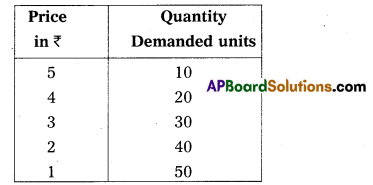
AP Inter 1st Year Economics Study Material Chapter 3 Theory of Demand 1
The table shows that as the price falls to ₹ 1/- the quantity demanded 50 units, when price ₹ 5/- he is buying 10 units. So, there is inverse relationship between price and demand. Price is low demand will be high and price is high demand will be low. We can illustrate the above schedule in a diagram.
AP Inter 1st Year Economics Study Material Chapter 3 Theory of Demand 2
In the above diagram on X-axis demand is shown and price is on Y-axis. DD is the ad curve. Demand curves slopes downward from left to right.
Assumptions :

  1. No change in the income of consumer
  2. The taste and preferences consumers remain same.
  3. The prices of related goods remain the same.
  4. New substitutes are not discovered.
  5. No expectation of future price changes.

Exceptions : In certain situations, more will be demanded at higher price and less will be demanded at a lower price. In such cases the demand curve slopes upward from left to right which is called an exceptional demand curve. This can be shown in the following diagram.
AP Inter 1st Year Economics Study Material Chapter 3 Theory of Demand 3
In the diagram when price increases from OP to OP1, demand also increases from OQ to OQ1. This is opposite to law of demand.
1) Giffen’s Paradox: This was stated by Sir Robert Giffen. He observed that poor people will demand more of inferior goods, if their prices raise. Inferior goods are known as Giffen goods.
Ex : Ragee, Jowar etc. He pointed out that in case of the English workers, the law of demand does not apply to bread. Giffen noticed that workers spend a major portion of their income on bread and only small portion on meat.

2) Veblen Effect (Prestigious goods) : This exception was stated by Veblen. Costly goods like diamonds and precious stones are called prestige goods or veblen goods. Generally rich people purchase those goods for the sake of prestige. Hence rich people may buy more such goods when their prices rise.

3) Speculation : When the price of a commodity rises the group of speculators expect that it will rise still further. Therefore, they buy more of that commodity. If they expect that there is a fall in price, the demand may not expand.
Ex : Shares in the stock market.

4) Illusion : Some times, consumer develop to false idea that a high priced good will have a better quality instead of low priced good. If the price of such good falls, demand decreases, which is contrary to the law of demand.

AP Inter 1st Year Economics Study Material Chapter 3 Theory of Demand

Question 2.
What is Demand Function ? What are the factors that determine the demand for a good ? [March 16]
Answer:
The functional relationship between the demand for a commodity and its various determinants may be explained mathematically in terms of a demand function.
Dx = f(Px,P1, ………… Pn, Y, T)
Where Dx = Demand for good X;
Px = price of X;
P1 …. Pn = Prices of substitutes and complementaries
Y = Income,
T = Taste of the consumer.
Determinants of demand :

  1. Price of commodity: The demand for any good depends on its price, more will be demanded at lower price and vice-versa.
  2. Prices of substitutes and complementaries : Demand is influenced by changes in price of related goods either substitutes or complementary goods.
    Ex: Increase in the price of coffee leads an increase in the demand for tea in the case of substitutes positive relation and complementaries negative relationship between price and demand.
  3. Income of the consumer : Demand always changes with a change in the incomes of the people. When income increases the demand for several commodities increases and vice-versa.
  4. Population : A change in the size and composition of population will effect the demand for certain goods like food grains, clothes etc.
  5. Taste and preferences: A change in the taste and the fashions bring about a change in the demand for a commodity.
  6. Technological changes: Due to economic progress technological changes the quantity the quality of goods available to the consumers increase.
    Ex : Demand for cell phones reduced the demand for landline phones.
  7. Change in the weather : Demand for commodity may change due to change in a climatic condition.
    Ex : During summer demand for cool drinks, in winter demand for wollen clothes.
  8. State of business : During the period of prosperity demand for commodities will expand and during depression demand will contract.

Question 3.
Explain the Concept of Demand and various types of Demand.
Answer:
The concept of demand has immerse significance in economics. In general language demand means a desire but in economics the desire backed up by ability to buy and willingness to pay the price.
Types of demands :
The demand may be classified into 3 types.

  1. Price demand
  2. Income demand
  3. Cross demand

1) Price demand : Price demand explains the relation between price and quantity demanded by a commodity it shows the inverse relationship between price and demand when the other things like consumers income, taste etc., remains constant. It means the price falls demand extends and the price raises demand contracts. The price demand can be expressed Dx = f(Px).
whereDx = Demand for X commodity
Px = Price of X
F = Function.

2) Income demand: It explains the relationship between consumers income and various quantities of various levels of income assuming other factors like price of goods, related goods, taste etc; remain the same. It means if income increases quantity demand increases and vice versa. This can be shown in the following form.
Dx = F(Y)
Where Dx = demand of X good;
Y = income of consumer.

3) Cross demand: It refers to change in demand for a commodity as a result of change in prices of its related commodities when other factors remains constant. This can be shown
Dx = f(Py)
Dx = demand of X good;
Py = Price of Y commodity;
F = function
Related goods are 2 types,

  1. Substitutes : Goods which satisfy same want called substitutes.
    Ex : Coffee and tea. Here there is a positive relation between price and demand.
  2. Complementary goods : These goods which satisfy the same want jointly.
    Ex : Car and petrol, shoes and sockes etc; are complementary goods.
    Here there exists inverse relation between complementary goods.

AP Inter 1st Year Economics Study Material Chapter 3 Theory of Demand

Question 4.
Explain the three Forms of Demand with suitable diagrams.
Answer:
The concept of demand has great significance in economics. In general language demand means a desire but in economics the desire backed up by ability to buy and willingness to pay the price.
Types of demand : The demand may be classified into three types.

  1. Price demand
  2. Income demand
  3. Cross demand

1) Price demand : Price demand explains the relationship between price and quantity demanded of a commodity it shows the inverse relationship between price and demand when the other things like consumers income, taste etc., remains constant. It means the price falls demand extends and price raises demand contracts. The price demand can be expressed Dx = f(Px)
Price demand can be explained with the help of demand schedule.
AP Inter 1st Year Economics Study Material Chapter 3 Theory of Demand 4
As price falls to ₹ 1/- the quantity demand is 50 units, when price of apple is ₹ 5/- he is buying 10 units. So, the table shows inverse relationship between price and demand. Price demand can be explained with the help of the demand curve.
AP Inter 1st Year Economics Study Material Chapter 3 Theory of Demand 5
On OX axis shows demand, OY axis shows price. We can obtain the demand curve ‘DD’ by joining all the points A, B, C, D, E which represents various quantities of demand at various prices. ‘DD’ is demand curve. It slopes downwards from left to right. It shows the inverse relationship between price and demand.

2) Income demand: It explains the relationship between consumers income and various quantities of various levels of income assuming other factors like price of goods, related goods, taste etc; remain the same. It means if income increases quantity demand increases and vice versa. This can be shown in the following form.
Dx = f(Y)
The functional relationship between income and demand may be inverse or direct depending on the nature of the commodity. This can be shown in the following table.
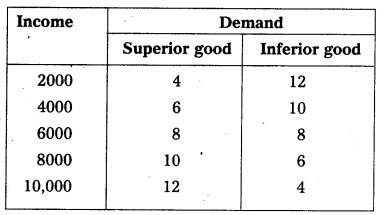
AP Inter 1st Year Economics Study Material Chapter 3 Theory of Demand 6
Superior goods : In case of superior goods quantity demanded will increase when there is an increase in the income of consumers.
In the diagram ‘X’ axis represents demand, OY axis represents income, YD represents the income demand curve. It showing positive slope whenever income increased from OY to OY1; the demand of superior or normal goods increases from OQ to OQ1.
This may happens in case of Veblen goods.
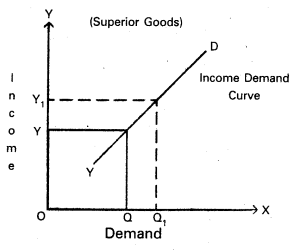
AP Inter 1st Year Economics Study Material Chapter 3 Theory of Demand 7
Inferior goods : On the contrary quantity demanded of inferior goods decreases with the increase in incomes of consumers.
In the diagram on ‘OX’ axis measures demand and OY axis represents income of the consumer. When the consumer income increases from OY to OY1 the demand for a commodity decreases from OQ to OQ1 So the YD’ curve is negative sloping.

3) Cross demand: Cross demand refers to the relationship between any two goods which are either complementary to each other or substitute for each other. It explains the functional relationship between the price of one commodity and quantity demanded of another commodity is called cross demand.
Dx = f(Py)
Where Dx – demand for ‘X’ commodity
Py Price of Y’ commodity
f = function
Substitutes : The goods which satisfy the same want are called substitutes.
Ex : Tea and coffee; pepsi and coca-cola etc. In the case of substitutes, the demand curve has a positive slope.
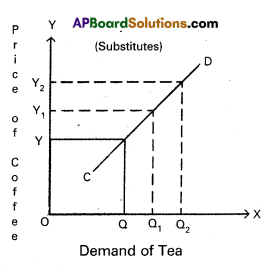
AP Inter 1st Year Economics Study Material Chapter 3 Theory of Demand 8
In the diagram ‘OX’ axis represents demand tea and OY axis represents price of coffee. Increase in the price of coffee from OY to OY2 leads to increase in the demand of tea from OQ to OQ2.

Complementaries : In case of complementary goods, with the increase in price of one commodity, the quantity demanded of another commodity falls.
Ex : Car and Petrol. Hence the demand curve of these goods slopes downward to the right.
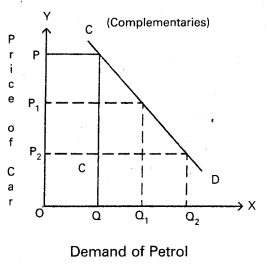
AP Inter 1st Year Economics Study Material Chapter 3 Theory of Demand 9
In the diagram if price of car decreases from OP to OP2 the quantity demand of petrol increases from OQ to OQ2. So cross demand i.e., CD curve is downward slopes.

AP Inter 1st Year Economics Study Material Chapter 3 Theory of Demand

Question 5.
Define the Concept of Elasticity of Demand and explain the concepts of price, income and cross elasticity of demand.
Answer:
The concept of elasticity demand was first introduced by Cournot and Mill. Later it was developed in a scientific manner by Marshall. Elasticity of demand means the degree of sensitiveness or responsiveness of demand to a change in its price.

According to Marshall “The elasticity of demand in a market is great or small according as the amount demanded increases much or little for a given fall in price”.

The concept of elasticity of demand explains how much or to what extent a change in any one of the independent variables leads to change in the dependent variable.
There are three kinds of elasticity of demand.

  1. Price elasticity of demand
  2. Income elasticity of demand
  3. Cross elasticity of demand

1) Price Elasticity of Demand : Alfred Marshall developed the concept of price elasticity of demand. Price elasticity of demand is generally defined as the degree of responsiveness or sensitiveness of demand for a commodity to the changes in its price. Thus price elasticity of demand is the ratio of percentage change in quantity demanded of a good and percentage change in its price. The following formula to measure price elasticity of demand.
Ep = \(\frac{\text { Percentage change in quantity demanded }}{\text { Percentage change in price }}\)
= \(\frac{\text { Change in quantity demanded }}{\text { Original quantity demanded }} \times \frac{\text { Original price }}{\text { Change in price }}\)
= \(\frac{\Delta \mathrm{q}}{\mathrm{q}} \times \frac{\mathrm{p}}{\Delta \mathrm{p}}=\frac{\Delta \mathrm{q}}{\Delta \mathrm{p}} \times \frac{\mathrm{p}}{\mathrm{q}}\)
where q = quantity;
p = price;
∆q = change in quantity demanded;
∆p = change in price.
There are five kinds of price elasticity of demand. They are :

  1. Perfectly Elastic demand (Ed = α)
  2. Perfectly Inelastic demand (Ed = 0)
  3. Unitary Elastic demand (Ed = 1)
  4. Relatively Elastic demand (Ed > 1)
  5. Relatively Inelastic demand (Ed < 1)

2) Income Elasticity of Demand : Income elasticity of demand shows the degree of responsiveness of quantity demanded of a commodity to a change in the income of the consumer, other things remain constant.
Ey = \(=\frac{\text { Percentage change in quantity demanded }}{\text { Percentage change inconsumer’s income }}\)
= \(=\frac{\text { Change in quantity demanded }}{\text { Original quantity demanded }} \times \frac{\text { Original income }}{\text { Change in income }}\)
= \(\frac{\Delta \mathrm{q}}{\mathrm{q}} \times \frac{\mathrm{y}}{\Delta \mathrm{y}}=\frac{\Delta \mathrm{q}}{\Delta \mathrm{y}} \times \frac{\mathrm{y}}{\mathrm{q}}\)
where q = Quantity;
y = income;
∆Q = change in quantity demanded;
∆y = change in income.
Income elasticity of demand will be positive in case of superior goods like milk and meat and negative in case of inferior goods like porridge and broken rice.

3) Cross Elasticity of Demand : Cross elasticity of demand refers to change in the quantity demanded of one good in response to change in the price of related good, other things remaining constant. There are certain goods whose demand depend not only to their price but also on the prices of related goods.
Ec = \(\frac{\text { Percentage change in quantity demanded of X }}{\text { Percentage change in the price of } Y}\)
Ec = \(\frac{\Delta \mathrm{Qx}}{\mathrm{Qx}} \div \frac{\Delta \mathrm{Py}}{\mathrm{Py}}=\frac{\Delta \mathrm{Qx}}{\mathrm{Qx}} \times \frac{\mathrm{Py}}{\Delta \mathrm{Py}}=\frac{\Delta \mathrm{Qx}}{\Delta \mathrm{Px}} \times \frac{\mathrm{Py}}{\mathrm{Px}}\)
Where Q(x) = Quantity demanded for X; P(y) = price of commodity (Y), ∆Q(x) = change in quantity demanded of X commodity, ∆P(y) = change in price of commodity Y.
Substitute goods like tea and coffee have positive cross elasticity demand where as complementary goods like shoes and socks have negative cross elasticity of demand.

AP Inter 1st Year Economics Study Material Chapter 3 Theory of Demand

Question 6.
What is Price Elasticity of Demand ? Explain the various types of Price Elasticity of Demand.
Answer:
Alfred Marshall developed the concept of price elasticity of demand. Price elasticity measures, other things remaining constant, change in the demanded of a good in response to a change in its price. Thus price elasticity of demand is the ratio of percentage change in quantity demanded of a good and percentage change in its price. Price elasticity can be written as stated below.
Ep = \(\frac{\text { Percentage change in quantity demanded }}{\text { Percentage change in price }}\)
= \(\frac{\text { Change in demand }}{\text { Original demand }} \times \frac{\text { Original price }}{\text { Change in price }}\)
= \(\frac{\Delta \mathrm{q}}{\mathrm{q}} \times \frac{\mathrm{p}}{\Delta \mathrm{p}}=\frac{\Delta \mathrm{q}}{\Delta \mathrm{p}} \times \frac{\mathrm{p}}{\mathrm{q}}\)
Where q = quantity; p = price; ∆q = change in demand; ∆p = change in price
Types of price elasticity of demand : Based on numerical value, price elasticity of demand can be five types.

  1. Perfectly Elastic demand (Ed = ∞)
  2. Perfectly Inelastic demand (Ed = 0)
  3. Unitary Elastic demand (Ed = 1)
  4. Relatively Elastic demand (Ed > 1)
  5. Relatively Inelastic demand (Ed < 1)

1) Perfectly Elastic demand : It is also known as “infinite elastic demand”. A small change in price leads to an infinite change in demand is called perfectly elastic demand. It is horizontal straight line to ‘X’ axis. The numerical value of perfectly elastic demand is infinite (Ed = ∞). It can be shown in the diagram.
AP Inter 1st Year Economics Study Material Chapter 3 Theory of Demand 10
In the diagram, Ed = \(\frac{\mathrm{OQQ}_1}{\mathrm{OQ}} \div \frac{\mathrm{O}}{\mathrm{OP}}\)
= \(\frac{\mathrm{QQ}_1}{\mathrm{OQ}} \times \frac{\mathrm{OP}}{\mathrm{O}}\) = ∞

2) Perfectly Inelastic demand: It is also known as “zero elastic demand”. In this case even a great rise ‘or fall in price does not lead to any change in quantity demanded is known as perfectly inelastic demand. The ‘demand curve will be vertical to the Y axis. The numerical value is ‘OE. This can be shown in the following diagram.
AP Inter 1st Year Economics Study Material Chapter 3 Theory of Demand 10
In the diagram, Ed = \(\frac{\text { Zero }}{\mathrm{OQ}} \div \frac{\mathrm{PP}_1}{\mathrm{OP}}\) = 0
∴ Ed = 0

3) Unitary Elastic demand: The percentage change in price leads to same percentage change in demand is called unitary elastic demand. In this case the elasticity of demand is equal to one. The shape of demand curve is “Rectangular Hyperbola”. This can be shown in the following.
AP Inter 1st Year Economics Study Material Chapter 3 Theory of Demand 12
In the diagram, Ed = OP1Q1 = OPQ
(or) OQ1 = PP1
∴ Ed = 1

4) Relatively Elastic demand: When a percentage change in price leads to more than percentage change in quantity demand is called relatively elastic demand. In this case the numerical value of Ed is greater than one (Ed > 1)
AP Inter 1st Year Economics Study Material Chapter 3 Theory of Demand 13
In the diagram, Ed = OQ1 > PP1
∴ Ed > 1

5) Relatively Inelastic demand : When the percentage change in price leads to a less than percentage change in quantity demand is called relatively inelastic demand. Here the numerical value is less than one (Ed < 1) . This can be shown to following diagram.
AP Inter 1st Year Economics Study Material Chapter 3 Theory of Demand 14
In the diagram, Ed = QQ1 < PP1
∴ Ed < 1

Question 7.
Explain the three methods of Measuring Price Elasticity of Demand.
Answer:
The concept of elasticity of demand is one of the original contributions of Dr.Marshall. The concepts of elasticity of demand clearly explains ‘how much’ demand increases due to a certain fall in price and ‘how much’ demand decreases due to certain rise in price.

According to Mrs. Joan Robinson, “The elasticity of demand at any price or at any output is the proportional change of amount purchased in response to a small change in price, divided by the proportional change in price”.

Methods of measurements of Price Elasticity of demand :
The Elasticity of demand can be measured mainly in three ways.

  1. Total outlay (or) Expenditure method
  2. Point method and
  3. Arc method.

1) Total outlay (or) Expenditure method : This method was introduced by Alfred Marshall. Price elasticity of demand can be measured on the basis of change in the total outlay due to a change in the price of a commodity. This method helps us to compare the total expenditure from a buyer or total revenue from the seller before and after the change in price.
Total outlay = Price × Quantity demanded
According to this method the price elasticity of demand is expressed in three forms, they are elastic demand, unitary elastic and inelastic demand. This can be explained with the help of table.
AP Inter 1st Year Economics Study Material Chapter 3 Theory of Demand 15
In this table shows that

  1. If the total expenditure increases due to a fall in price is known as relatively elastic demand.
  2. If total expenditure remains constant even the price falls is known as unitary elastic demand.
  3. If the total expenditure decreases due to a fall in price is known as relatively inelastic demand.

2) Point method : This method is introduced by Marshall. In this method elasticity of demand is measured at a point on the demand curve. So, this method is also called as “geometrical method”. In this method to measure elasticity at a point on demand curve the following formula is applied.
Ed = \(\frac{\text { The distance from the point to the } \mathrm{X} \text {-axis }}{\text { The distance from the point to the } \mathrm{Y} \text {-axis }}\)
In the below diagram ‘AE’ is straight line demand curve. Which is 10 cm length. Applying the formula we get
Ed = 1 Ed < 1 Ed = 0
AP Inter 1st Year Economics Study Material Chapter 3 Theory of Demand 16
Elasticity at point A, Ed = \(\frac{\mathrm{AE}}{\mathrm{A}}=\frac{10}{0}\) = 0
Elasticity at point B, Ed = \(\frac{\mathrm{BE}}{\mathrm{BA}}=\frac{7.5}{2.5}\) = 3 > 1
Elasticity at point C, Ed = \(\frac{\mathrm{CE}}{\mathrm{CA}}=\frac{5}{5}\) = 1
Elasticity at point D, Ed = \(\frac{\mathrm{DE}}{\mathrm{DA}}=\frac{1}{3}\) = < 1
Elasticity at point E, Ed = \(\frac{\mathrm{E}}{\mathrm{DA}}=\frac{0}{10}\) = 0
if the demand curve is non-linear. It means if the demand curve is not straight line will be drawn at the point on the demand curve where to measure elasticity.
AP Inter 1st Year Economics Study Material Chapter 3 Theory of Demand 17
In the diagram at C point where Elasticity of demand will be equal to \(\frac{\mathrm{CB}}{\mathrm{CA}}\).

3) Arc method : The word ‘ArC means a portion or a segment of a demand curve. In this method mid points between the old and new price and quantities demanded are used. This method used to known small changes in price. This method is also known as ‘Average Elasticity of demand”. This method studies a segment of the demand curve between two points the formula for measuring elasticity is given below.
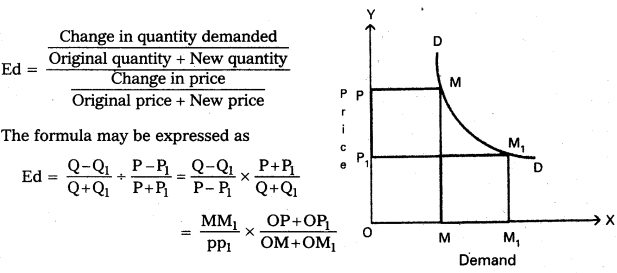
AP Inter 1st Year Economics Study Material Chapter 3 Theory of Demand 18
Suppose we take price of the commodity is ₹ 4/- demand is 300 units. If price falls ₹ 3/ – demand increases 400 units.
Then applying above formula Arc elasticity of demand is
\(\frac{100}{300+400} \div \frac{1}{4+3}=\frac{100}{700} \div \frac{1}{7}\)
= \(\frac{100}{700} \times \frac{7}{1}=\frac{700}{700}\) = 1
∴ Ed = 1

AP Inter 1st Year Economics Study Material Chapter 3 Theory of Demand

Question 8.
What are the factors that determine Price Elasticity of Demand ?
Answer:
The term elasticity refers to the measure of extent of relationship between two related variables. The elasticity of demand is the measure of responsiveness or sensitiveness of demand for a commodity to the change in it demand.
Determinants of Elasticity of Demand : The. elasticity of demand varies from commodity to commodity.
1) Nature of commodity: Commodities can be grouped as necessaries, comforts and luxuries. In case of necessaries, the elasticity of demand will be inelastic.
Ex : Rice, salt etc. On the other hand in case of luxuries the demand will be more elastic.
Ex : Diamonds & gold etc.

2) Availability of substitutes : Prices of substitutes influence the demand for a com-modity upto a certain extent. The closer the substitute, the greater the elasticity of demand for the commodity. For Ex : Cool drinks, soaps etc. but in case of non-availability of substitutes the elasticity of demand will be low.

3) Complementary goods: Price elasticity for a good is also depends on the nature of price elasticity of jointly demand goods. If the demand for car is elastic, then the demand for petrol will also be elastic.

4) Multiple uses of the commodity : The wider the range of alternative uses of a product, the higher the elasticity of demand and vice-versa.
Ex : Coal and electricity have multiple uses and will have elastic demand.

5) Proportion of income spent: If proportion of income spent on commodity is very small, its demand will be less elastic and vice-versa.

6) Period of time : In the long run, demand will be more elastic. Longer the time period considered, greater will be the possibility of substitution. For a cheaper good.
Ex : If the price of petrol increases in the short run, it may not be possible to replace the petrol engines with diesel engines but in the long run it can be possible.

7) Price level: Goods which are in very high range or in very low range have inelastic demand but it is high at moderate price.

8) Habit : The demand for a commodity to which the consumer is accustomed is generally inelastic.
Ex : Tobacco and alcohol.

9) Income group : The demand of higher income groups will be inelastic as they do not bother about price changes. On the other hand, the demand of middle and lower income groups will be elastic.

10) Postponement of purchase: The demand for a commodity, the consumption of which can be postponed is more eiastic than that of the use of the commodity cannot be postpone the purchases of such goods like life saving medicines.

AP Inter 1st Year Economics Study Material Chapter 3 Theory of Demand

Question 9.
Explain importance of Elasticity of Demand.
Answer:
The term elasticity refers to the measure of extent of relationship between two related variable. The elasticity of demand is the measure of responsiveness or sensitiveness of demand for a commodity to the change in it demand.
Importance :
1) Useful to monopolist: Monopolist should study the elasticity of demand for his commodity before fixing up the price. Monopolist will fix a higher price when the commodity inelastic demand, but he will fix a lower price when the commodity has elastic demand.

2) Useful to joint products : It is useful in the price fixation of joint goods like meat and fur. In such case the producer wall be guided by elasticity of demand to fix the prices of the joint goods.

3) Useful to the government: The concept of elasticity can be used in formulating government policies relating public utility service like Railways, drug industry etc.

4) Useful to international trade : In calculating the terms of trade both countries have to take into account the mutual elasticities of demand for the products.

5) Useful to finance minister : The concept of elasticity is useful to the Finance Minister in imposing taxes on goods. The finance minister studies the elasticity of commodities before he imposes new taxes or enhances old taxes.

6) Useful to Management: Before asking for higher wages trade union leaders must know the elasticity of demand of the product produced by them. Trade union leaders may demand for higher wages only when the goods produced by them have inelastic demand.

7) Useful to producers : Volume of goods must be produced in accordance with demand for the commodity. Whenever the demand for the commodity is inelastic, the producer will produce more commodities to take advantage of higher price. So, it helps in determining the volume of output.

Short Answer Questions

Question 1.
Explain the Law of Demand or Price Demand.
Answer:
Demand means a desire which is backed up by ability to buy and willingness to pay the price is called demand in Economics. Thus demand will be always to a price and time. Demand has the following features.

  1. Desire for the commodity
  2. Ability to buy the commodity
  3. Willing to pay the price of commodity
  4. Demand is always at a price ‘
  5. Demand is per unit of time i.e, per day, week etc.

Therefore the price demand may be expressed in the form of small equation.
Dx = f(Px)
Price demand explains the relation between price and quantity demanded of a commodity. Price demand states that there is an inverse relationship between price and demand.

Law of demand : Marshall defines the law of demand as, “The amount demanded increases with a fall in price and diminishes with arise in price when other things remain the same”. So, the law of demand explains the inverse relationship between the price and quantity demanded of a commodity.

Demand schedule : It means a list of the quantities demanded at various prices in a given period of time in a market. An imaginary example given below.
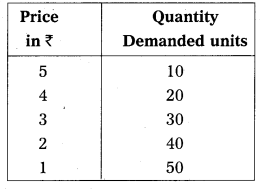
AP Inter 1st Year Economics Study Material Chapter 3 Theory of Demand 19
The table shows that as the price falls to ₹ 1/- the quantity demanded 50 units, when price ₹ 5/- he is buying 10 units. So, there is inverse relationship between price and demand. Price is low demand will be high and price is high demand will be low. We can illustrate the above schedule in a diagram.
AP Inter 1st Year Economics Study Material Chapter 3 Theory of Demand 20
In the above diagram on X-axis demand is shown and price is on Y-axis. DD is the demand curve. Demand curves slopes downward from left to right.
Assumptions :

  1. No change in the income of consumer
  2. The taste and preferences consumers remain same.
  3. The prices of related goods remain the same.
  4. New substitutes are not discovered.
  5. No expectation of future price changes.

Exceptions : In certain situations, more will be demanded at higher price and less will be demanded at a lower price. In such cases the demand curve slopes upward from left to right which is called an exceptional demand curve. This can be shown in the following diagram.
AP Inter 1st Year Economics Study Material Chapter 3 Theory of Demand 21
In the diagram when price increases from OP to OP1, demand also increases from OQ to OQ1. This is opposite to law of demand.

AP Inter 1st Year Economics Study Material Chapter 3 Theory of Demand

Question 2.
Explain the Exceptions to the Law of Demand or Price Demand.
Answer:
In Economics demand means a desire which is backed up by ability to buy and willingness to pay the price. Thus demand will be always at a price and time.

According to Marshal “The amount demanded increases with a fall in price and diminishes with rise in price when other things remain the same”.

Exceptions : In certain situations, more will be demanded at higher price and less will be demanded at a lower price. In such cases the demand curve slopes upward from left to right which is called an exceptional demand curve. This can be shown in the following diagram.
AP Inter 1st Year Economics Study Material Chapter 3 Theory of Demand 22
In the diagram when price increases from OP to OP1, demand also increases from OQ to OQ1. This is opposite to law of demand.

Question 3.
Why a Demand Curve has a negative slope or why Demand Curve slopes downward ? [March 18]
Answer:
According to Marshall “The amount demanded increases with a fall in price and diminishes with a rise in price when other things remain the same”.

The law of demand explains inverse relationship between the price and quantity demanded of a commodity. Therefore the demand curve slopes downward from left to right.
AP Inter 1st Year Economics Study Material Chapter 3 Theory of Demand 23
There are some other reasons also responsible for downward sloping demand curve.
1) Old and new buyers : If the price of a good falls, the real income of the old buyers will increase. Hence the demand for the good will increase. In the same way, the fall in price attracts new buyers and will be able to built after a fall in its price. So the demand curve slopes downards from left to right.

2) Income effect: Fall in price of commodity the real income of its consumers increase. The increase in real income encourages demand for the commodity with reduced price. The increase in demand on account of increased in real income is known as income effect.

3) Substitution effect: When the price of commodity falls, it will become relatively cheaper than its substitutes. The increase in demand on account of increased in real income is known as income effect.

4) Law of diminishing marginal utility: According to this law, if consumer goes on consuming more units of the commodity, the additional utility goes on diminishing. Therefore, the consumer prefers to buy at a lower price. As a result the demand curve has a negative slope.

AP Inter 1st Year Economics Study Material Chapter 3 Theory of Demand

Question 4.
Explain the concept of Income Demand.
Answer:
Income demand : It explains the relationship between consumers income and various quantities of various levels of income assuming other factors like price of goods, related goods, taste etc; remain the same. It means if income increases quantity demand increases and vice versa. This can be shown in the following form.
Dx = f(Y)
The functional relationship between income and demand may be inverse or direct depending on the nature of the commodity. This can be shown in the following table.
AP Inter 1st Year Economics Study Material Chapter 3 Theory of Demand 24
Superior goods : In case of superior goods quantity demanded will increase when there is an increase in the income of consumers.
AP Inter 1st Year Economics Study Material Chapter 3 Theory of Demand 25
In the diagram ‘X’ axis represents demand, OY axis represents income, YD represents the income demand curve. It showing positive slope whenever income increased from OY to OY1 the demand of superior or normal goods increases from OQ to OQ1.
This may happens in case of Veblen goods.

Inferior goods : On the contrary quantity demanded of inferior goods decreases with the increase in incomes of consumers.
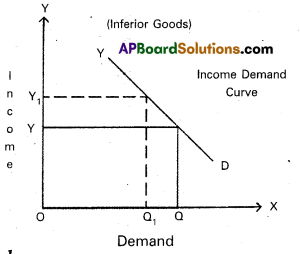
AP Inter 1st Year Economics Study Material Chapter 3 Theory of Demand 26
In the diagram on ‘OX’ axis measures demand and OY axis represents income of the consumer. When the consumer income increases from OY to OY1 the demand for a commodity decreases from OQ to OQ1 So the YD’ curve is negative sloping.

Question 5.
Explain the concept of Cross Demand.
Answer:
Cross demand: Cross demand refers to the relationship between any two goods which are either complementary to each other or substitute for each other. It explains the functional relationship between the price of one commodity and quantity demanded of another commodity is called cross demand.
Dx = f(Py)
Where Dx = demand for ‘X’ commodity
Px = Price of ‘y’ commodity
f = function
Substitutes : The goods which satisfy the same want are called substitutes.
Ex : Tea and coffee; pepsi and coca-cola etc. In the case of substitutes, the demand curve has a positive slope.
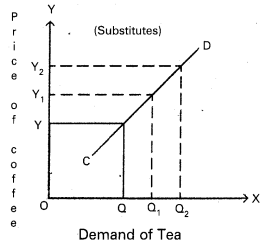
AP Inter 1st Year Economics Study Material Chapter 3 Theory of Demand 27
In the diagram ‘OX’ axis represents demand of tea and OY axis represents price of coffee. Increase in the price of coffee from OY to OY2 leads to increase in the demand of tea from OQ to OQ2.

Complementaries: In case of complementary goods, with the increase in price of one commodity, the quantity demanded of another commodity falls.
Ex : Car and Petrol. Hence the demand curve of these goods slopes downward to the right.
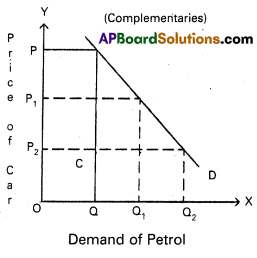
AP Inter 1st Year Economics Study Material Chapter 3 Theory of Demand 28
In the diagram if price of car decreases from OP to OP2 the quantity demand of petrol increases from OQ to OQ2. So cross demand i.e., CD curve is down ward slopes.

AP Inter 1st Year Economics Study Material Chapter 3 Theory of Demand

Question 6.
What are the factors that determine Demand ? [March 18, 17]
Answer:
The functional relationship between the demand for a commodity and its various determinants may be explained mathematically in terms of a demand function.
Dx = f(Px,P1, ………… Pn, Y, T)
Where Dx = Demand for good X;
Px = price of X;
P1 …. Pn = Prices of substitutes and complementaries
Y = Income,
T = Taste of the consumer.
Determinants of demand :
1) Price of commodity: The demand for any good depends on its price, more will be demanded at lower price and vice-versa.

2) Prices of substitutes and complementaries : Demand is influenced by changes in price of related goods either substitutes or complementary goods.
Ex: Increase in the price of coffee leads an increase in the demand for tea in the case of substitutes positive relation and complementaries negative relationship between price and demand.

3) Income of the consumer : Demand always changes with a change in the incomes of the people. When income increases the demand for several commodities increases and vice-versa.

4) Population : A change in the size and composition of population will effect the demand for certain goods like food grains, clothes etc.

5) Taste and preferences: A change in the taste and the fashions bring about a change in the demand for a commodity.

6) Technological changes: Due to economic progress technological changes the quantity the quality of goods available to the consumers increase.
Ex : Demand for cell phones reduced the demand for landline phones.

7) Change in the weather : Demand for commodity may change due to change in a climatic condition.
Ex : During summer demand for cool drinks, in winter demand for wollen clothes.

8) State of business : During the period of prosperity demand for commodities will expand and during depression demand will contract.

Question 7.
What is Elasticity of Demand ?
Answer:
In Economic theory, the concept of elasticity of demand has a significant role. Elasticity of demand means the percentage change in quantity demanded in response to the percentage change in one of the variables on which demand depends.
Elasticity of demand changes from person to person, place to place, time to time and one commodity to another.
Accoridng to Marshall “The elasticity of demand in a market is great or small according as the amount demanded increases much or little for a given fall in price”.
The concept of elasticity of demand explains how much or to what extent a change in any one of the independent variables leads to a change in the dependent variable.
There are three kinds of elasticity of demand.

  1. Price Elasticity of demand
  2. Income Elasticity of demand .
  3. Cross Elasticity of demand

AP Inter 1st Year Economics Study Material Chapter 3 Theory of Demand

Question 8.
Explain the three types of Elasticity of Demand.
Answer:
The concept of elasticity demand was first introduced by Cournot and Mill. Later it was developed in a scientific manner by Marshall. Elasticity of demand means the degree of sensitiveness or responsiveness of demand to a change in its price.

According to Marshall “The elasticity of demand in a market is great or small according as the amount demanded increases much or little for a given fall in price”.

The concept of elasticity of demand explains how much or to what extent a change in any one of the independent variables leads to change in the dependent variable.
There are three kinds of elasticity of demand.

  1. Price elasticity of demand
  2. Income elasticity of demand
  3. Cross elasticity of demand

1) Price Elasticity of Demand : Alfred Marshall developed the concept of price elasticity of demand. Price elasticity of demand is generally defined as the degree of responsiveness or sensitiveness of demand for a commodity to the changes in its price. Thus price elasticity of demand is the ratio of percentage change in quantity demanded of a good and percentage change in its price. The following formula to measure price elasticity of demand.
Ep = \(\frac{\text { Percentage change in quantity demanded }}{\text { Percentage change in price }}\)
= \(\frac{\text { Change in quantity demanded }}{\text { Original quantity demanded }} \times \frac{\text { Original price }}{\text { Change in price }}\)
= \(\frac{\Delta \mathrm{q}}{\mathrm{q}} \times \frac{\mathrm{p}}{\Delta \mathrm{p}}=\frac{\Delta \mathrm{q}}{\Delta \mathrm{p}} \times \frac{\mathrm{p}}{\mathrm{q}}\)
where q = quantity;
p = price;
∆q = change in quantity demanded;
∆p = change in price.
There are five kinds of price elasticity of demand. They are :

  1. Perfectly Elastic demand (Ed = α)
  2. Perfectly Inelastic demand (Ed = 0)
  3. Unitary Elastic demand (Ed = 1)
  4. Relatively Elastic demand (Ed > 1)
  5. Relatively Inelastic demand (Ed < 1)

2) Income Elasticity of Demand : Income elasticity of demand shows the degree of responsiveness of quantity demanded of a commodity to a change in the income of the consumer, other things remain constant.
Ey = \(=\frac{\text { Percentage change in quantity demanded }}{\text { Percentage change inconsumer’s income }}\)
= \(=\frac{\text { Change in quantity demanded }}{\text { Original quantity demanded }} \times \frac{\text { Original income }}{\text { Change in income }}\)
= \(\frac{\Delta \mathrm{q}}{\mathrm{q}} \times \frac{\mathrm{y}}{\Delta \mathrm{y}}=\frac{\Delta \mathrm{q}}{\Delta \mathrm{y}} \times \frac{\mathrm{y}}{\mathrm{q}}\)
where q = Quantity;
y = income;
∆Q = change in quantity demanded;
∆y = change in income.
Income elasticity of demand will be positive in case of superior goods like milk and meat and negative in case of inferior goods like porridge and broken rice.

3) Cross Elasticity of Demand : Cross elasticity of demand refers to change in the quantity demanded of one good in response to change in the price of related good, other things remaining constant. There are certain goods whose demand depend not only to their price but also on the prices of related goods.
Ec = \(\frac{\text { Percentage change in quantity demanded of X }}{\text { Percentage change in the price of } Y}\)
Ec = \(\frac{\Delta \mathrm{Qx}}{\mathrm{Qx}} \div \frac{\Delta \mathrm{Py}}{\mathrm{Py}}=\frac{\Delta \mathrm{Qx}}{\mathrm{Qx}} \times \frac{\mathrm{Py}}{\Delta \mathrm{Py}}=\frac{\Delta \mathrm{Qx}}{\Delta \mathrm{Px}} \times \frac{\mathrm{Py}}{\mathrm{Px}}\)
Where Q(x) = Quantity demanded for X; P(y) = price of commodity (Y), ∆Q(x) = change in quantity demanded of X commodity, ∆P(y) = change in price of commodity Y.
Substitute goods like tea and coffee have positive cross elasticity demand where as complementary goods like shoes and socks have negative cross elasticity of demand.

AP Inter 1st Year Economics Study Material Chapter 3 Theory of Demand

Quantity 9.
Define Price Elasticity of Demand. Explain briefly various types of Price Elasticity of Demand.
Answer:
Alfred Marshall developed the concept of price elasticity of demand. Price elasticity measures, other things remaining constant, change in the demanded of a good in response to a change in its price. Thus price elasticity of demand is the ratio of percentage change in quantity demanded of a good and percentage change in its price. Price elasticity can be written as stated below.
Ep = \(\frac{\text { Percentage change in quantity demanded }}{\text { Percentage change in price }}\)
= \(\frac{\text { Change in demand }}{\text { Original demand }} \times \frac{\text { Original price }}{\text { Change in price }}\)
= \(\frac{\Delta \mathrm{q}}{\mathrm{q}} \times \frac{\mathrm{p}}{\Delta \mathrm{p}}=\frac{\Delta \mathrm{q}}{\Delta \mathrm{p}} \times \frac{\mathrm{p}}{\mathrm{q}}\)
Where q = quantity; p = price; ∆q = change in demand; ∆p = change in price
Types of price elasticity of demand : Based on numerical value, price elasticity of demand can be five types.

  1. Perfectly Elastic demand (Ed = ∞)
  2. Perfectly Inelastic demand (Ed = 0)
  3. Unitary Elastic demand (Ed = 1)
  4. Relatively Elastic demand (Ed > 1)
  5. Relatively Inelastic demand (Ed < 1)

1) Perfectly Elastic demand : It is also known as “infinite elastic demand”. A small change in price leads to an infinite change in demand is called perfectly elastic demand. It is horizontal straight line to ‘X’ axis. The numerical value of perfectly elastic demand is infinite (Ed = ∞). It can be shown in the diagram.
AP Inter 1st Year Economics Study Material Chapter 3 Theory of Demand 10
In the diagram, Ed = \(\frac{\mathrm{OQQ}_1}{\mathrm{OQ}} \div \frac{\mathrm{O}}{\mathrm{OP}}\)
= \(\frac{\mathrm{QQ}_1}{\mathrm{OQ}} \times \frac{\mathrm{OP}}{\mathrm{O}}\) = ∞

2) Perfectly Inelastic demand: It is also known as “zero elastic demand”. In this case even a great rise ‘or fall in price does not lead to any change in quantity demanded is known as perfectly inelastic demand. The ‘demand curve will be vertical to the Y axis. The numerical value is ‘OE. This can be shown in the following diagram.
AP Inter 1st Year Economics Study Material Chapter 3 Theory of Demand 11
In the diagram, Ed = \(\frac{\text { Zero }}{\mathrm{OQ}} \div \frac{\mathrm{PP}_1}{\mathrm{OP}}\) = 0
∴ Ed = 0

3) Unitary Elastic demand: The percentage change in price leads to same percentage change in demand is called unitary elastic demand. In this case the elasticity of demand is equal to one. The shape of demand curve is “Rectangular Hyperbola”. This can be shown in the following.
AP Inter 1st Year Economics Study Material Chapter 3 Theory of Demand 12
In the diagram, Ed = OP1Q1 = OPQ
(or) OQ1 = PP1
∴ Ed = 1

4) Relatively Elastic demand: When a percentage change in price leads to more than percentage change in quantity demand is called relatively elastic demand. In this case the numerical value of Ed is greater than one (Ed > 1)
AP Inter 1st Year Economics Study Material Chapter 3 Theory of Demand 13
In the diagram, Ed = OQ1 > PP1
∴ Ed > 1

5) Relatively Inelastic demand : When the percentage change in price leads to a less than percentage change in quantity demand is called relatively inelastic demand. Here the numerical value is less than one (Ed < 1) . This can be shown to following diagram.
AP Inter 1st Year Economics Study Material Chapter 3 Theory of Demand 14
In the diagram, Ed = QQ1 < PP1
∴ Ed < 1

AP Inter 1st Year Economics Study Material Chapter 3 Theory of Demand

Question 10.
Explain the Total Outaly method of Measuring Elasticity of Demand.
Answer:
Total Outlay (or) Expenditure method : This method was introduced by Alfred Marshall. Price elasticity of demand can be measured on the basis of change in the total outlay due to a change in the price of a commodity. This method helps us to compare the total expenditure from a buyer or total revenue from the seller before and after the change in price.
Total outlay = Price × Quantity demanded
According to this method the price elasticity of demand is expressed in three forms, they are elastic demand, unitary elastic and inelastic demand. This can be explained with the help of table.
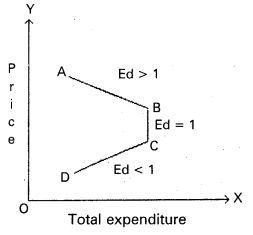
AP Inter 1st Year Economics Study Material Chapter 3 Theory of Demand 29
AP Inter 1st Year Economics Study Material Chapter 3 Theory of Demand 30
In this table shows that

  1. If the total expenditure increases due to a fall in price is known as relatively elastic demand.
  2. If total expenditure remains constant even the price falls is known as unitary elastic demand.
  3. If the total expenditure decreases due to a fall in price is known as relatively inelastic demand.

In the diagram on ‘OX’ axis measure total expenditure and ‘OY axis measures price. The total outlay curve AD is shown in three parts i.e., A to B; B to C and C to D.

Question 11.
Explain the Point method of Measuring Price Elasticity of Demand or How do you measure Elasticity of Demand on straight line Demand Curve ?
Answer:
Point method : This method is introduced by Marshall. In this method elasticity of demand is measured at a point on the demand curve. So, this method is also called as “geometrical method”. In this method to measure elasticity at a point on demand curve the following formula is applied.
Ed = \(\frac{\text { The distance from the point to the } \mathrm{X} \text {-axis }}{\text { The distance from the point to the } \mathrm{Y} \text {-axis }}\)
In the below diagram ‘AE’ is straight line demand curve. Which is 10 cm length. Applying the formula we get
Ed = 1 Ed < 1 Ed = 0
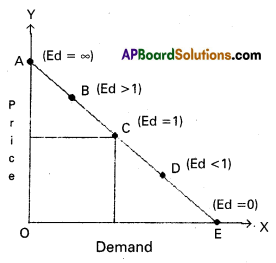
AP Inter 1st Year Economics Study Material Chapter 3 Theory of Demand 31
Elasticity at point A, Ed = \(\frac{\mathrm{AE}}{\mathrm{A}}=\frac{10}{0}\) = 0
Elasticity at point B, Ed = \(\frac{\mathrm{BE}}{\mathrm{BA}}=\frac{7.5}{2.5}\) = 3 > 1
Elasticity at point C, Ed = \(\frac{\mathrm{CE}}{\mathrm{CA}}=\frac{5}{5}\) = 1
Elasticity at point D, Ed = \(\frac{\mathrm{DE}}{\mathrm{DA}}=\frac{1}{3}\) = < 1
Elasticity at point E, Ed = \(\frac{\mathrm{E}}{\mathrm{DA}}=\frac{0}{10}\) = 0
If the demand curve is non-linear. It means if the demand curve is not straight line will be drawn at the point on the demand curve where to measure elasticity.
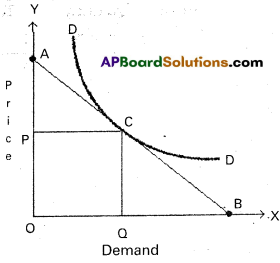
AP Inter 1st Year Economics Study Material Chapter 3 Theory of Demand 32
In the diagram at C point where Elasticity of demand will be equal to \(\frac{\mathrm{CB}}{\mathrm{CA}}\).

Question 12.
What are the basic determinants of Elasticity of Demand ?
Answer:
The term elasticity refers to the measure of extent of relationship between two related variables. The elasticity of demand is the measure of responsiveness or sensitiveness of demand for a commodity to the change in it demand.
Determinants of Elasticity of Demand : The. elasticity of demand varies from commodity to commodity.
1) Nature of commodity: Commodities can be grouped as necessaries, comforts and luxuries. In case of necessaries, the elasticity of demand will be inelastic.
Ex : Rice, salt etc. On the other hand in case of luxuries the demand will be more elastic.
Ex : Diamonds & gold etc.

2) Availability of substitutes : Prices of substitutes influence the demand for a com-modity upto a certain extent. The closer the substitute, the greater the elasticity of demand for the commodity. For Ex : Cool drinks, soaps etc. but in case of non-availability of substitutes the elasticity of demand will be low.

3) Complementary goods: Price elasticity for a good is also depends on the nature of price elasticity of jointly demand goods. If the demand for car is elastic, then the demand for petrol will also be elastic.

4) Multiple uses of the commodity : The wider the range of alternative uses of a product, the higher the elasticity of demand and vice-versa.
Ex : Coal and electricity have multiple uses and will have elastic demand.

5) Proportion of income spent: If proportion of income spent on commodity is very small, its demand will be less elastic and vice-versa.

6) Period of time : In the long run, demand will be more elastic. Longer the time period considered, greater will be the possibility of substitution. For a cheaper good.
Ex : If the price of petrol increases in the short run, it may not be possible to replace the petrol engines with diesel engines but in the long run it can be possible.

7) Price level: Goods which are in very high range or in very low range have inelastic demand but it is high at moderate price.

8) Habit : The demand for a commodity to which the consumer is accustomed is generally inelastic.
Ex : Tobacco and alcohol.

9) Income group : The demand of higher income groups will be inelastic as they do not bother about price changes. On the other hand, the demand of middle and lower income groups will be elastic.

10) Postponement of purchase: The demand for a commodity, the consumption of which can be postponed is more eiastic than that of the use of the commodity cannot be postpone the purchases of such goods like life saving medicines.

AP Inter 1st Year Economics Study Material Chapter 3 Theory of Demand

Question 13.
Explain the importance of the Concept of Elasticity of Demand.
Answer:
The term elasticity refers to the measure of extent of relationship between two related variable. The elasticity of demand is the measure of responsiveness or sensitiveness of demand for a commodity to the change in it demand.
Importance :
1) Useful to monopolist: Monopolist should study the elasticity of demand for his commodity before fixing up the price. Monopolist will fix a higher price when the commodity inelastic demand, but he will fix a lower price when the commodity has elastic demand.

2) Useful to joint products : It is useful in the price fixation of joint goods like meat and fur. In such case the producer wall be guided by elasticity of demand to fix the prices of the joint goods.

3) Useful to the government: The concept of elasticity can be used in formulating government policies relating public utility service like Railways, drug industry etc.

4) Useful to international trade : In calculating the terms of trade both countries have to take into account the mutual elasticities of demand for the products.

5) Useful to finance minister : The concept of elasticity is useful to the Finance Minister in imposing taxes on goods. The finance minister studies the elasticity of commodities before he imposes new taxes or enhances old taxes.

6) Useful to Management: Before asking for higher wages trade union leaders must know the elasticity of demand of the product produced by them. Trade union leaders may demand for higher wages only when the goods produced by them have inelastic demand.

7) Useful to producers : Volume of goods must be produced in accordance with demand for the commodity. Whenever the demand for the commodity is inelastic, the producer will produce more commodities to take advantage of higher price. So, it helps in determining the volume of output.

Very Short Answer Question

Question 1.
Demand
Answer:
The desire backed up by willingness and ability to pay a sum of money for some quantity of a good or service.

AP Inter 1st Year Economics Study Material Chapter 3 Theory of Demand

Question 2.
Demand Schedule [March 17]
Answer:
It shows the functional relationship between the quantity of commodity demanded and its price. The demand schedule may be two types.

  1. Individual demand schedule
  2. Market demand schedule

Question 3.
Individual Demand Schedule
Answer:
It explains the relationship between various quantities purchased at various prices by a single consumer in the market.

Question 4.
Market Demand Schedule
Answer:
It shows the total demand for a group at a particular time at different prices in the market.

Question 5.
Demand Function
Answer:
Demand function shows the functional relationship between quantity demanded at various factors that determine the demand for a commodity. It can be expressed as follows.
Dx = f(Px, P1, ………… Pn, Y, T)
Where
Dx = Demand for good X
Px = price of X
P1 …. Pn = Prices of substitutes and complementary
Y = Income of consumer
T = Tastes
f = Functional relationship

Question 6.
Giffen’s Paradox (or) Giffen Goods [March 18, 16]
Answer:
It means necessary goods Sir Robert Giffen in mid 19th century observed that the low paid workers in England purchased more bread when its price increase by decrease in the purchase of meat. The increase in demand for bread when price increased is an exception to the law of demand, it is known as Giffen’s paradox.

AP Inter 1st Year Economics Study Material Chapter 3 Theory of Demand

Question 7.
Veblen Goods (or) Prestigious Goods
Answer:
This is associated with the name of T.Veblen costly goods like diamonds and cars are called Veblen goods generally rich people purchase those goods. For the sake of prestage. Hence rich people may buy more such goods when their prises rise.

Question 8.
Speculation
Answer:
When the price of commodity rises the group of speculats except that be rise still further. Therefore, they buy more of the commodity. If they expect that there is a fallen price, the demand may not expand. Ex : shares.

Question 9.
Price Demand
Answer:
It explains the functional relationship between price of good and quantity of demanded when the remaining factors constant. It shows inverse relationship between price and demand.
Dx = f(Px)
Dx = Demand for X commodity
Px = Price of X

Question 10.
Income Demand [March 17]
Answer:
It shows the direct relationship between the income of the consumer and quantity demanded when the other factors remain constant. There is direct relationship between income and demand for superior goods. Inverse relationship between income and demand for inferior goods.
Dx = f(Y)

Question 11.
Cross Demand [March 18]
Answer:
Cross demand refers to the relationship between any two goods which are either complementary to each other or substitute of each other at different prices.
Dx = f(Py)

AP Inter 1st Year Economics Study Material Chapter 3 Theory of Demand

Question 12.
Substitutes
Answer:
These are goods which satisfy the same want.
Ex : tea and coffee. In this case the relationship between demand for a product and the price of its substitute is positive in its nature.

Question 13.
Complementaries
Answer:
These are goods which satisfy the same wants jointly.
Ex : Shoes and socks, car and petrol. The relationship between complementary goods is inverse.

Question 14.
Inferior Goods
Answer:
The goods whose income elasticity of demand is negative for levels of income are termed as inferior goods. In case of inferior goods if income increases demand decreases and vice-versa. The income demand for inferior goods has a negative slope.

Question 15.
Elasticity of Demand
Answer:
It means the degree of responsiveness of demand or the sensitiveness of demand to change in price. This was developed by Marshall It explains how much demand increases due to fall in price and how much demand decreases due to rise in price.

Question 16.
Price Elasticity of Demand
Answer:
It is the percentage change in quantity demanded of a commodity as a result of percentage change in price of a commodity.
Ed = \(\frac{\text { Percentage change in quantity demanded }}{\text { Percentage change in price }}\)

AP Inter 1st Year Economics Study Material Chapter 3 Theory of Demand

Question 17.
Income Elasticity of Demand
Answer:
It is the percentage change in quantity demanded of a commodity as a result of percentage change in the income of the consumer.
Ey = \(\frac{\text { Percentage change in quantity demanded }}{\text { Percentage change in consumer’s income }}\)

Question 18.
Cross Elasticity of Demand
Answer:
It is the percentage change in the quantity demanded of a commodity as a result of proportional change in the price of related commodity.
Ec = \(\frac{\text { Percentage change in quantity demanded of } \mathrm{X}}{\text { Percentage change in the price of } \mathrm{Y}}\)

Question 19.
Perfectly Elastic Demand
Answer:
If a negligible change in price leads to an infinite change in demand is called perfectly elastic demand. In this case the demand curve is horizontal to ‘X’ axis.

Question 20.
Perfectly Inelastic Demand [March 16]
Answer:
Even a great rise or fall in price does not lead and change in quantity demanded is known as perfectly inelastic demand. The demand curve is vertical to ‘Y’ axis.

Question 21.
Unitary Elastic Demand
Answer:
The proportionate change demand is equal to the proportionate change in price. In this case the demand curve will be a rectangular hyperbola.

AP Inter 1st Year Economics Study Material Chapter 3 Theory of Demand

Question 22.
Relatively Elastic Demand
Answer:
When a proportionate change in price leads to more than proportionate change in quantity demand is called relatively elastic demand.

Question 23.
Relatively Inelastic Demand
Answer:
When the proportionate change in price leads to a less than proportionate change in quantity demand is called relatively inelastic demand.

Question 24.
Arc method
Answer:
Arc method is the elasticity of the mid point of an arc of a demand curve. It studies a portion of the demand curve between two points. This is used when the change in price is not very large.

Question 25.
Importance of Price Elasticity of Demand.
Answer:

  1. It is useful to finance minister in imposing taxes.
  2. Useful to monopolist for fixing the price.
  3. Useful in determination of wages.
  4. Useful in determination of prices of factors of production.

Additional Questions

Question 26.
Terms of Trade
Answer:
It is the ratio of an index of a country’s export price to an index of its important price.

AP Inter 1st Year Economics Study Material Chapter 3 Theory of Demand

Question 27.
Tax
Answer:
Tax is a compulsory payment collected from individuals or firms by central, state and local governments.

AP 7th Class Social Important Questions Chapter 7 Handicrafts and Handlooms

AP State Syllabus 7th Class Social Important Questions 7th Lesson Handicrafts and Handlooms

Question 1.
What do you understand about raw material in the context of basket making? Who collects them?
Answer:
Spines of wild date palm (eatha chettu) tree leaves, knife, etc., are used for basket making. Using a knife basket maker shaves off the leaves and keeps them in hot sunshine to make them dry. The raw material, wild date palm leaves are brought in bundles. Basketmakers collect raw material like a wild date palm, cane and bamboo which are found in forests.

Question 2.
What are the tools used by the basket makers?
Answer:
Basket making is a craftwork that involves the use of wild date palm leaves, cane and bamboo which are found in forests. Using a knife, the basket maker shaves off the leaves and keeps them in hot sunshine to make them dry. The raw material, wild date palm leaves are brought from the forest. Basketmakers or their relatives collect the spines from bushes around their villages and sell them to market makers.

AP 7th Class Social Important Questions Chapter 7 Handicrafts and Handlooms

Question 3.
Do you think people like Polaiah should be given ration cards and allowed to vote in Hyderabad?
Answer:
Yes. People like Polaiah should be provided permanent housing and permanent address proof. He should be provided with a voter identity card and he should be allowed to vote in Hyderabad. In the same way, he should be provided with a ration card and it is allowed to avail all the benefits of it for himself.

Question 4.
Name the raw materials to make silk sarees.
Answer:

  1. To make silk sarees weavers need silk yarn, colours, cotton thread.
  2. These are not produced by weavers they buy them from the market.
  3. Silkworms from which silk yarn is made, grow on mulberry leaves.
  4. The rearing of silkworms is taken up by small farmers.
  5. Cotton is produced in farms and is made into thread either in factories or as a household craft.
  6. Colours are often made in factories.
  7. Weavers buy yarn and colours from the market.

Question 5.
What are the stages of weaving sarees
Answer:
There are different stages of making the saree.

  1. The first of these is preparing the yarn.
  2. These yarns are then marked with the design.
  3. Their markings of the designs help the weaver to identify what colours need to be dyed into which part of the yarn.
  4. Dyeing the yarn is a long repeated process.
  5. Each colour needs to be separated and dried one after the other.
  6. Only when the colouring is completed/the thread can be used for weaving.

AP 7th Class Social Important Questions Chapter 7 Handicrafts and Handlooms

Question 6.
What do you understand about the problems of weavers?
Answer:

  1. Andhra Pradesh has the second largest number of handlooms in the country, next to West Bengal.
  2. Handloom weavers are facing a serious problem.
  3. They face stiff competition from power loom and mill made cloth.
  4. Mill made cloth is cheaper. It is made from synthetic yarn which costs much less than cotton or silk.
  5. Even though it is popular due to its high quality and unique beauty, the Dharmavaram saree seems to be expensive. But the weavers are not getting rate due to middlemen’s involvement.
  6. Fashions in the cities change fast. It is difficult for the weavers to know which designs are in demand.
  7. They also have to depend on middlemen for getting raw materials like cotton or silk yarn.
  8. Thus middlemen have a good position and are getting the largest share than weavers.
  9. Co-operative societies do not provide opportunities for weavers to produce sarees to suit the changing preferences of consumers.
  10. This has once again pushed the weavers into the clutches of the middlemen and traders.

Question 7.
What is the role of cooperative societies to help the weavers?
Answer:

  1. Andhra Pradesh has the second largest number of handlooms in the country. Weavers are facing many problems.
  2. In order to overcome these problems the weavers are encouraged to form cooperative societies.
  3. The cooperative societies are meant to help the weavers in buying raw materials at a low price and to arrange for marketing of their cloth.
  4. This reduced their dependence upon middlemen and traders.
  5. The cooperative societies should help the weavers by training in new designs.

AP 7th Class Social Important Questions Chapter 7 Handicrafts and Handlooms

Question 8.
Observe the following table carefully and answer the questions.

Raw MaterialsTools
Basket making1. Wild date plam leaves
2. Cane
3. Bamboo
Knife
Handloom weaving1.   Silk yarn
2.    Colour
3.    Zari
1.   Maggam
2.    Stones
3.    Punched Jacquard cards

a. List the raw materials used to make baskets.
Answer:
Wild date palms, cane and bamboo.

b. What are the raw materials used to make Dharmavaram sarees?
Answer:
Silk yarn, colour and zari.

c. What is the tool used to shave off the leaves?
Answer:
A knife.

d. Where are basket making raw materials found?
Answer:
In forests.

e. How do weavers get silk yarn?
Answer:
Silk yarn is made from silkworms that grow on mulberry leaves.

Question 9.
How are raw materials of silk sarees produced?
Answer:
Weavers need raw materials to make silk sarees. These are not produced by weavers, they buy them from the market.

  1. Silk yarn is made from silkworms. They grow on mulberry leaves. The rearing of silkworms is taken up by small farmers.
  2. Cotton is produced in farms and is made into thread either in factories or as a household craft.
  3. Colours are often made in factories. Weavers buy yarn and colours from the market.

AP 7th Class Social Important Questions Chapter 7 Handicrafts and Handlooms

Question 10.
Describe Dharmavaram sarees.
Answer:

  1. Dharmavaram sarees one traditionally woven in the interlocked weft technique.
  2. Dharmavaram silk sarees are a benchmark in the traditional craft industry.
  3. They are very famous for stacking colour combinations with contrast pallu and border woven with exquisite brocade gold patterns.
  4. Additional designs are added to silk sarees using kunrians, chamkies, and stones and also opposite colours.
  5. Recently Dharmavaram sarees received patent rights.

Question 11.
Why has Venkatesu’s family begun to weave for a master weaver?
Answer:

  1. Venkatesu is a resident of Dharmavaram.
  2. All of his family members – he, his wife, son and daughter – in – law work as weavers.
  3. Weaving saree is a hereditary occupation for Venkatesu’s family.
  4. The income Venkatesu’s family gets from weaving silk sarees is insufficient to run the family.
  5. From March to May, Venkatesu’s family is able to weave only a few hours a day
  6. Women are distressed a lot because they have to do weaving related works and also take care of the household chores.
  7. Earlier, Venkatesu’s family used to weave only for the cooperative society.
  8. Later, they had to look for additional sources of income to run their families.

AP 7th Class Social Important Questions Chapter 7 Handicrafts and Handlooms

Question 12.
Why do basket makers migrate, from rural areas to urban areas?
Answer:

  1. Basket making is craftwork that involves the use of wild date palm leaves, cane and bamboo which are found in forests.
  2. There has been depletion of forests due to their extensive exploitation for big industries.
  3. This affects the livelihoods of people who have traditionally depended on forests.
  4. Further, the demand for such products has reduced considerably.
  5. This forces them to move out of rural areas and migrate to urban areas for survival.
  6. This is true for many involved in traditional activities.
  7. However, they have to often live in urban areas without basic amenities.

Question 13.
How do master weavers and merchants take control over the weavers to get profits?
Answer:

  1. A large amount of handloom cloth materials in Andhra Pradesh are produced and marketed by master weavers and merchants.
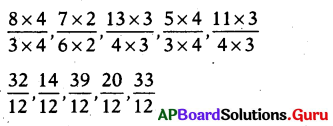
  2. The master weavers and merchants procure all the raw materials and supply them to weavers and collect the woven cloth.
  3. They then sell these materials to wholesale cloth merchants.
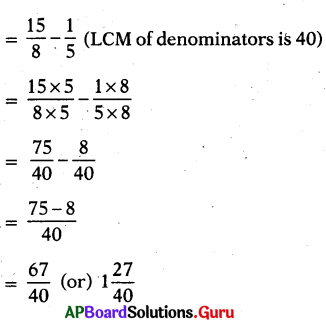
  4. They pay a stipulated amount as wages for the weaving work.
  5. Many master weavers also provide loans to weavers to set up looms, buy other tools and thus restrict them not to weave sarees for other master weavers.
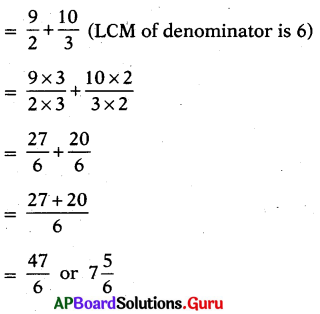
  6. They also decide the wages for the work done by the weavers.
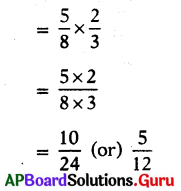
  7. Since they are interested in raising their incomes, it is natural for them to look for ways to pay less to the weavers.
  8. Distressed weaving families should be provided work from cooperative societies and saved from the master weavers.

AP 7th Class Social Important Questions Chapter 7 Handicrafts and Handlooms

Question 14.
Appreciate Venkatesu’s family for weaving sarees which is hereditary occupation?
Answer:

  1. Venkatesu is a resident of Dharmavaram. AH of his family members – he, his wife, son and daughter-in-law work as weavers.
  2. While he was winding yarn, his son Nagendra was engaged in weaving in the maggam (pit loom) set up inside the house.
  3. Katcha pattu, spindling of yarn, etc. were used to do different tasks in producing silk sarees.
  4. Venkatesu’s wife and daughter-in-law do bobbin winding.
  5. There is some work like making saratas for warping done collectively by group of weavers on streets or outside his house.
  6. His son Nagendra brings all the raw materials like dyed silk yarn, zari and design from master weaver and sometimes from cooperative society.
  7. Venkatesu gets raw materials at a time to weave ten sarees.
  8. The whole family has to work for 12 -15 hours a day for nearly 40 – 50 days to weave sarees. They get about Rs. 1300 per saree for the work.

AP 7th Class Social Important Questions Chapter 7 Handicrafts and Handlooms

Question 15.
Write a letter to Newspaper Editor explaining their problems of weavers at present?
Answer:

A Letter to Editor

Vijayawada
XXXXXXXX

From,
Y. Lakhmi,
7th Class,
77 – 28 – S/A,
Mangalagiri.

To,
The Editor,
The Hindu News Paper,
Vijayawada.

Dear Sir,

l am a proud reader of your newspaper for the last 10 years.
Here I would like to bring to your notice one burning issue of our society regarding the weaver’s community.
I request you to make a full-page report if possible regarding the facts & figures of Handloom weavers in our state.
Issues like daily wages, family welfare, delay in payment from mill owners. No help (subsidies) from the Government & Ministry.
Lack of collaboration between Designing & Marketing teams. By continuous ignorance of people of this sector cost nation’s heritage and colourful image at world level. We should not let die this fine art of many generations so easily.
I will be humble & society will be grateful to you & your newspaper for so long if we can make some good difference in the lives of weavers.

Thanking you sir,
Y. Lakshmi.

AP 7th Class Social Important Questions

AP 7th Class Social Important Questions Chapter 5 Europe

AP State Syllabus 7th Class Social Important Questions 5th Lesson Europe

Question 1.
Give one reason why the climate of Europe is cooler than that of India?
Answer:
Temperature decreases as the distance from the equator increases.
Since Europe is farther from the Equator than India, so the climate of Europe is cooler than that of India.

Question 2.
Distinguish between an Island and a Peninsula. (OR)
Distinguish between a Peninsula and an Island giving one example for each.
Answer:

IslandPeninsula
1. A piece of land surrounded by water on all sides.1. A piece of land surrounded by water on three sides and the fourth side is covered by land.
Ex: Sri Lanka, EnglandEx: India.

AP 7th Class Social Important Questions Chapter 5 Europe

Question 3.
Explain why the Mediterranean Sea was named so?
Answer:
The Mediterranean is derived from the Latin words meaning “the middle of the earth.” During the time of the Roman empire little was known about far Eastern Asia or the Americas or Southern Africa and so the Romans considered they lived in the hub of the universe.

Question 4.
Explain the location of Europe.
Answer:
Europe extends from 35° South to 72° North latitudes and from 10° West to 60° East longitudes. Europe has an area of 10,180,000 square kilometres approximately. It is the second smallest continent. The boundaries of Europe are North – Arctic ocean; South – Mediterranean sea, Caspian and Black seas; East – Ural mountains, West – Atlantic ocean.
The Ural Mountains separate Europe from Asia. The Mediterranean sea separates Europe from Africa. The Mediterranean sea separates Europe in the North from Africa in the South.

Question 5.
Mention the important rivers of Europe.
Answer:

  1. Many rivers in Europe originate from the Alphs mountains.
  2. River Volga is the largest river in Europe.
  3. The second-longest river is the Danube. It is known as an international river.
  4. The river Rhine is one of the most important rivers as it flows through several countries and empties itself into the North Sea.
  5. Unlike the Rhine, the Volga drains into the Caspian Sea, which is a vast lake.

AP 7th Class Social Important Questions Chapter 5 Europe

Question 6.
Explain about the mountains and plains of Europe.
Answer:

  1. The Alps, the most important mountain ranges of Europe, are covered with snow all year-round.
  2. The Caucasian Mountains, which lie between the Caspian Sea and the Black Sea form the southern boundary of Europe.
  3. They, too are very high and covered with snow all year-round.
  4. There are vast plains in Europe. The whole of Eastern Europe is a vast plain, which stretches across several countries like Russia, Ukraine, Poland, Bylorussia, etc. These plains experience heavy snowfall and bitter cold in winters.
  5. When the snow melts in summer, small streams start flowing.
  6. These join to form mighty rivers. It is from these plains that rivers like the Dnieper and the Volga, the longest river in Europe, originate.

Question 7.
Find out the names of some of the other Island countries of Europe.
Answer:

  1. The sea surrounds some of the European countries, not just on three sides but on all four sides.
  2. These are Island countries.
  3. Great Britain and Ireland are Island countries in Europe.

Question 8.
What are the important crops that are grown in Europe?
Answer:

  1. Food crops that are grown in Europe are wheat, maize, rye, barley and oats. Sugar is manufactured from beet in Russia, Ukraine and Germany.
  2. A commercial crop that is grown in Europe is ‘Tobacco’.
  3. Fruits that are farmed in Europe are apples, pears, peaches, grapes, oranges, palm and olive, etc.
  4. Fruits like grapes are used for making wine.

AP 7th Class Social Important Questions Chapter 5 Europe

Question 9.
What are trade winds? Explain.
Answer:
The ships of those times had sailed to harness wind power. They sailed with ease with the winds blowing westwards towards America. These winds blow westwards taking ships from Europe to America. These were not the Westerlies, which blew towards Europe. These were different winds, which blew from the south of Europe towards the southwest direction. They blew throughout the year and took ships from southwest Europe to the east coast of America. These winds are called ‘Trade Winds’.

Question 10.
The Alps stretch across several countries. Find out the names of these countries.
Answer:
France, Italy, Austria, Hungary, etc.

Question 11.
Write the names of two rivers starting from the Alps.
Answer:
Danube and Rhine.

Question 12.
Name the countries across whose borders the Pyrenees stretch.
Answer:
Spain and France.

Question 13.
Name the Mountains stretching Eastern Europe.
Answer:
Caucasus mountains.

AP 7th Class Social Important Questions Chapter 5 Europe

Question 14.
Identify the other mountains in Europe and prepare a table.
Answer:
Carpathian mountains; Ural mountains; Scandinavian ranges; Tatra mountains; Appnines and Dinaric Alps mountains; Cantabrian mountains.

Question 15.
Names of oceans or seas into which the following rivers empty themselves.
Answer:

S.No.RiverOcean/SeaS.No.RiverOcean/Sea
1.SeineNorth sea6.VistulaBaltic sea
2.RhineNorth sea7.VolgaCaspian sea
3.OderBaltic sea8.DniperBlack sea
4.PoAdriatic Sea9.DonBlack sea
5.DanubeBlack sea10.W DvinaBaltic sea

Question 16.
Compare Mediterranean and Andhra Pradesh climates on the following aspects:
Answer:

SeasonsRainfall
WintersSummers
MediterraneanToo coldWarmRainfall occurs only in winter.
Andhra PradeshColdToo hotRainfall occurs in rainy seasons.

AP 7th Class Social Important Questions Chapter 5 Europe

Question 17.
When does it rain most in your state, in the summer months or in the winter months?
Answer:
In rainy months.

Question 18.
Find out if your region gets light winter showers and the name given to it in the – regional language.
Answer:
Dussehra Musurlu.

Question 19.
Fishing is of importance in …………. whereas fruit growing is important in ……….
Answer:
Coastal areas; Mediterranean countries.

Question 20.
Why do you think the climate of Europe is so different from ours? Discuss among yourselves in the class.
Answer:
The climate of Europe is temperate and Continental in nature. The climate of India is tropical wet, tropical dry, subtropical humid, and mountain climate. So both are different from each other.

Question 21.
To begin with which part of Europe is along the Atlantic Ocean – the eastern or the western part?
Answer:
Western part.

AP 7th Class Social Important Questions Chapter 5 Europe

Question 22.
Observe the following table carefully and answer the questions.

S.No.CropsCountries where the crops are grown
1.WheatFrance, Italy, Germany, Spain, Poland, UK, and Hungary.
2.MaizeRussia, Romania, Yugoslavia, Hungary, France, Italy, etc.
3.RyePoland, Russia, Ukraine, Kazakhstan, and Germany.
4.BarleyRussia, UK, France, Denmark, Germany, Poland, and Spain.
5.TobaccoBulgaria, Greece, Italy, and Poland.
6.OatsRussia, Poland, France, Sweden, Germany, etc.
7.OlivesSpain, Italy, Greece, France, and Portugal.

1. Mention the important producers of maize in Europe.
Answer:
Russia, Romania, Yugoslavia, Hungary, etc.

2. Mention the important producers of barley in Europe.
Answer:
Russia, U.K., France, Denmark, Germany, Poland, and Spain.

3. Which countries are producing rye mainly?
Answer:
Poland, Russia, Ukraine, Kazakhstan, and Germany.

4. Which countries are producing Tobacco mainly?
Answer:
Bulgaria, Greece, Italy, and Poland.

5. Mention two important countries that are producing olives mainly.
Answer:
Spain, Italy, Greece, France, and Portugal.

AP 7th Class Social Important Questions Chapter 5 Europe

Question 23.
What is the Dogger Bank? Name the countries which would benefit from the Dogger Bank.
Answer:
The warm currents are very good for fish breeding as they contain ample food materials for the fish. As a result, the fishery industry is very well developed in the North Sea near Britain. This part of the North Sea is called ‘Dogger Bank’. Fish is an important part of the food of the Europeans and fishing is a very important industry in Europe. United Kingdom, Belgium, Netherland, Denmark, Norway, and Sweden would get benefit from Dogger Bank.

Question 24.
Why do you think the climate of Eastern Europe is not so strongly affected by the warm currents?
Answer:
The warm currents are from the west side of the continent. So it strongly affects western Europe only but not eastern Europe.

Question 25.
Can you guess the impact of the Westerlies on Europe?
Answer:
The westerlies play an important role in carrying the warm, equitornal wates and winds to the western coasts of continents, especially in the southern hemisphere because of its vast oceanic expanse.

Question 26.
What differences did you notice between the climates of India and west Europe?
Answer:
India has a hot type of climate while west Europe has a warm type of climate.

AP 7th Class Social Important Questions Chapter 5 Europe

Question 27.
Can you reason why is it possible to raise two crops in the Mediterranean countries?
Answer:
The Mediterranean countries are the southernmost countries in Europe. As a result, the winters here are not too cold and summers are warm. It does not rain all through the year as in Western Europe. It rains here only in winter. Such rainy winters and summers are termed Mediterranean climates. So it is possible to raise two crops a year.

Question 28.
Locate the following on the given map.
1. Austria
2. Spain
3. Portugal
4. Germany
5. Russia
6. Italy
7. France
8. Ukraine
9. Poland
10. Norway.
Answer:
AP 7th Class Social Important Questions Chapter 5 Europe 1

AP 7th Class Social Important Questions Chapter 5 Europe

Question 29.
Observe the map and answer the following.
AP 7th Class Social Important Questions Chapter 5 Europe 2
a. Name the mountains to the east of Europe.
Answer:
Ural mountains.

b. Name the ocean to the west of Europe.
Answer:
The Atlantic Ocean.

c. Look in the atlas and find the name of the sea just south of Europe.
Answer:
The Mediterranean Sea.

d. Name the island country of Europe.
Answer:
The United Kingdom.

e. Name the mountains that divide Europe from Asia.
Answer:
Ural mountains.

AP 7th Class Social Important Questions Chapter 5 Europe

Question 30.
Now you are familiar with the location of Europe. You can take a look at the countries of Europe. Look at the following map to find out their names. Have you heard of some of these countries before?
AP 7th Class Social Important Questions Chapter 5 Europe 3
Answer:
Norway, Sweden, Denmark, Finland, Ireland, U.K., Netherlands, France, Belgium, Germany, Spain, Portugal, Switzerland, Poland, Italy, Belarus, Austria, Hungary, Italy, Bulgaria, Turkey, Romania, Russia, Latvia, Lithuani, etc.
I heard about U.K., Russia, Switzerland, and Italy.

Question 31.
Observe the map and answer the following questions.
AP 7th Class Social Important Questions Chapter 5 Europe 4
a. Which of these is a peninsula Greece of France?
Answer:
Greece

b. Are Spain and Portugal peninsulas, too?
Answer:
Spain is a peninsula, but Portugal is not a peninsula.

c. Name the mountain range in the Scandinavian Peninsula.
Scandinavian ranges.

AP 7th Class Social Important Questions Chapter 5 Europe

Question 32.
i) Look at a globe to see how far is north Europe from the Equator.
Answer:
Europe is 350 latitudes North of the Equator.

ii) Is Europe even farther north than India?
Answer:
Yes.

iii) Will Norway be warmer than Italy? Why?
Answer:
No, Norway is cooler than Italy because it is on higher latitudes.

Question 33.
Look at the wall map or atlas to identify the names of at least six cities of Europe which are situated on the sea coast.
Answer:
Moscow – Russia
London – U.K.
Berlin – Germany
Istanbul – Turkey
St. Petersburg – Russia
Madrid – Spain

Question 34.
Look at Map 2 (Text P. 42) and name four Mediterranean countries.
Answer:
Turkey, Syria, Lebanon, and Israel.

Question 35.
Look at Map 6 (Text PAT) and answer the following questions.
i) Which winds would help the sailors to return to Europe from America?
Answer:
Trade winds.

ii) Could the sail-driven ships use the Trade Winds to return to Europe? Give reasons for your answer.
Answer:
No, they cannot use the Trade winds to return to Europe.
The reason is that the winds are blowing from south-east to north-west. Europe is on the northeast side of the Trade. Wind.

AP 7th Class Social Important Questions Chapter 5 Europe

Question 36.
i) Look at the map (Text P.No. 47 Map 6) can you tell what the new route could be?
Answer:
The new route is the Columbus route.

ii) Looking at the globe to check whether Columbus’ thinking was correct?
Answer:
Yes, he was correct.

iii) Look at the map to be able to tell whether it will be warmer in Spain or in Slovakia.
Answer:
In Spain – there will be mild winters and warm summers. In Slovakia – temperate cool summers, cold, cloudy, humid winters.

Question 37.
Which fruits are grown extensively in southern Europe?
Answer:
The Mediterranean climate is very good for growing juicy fruits. Thus regions with a Mediterranean climate are famous for their fruits. Fruits like olives, figs, grapes, oranges, etc., are grown extensively in southern Europe.

AP 7th Class Social Important Questions

AP 7th Class Social Important Questions Chapter 4 Oceans and Fishing

AP State Syllabus 7th Class Social Important Questions 4th Lesson Oceans and Fishing

Question 1.
Fishing with the mechanical boat is risky than the Karratheppa. Why?
Answer:
Compared to the Karrateppa, there is far more risk of life in Marapadava (Mechanised boat) because it goes far into the sea and it is difficult to swim over to shore in times of trouble.
What is worse, there is no first aid in the big boats, nor any life jacket. Fishing is a risky and brave occupation.

AP 7th Class Social Important Questions Chapter 4 Oceans and Fishing

Question 2.
Study the table given below and answer the following questions.
Distribution of Fresh Water on Earth

Sl.No.SourcePercentage
1Ice caps and Glaciers68.7%
2Groundwater30.1%
3Surface water (lakes, swamps, rivers)0.3%
4Others0.9%

a) Where do we have the highest percentage of fresh water on the Earth?
Answer:
Ice caps and Glaciers.

b) Give any two sources of surface water.
Answer:
Lakes, swamps, rivers, etc.

Question 3.
Read the info chart given below and answer questions a and b.
AP 7th Class Social Important Questions Chapter 4 Oceans and Fishing 1
a) Where is the most fresh water on the earth found?
Answer:
More fresh water on the earth is found in Icecaps & Glaciers.

b) What percentage of the freshwater is accessible?
Answer:
Accessible surface freshwater is 1%.

AP 7th Class Social Important Questions Chapter 4 Oceans and Fishing

Question 4.
“The lives of fishermen are risky and troublesome” – Comment in your own words.
Answer:
I agree with the above statement.

  1. Most of the Fishermen do not own mechanical boats. They depend on others boats and go fishing.
  2. Always they are taking money from middlemen for diesel and kit expenses.
  3. Again they sell the day’s catch of fish to the middlemen at the rate he fixes.
  4. They don’t have any profits.
  5. There is no First Aid in the big boats nor any life jacket.

Their life is risky and troublesome. While they go fishing, if any cyclone hits that area, they are not able to reach the coast of the ocean.

Question 5.
What is an ocean? Name the oceans in the world.
Answer:
The vast body of salt water that covers a considerable portion of the earth’s crust is called the ocean. There are three major oceans in the world. They are the Pacific, the Atlantic, and the Indian ocean. Apart from these three, waters of the Arctic and Antarctic are also described as oceans.

Question 6.
What are the two types of ocean currents? Give examples.
Answer:
Ocean currents are of two types. They are:
1) Warm currents: They flow from the equator towards poleward regions.
Eg: The Gulf stream and the Atlantic drift.
2) Cold currents: They flow from poleward regions towards the equator.
Eg: The Labrador current, The Greenland current.

AP 7th Class Social Important Questions Chapter 4 Oceans and Fishing

Question 7.
What are high tides and low tides?
Answer:
High tide: The bulge of seawater is high tide.
Low tide: The level of the seawater reduces. It is low tide.
High tides and low tides occur twice each day.

Question 8.
Explain the different types of nets.
Answer:
Nets are of different types based on different sizes of the Kannulu (Rings) and the layers of the net. Recently a net known as Ring Net which helps in getting a better catch is being increasingly used by the fishermen. This has helped to reduce migration from the village. Earlier there were nets made up of cotton thread. Now cotton nets have almost been replaced by plastic, nylon and other synthetic, materials. A net lasts for 4 – 5 years. Nets are purchased by weight and the type of rings they contain. Nets cost around Rs. 250-300 per kg. Ring nets weigh around 500 kgs.

Question 9.
What enables the middlemen in the fish business to earn much more money than the fishermen?
Answer:
Some middlemen temporarily store the fish, segregate them and carry them in cold container tanks to faraway places like Kolkata, Bangalore, Chennai, Hyderabad, Kerala, and so on. These people get four times more money than the catcher does. They also provide advances for the fishermen with interest. Fishermen have no option to sell the day’s catch of fish to the middlemen at the rate they choose to fix. Thus middlemen earn more money than fishermen.

AP 7th Class Social Important Questions Chapter 4 Oceans and Fishing

Question 10.
Is the water found in your village/town saline or potable? Is it different in different parts of the village/town?
Answer:
In our city, Vijayawada both saline and potable waters are found. The water supplied by Corporation is potable water. In many areas, people use bore pumps for domestic purposes. Of these, some are saline and some are potable.

Question 11.
What are the names you use for different water bodies? Do large or small water¬bodies have different names?
Answer:
Oceans, seas, rivers, lakes, ponds, waterfalls, canals, streams, and tanks are the names of different water bodies. All water bodies have different names.

Question 12.
How many meters deep are the water bodies you have seen?
Answer:
I have seen the Bay of Bengal, the Arabian Sea, and the Indian ocean at Kanya Kumari in Tamil Nadu the southernmost tip of India. The depth of the Bay of Bengal is 4,694 m, the Arabian sea is 4,652 m and the Indian ocean is 8,047 m.

Question 13.
Please share what you have seen or felt about what lies under the surface of water bodies.
Answer:
There will be many sea animals and many kinds of landforms under the surface of water bodies.

AP 7th Class Social Important Questions Chapter 4 Oceans and Fishing

Question 14.
Look at the image of Bhavanapadu village and find the following.
AP 7th Class Social Important Questions Chapter 4 Oceans and Fishing 2
i) Identify the water bodies in the image.
ii) Identify the land that is used for activities other than agriculture in this village.
If so, for what purpose?
Answer:
AP 7th Class Social Important Questions Chapter 4 Oceans and Fishing 3

Question 15.
Read the following para and answer the questions.
Tata Rao owns this boat which he purchased from Markonda in Odisha. It cost him around Rs. 6 lakhs. He borrowed the money from private moneylenders at a high rate of interest. He couldn’t get a bank loan, as he had no fixed assets. Even for daily fishing expenses, he has to get advances from middlemen. He has to invest a minimum of Rupees. 5,000/- per trip for diesel, wages, and other things. Because he has borrowed money from the middleman, Tata Rao has to sell the day’s catch of fish to the middleman at the rate he fixes. By this time the boat is ready for sale and all the twenty members are on the boat. They go up to 15-20 kilometers in the sea.
a. Where did Tata Rao purchase the boat?
Answer:
Tata Rao purchased the boat from Markonda in Odisha.

AP 7th Class Social Important Questions Chapter 4 Oceans and Fishing

b. Why could he not get a bank loan?
Answer:
Because he had no fixed assets.

c. Where did he get advance?
Answer:
From Middlemen.

d. How much money did he invest?
Answer:
He invested Rs. 6 lakhs and a minimum of Rs. 5000/- per trip for diesel, wages, and other things.

e. Did he have any other option to sell his day’s catch-offish to anyone at a high rate?
Answer:
No. He had no option but to sell the day’s catch of fish to the middleman.

Question 16.
For what purpose are thermocol boxes shown in the photo lined up in the middleman’s add?
AP 7th Class Social Important Questions Chapter 4 Oceans and Fishing 4
Answer:
Some middlemen temporarily store the fish, segregate them and carry them in cold container tanks faraway places like Kolkata, Bangalore, Chennai, Hyderabad, Kerala, and so on.
Their people store the fish in pheromonal boxes so that they won’t get damaged and middlemen store them for many days.

AP 7th Class Social Important Questions Chapter 4 Oceans and Fishing

Question 17.
Write the different crops cultivated in Bhavanapadu village.
Answer:
Fishing is not the only occupation of the people in Bhavanapdu village. They cultivate the land to grow crops and also rear animals and birds. The village soil is mainly loamy and rice is the principal crop grown on it.
They don’t grow any commercial crops.

Question 18.
Explain about the salinity and drinking water in the village.
Answer:
The water in the village is saline. If one digs up to 8 or 10 feet near the beach one can get potable water. But in summer these wells dry up. And it takes a long time for the water to fill up again. If you wait for an hour you may get another pot of water.
The government has sanctioned a protective water project that pumps water from the nearest village known as Suryamanipuram. It gave relief for some time. But cleaning of headwater tank and frequent repair of pumping motor is a hurdle.

Question 19.
In the world map or on the globe, find the names of five seas and five oceans.
Answer:
AP 7th Class Social Important Questions Chapter 4 Oceans and Fishing 5
Seas:

  1. The Mediterranean Sea
  2. the Arabian Sea
  3. Red Sea
  4. Dead Sea
  5. The Yellow Sea.

Oceans:

  1. The Pacific Ocean
  2. The Atlantic Ocean
  3. The Indian Ocean
  4. The Arctic Ocean
  5. The Antarctic ocean

AP 7th Class Social Important Questions Chapter 4 Oceans and Fishing

Question 20.
How are oceans useful to mankind?
Answer:

  1. Ocean water is saline. It contains several mineral salts’ dissolved in it.
  2. The oceans are the main source of rainfall.
  3. Oceans are storehouses of fish and other seafood.
  4. They are the main source of salts.
  5. Oceans provide natural highways for international trade.
  6. Oceans regulate the temperature of the coastal regions.
  7. Oceans are necessary for the balance of the ecological systems.
  8. Pearls are found in oysters.
  9. Some fish like cod and shark provide us with liver oil which is used as a tonic.
  10. Oceans provide us with large quantities and a variety of marine foods such as fish, shrimp, oysters, and crabs, etc.

Question 21.
Describe the social life of the people of Bhavanapadu.
Answer:
A large number of people of Bhavanapadu worship Gangamma, Gowri, and Shiva primarily. They perform puja to their boats and nets. The most important festival is Gowri Purnima. They spend the common good fund of the village on these festivals. Most of the men wear tattoos. There is an open stage, where the dramas, Burra Katha, Hari Katha, and record dances are performed. All these activities are led by the caste headmen called Pillas. They determine the customs and traditions of the people. They even resolve disputes and impose fines. The money collected goes to the common good fund.

AP 7th Class Social Important Questions